
Effect of Jatropha Curcas Plant on Some Soil Quality in Part of the Semi-Arid Zone of Nigeria
DOI:
https://doi.org/10.33003/fjs-2026-10(ANB-K)-5299Keywords:
Soil Quality, Erodibility, Erosion, Land Degradation, JatrophaAbstract
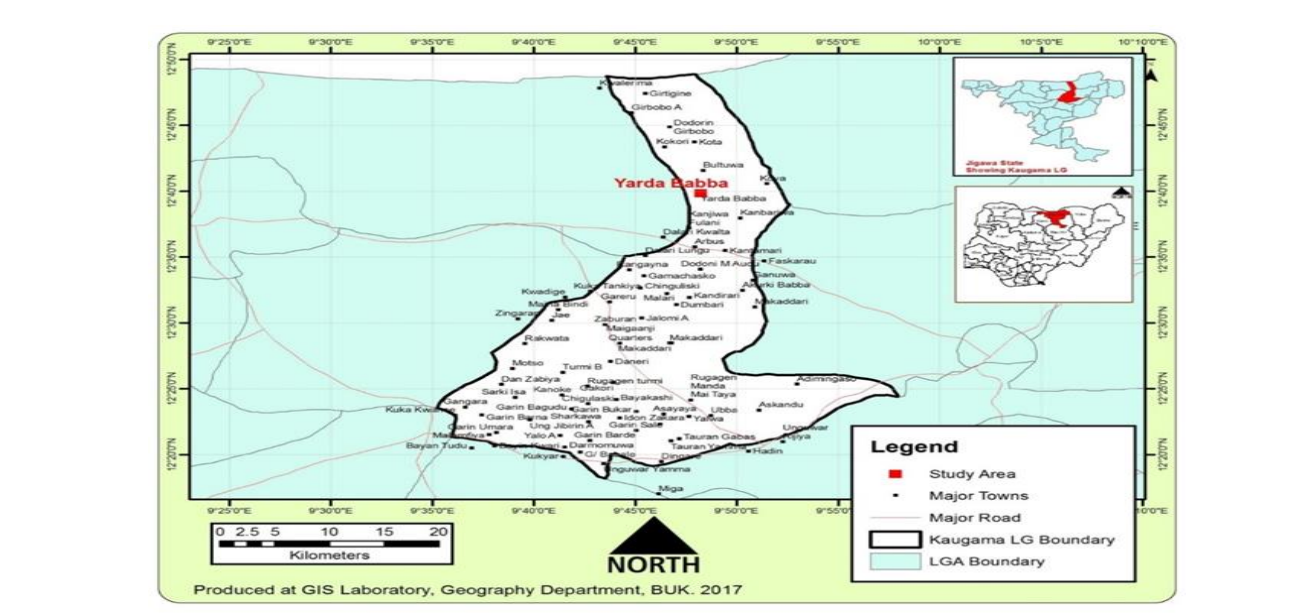
The global land productivity is continuously decline due to land degradation and subsequently reduce the soil quality. The research aimed at assessing the effects of Jatropha Curcas plant on some soil quality and evaluate the erodibility status of the area. The Jatropha plantation land was demarcated and adjacent to it cultivated land were used as sampling location. Ten soils samples were randomly collected in each of the sampling location using composite sampling techniques from 0 – 15 cm depth. The laboratory results were analysed using descriptive also student’s t-test was used at 0.05 probability level. The results revealed that mean values of organic carbon (0.94%), organic matter (1.87%), Infiltration rate (12.56mm), %clay (8.8%), %silt (9.6% ), soil carbon stock (2464.5ton) were all found higher at Jatropha site than control site. This implies that jatropha have the capacity to enhance and retain some soil quality parameters. It was discovered that cultivated land is more susceptibility to erosion due to high erodibility status (24.54ton/ha) than the Jatropha site (23.29ton/ha). This signified that jatropha plantation improve soil quality and reduce soil vulnerability to erosion. This is further, testified by t-test whereby significant difference in the mean values of organic matter, organic carbon, infiltration rate, soil carbon stock, soil erodibility was observed. It was concluded that Jatropha curcas have the ability improve soil quality parameter and therefore, reduce land degradation.
References
Abdulrashid, L., Abubakar, S. M. (2014). Soil Degradation in Marginal Areas: Perspectives of farming communities of semi-arid areas of Katsina State, northern Nigeria international Journal of Innovative Research & Development,6 (2): 12.
Augustine, N.O and Echebiri C.C. (2014). Assessment of the productivity of biodiesel from Jatropha Curcas plant. Nigeria sky journal of soil science and environmental management, 3 (7): 67-72.
Badamasi, M. M (2014). Vegetation and forestry in Tanko and Momale (eds), Kano environment, society and development. Adonis and Abbey Publishers Ltd. Kano, Nigeria.
Brabant, P. (2010). Land degradation assessment and mapping method. A standard guideline proposal. csfd/agropolis international, montpellier, France
Brady, N.C. and Weil, R. R. (2014). Nature and properties of soils. Fourteen edition, pearson
education Inc: Upper saddle River New14th
Declerca, B. (2014). Wasteland reclamation through rehabilitation of eroded soil in Tamil Nadu, India.
Essiet, E. U. (2013). Agricultural sustainability in the drylands of Nigeria: Realities and prospects. Bayero University, Kano. Inaugural lecture series No. 11.
FAO and IFAD (2010) Jatropha: A smallholder bioenergy crop the potential for pro-poor development. Integrated crop management vol. 8.
Gregorich, E. G., Carter, M. R., Angers, D. A., Monreal, C. M. and Ellert, B. H. (1994). Towards a minimum data set to assess soil organic matter quality in agricultural soils. Canadian Journal Soil Science, 74: 367-386.
Henning, R. (2008): “Combating Desertification” The Jatropha project of Mali, West Africa, in Henning R, The Jatropha Book, The Jatropha System, an integrated approach of the Arid Land Newsletter. Retrieved from http://ag.arizona.edu/OALS/ALN/aln40/ Jatropha.html.
Henning, R.K. (2004). The Jatropha System – an integrated approach of rural development (available at www.jatropha.de). [Accessed 21 April 2008]
Kemper, W.D. and Rosenau, R.C. (1986). Aggregate stability and size distributions. In: Methods of soil analysis. Part 1, 2nd Ed. A. Klute (Ed.). Agonomy monograph. ASA and SSSA, Madison, WI, PP. 425-442.
Liman, M. Idris, H. A, Mohammed, U.K. (2014). Wheather and climate in Tanko and Momale (eds) (2014); Kano Environment, society and development. Adonis and Abbey Publishers ltd. Kano, Nigeria.
London, J. R. (1991). Booker Tropical Soil Manual, John Wiley and Sons Inc., New York, 465
Mohammed, M. A. and Yusif, S.A. (2020). Evaluation of soil fertility for maize (ZEA MAY. L)
production at Tamburawa in Birnin Kudu, Kano State, FUDMA Journal of Science, 4
(2): 617 – 622
Nweke, I. A. and Nnabude P. C. (2015). Aggregate stability of four soils as evaluated by different indices. Journal of Experimental Biology and Agricultural Sciences. ISSN No. 2320 – 8694.
Openshaw, K. (2000). A review of Jatropha Curcas: an oil plant of unfulfilled promise, Biomass and Bioenergy 19:pp1-15.
Ravi, S., D'Odorico, P., Zobeck, T. M. & Over, T. M., (2009b). The effect of fireinduced
soil hydrophobicity on wind erosion in a semiarid grassland: experimental observations and theoretical framework. Geomorphology, 105(1-2), 80–86.
Roldan, A., Carvaca, F., Hernandez, M.T., Garcia, C., Sanchez-Brito, C., Velasquez, M. andTiscareno, M. (2003). No- tillage, crop residue additions, and legume cover cropping effects on soil quality characteristics under maize in Patscuaro watershed (Mexico). Soil Tillage Research, 72:65-73.
Sarkar, D. and Haldar, A. (2005). Physical and Chemical Methods in Soil Analysis: Fundamental
Concepts of Analytical Chemistry and Instrumental Technique, Newage International, Publishers, 4835/24, Ansari Road, Daryaganji, New Delhi-India
Shehu, B. M. (2013). Physical quality of an Alfisol as influenced by cultivation of Jatropha curcas L. at Samaru, Northern Nigeria.
Songu, G. A., Abu, R. D., Temwa, N. M., Yiye, S. T., Wahab, S. and Mohammed, B. G. (2021).
Anaysis of soil erodibility factor for hydrologic processes in North Central Nigeria, J.
Appl. Sci. Environ. Manage, 25(3): 425 – 432
United Nations Framework Convention on Climate Change (UNFCCC, 2013). Mechansims under the Kyoto protocol: Emission trading, the clean developmen mechanism and joint implementation. Available online: http://unfccc.int/kyoto_protocol/mechanisms/ items/1673.php (accessed on 5 December 2013).
Usman A. K. Ahmed M., Salisu, M and Ibrahim, A. A. (2014). The Imperative of Sand Dune Stabilization in Semi Arid Zone with Focus on Jigawa State, Nigeria. Zaria Geographer 21: 1, ISSN: 0795-7599
Walkley, A. and Black, C. A. (1934). An Examination of the Djetgareff Method for
Determining Organic Matter and Proposed Modification of the Chromic Acid Titration Method, Soil Sciences, 37: 29–38
Wienhold, B.J., Andrew, S. S. and Karlen, D.L. (2004). Soil quality: Review of the science and experiences in the USA. Environment Geochemical Health,26:85- 89.
Downloads
Published
Issue
Section
Categories
License
Copyright (c) 2026 Ladan Yusuf, Ahmed Mohammed, Mohammed Mansur Abdul, Adamu Ahmed

This work is licensed under a Creative Commons Attribution 4.0 International License.


