
Dietary Turmeric Enhances Physiological Resilience of African Catfish (Clarias gariepinus) Following Aeromonas hydrophila Challenge: An Integrated Physiological Assessment
DOI:
https://doi.org/10.33003/fjs-2026-1019-5857Keywords:
Physiological resilience, Phytogenic feed additive, Disease resistance, Oxidative stress, Haematology, CortisolAbstract
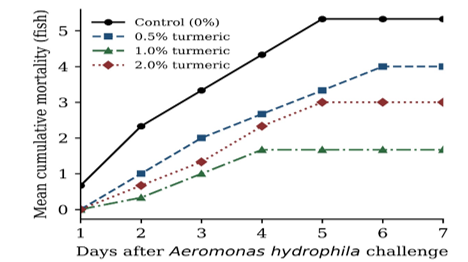
Improving physiological resilience to bacterial infection has become an important objective in sustainable aquaculture because disease outbreaks continue to compromise fish health, survival and production efficiency. Although dietary turmeric (Curcuma longa) has been reported to improve fish health, its effects on the integrated physiological responses associated with bacterial challenge remain poorly understood in African catfish (Clarias gariepinus). This study evaluated the effects of graded dietary turmeric supplementation on physiological resilience following experimental Aeromonas hydrophila challenge through an integrated assessment of post-challenge survival, haematological profile, platelet indices, serum biochemical profile, electrolyte balance, antioxidant status and cortisol response. Fish were fed diets containing 0% (control), 0.5%, 1.0% or 2.0% dietary turmeric for 16 weeks before bacterial challenge. Dietary turmeric significantly improved post-challenge survival (P < 0.001), with the highest survival (86.03 ± 2.95%) recorded in fish fed the 1.0% turmeric diet compared with the control (55.53 ± 1.40%). Turmeric supplementation also produced coordinated improvements in haematological characteristics, platelet indices, serum biochemical profile and electrolyte homeostasis, while enhancing tissue reduced glutathione concentrations and moderating the cortisol response following bacterial infection. These physiological responses collectively indicate an improved capacity to maintain homeostasis during bacterial stress. The present study demonstrates that the benefits of dietary turmeric extend beyond improved survival to encompass coordinated physiological adaptations that enhance resilience to A. hydrophila infection. These findings support further evaluation of dietary turmeric as a functional phytogenic feed additive for improving fish health and disease resilience in African catfish culture.
References
Abdella, B., Shokrak, N.M., Abozahra, N.A., Yomna M. E., Hossam I. K., and Radi A. M. (2024). Aquaculture and Aeromonas hydrophila: a complex interplay of environmental factors and virulence. Aquacult Int 32, 7671–7681. https://doi.org/10.1007/s10499-024-01535-y
Abdul Kari, Z. Nutritional immunomodulation in aquaculture: functional nutrients, stress resilience, and sustainable health strategies. Aquacult Int 33, 441 (2025). https://doi.org/10.1007/s10499-025-02122-5
Abdul Kari, Z., Wee, W., Mohamad Sukri, S. A., Che Harun, H., Hanif Reduan, M. F., Irwan Khoo, M., Van Doan, H., Wen Goh, K., & Seong Wei, L. (2022). Role of phytobiotics in relieving the impacts of Aeromonas hydrophila infection on aquatic animals: A mini-review. Frontiers in veterinary science, 9, 1023784. https://doi.org/10.3389/fvets.2022.1023784
Aly, S. M., Abd Allah, O. A., ElBanna, N. I., Abdel-Naeim, N. S., Abdelnaeim, N. S., & Fathi, M. (2025). Comparative evaluation of antioxidant status, stress, and hepatorenal biomarkers in Nile tilapia (Oreochromis niloticus) cultured in In-Pond raceway and traditional aquaculture systems. Fish Physiol Biochem 51, 119 https://doi.org/10.1007/s10695-025-01531-w
Association of Official Analytical Chemists (AOAC). (2019). Official methods of analysis of AOAC International (21st ed.). AOAC International.
Banu, M. S., Yadav, N. K., Saha, H., & Patel, A. B. (2025). Culinary spices as functional feed additives in aquaculture: Growth, immunity, and health perspectives. Comparative Immunology Reports, 9, 200256. https://doi.org/10.1016/j.cirep.2025.200256
Eissa, E.-S. H., Awlya, O. F., Abusudah, W. F., Qadhi, A. H., Abd El-Aziz, Y. M., Rinthong, P.-o., Abdelnour, S. A., Munir, M. B., Eissa, M. E. H., and Sakr, S. E.-S. (2024). Curcumin’s effects on growth indices, histological scores, blood metabolites, redox state, immunity, and antioxidant-related genes of red tilapia (Oreochromis sp.). Aquacult Int 32, 7031–7046 (2024). https://doi.org/10.1007/s10499-024-01500-9
El-Gammal G. A., Gehan I.E. Ali, Aly S. Saif, Shaimaa Elbaz, Sabreen E. Fadl, and Nagwa I.S. Abu-Zahra, (2025). The immunomodulatory and antioxidative effects of curcumin-supplemented diets against the isolated Aeromonas hydrophila in Oreochromis niloticus, Fish & Shellfish Immunology, Volume 157, https://doi.org/10.1016/j.fsi.2024.110077
Elgendy, M.Y., Ali, S.E., Dayem, A.A., Riad H. K., Moustafa M. M., and Mohamed A. (2024). Alternative therapies recently applied in controlling farmed fish diseases: mechanisms, challenges, and prospects. Aquacult Int 32, 9017–9078. https://doi.org/10.1007/s10499-024-01603-3
Ghosh, A.K., Islam, S.S. and Hasanuzzaman, A.F.M. (2025), Exploring the Potential of Medicinal Plants on Fish Resilience to Aeromonas hydrophila Infection: A Comprehensive Study of Immunology, Biochemistry, Growth and Survival. Aqua. Fish & Fisheries, 5: e70084. https://doi.org/10.1002/aff2.70084
Jeamsripong, S., Odoi, J. O., Shahi, M. K., Anuntawirun, S., Roongrojmongkhon, N., & Thiptara, A. (2025). Global spread and antimicrobial resistance of Aeromonas hydrophila in aquatic food animals: a systematic review and meta-analysis. Scientific reports, 15(1), 28441. https://doi.org/10.1038/s41598-025-14498-8
Jimoh, Wasiu Adeyemi, Fawole, Femi John, Ayeloja, Ayodeji Ahmed, Ojo, Olayinka Abosede, Ijalaye, Boluwatife Mary, Adesaogun, Aishat Yetunde, and Olaitan, Emmanuel Oladele (2024). Fenugreek Supplementation in Hybrid African Catfish Diets: Effect on Growth Performance, Physio-Metabolic Response, and Antioxidant Enzyme Capacity, Aquaculture Research, 6017812, 11 pages, 2024. https://doi.org/10.1155/2024/6017812
Kılıç, N., and Gültekin, G. (2024). Sustainable Approaches in Aquaculture: Pharmacological and Natural Alternatives to Antibiotics. Marine Science and Technology Bulletin, 13(3), 239-250. https://doi.org/10.33714/masteb.1488998
Komal W, Fatima S, Minahal Q, Liaqat R (2024) Enhancing growth, antioxidant capacity, and immune response in tilapia (Oreochromis niloticus) through curcumin supplementation across varied stocking density paradigms. PLoS ONE 19(11): e0311146. https://doi.org/10.1371/journal.pone.0311146
María Ortiz, and María Ángeles Esteban, (2024). Biology and functions of fish thrombocytes: A review, Fish & Shellfish Immunology,Volume 148, 109509, https://doi.org/10.1016/j.fsi.2024.109509.
Mulla AN, Thorat ST, Chandramore K, Kumar P, Reddy KS, Kumar N. (2025). Curcumin as a protective agent against chromium and ammonia toxicity using molecular and biochemical approaches in fish. Sci Rep. Apr 8;15(1):12023. https://doi.org/10.1038/s41598-025-95369-0
Tuong, D. T. C., Moniruzzaman, M., Smirnova, E., Chin, S., Sureshbabu, A., Karthikeyan, A., and Min, T. (2023). Curcumin as a Potential Antioxidant in Stress Regulation of Terrestrial, Avian, and Aquatic Animals: A Review. Antioxidants (Basel, Switzerland), 12(9), 1700. https://doi.org/10.3390/antiox12091700
Wei, L. S., Kon Yeu Hooi, Khoo, M. I. ., MN, A., & Wee, W. (2024). Effect of dietary supplementation of turmeric, Curcuma longa leaf on growth and health status of African catfish, Clarias gariepinus: https://doi.org/10.12982/VIS.2024.062. Veterinary Integrative Sciences, 22(3), 907–920. retrieved from https://he02.tci-thaijo.org/index.php/vis/article/view/266708
Wei, L. S., Liew, V. K., Tahiluddin, A. B., Harikrishnan, R., Hosain, M. E., Azra, M. N., & Wee, W. (2025). Dietary Dill Weed (Anethum graveolens) Stimulated Disease Resistance of African Catfish (Clarias gariepinus) Against Edwardsiellosis Infection. Bacteria, 4(2), 23. https://doi.org/10.3390/bacteria4020023
Downloads
Published
Issue
Section
Categories
License
Copyright (c) 2026 Felix Onyeka Nwose, Francis Oster Nwachi, Jerimoth Kesena Ekelemu

This work is licensed under a Creative Commons Attribution 4.0 International License.


