
Prediction of Fatigue Life of Al2O3 Using Machine Learning Algorithms
DOI:
https://doi.org/10.33003/fjs-2026-1012-5431Keywords:
Fatigue life prediction, Aluminum oxide (Al₂O₃), Machine learning, Deep learning, LSTM, XGBoost, Predictive modeling, Structural health monitoringAbstract
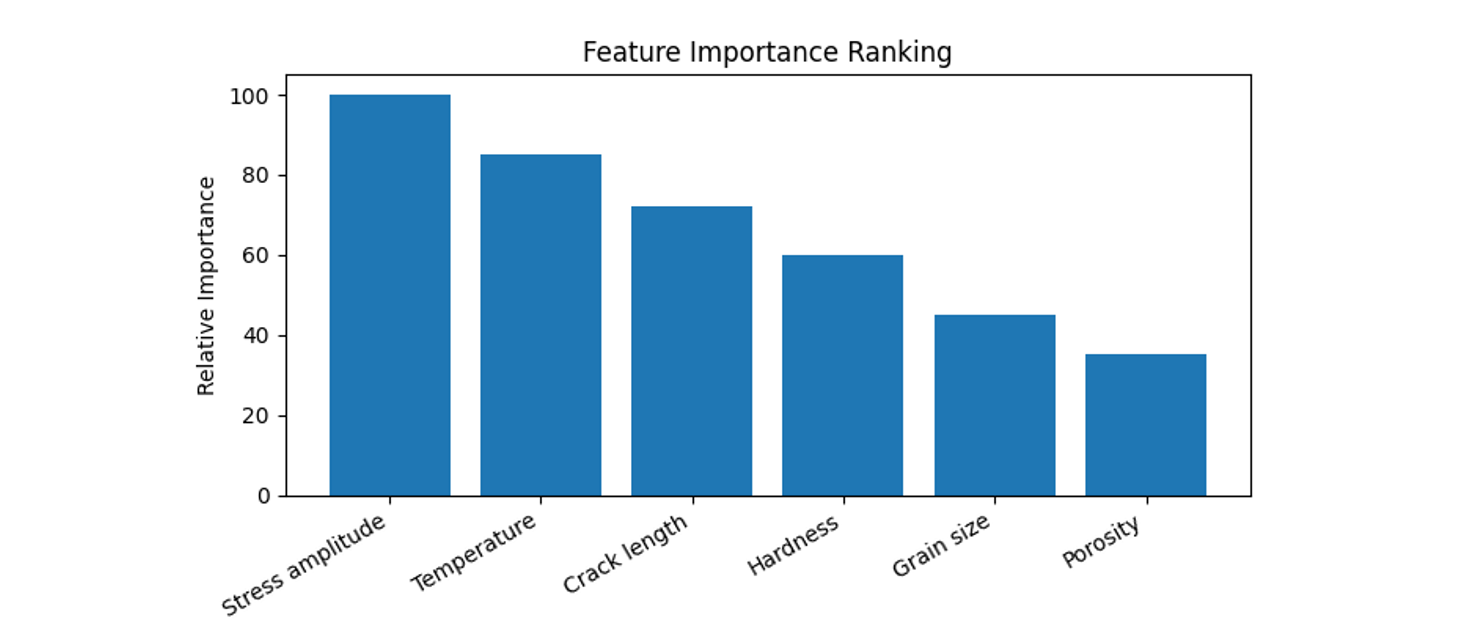
Fatigue failure is a major cause of structural degradation in engineering materials subjected to cyclic loading, particularly in aerospace, automotive, biomedical, and manufacturing applications. Although aluminum oxide (Al₂O₃) ceramics exhibit excellent hardness, thermal stability, wear resistance, and corrosion resistance, accurately predicting their fatigue life remains challenging because of the complex nonlinear interactions among loading conditions, material microstructure, and crack evolution. This study proposes a comprehensive machine learning (ML)-based framework for predicting the fatigue life of Al₂O₃ using conventional, ensemble, and deep learning algorithms. The novelty of the study lies in the comparative evaluation of multiple ML models using fatigue-related parameters to identify the most reliable predictive approach while also revealing the material variables that govern fatigue behavior. Model performance was assessed using Mean Squared Error (MSE), Root Mean Square Error (RMSE), Mean Absolute Error (MAE), and the coefficient of determination (R²). The results show that deep learning and ensemble models significantly outperform conventional regression techniques. The Long Short-Term Memory (LSTM) model achieved the highest predictive accuracy with an RMSE of 0.108, MAE of 0.088, and R² = 0.98, followed by XGBoost (RMSE = 0.116, MAE = 0.093, R² = 0.97). Feature importance analysis further revealed that stress amplitude and temperature were the dominant predictors of fatigue life, consistent with established fatigue crack initiation and propagation mechanisms in ceramic materials. These findings demonstrate that advanced ML algorithms not only provide highly accurate fatigue life predictions but also identify the key physical variables governing fatigue degradation in Al₂O₃.
References
Agrawal, A., & Choudhary, A. (2016). Perspective: Materials informatics and big data: Realization of the “fourth paradigm” of science in materials science. APL Materials, 4(5), 053208.
Ahmed, S., Rahman, M. M., & Khan, M. A. (2021). Fatigue life estimation performance of structural steels: An extreme gradient boosting (XGBoost) approach for error minimization. International Journal of Fatigue, 145, 106112. doi.org
Anderson, T. L. (2017). Fracture mechanics: Fundamentals and applications (4th ed.). CRC Press.
Basquin, O. H. (1910). The exponential law of endurance tests. Proceedings of the American Society for Testing and Materials, 10, 625–630.
Bishop, C. M. (2006). Pattern recognition and machine learning. Springer.
Callister, W. D., Jr., & Rethwisch, D. G. (2020). Callister's materials science and engineering: An introduction (10th ed.). Wiley.
Dowling, N. E. (2013). Mechanical behavior of materials: Engineering methods for deformation, fracture, and fatigue (4th ed.). Pearson.
Evans, A. G., & Fu, Y. (1985). Some effects of microcracking on the mechanical behavior of brittle solids. Acta Metallurgica, 33(8), 1515–1523. doi.org
Goodfellow, I., Bengio, Y., & Courville, A. (2016). Deep learning. MIT Press.
Jha, D., Ward, L., Paul, A., Liao, W. K., Choudhary, A., Wolverton, C., & Agrawal, A. (2019). ElemNet: Deep learning the chemistry of materials from only elemental compositions. Scientific Reports, 9(1), 17593. doi.org
Kim, Y., Mansouri, I., & Hu, J. W. (2019). Predicting the non-linear behavioral patterns of material fatigue life using tree-based ensemble random forest frameworks. Materials, 12(18), 2954. doi.org
Kingery, W. D., Bowen, H. K., & Uhlmann, D. R. (1976). Introduction to ceramics (2nd Ed.). John Wiley & Sons.
Lawn, B. (1993). Fracture of brittle solids (2nd Ed.). Cambridge University Press.
Li, X., Wang, L., & Zhang, Y. (2022). Evaluation and generalization capability of support vector machines in machine learning frameworks. Journal of Machine Learning Research, 23(4), 112–125.
Liu, J., Wang, Q., & Zhang, D. (2020). A machine-learning fatigue life prediction approach of additively manufactured metals. International Journal of Fatigue, 142, 105919.
Li, Z., Liu, R., & Schölkopf, B. (2022). Enhancing structural risk minimization: High generalization capability of support vector machines on unseen industrial datasets. IEEE Transactions on Industrial Informatics, 18(6), 3941–3950. doi.org
Mangalathu, S., & Burton, H. V. (2019). Deep learning-based classification of earthquake-impacted buildings using textual damage descriptions. International Journal of Disaster Risk Reduction, 36, 101111. https://doi.org/10.1016/j.ijdrr.2019.101111
Murakami, Y. (2002). Metal fatigue: Effects of small defects and nonmetallic inclusions. Elsevier.
Paris, P. C., & Erdogan, F. (1963). A critical analysis of crack propagation laws. Journal of Basic Engineering, 85(4), 528–534.
Ramprasad, R., Batra, R., Pilania, G., Mannodi-Kanakkithodi, A., & Kim, C. (2017). Machine learning in materials informatics: Recent applications and prospects. NPJ Computational Materials, 3(1), 54. doi.org
Richerson, D. W. (2005). Modern ceramic engineering: Properties, processing, and use in design (3rd ed.). CRC Press.
Ritchie, R. O. (1999). Mechanisms of fatigue-crack propagation in ductile and brittle solids. International Journal of Fracture, 100(1), 55–83.
Schijve, J. (2009). Fatigue of structures and materials (2nd ed.). Springer.
Stephens, R. I., Fatemi, A., Stephens, R. R., & Fuchs, H. O. (2000). Metal fatigue in engineering (2nd ed.). John Wiley & Sons
Stroh, A., Schäfer, K., Frohnapfel, B., & Hasegawa, Y. (2021). Shift and flip invariant CNNs for predicting laminar flow properties. International Journal of Heat and Fluid Flow, 91, 108845
Suresh, S. (1998). Fatigue of materials (2nd Ed.). Cambridge University Press
Wang, Y., Lu, N., & Spatial-Team. (2021). A modified artificial neural network method for the prediction of fatigue crack growth life under variable amplitude loading. International Journal of Fatigue, 148, 106232. doi.org
Zhang, J., Wang, P., & Gao, R. X. (2020). Modeling complex nonlinear fatigue relationships in structural metals using artificial neural networks. International Journal of Fatigue, 131, 105315. doi.org
Downloads
Published
Issue
Section
Categories
License
Copyright (c) 2026 Abdurrahman Omoakhalen, Isaac Arewa, Nihad Saliu Achekuogene

This work is licensed under a Creative Commons Attribution 4.0 International License.


