
EXPLORING EXPERT SYSTEMS AND THEIR APPLICATIONS IN THE PHARMACEUTICAL INDUSTRY IN NIGERIA
DOI:
https://doi.org/10.33003/fjs-2026-1002-4379Abstract
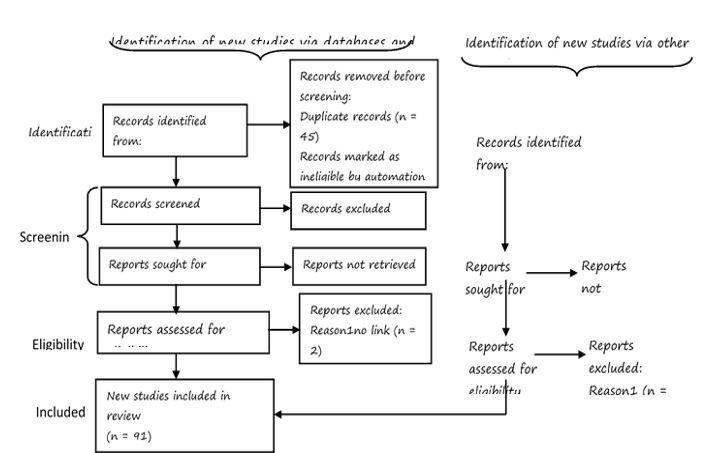
Pharmaceutical retail organizations are critical to healthcare access and medication availability, yet many continue to experience stock-outs, overstocking, expiry losses, and supply-chain inefficiencies. This study systematically reviewed literature on Decision Support Systems (DSS), Expert Systems (ES), and Inventory Management Systems (IMS) to evaluate their application, integration, and outcomes in pharmaceutical retail settings globally. A systematic review guided by PRISMA identified 149 records, screened 104 unique studies, and included 91 eligible publications spanning 2015–2025. Evidence was synthesized using a mixed approach that combined descriptive statistical analysis, covering publication trends, technologies adopted, geographic distribution, and reported outcomes, with thematic synthesis to identify dominant system architectures, benefits, barriers, and research gaps. The findings reveal strong global growth in DSS–IMS research, driven largely by artificial intelligence and machine learning, and increasing interest in integrated decision-support frameworks. However, Nigeria-specific evidence indicates continued reliance on basic inventory tools with limited predictive or expert-system capabilities, constrained by infrastructural deficits, high implementation costs, weak policy enforcement and limited technical expertise. The study’s contribution lies in foregrounding Nigeria within the global DSS–IMS discourse and consolidating fragmented evidence into a context-sensitive foundation for system design. It highlights the urgent need for scalable, integrated DSS–IMS frameworks incorporating real-time analytics, expert-system intelligence and regulatory alignment to improve inventory performance, patient safety and operational resilience in resource-constrained pharmaceutical retail environments.
References
Akinboade, O. A., Oludele, T., & Kinfack, E. (2020). Infrastructure, human capital, and technology adoption in sub-Saharan Africa: Evidence from SMEs. Development Southern Africa, 37*(5), 742760.
Gorry, G. A., & Scott Morton, M. S. (1971). A Framework for Management Information Systems. Sloan Management Review.
Gupta, A., & Kohli, A. (2019). Enterprise decision support systems: A framework for healthcare and retail integration. Decision Support Systems, 121, 55–66.
Harris, F. W. (1913). How Many Parts to Make at Once. Factory (reprinted Operations Research, 1990).
Hançerlioğulları G., Şen A., Aktunç E. A., (2016) “Demand uncertainty and inventory turnover performance: an empirical analysis of the US retail industry”, International Journal of Physical Distribution and Logistics Management, vol. 46, núm. 6–7, pp. 681–708, doi: 10.1108/IJPDLM-12-2014-0303.
Ishfaq R., Defee C. C., Gibson B. J., Raja U., (2016) Realignment of the physical distribution process in omni-channel fulfillment, International Journal of Physical Distribution & Logistics Management, vol. 46, núm. 6/7, pp. 543561, jul. 2016, doi: 10.1108/IJPDLM-02-2015-0032.
Kembro J., Norrman A., (2019 Exploring trends, implications and challenges for logistics information systems in omni-channels: Swedish retailers perception, International Journal of Retail and Distribution Management, vol. 47, núm. 4, pp. 384411, doi: 10.1108/IJRDM-07-2017-0141.
McDermott, J. (1982). R1/XCON: A Rule-Based Configurer of Computer Systems. AI Magazine/AAAI.
Ohno, T. (1988). Toyota Production System / Just-In-Time for Today and Tomorrow.
Orlicky, J. (1975). Material Requirements Planning. (later editions referenced).
Power, D. J. (2015). Decision Support Systems: Concepts and Resources for Managers, Westport, CT: Greenwood/Quorum.
Rochon, P. A., Gomes, T., & Schneeweiss, S. (2022). Predicting drug shortages using community pharmacy data: A prospective cohort study. BMC Primary Care, 23(1), 165. https://doi.org/10.1186/s12875-022-01785-4
Shortliffe, E. H. (1976). Computer-Based Medical Consultations: MYCIN. Elsevier.
Sprague, R. H. (1980). A Framework for the Development of Decision Support Systems. MIS Quarterly.
Sterman J. D. & Dogan G. (2015) Im not hoarding, im just stocking up before the hoarders get here: Behavioral causes of phantom ordering in supply chains, Journal of Operations Management, vol. 39, pp. 622.
Turban, E., Sharda, R., & Delen, D. (2018). Decision support and business intelligence systems (10th ed.). Pearson Education.
Wang, L., Li, L., & Zhang, X. (2019). Enhancing Evidence-Based Medicine with Expert Systems. Journal of Healthcare Engineering, 2(1), 37-41.
Wang, L., Li, Y., & Zhang, X. (2019). Expert Systems for Differential Diagnosis in Cardiology. Journal of Medical Diagnosis and Treatment, 25(2), 92-98.
Wilson, R. H. (1934). A Scientific Routine for Stock Control. Harvard Business Review. (secondary confirmations).
World Health Organization. (2018). Global report on effective access to medicines: Improving supply chains and reducing expiries. Geneva: WHO.
Downloads
Published
Issue
Section
Categories
License
Copyright (c) 2026 Abdurrahman Ismail Omoakhalen, Vincent Aizebeoje Balogun, Nihad Saliu Achekuogene, Rabiatu Omoakhalen

This work is licensed under a Creative Commons Attribution 4.0 International License.