
Sustainable Dyeing of Cotton, Silk, and Wool Using Natural Dyes from Lawsonia inermis (Henna) and Mentha spicata (Mint): Extraction, Optimization, and Multifunctional Assessment
DOI:
https://doi.org/10.33003/Keywords:
natural dyes, Lawsonia inermis, ultrasound-assisted extraction, antibacterial textiles, UV protection, sustainable dyeingAbstract
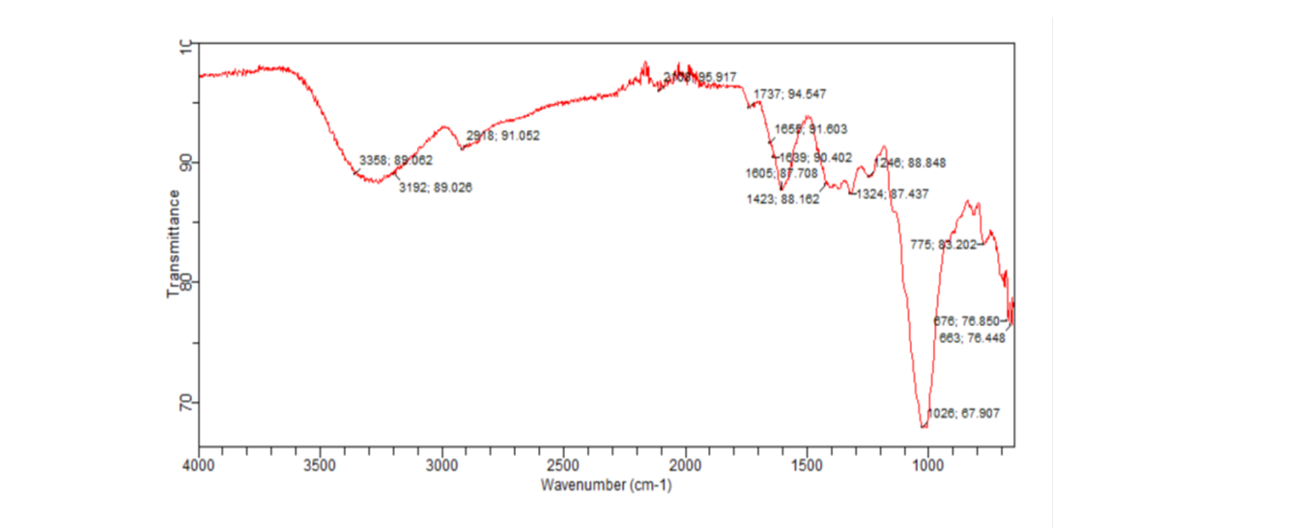
The present study investigates sustainable extraction and application of natural dyes from Lawsonia inermis (henna) and Mentha spicata (mint) for dyeing cotton, silk, and wool substrates. Dye extraction was optimized using direct heat (DH), ultrasonic bath (USB), and ultrasonic probe (USP) methods. USP extraction yielded the highest colorant recovery and superior color strength with henna 78 ± 3.1%, mint 72 ± 2.6%, compared to USB (63 ± 2.5% and 58 ± 2.3%) and DH (48 ± 2.1% and 42 ± 1.8%). FTIR confirmed hydroxyl, carbonyl, and aromatic groups associated with polyphenols, flavonoids, and tannins. Color strength (K/S values) was highest for silk (henna 15.6, mint 12.2), followed by wool (14.9, 11.5) and cotton (12.5, 9.8). The dyed substrates were further evaluated for color fastness, antibacterial activity, and UV protection. Henna extracts imparted darker shades with stronger antibacterial properties, while mint extracts contributed softer tones with moderate antibacterial effects. Both dyes enhanced UV protection, with silk demonstrating the highest dye uptake. Color fastness tests showed good wash, rubbing, and perspiration resistance (ratings 3–5). Henna-dyed fabrics exhibited stronger antibacterial activity, with inhibition zones up to 20 mm against S. aureus and 18 mm against E. coli, compared to mint (15 mm and 14 mm, respectively). Both dyes improved UV protection, with UPF values ranging from 25 (cotton-mint) to 40 (wool-henna). These findings highlight henna and mint as eco-friendly alternatives to synthetic dyes, providing multifunctional benefits of coloration, antibacterial efficacy, and UV protection within the framework of green chemistry.
References
Esclapez, M.D., García-Pérez, J.V., Mulet, A., & Cárcel, J.A. (2011). Ultrasound-assisted extraction of natural products. Food Engineering Reviews, 3(2), 108–120.
Mason, T.J., Paniwnyk, L., & Lorimer, J.P. (1996). The uses of ultrasound in food technology. Ultrasonics Sonochemistry, 3(3), S253–S260.
Metwally, R.A., et al. (2021). Antibacterial evaluation of bioactive textiles. Materials Today Communications, 26, 101934.
Moore, S.B., & Ausley, L.W. (2004). Systems thinking and green chemistry in textile processing. Journal of Cleaner Production, 12(6), 585–601. https://doi.org/10.1016/S0959-6526(03)00093-0
Pisitsak, P., et al. (2016). UV protection efficiency of dyed fabrics. Textile Research Journal, 86(6), 631–639.
Rather, L.J., Shabbir, M., & Bukhari, M.N. (2020). Revival of natural dyes: A sustainable approach in the textile industry. Journal of Cleaner Production, 272, 123011. https://doi.org/10.1016/j.jclepro.2020.123011
Samanta, A.K., Agarwal, P., & Singhee, D. (2018). Application of natural dyes on textiles. Colourage, 65(5), 29–40.
Saxena, S., & Raja, A.S.M. (2014). Natural dyes: Sources, chemistry, application and sustainability issues. In S.S. Muthu (Ed.), Roadmap to Sustainable Textiles and Clothing (pp. 37–80). Springer. https://doi.org/10.1007/978-981-287-065-0_2
Silva, J., Abreu, R., & Sousa, M. (2010). Mentha spicata: Chemical composition and biological activities. Phytochemistry Reviews, 9(2), 255–278.
Silva, F., Ferreira, S., Duarte, A., Mendonça, D.I., & Domingues, F.C. (2010). Antifungal activity of Coridothymus capitatus, Thymus vulgaris and Mentha piperita essential oils against Candida, Aspergillus and dermatophyte species. Journal of Medical Microbiology, 59(7), 781–787. https://doi.org/10.1099/jmm.0.019885-0
Sivakumar, V., Vigneswaran, C., & Kumar, P. (2009). Dyeing of textiles with natural colorants. Indian Journal of Fibre & Textile Research, 34(4), 384–390.
Tausif, M., Nazir, A., & Hussain, T. (2018). Health and safety hazards of synthetic dyes in textiles. Journal of Textile Science & Engineering, 8(3), 1–7. https://doi.org/10.4172/2165-8064.1000356
Vilar, D., Ferreira, S., & Santos, R. (2014). Medicinal and pharmacological properties of Lawsonia inermis. Journal of Ethnopharmacology, 155(1), 67–83.
Vilar, D., Ferreira, S., & Santos, R. (2014). Phytochemical composition and biological activities of Mentha spicata L. (spearmint): A review. Phytomedicine, 21(11), 1141–1149. https://doi.org/10.1016/j.phymed.2014.04.003
Wani, S.A., Rather, L.J., & Shabbir, M. (2021). Ultrasound-assisted extraction of natural pigments: A green approach. Ultrasonics Sonochemistry, 70, 105327.
Downloads
Published
Issue
Section
Categories
License
Copyright (c) 2026 Albashir Yasir, Sani Muhammad Gumel, Solomon Joshua, Aminu Abdulkarim, Sule Erten Ela, Hauwa yahaya Umar, Umar Joji, Abdulhamid Ahmad Aliyu

This work is licensed under a Creative Commons Attribution 4.0 International License.


