
SEQUESTRATION OF Pb2+AND Cd2+ IONS FROM AQUEOUS SOLUTIONS USING Rinorea dentata LEAF POWDER AS A LOW-COST ADSORBENT
DOI:
https://doi.org/10.33003/fjs-2026-1008-4636Keywords:
Adsorption, Isotherm Models, Rinorea dentata, Thermodynamics, Metal IonsAbstract
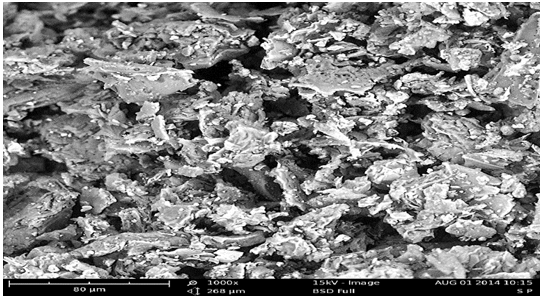
Rinorea dentata leaf powder (RDLP) was evaluated as a low-cost adsorbent to sequester Pb2+ and Cd2+ ions from aqueous solutions. Physicochemical analyses showed a pore volume estimate of 3.8 × 10⁻³ cm³/g, low moisture, ash, and volatile matter content. RDLP’s surface was confirmed as porous and irregular by scanning electron microscopy, while energy dispersive X-ray spectroscopy (EDX) identified carbon as the dominant element occurring with small amounts of oxygen and nitrogen. Optimal adsorption conditions of 10 mg/L initial metal ion concentration, pH 6, 80 min contact time, 0.6 g adsorbent dose, and 30 µm particle size were determined through batch adsorption experiments conducted at ambient temperature. The Langmuir isotherm model provided a better fit (R² = 0.980 for Pb²⁺ and 0.992 for Cd²⁺) than the Freundlich model, although both models reasonably described the adsorption behaviour, indicating favourable adsorption with predominantly monolayer coverage at lower concentrations, and the presence of surface heterogeneity as suggested by SEM/EDX and the Freundlich model. The pseudo-first order model provided the best fit to the experimental data (R² = 0.954 for Pb²⁺ and 0.972 for Cd²⁺), suggesting physical interactions; however, the intraparticle diffusion contributed to the rate-limiting step, particularly for Cd2+ ions. The thermodynamic studies revealed a low enthalpy change (ΔH=14.321 kJ/mol for Pb²⁺ and ΔH =15.026kJ/mol for Cd²⁺ ions, respectively), signifying that the adsorption process was endothermic and thermodynamically feasible with increasing spontaneity at higher temperatures. Overall, RDLP demonstrates strong potential as an inexpensive and effective adsorbent for heavy metal remediation in aqueous systems.
References
Abiodun, O. A. O., Oluwaseun, O., Oladayo, O. K., Abayomi, O., George, A. A., Opatola, E., Orah, F. R., Isukuru, J.E., Ede, C. I., Oluwayomi, O. T., Okolie, J. A., & Omotayo, I. A. (2023). Remediation of heavy metals using biomass-based adsorbents: Adsorption kinetics and isotherm models. Clean Technologies, 5, 934–960. Doi: https://doi.org/10.3390/cleantechnol5030047
Alexander, B., Evgeny, V. G., Irina, V. B., Anastassia, E. K., Shilpi, A., Alexey, G. T., & Vinod, K. G. (2018). Adsorption of heavy metals on conventional and nanostructured materials for wastewater treatment purposes: A review. Ecotoxicology and Environmental Safety, 148, 702–712. Doi: https://doi.org/10.1016/j.ecoenv.2017.11.034
Aliyu A. U., Musa, S., Garba, H., Ahmad, S., & Hausa, S. S. K. (2026). Isolation and evaluation of indigenous fungal species for biosorption of cadmium (Cd) from contaminated soil. FUDMA Journal of Sciences, 10(6), 69–73. Doi: https://doi.org/10.33003/fjs-2026-1006-5070
American Water Works Association. (1991). AWWA standards for granular activated carbons. AWWA.
American Water Works Association. (2018). Activated carbon adsorption for water treatment (3rd ed.). AWWA.
Ansam, Q. J., & Sata, K. A. (2024). Removal of heavy metal ions from wastewater using ion-exchange resin in a batch process: Kinetic and isotherm studies. South African Journal of Chemical Engineering, 49, 43–54. Doi: https://doi.org/10.1016/j.sajce.2024.04.002
Anwar, H. S., Noorfidza, Y. H., & Neisha, Z. (2020). Heavy metals capture from water sludge by kenaf fibre activated carbon in batch adsorption. Journal of Ecological Engineering, 21, 102–115. Doi: https://doi.org/10.12911/22998993
ASTM International. (2015). ASTM D7582–15: Standard test methods for proximate analysis of coal and coke by macro thermogravimetric analysis. ASTM International. Doi: https://www.astm.org/d7582-15.html
Attah, F., Hellinger, R., Sonibare, A. M., Moody, O. J., Arrowsmith, S., Wray, S., & Gruber, W. C. (2016). Ethnobotanical survey of Rinorea dentata (Violaceae) used in South-Western Nigerian ethnomedicine and detection of cyclotides. Journal of Ethnopharmacology, 179, 83–91. Doi: https://doi.org/10.1016/j.jep.2015.12.038
Bayuo, J., Pelig-Ba, K., &Abukari, M. (2018). Isotherm modeling of lead (II) adsorption from aqueous solution using groundnut shell as a low-cost adsorbent. IOSR Journal of Applied Chemistry, 11(1), 18–23. Doi: https://doi.org/10.9790/5736-1111011823
Bayuo, J., Rwiza, M. J., Choi, J. W., Mtei, K. M., Hosseini-Bandegharaei, A., & Sillanpää, M. (2024). Adsorption and desorption processes of toxic heavy metals, regeneration and reusability of spent adsorbents: Economic and environmental sustainability approach. Advances in colloid and interface science, 329, 103196. Doi: https://doi.org/10.1016/j.cis.2024.103196
Bouamama, A., Abdellah, A., Stéphane, M., Anne, P., Nasre-Dine, A., Laurent, B., & Davy, D. (2017). Removal of Cu²⁺, Pb²⁺, and Zn²⁺ by flax fibres. Process Safety and Environmental Protection, 109, 639–647. Doi: https://doi.org/10.1016/j.psep.2017.05.012
Campisi, S., Chan-Thaw, C. E., & Villa, A. (2018). Heteroatom-mediated metal–support interactions in functionalized carbons. Applied Sciences, 8, 1159. Doi: https://doi.org/10.3390/app8071159
Chang, Y., Wang, H., & Li, Z. (2023). Adsorption of Cr⁶⁺, Cu²⁺, Pb²⁺, and Zn²⁺ by magnetic nano-chitosan. Molecules, 28, 2607. Doi: https://doi.org/10.3390/molecules28062607
Ekere, R. N., Agwogie, B. A., &Ihedioha, N. J. (2015). Biosorption of Pb²⁺, Cd²⁺ and Cu²⁺ from aqueous solutions using Adansonia digitata root powder. International Journal of Phytoremediation, 18, 116–125. Doi: https://doi.org/10.1080/15226514.2015.1058329
El-Sayed, E. M., & El-Sayed, Z. A. (2022). Removal of Cu(II), Pb(II), and Zn(II) using agricultural wastes. Journal of Water Resource and Protection, 14, 123–135. Doi: https://doi.org/10.4236/jwarp.2022.143008
Faith, C., Njenga, M., & Beatrice, K. (2021). Adsorption of Pb, Cu, and Zn in multi-metal systems using waste rubber tires. Heliyon, 7, e08254. Doi: https://doi.org/10.1016/j.heliyon.2021.e08254
Fajobi M.O., Lasode O.A., Adeleke, A.A., Ikubanni, P.P., Balogun, A.O. (2022) Investigation of physicochemical characteristics of selected lignocellulose biomass. Sci Rep. 2022 Feb 21;12(1):2918. Doi: https://doi.org/10.1038/s41598-022-07061-2
Folasegun, D. A., &Kovo, A. S. (2014). Simultaneous adsorption of Ni(II) and Mn(II) from aqueous solution using rice husk ash. Journal of Materials Research and Technology, 3(2), 129–141. Doi: https://doi.org/10.1016/j.jmrt.2014.03.002
Foo, Y. K., & Hameed, H. B. (2010). Insights into adsorption isotherm modeling. Chemical Engineering Journal, 156, 2–10. Doi: https://doi.org/10.1016/j.cej.2009.09.013
Haerdi, F. (1964). Rinorea species records. JSTOR Global Plants. https://plants.jstor.org/stable/history/10.5555/al.ap.upwta.5_514
He, J., & Chen, J. P. (2014). A comprehensive review on biosorption of heavy metals by algal biomass: Materials, performances, chemistry, and modeling simulation tools. Bioresource Technology, 160, 67–78. Doi: https://doi.org/10.1016/j.biortech.2014.01.068
Horsfall Jnr, M., Verla, E. N., Spiff, I. A., &Ekpete, O. A. (2012). Preparation and characterization of activated carbon from fluted pumpkin (Telfairia occidentalisHook.f) seed shell. Research Journal of Chemical Sciences, 2(10), 10–15. Doi: https://doi.org/10.13140/RG.2.2.30627.04647
Jain, K. C., Malik, S. D., & Yadav, K. A. (2016). Applicability of plant-based biosorbents in heavy-metalremoval: A review. Environmental Processes, 3, 495–523. Doi: https://doi.org/10.1007/s40710-016-0143-5
Jasper, E. E., Onwuka, J. C., &Bidam, M. Y. (2021). Screening of factors that influence the preparation of Dialiumguineense pods active carbon for use in methylene blue adsorption: A full factorial experimental design. Bulletin of the National Research Centre, 45, 168. Doi: https://doi.org/10.1186/s42269-021-00629-4
Kajjumba, G. W., Emik, S., Öngen, A., Kurtuluş Özcan, H., & Aydın, S. (2019). Modelling of adsorption kinetic processes—Errors, theory and application. In Advanced sorption process applications. IntechOpen. Doi: https://doi.org/10.5772/intechopen.80495
Khulbe, C. K., & Matsuura, T. (2018). Removal of heavy metals and pollutants by membrane adsorption techniques. Applied Water Science, 8, 19. Doi: https://doi.org/10.1007/s13201-018-0661-6
Kumar, A., & Singh, R. (2021). Adsorptive removal of Pb(II) and Zn(II) onto manganese oxide-coated sand. Environmental Science and Pollution Research, 28, 12345–12356. Doi: https://doi.org/10.1007/s11356-020-12345-6
Kyriakopoulos, L. G., Tsimnadis, K., Sebos, I., &Charabi, Y. (2024). Effect of pore size distribution on adsorption behaviour of carbonaceous materials. Crystals, 14, 742. Doi: https://doi.org/10.3390/cryst14080742
Latiza, J. P., Mustafa, A., Delos Reyes, K., Nebres, L. K., & Rubi, V. C. R. (2024). Adsorbents derived from plant sources: Current research and future outlook. Engineering Proceedings, 67, 15. Doi: https://doi.org/10.3390/engproc2024067015
Lee, H. J., & Park, J. (2018). Adsorption of Pb²⁺ and Zn²⁺ using Opuntia powder. Desalination and Water Treatment, 135, 330–340. Doi: https://doi.org/10.5004/dwt.2018.22309
Li, J., Dong, X., Liu, X., Xu, X., Duan, W., Park, J., Gao, L., & Lu, Y. (2022). Comparative adsorption characteristics of heavy metals. Sustainability, 14(23), 15579. Doi: https://doi.org/10.3390/su142315579
López Pastor, R., Pinna-Hernández, G. M., Sánchez Molina, A. J., &Acién Fernández, G. F. (2024). Influence of moisture and ash content on adsorption processes. Heliyon, 11(1), e40346. Doi: https://doi.org/10.1016/j.heliyon.2024.e40346
Marzeddu, S., Décima, A. M., Camilli, L., Bracciale, P. M., Genova, V., Paglia, L., Marra, F., Damizia, M., Stoller, M., Chiavola, A., & Boni, R. M. (2022). Physical-chemical characterization of carbon-based sorbents. Materials, 15, 7162. Doi: https://doi.org/10.3390/ma15207162
Mashael, A. A., & Mohammad, A. A. (2021). Nanoadsorption mechanisms of crystal violet using nano-hazelnut shell. Journal of Water Process Engineering, 44, 102354. Doi: https://doi.org/10.1016/j.jwpe.2021.102354
Munvera, A. M., Ouahouo, B. M. W., Mkounga, P., Mbekou, M. I. K., Nuzhat, S., Choudhary, M. I., & Nkengfack, A. E. (2020). Chemical constituents from leaves and trunk bark of Rinorea oblongifolia (Violaceae). Natural Product Research, 34(14), 2014–2021. Doi: https://doi.org/10.1080/14786419.2019.1573230
Nhuchhen, D. R. (2016). Prediction of carbon, hydrogen, and oxygen compositions of raw and torrefied biomass using proximate analysis. Fuel, 180, 348–356. Doi: https://doi.org/10.1016/j.fuel.2016.04.058
Pohl, A. (2020). Removal of heavy metal ions from water and wastewaters by sulfur-containing precipitation agents. Water, Air, & Soil Pollution, 231, 503. Doi: https://doi.org/10.1007/s11270-020-04863-w
Ridha, A.-S. N., Kamal, M. N., & Ridha, A.-S. M. (2020). Effect of adsorption on electrical conductivity and ionization constants. Journal of Physics: Conference Series, 1660, 012021. Doi: https://doi.org/10.1088/1742-6596/1660/1/012021
Saikat, M., Arka, J. C., Abu, M. T., Talha, B. E., Firzan, N., Ameer, K., Abubakr, M. I., Mayeen, U. K., Hamid, O., Fahad, A. A., & Jesus, S.-G. (2022). Impact of heavy metals on the environment and human health: Novel therapeutic insights to counter toxicity. Journal of King Saud University – Science, 34, 101865. Doi: https://doi.org/10.1016/j.jksus.2022.101865
Saleem, J., Shahid, U., Hijab, M., Hamish, M., & Gordon, M. (2019). Production and applications of activated carbons from olive stones. Biomass Conversion and Biorefinery, 9, 775–802. Doi: https://doi.org/10.1007/s13399-019-00473-7
Shankar, P., Thandapani, G., Kumar, V., & Sudha, P. N. (2022). Evaluation of batch and packed-bed adsorption columns for chromium(VI) ion removal using chitosan–silica–g–AM/orange peel hydrogel composite. Biomass Conversion and Biorefinery, 14, 2745–2760. Doi: https://doi.org/10.1007/s13399-022-02450-z
Singh, V., Ahmed, G., & Vedika, S. (2024). Toxic heavy metal ion contamination in water and their sustainable reduction by eco-friendly methods: Isotherms, thermodynamics and kinetics study. Scientific Reports, 14, 7595. Doi: https://doi.org/10.1038/s41598-024-58061-3
Sohail, A., Asif, A. S., Md., S. K., Ahmad, Z., Izhar, A., Esrafil, A., & Fazlollah, C. (2020). Removal of heavy metals (Cr, Cu, and Zn) from electroplating wastewater by electrocoagulation and adsorption processes. Desalination and Water Treatment, 179, 263–271. Doi: https://doi.org/10.5004/dwt.2020.25010
Subhashish, D., Veerendra, G. T. N., Phani, M. A. V., & Anjaneya Babu, P. S. S. (2023). Performance of plant-leaf biosorbents for phosphorus removal from synthetic water. Cleaner Materials, 8, 100191. Doi: https://doi.org/10.1016/j.clema.2023.100191
Usman, I. M., Muhammad, V. S., & Sagheer, O. A. (2024). Adsorptive removal of heavy metals from aqueous solutions: Progress in adsorbent development and effectiveness. Environmental Research, 251, 118562. Doi: https://doi.org/10.1016/j.envres.2024.118562
Wang B, Lan J, Bo C, Gong B, Ou J(2023). Adsorption of heavy metal onto biomass-derived activated carbon: review. RSC Adv. 31;13(7):4275-4302. Doi: https://doi.org/10.1039/d2ra07911a
Wang, J., & Guo, X. (2020). Adsorption isotherm models: Classification and application. Chemosphere, 258, 127279. Doi: https://doi.org/10.1016/j.chemosphere.2020.127279
Weber, W. J., & Morris, J. C. (1963). Kinetics of adsorption on carbon from solution. Journal of the Sanitary Engineering Division, 89(2), 31–60. Doi: https://doi.org/10.1061/jsedai.0000430
Wu, Z., Ye, X., Liu, H., Zhang, H., Liu, Z., Guo, M., Li, Q., & Li, J. (2020). Interactions between adsorbents and adsorbates in aqueous systems. Pure and Applied Chemistry, 92(10), 1655–1662. Doi: https://doi.org/10.1515/pac-2019-1110
Xie, S. (2024). Biosorption of heavy metal ions from contaminated wastewater: An eco-friendly approach. Green Chemistry Letters and Reviews, 17. Doi: https://doi.org/10.1080/17518253.2024.2357213
Zhang, Y., Li, X., Wang, J., & Chen, Y. (2023). Adsorption of Pb²⁺ and Zn²⁺ by magnetic biochar. Toxics, 11, 590. Doi: https://doi.org/10.3390/toxics11070590
Zhou, L., Yu, Q., Cui, Y., Xie, F., Li, W., Li, Y., & Chen, M. (2017). Adsorption properties of reed-derived activated carbon. Ecological Engineering, 102, 443–450. Doi: https://doi.org/10.1016/j.ecoleng.2017.02.036
Downloads
Published
Issue
Section
Categories
License
Copyright (c) 2026 Enebi Jasper, Bright Aiyehirue Agwogie, Lanre Tijani Soliu, Evangeline Nwakaego Okotcha, Andrew Ogheneovo Onofuevure, Edith Chinyere Unoka, Jamila Bashir Yakasai, Oghenetega Efetobo

This work is licensed under a Creative Commons Attribution 4.0 International License.


