
Evaluation of Biomedical and Probiotic Properties of Fermented Cocoa Pod Isolates from Idanre, Ondo State
DOI:
https://doi.org/10.33003/fjs-2026-1020-6184Keywords:
Cocoa fermentation, Antibiotic resistance, Microbial diversity, Growth-death kinetics, Consumer safetyAbstract
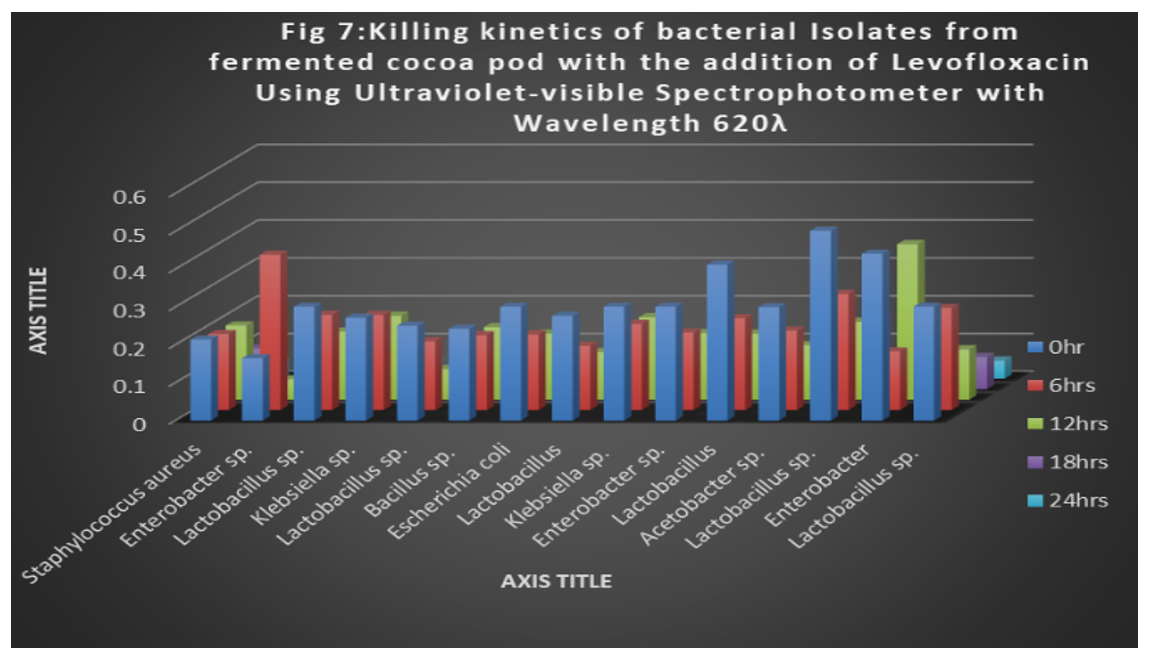
Cocoa (Theobroma cacao L.) is an economically important crop whose beans are widely used in chocolate production. Its fermentation involves diverse microorganisms that influence product quality, however, the presence of potentially pathogenic and antimicrobial-resistant organisms may pose risks to consumer safety. This study investigated the microbial profile of fermented cocoa pods from Idanre Farm Settlement, Ondo State, Nigeria, focusing on microbial diversity, antibiotic susceptibility, and growth-death kinetics. Fermentation was simulated under laboratory conditions using freshly harvested cocoa beans with mucilaginous pulp. Microorganisms were isolated and characterized using serial dilution, selective media, Gram staining, biochemical tests, and cultural and microscopic identification of fungi. Bacterial counts ranged from 1.2 × 10⁵ to 1.5 × 10⁶ CFU/mL, while fungal spore-forming units ranged from 0.1 × 10² to 2.9 × 10³ SFU/mL. The bacterial community was dominated by Lactobacillus spp., with other isolates including Staphylococcus aureus, Bacillus, Enterobacter, Klebsiella, Escherichia coli, and Acetobacter spp. Fungal isolates comprised yeasts such as Candida tropicalis and Pichia membranifaciens, and filamentous fungi including Fusarium equiseti, Aspergillus parasiticus, Aspergillus calidoustus, and Alternaria infestoria. Antibiotic susceptibility testing revealed high resistance to amoxicillin and tetracycline, whereas ciprofloxacin and gentamicin showed greater effectiveness against most bacterial isolates. Killing kinetics demonstrated rapid reductions in viable bacterial populations within 6–12 hours following treatment with ciprofloxacin and gentamicin, while amoxicillin exhibited limited bactericidal activity. The coexistence of beneficial fermentative microorganisms with potential pathogens indicates the complex microbiological nature of cocoa fermentation. The findings emphasize the need for improved hygienic practices, microbial monitoring
References
Addae, S. (2022). Effect of different growth media on growth, survival rate and seedling vigour of cocoa (Theobroma cacao) [Doctoral dissertation, University of Education, Winneba].
Baleba, C. B. M., Soh, R. M., Damndja, W. N., & Agamou, J. A. A. (2025). Formulation of functional cocoa liquor (Theobroma cacao) from raw and processed beans blend: Physicochemical, phytochemical, sensory characteristics and in vitro antioxidant activity. Discover Food, 5(1), 186. https://doi.org/10.1007/s44187-025-00488-2
Banahene, J. C. M., Ofosu, I. W., Lutterodt, H. E., & Ellis, W. O. (2025). Assessing the fungal contamination and potential impact of ochratoxigenic Aspergillus species on cocoa beans from cocoa-growing regions of Ghana. Science Progress, 108(1), https://doi.org/10.1177/00368504241311963
Boekhout, T., Aime, M. C., Begerow, D., Gabaldón, T., Heitman, J., Kemler, M., & Yurkov, A. (2021). The evolving species concepts used for yeasts: From phenotypes and genomes to speciation networks. Fungal Diversity, 109(1), 27–55. https://doi.org/10.1007/s13225-021-00475-9
Campos, S. D. M., Martínez-Burgos, W. J., dos Reis, G. A., Ocán-Torres, D. Y., dos Santos Costa, G., Rosas Vega, F., Alvarez Badel, B., Sotelo Coronado, L., Lima Serra, J., & Soccol, C. R. (2025). The role of microbial dynamics, sensorial compounds, and producing regions in cocoa fermentation. Microbiology Research, 16(4), 75. https://doi.org/10.3390/microbiolres16040075
Del Fresno, J. M., Vaquero, C., Bañuelos, M. A., Palomero, F., & López, C. (2022). pH control and aroma improvement using the non-Saccharomyces Lachancea thermotolerans and Hanseniaspora spp. yeasts to improve wine. Grapes and Wine, 223.
Esan, V. I., Oke, G. O., Olaide, A., Ayoola, M. O., Obisesan, I. A., & Oluranti, O. O. (2025). Knowledge on potential, production, and achievements of cocoa (Theobroma cacao) in Nigeria: Past, current status, and perspective. CABI Agriculture and Bioscience, 6(1), 0028. https://doi.org/10.1079/ab.2025.0028
Escobar, S., Santander, M., Zuluaga, M., Chacón, I., Rodríguez, J., & Vaillant, F. (2021). Fine cocoa beans production: Tracking aroma precursors through a comprehensive analysis of flavor attributes formation. Food Chemistry, 365, 130627. https://doi.org/10.1016/j.foodchem.2021.130627
Essien, B. A., Okereke, P. O., & Oyeleye, A. D. (2021). Industrial crops production. Agricultural Technology for Colleges, 122. Eds: Ogbu, JU; Bello, RS; Onyia VN; Okoronkwo, MO
Fan, Y., & Han, B. Z. (2023). Functional microorganisms are associated with Baijiu fermentation. In Science and engineering of Chinese liquor (Baijiu): Microbiology, chemistry and process technology (pp. 503–545).
Farrera, L., Colas De La Noue, A., Strub, C., Guibert, B., Kouame, C., Grabulos, J., & Teyssier, C. (2021). Towards a starter culture for cocoa fermentation by the selection of acetic acid bacteria. Fermentation,7(1), 42. https://doi.org/10.3390/fermentation7010042
Gupta, K., Bardhan, P., Saikia, D., Rather, M. A., Loying, S., Mandal, M., & Kataki, R. (2022). Microbial fermentation: Basic fundamentals and its dynamic prospect in various industrial applications. Industrial Microbiology and Biotechnology, 107–128. https://doi.org/10.1007/978-981-16-5214-1_4
Gutiérrez-Ríos, H. G., Suárez-Quiroz, M. L., Hernández-Estrada, Z. J., Castellanos-Onorio, O. P., Alonso-Villegas, R., Rayas-Duarte, P., & González-Rios, O. (2022). Yeasts as producers of flavor precursors during cocoa bean fermentation and their relevance as starter cultures: A review. Fermentation, 8(7), 331. https://doi.org/10.3390/fermentation8070331
Hassen, N. I., Badaluddin, N. A., Mustapha, Z., & Zawawi, D. D. (2022). Identification and prevention of microbial contaminants in Musa paradisiaca tissue culture. Malaysian Applied Biology, 51(5), 129–143. https://doi.org/10.55230/mabjournal.v51i5.2374
Herrera-Rocha, F., Cala, M. P., Aguirre Mejía, J. L., Rodríguez-López, C. M., Chica, M. J., Olarte, H. H., & Gonzalez Barrios, A. F. (2021). Dissecting fine-flavor cocoa bean fermentation through metabolomics analysis to break down the current metabolic paradigm. Scientific Reports, 11(1), 21904. https://doi.org/10.1038/s41598-021-01427-8
Hirko, B., Mitiku, H., & Getu, A. (2023). Role of fermentation and microbes in cacao fermentation and their impact on cacao quality. Systems Microbiology and Biomanufacturing, 3(4), 509–520. https://doi.org/10.1007/s43393-023-00160-9
Janda, J. M., & Abbott, S. L. (2021). The changing face of the family Enterobacteriaceae (Order: “Enterobacterales”): New members, taxonomic issues, geographic expansion, and new diseases and disease syndromes. Clinical Microbiology Reviews, 34(2), 10–1128. https://doi.org/10.1128/CMR.00174-20
Kouamé, C., Loiseau, G., Grabulos, J., Boulanger, R., & Mestres, C. (2021). Development of a model for the alcoholic fermentation of cocoa beans by a Saccharomyces cerevisiae strain. International Journal of Food Microbiology,337, 108917. https://doi.org/10.1016/j.ijfoodmicro.2020.108917
Martínez-Miranda, J. G., Chairez, I., & Durán-Páramo, E. (2022). Mannitol production by heterofermentative lactic acid bacteria: A review. Applied Biochemistry and Biotechnology, 194(6), 2762–2795. https://doi.org/10.1007/s12010-022-03836-5
Milanesi, R., Porro, D., Branduardi, P., & Serra, I. (2025). Production of Industrially Relevant Organic Acids by Yeasts and Filamentous Fungi. In Biotechnology of Yeasts and Filamentous Fungi (pp. 123-140). Cham: Springer Nature Switzerland.
Mota-Gutierrez, J., Ferrocino, I., Giordano, M., Suarez-Quiroz, M. L., Gonzalez-Ríos, O., & Cocolin, L. (2021). Influence of taxonomic and functional content of microbial communities on the quality of fermented cocoa pulp-bean mass. Applied and Environmental Microbiology, 87(14), e00425-21. https://doi.org/10.1128/AEM.00425-21
Ouattara, L. Y., Kouassi, E. K. A., Soro, D., Soro, Y., Yao, K. B., Adouby, K., & Aina, P. M. (2021). Cocoa pod husks as potential sources of renewable high-value-added products: A review of current valorizations and future prospects. BioResources, 16(1), 22. : https://doi.org/10.15376/biores.16.1.Ouattara
Papalexandratou, Z., Kirchmayr, M., Lugo-Cervantes, E., Velásquez-Reyes, D., & Gschaedler, A. (2025). Cacao post-harvest processing: From tradition to modernization and its role to quality diversification. In Sustainable cacao cultivation in Latin America (pp. 193–234). Routledge. https://doi.org/10.4324/9781003381761-14
Schlüter, A., Huhn, T., Kneubuhl, M., Chatelain, K., Rohn, S., & Chetschik, I. (2022). Comparison of the aroma composition and sensory properties of dark chocolates made with moist incubated and fermented cocoa beans. Journal of Agricultural and Food Chemistry, 70(13), 4057–4065. https://doi.org/10.1021/acs.jafc.1c08238
Schmidt, J. E., DuVal, A., Isaac, M. E., & Hohmann, P. (2022). At the roots of chocolate: Understanding and optimizing the cacao root-associated microbiome for ecosystem services. A review. Agronomy for Sustainable Development, 42(2), 14. https://doi.org/10.1007/s13593-021-00748-2
Sentellas, S., & Saurina, J. (2023). Authentication of cocoa products based on profiling and fingerprinting approaches: Assessment of geographical, varietal, agricultural and processing features. Foods,12(16), 3120. https://doi.org/10.3390/foods12163120
Osuntokun, O. T., Thonda, O. A., Ajadi, F. A., Wilkie, E. D., & Oluwatuyi, B. B. (2022). Microbiological analysis, quality and safety evaluation of commercially sold medicinal herbal cocktails from local herb seller within Akoko South West, Ondo State, Nigeria. Journal of Complementary and Alternative Medical Research, 18(2), 20–36. https://doi.org/10.9734/JOCAMR/2022/v18i230348
Younes, A., Li, M., & Karboune, S. (2023). Cocoa bean shells: A review into the chemical profile, the bioactivity and the biotransformation to enhance their potential applications in foods. Critical Reviews in Food Science and Nutrition, 63(28), 9111–9135. https://doi.org/10.1080/10408398.2022.2065659
Zhou, Y., Xu, C., & Zhang, L. (2024). Antimicrobial susceptibility testing and evaluation of antibiotic activity against bacterial isolates. Journal of Applied Microbiology.
Katz D. L., Doughty K., Ali A. (2011). Cocoa and chocolate in human health and disease. Antioxid Redox Signal.;15(10):2779-811. https://doi.org/10.1089/ars.2010.3697 Epub 2011 Jun 13. PMID: 21470061; PMCID: PMC4696435.
Edo, G. I., Samuel, P. O., Oloni, G. O., Ezekiel, G. O., Onoharigho, F. O., Oghenegueke, O., & chukwuemeziozor Igbodo, P. (2023). Review on the biological and bioactive components of cocoa (Theobroma cacao). Insight on food, health and nutrition.
Jean-Marie E, Bereau D, Robinson J. C. (2021). Benefits of Polyphenols and Methylxanthines from Cocoa Beans on Dietary Metabolic Disorders. Foods.; 10(9):2049. https://doi.org/10.3390/foods10092049
Adegbehingbe, K. T., Fakoya, S., Bello, M. O., Osunla, C. A., & Akeredolu, S. O. (2019). Antibacterial activity of bacteria isolated from fermenting cocoa water against some pathogenic bacteria. International Journal of Current Microbiology and Applied Sciences, 8(7), 401–408. https://doi.org/10.20546/ijcmas.2019.807.049
Okafor, U. C., Eze, C., Iloduba, U. S., & Nwachineke, C. E. (2025). Assessment of microbial contaminants and antibiotic susceptibility patterns of water tank samples from selected hostels in Ifite-Awka, Nigeria. Industrial and Domestic Waste Management, 5(2), 84–96. https://doi.org/10.53623/idwm.v5i2.727
Aboh, M. I., Ya'aba, Y., Mohammed, S. B., & Oladosu, P. O. (2020). Comparative study on effectiveness of commercial antibiotic discs in Federal Capital Territory (FCT), Nigeria. Journal of Advances in Microbiology, 20(12), 77–83.
https://doi.org/10.9734/jamb/2020/v20i1230311
Kortei, N. K., Djaba, B. T., Tettey, C. O., Agyemang, A. O., Aninagyei, E., Essuman, E. K., ... & Annan, T. (2022). Toxicogenic fungi, aflatoxins, and antimicrobial activities associated with some spices and herbs from three selected markets in Ho municipality, Ghana. International journal of food science, 2022(1), 7195890. https://doi.org/10.1155/2022/7195890
Sánchez-Hervás, M., Gil, J. V., Bisbal, F., Ramón, D., & Martínez-Culebras, P. V. (2008). Mycobiota and mycotoxin producing fungi from cocoa beans. International journal of food microbiology, 125(3), 336-340. https://doi.org/10.1016/j.ijfoodmicro.2008.04.021
Ao, K., Li, X., Zhang, W., Chen, Z., Liu, Y., Shu, L., & Kang, M. (2023). Evaluation of the Autof ms1000 mass spectrometry for rapid clinical identification of filamentous fungi. BMC microbiology, 23(1), 228. https://doi.org/10.1186/s12866-023-02968-w
Barnett, H. L., & Hunter, B. B. (1998). Illustrated Genera of Imperfect Fungi (4th ed.). APS Press, St. Paul, Minnesota.
Ruiz, B. D., Chávez, R. C., & Alcivar, D. C. C. (2026). Caracterización morfológica, cultural y distribución de hongos asociados a granos de cacao. Agroindustrial Science, 16(1), 85-96. https://doi.org/10.17268/agroind.sci.2026.01.09
Tenkap, P. E., & Balogun, B. O. (2020). Land suitability for cocoa production in Idanre, Ondo State, Nigeria. Journal of Agricultural Biotechnology and Sustainable Development, 12(2), 19-33. https://doi.org/10.5897/JABSD2019.0345
Oladoyin, O. P., & Aturamu, O. A. (2022). Cost-benefit analysis of cocoa production in Idanre local government area of Ondo state, Nigeria. Asian Journal of Advanced Research and Reports, 16(2), 1-10. https://doi.org/10.9734/ajarr/2022/v16i230451
Downloads
Published
Issue
Section
Categories
License
Copyright (c) 2026 Oludare Temitope Osuntokun, Opeoluwa Akindowo, Olorunfemi Omobolade, Bukunmi Olusegun-Awosika, Elizabeth Omobolade

This work is licensed under a Creative Commons Attribution 4.0 International License.