
Isolation, Molecular Characterization, and Multidrug Resistance Profiling of Extended-spectrum β-lactamase-producing Escherichia Coli Found on Healthcare Environmental Surfaces in Katsina State, Nigeria
DOI:
https://doi.org/10.33003/fjs-2026-1018-6114Keywords:
Polyherbal Formulation, Antidiabetic, Syrup, LD50, GC-MS, Diabetes MellitusAbstract
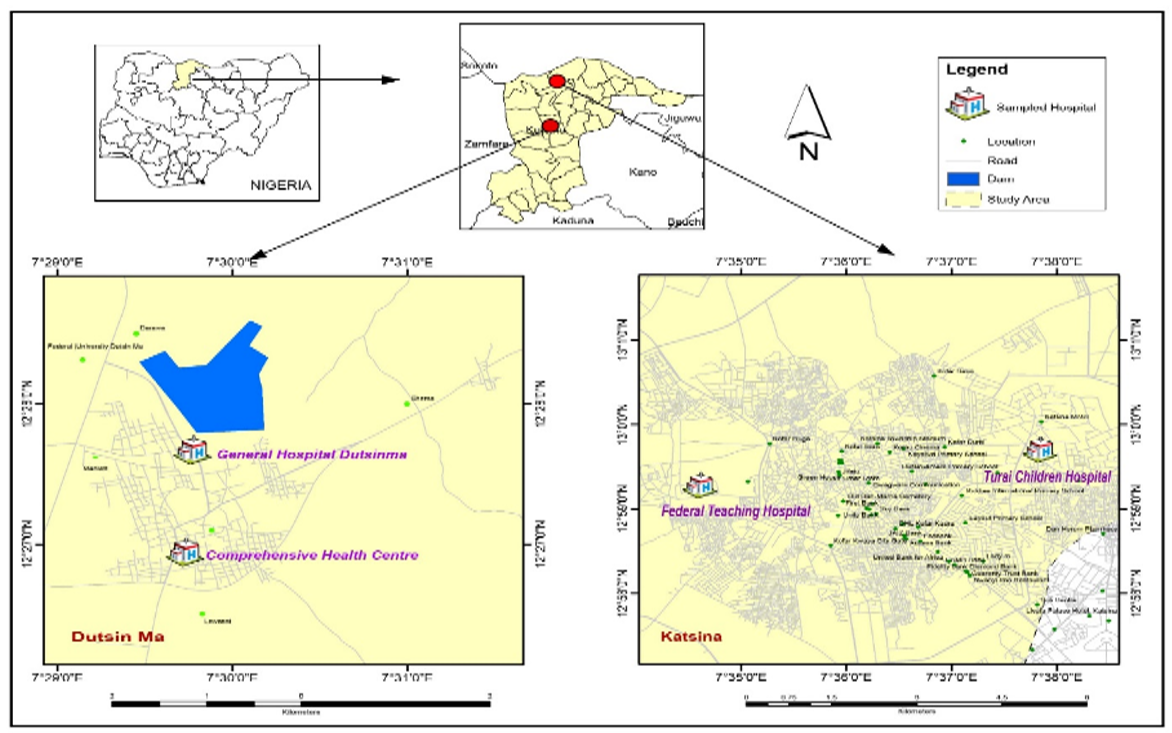
Multidrug resistance (MDR) in E. coli is an escalating public health threat, especially in clinical and maternity environments. A cross-sectional study was conducted across four healthcare facilities: General Hospital Dutsin-Ma, Comprehensive Healthcare Centre (CHC) Dutsin-Ma, Federal Teaching Hospital Katsina (FTHK), and Turai Children and Maternity Hospital (TCMH). A total of 120 swab samples were taken from 24 different environmental surfaces and equipment, including clinical devices, furniture, and wet utilities. Gram staining, biochemical test and cultural techniques were used to identify the isolates using standard methods. Antimicrobial susceptibility testing was carried out using Kirby-Bauer disc diffusion method. The results showed that E. coli recovery was found only on the wet utilities at CHC (n=3, 50.0%) and TCMH (n=3, 50.0%), with no bacterial recovery noted at General Hospital or FTHK. In total, sinks accounted for 50.00% (n=3) of the isolated bacteria, followed by toilet seats at 33.33% (n=2) and floors at 16.67% (n=1); clinical tools and direct care equipment showed no bacterial growth. All isolates were confirmed as E. coli through the amplification of the uidA gene. Notably, 66.67% (n=4) of the isolates were ESBL producers. Complete resistance to ciprofloxacin, erythromycin, amoxicillin-clavulanate, and cefoxitin was found among the isolates from CHC. All the isolates were susceptible to imipenem. MDR strains screened (n=2, 50.0%) carried both the blaTEM and blaCTX resistance genes. In conclusion, wet utilities, particularly sinks and toilet seats, serve as significant environmental reservoirs for ESBL-producing, MDR E. coli. There is need for targeted environmental decontamination strategies focusing on sanitary infrastructure
References
Adegboyega, H. O., Banjo, T. A., Deji-Agboola, A. M., Iwalokun, B., Mutiu, W. B., Osinupebi, O. A., & Omirin, E. S. (2025). Genotypic Detection of Antibiotic-Resistant Genes in Emerging Bacterial Pathogens from Neonatal Sepsis Patients in Lagos. bioRxiv, 1-6.
Ajekiigbe, V. O., Ogieuhi, I. J., Odeniyi, T. A., Ogunleke, P. O., Olatunde, J. T., Babalola, A. V., & Anthony, C. S. (2025). Understanding Nigeria’s antibiotic resistance crisis among neonates and its future implications. Discover Public Health, 22(1):1- 4.
Alabi, O. E. (2024). One health put into practice? An analysis of the Nigerian antimicrobial resistance policy, strategies and practices (Doctoral dissertation, Thammasat University). 1-122
Beshiru, A., Igbinosa, I. H., Akinnibosun, O., Ogofure, A. G., Dunkwu-Okafor, A., Uwhuba, K. E., & Igbinosa, E. O. (2024). Characterization of resistance and virulence factors in livestock-associated methicillin-resistant Staphylococcus aureus. Scientific Reports, 14(1), 13235.
Clinical and Laboratory Standards Institute (2022). Performance Standard for Antimicrobial Susceptibility Testing. 24th Informational Supplement. CLSI Document M100-S24, CLSI, Wayne, PA. pp 12-47
Dauda, A. M., (2016). Bacteriological analysis of wound infections in patients attending Ahmadu Bello University Teaching Hospital, Zaria, and Federal Medical Centre, Katsina, Nigeria. Journal of Medical and Applied Biosciences, 8(2), 1-8.
Dimri, A. G., Chaudhary, S., Singh, D., Chauhan, A., & Aggarwal, M. (2020). Morphological and biochemical characterization of food borne gram-positive and gram-negative bacteria. Science Archives, 1(1), 16-23.
Doi, Y., Iovleva, A., & Bonomo, R. A. (2017). The ecology of extended-spectrum β-lactamases (ESBLs) in the developed world. Journal of Travel Medicine, 24(suppl_1), S44-S51.
Edupuganti, U. P. R. (2021). Dual Control of One Component Signaling: Mechanistic and Structural Insights into EL222 Active States (Doctoral dissertation, City University of New York).
Egwuatu, T. O., Ogunrinde, O. G., Osibeluwo, B. V., & Osuagwu, C. S. (2023). Carbapenemase Genes in Gram-Negative Bacteria: Detection and Implications in Clinical Isolates from Patient Samples. Egyptian Academic Journal of Biological Sciences, 15(2): 13-25.
Elkady, M. A., Bakr, W. M., Ghazal, H., & Omran, E. A. (2022). Role of environmental surfaces and hands of healthcare workers in perpetuating multi-drug-resistant pathogens in a neonatal intensive care unit. European Journal of Pediatrics, 1-10.
Fagbamila, I. O., Umoh, J. U., Kwaga, J. K. P., Kabir, J., Abdu, P. A., Okolocha, E. C., & Bala, K. (2016). Molecular epidemiology, risk factors and assessment of antibiotic resistance of salmonellae in commercial layer farms in six selected states in Nigeria (Doctoral dissertation, Ph. D thesis: 79-84.
Feldmann-Jensen, S., DPPD, M., & O’Sullivan, T. (2024). Informing Adaptation with Lessons Learned from Key 21st Century Infectious Disease Outbreaks. Current and Emerging Trends in the Management of International Disasters. 1-10
Idris, S. (2021). Isolation and Characterization of Vancomycin Resistant Staphylococcus aureus from Wound Infections in Patients Attending Selected Hospitals in Minna, Niger State, Nigeria (Doctoral dissertation). 1-125
Iseghohi, F., Igwe, J. C., Galadima, M., Kuta, A. F., Abdullahi, A. M., & Chukwunwejim, C. R. (2020). Prevalence of extended spectrum beta-lactamases (ESBLs)-producing Escherichia coli isolated from UTI patients attending some selected hospitals in Minna, Nigeria. Nigerian Journal of Biotechnology, 37(2): 56-73.
Joseph, I. S., Okolo, I. O., Udenweze, E. C., Nwankwo, C. E., Peter, I. U., Ogbonna, I. P., & Iroha, I. R. (2023). Comparison of Antibiotic-Resistant Pattern of Extended Spectrum Beta-Lactamase and Carbapenem-Resistant Escherichia Coli Isolates from Clinical and Non-Clinical Sources. Journal of Drug Delivery & Therapeutics, 13(7):34-124
Kalpana, P., Trivedi, P., Bhavsar, P., Patel, K., Yasobant, S., & Saxena, D. (2022). Evidence of antimicrobial resistance from maternity units and labor rooms: a Water, Sanitation, and Hygiene (WASH) Study from Gujarat, India. Healthcare, 10 (4): 1-648
Lam, A. Y. T., Lau, C. H., Tam, W. Y., Chan, C. T. M., Lok, T. M., Suen, L. K. P., & Siu, G. K. H. (2025). Targeted probe capture metagenomics-enabled surveillance of multidrug-resistant organisms and antimicrobial resistance genes in post-handwashing areas of public washrooms. Environmental Microbiome, 20(1), 143.
Menegbo, E., & Johnbusco C. Ojiako, D. (2018). Geospatial mapping and analysis of public health care facilities in OBIO/AKPOR LGA, rivers state, Nigeria. International Journal of Advanced Geosciences, 6(2), 200-204. https://doi.org/10.14419/ijag.v6i2.13687
Milaham, M., Van Gurp, M., Adewusi, O. J., Okonuga, O. C., Ormel, H., Tristan, B., & Gidado, M. (2022). Assessment of tuberculosis case notification rate: spatial mapping of hotspot, coverage and diagnostics in Katsina State, north-western Nigeria. Journal of Public Health in Africa, 13(3): 1-6.
Mousum, T. (2021). Isolation and Identification of Escherichia coli and Salmonella from Drinking Water in and Around the Sau Campus (Doctoral dissertation, Department of Microbiology and Parasitology, Sher-E-Bangla Agricultural University, Dhaka). 150-176.
Musa, M., Aminu, S. B., Bakori, H. S., & Muhammad, Z. A. (2026). Prevalence and Public Health Threat of Multidrug-resistant Hospital-acquired Infections in Nigeria: A Comprehensive Review. South Asian Journal of Parasitology, 9(1), 52-66.
Odoyo, E., Matano, D., Tiria, F., Georges, M., Kyanya, C., Wahome, S., & Musila, L. (2023). Environmental contamination across multiple hospital departments with multidrug-resistant bacteria pose an elevated risk of healthcare-associated infections in Kenyan hospitals. Antimicrobial Resistance & Infection Control, 12(1):2-11.
Oladokun, R. E., Alao, M. A., Ogunbosi, B. O., Bello, O. E., Ude, I., Obasi, A., & Tongo, O. O. (2023). Trends in identification, etiology, and resistance profiles of bacterial isolates and appropriate therapy for neonatal sepsis in low-and middle-income countries: A narrative review. Current Pediatrics Reports, 11(4): 214-221.
Valzano, F., La Bella, G., Lopizzo, T., Curci, A., Lupo, L., Morelli, E., & Arena, F. (2024). Resistance to ceftazidime–avibactam and other new β-lactams in Pseudomonas aeruginosa clinical isolates: a multi-center surveillance study. Microbiology Spectrum. 12(8): 1-8 e04266-23.
WHO (2020). Antimicrobial resistance. World Health Organization. https://www.who.int/news-room/fact-sheets/detail/antimicrobial-resistance
WHO (2022). Global antimicrobial resistance and use surveillance system (GLASS) report 2023. Geneva: World Health Organization.
Downloads
Published
Issue
Section
Categories
License
Copyright (c) 2026 Sakinat Ifediorah, Abdullahi Anas, Mohammed Adamu Garga

This work is licensed under a Creative Commons Attribution 4.0 International License.


