
Hepatoprotective Effect of Cochlospermum planchonii Methanol Root Extract in Albino Rats
DOI:
https://doi.org/10.33003/fjs-2026-1018-6032Keywords:
Cochlospermum planchonii, Hepatoprotective, Toxicity, Phytochemicals, Albino Rats, Methanol ExtractAbstract
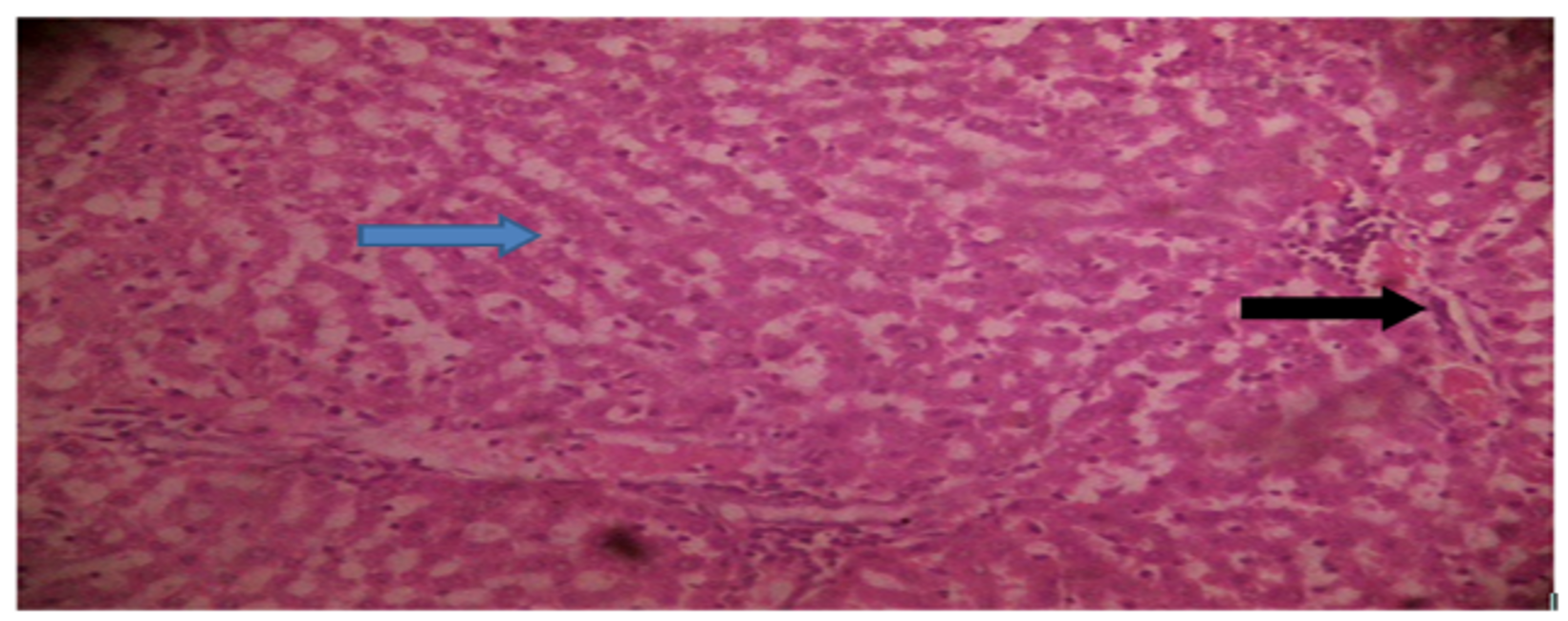
Across much of West Africa, root and rhizome decoctions of Cochlospermum planchonii are used to manage jaundice and other liver-related complaints, yet this folk use has not been widely tested under controlled experimental conditions. This study was designed to evaluate the hepatoprotective activity of methanol root extract of C. planchonii in albino rats, conducted between March to April 2026. Fresh roots were harvested, botanically authenticated, air-dried, and macerated in methanol to obtain the extract. Percentage yield was determined and a qualitative phytochemical screening was performed (Harborne, 1973; Trease and Evans, 1989). Acute oral toxicity was assessed at 5000 mg/kg. Thirty albino rats were assigned to six groups: a normal control, a disease (negative) control, a silymarin-treated positive control (1.07 mg/kg), and three extract-treated groups (100, 200, and 400 mg/kg body weight). Serum liver-function markers (AST, ALT, ALP, albumin, total protein, and total and direct bilirubin) were measured, and liver tissue was examined histologically. Data were analyzed by one-way ANOVA. Extraction yielded 11.54% of a dark-green, water-soluble concentrate containing tannins, flavonoids, alkaloids, cardiac glycosides, steroids, and saponins. No mortality occurred at 5000 mg/kg, placing the LD50 above this dose. AST was significantly elevated in the negative control and in the 100 and 200 mg/kg extract groups, whereas the 400 mg/kg group showed AST values comparable to the normal control; ALT and ALP did not differ significantly among groups. Histology showed better-preserved liver architecture and reduced inflammatory change in the extract-treated animals, most evident at 400 mg/kg.
References
Abdullahi, H., Musa, H., and Bello, S. (2021). Flavonoids as hepatoprotective agents: Mechanisms and therapeutic potential. Journal of Herbal Medicine, 27, 100425. https://doi.org/10.1016/j.hermed.2021.100425
Abubakar, M., Ibrahim, A., and Usman, B. (2020). Tannins in medicinal plants: Pharmacological and therapeutic importance. Phytochemistry Reviews, 19(6), 1235–1250. https://doi.org/10.1007/s11101-020-09699-4
Adebayo, A., Yusuf, M., and Kola, O. (2023). Phytochemicals in medicinal plants: Pharmacological and toxicological insights. Frontiers in Pharmacology, 14, 1156213. https://doi.org/10.3389/fphar.2023.1156213
Adepoju, T., Oladele, F., and Akinola, O. (2020). Steroids and bone metabolism: Implications for therapy. Clinical Reviews in Bone and Mineral Metabolism, 18(2), 45–54. https://doi.org/10.1007/s12018-020-09234-x
Barkat, M. A., Goyal, A., Barkat, H. A., Salauddin, M., Pottoo, F. H., and Anwer, E. T. (2021). Herbal medicine: Clinical perspective and regulatory status. Combinatorial Chemistry & High Throughput Screening, 24(10), 1573–1582.
Brooks, G. A., Arevalo, J. A., Osmond, A. D., Leija, R. G., Curl, C. C., and Tovar, A. P. (2022). Lactate in contemporary biology: a phoenix risen. The Journal of Physiology, 600(5), 1229–1251.
Burkill, H. M. (1985). The Useful Plants of West Tropical Africa (Vol. 1, 2nd ed.). Royal Botanic Gardens, Kew.
Chaudhary, S., and Rani, S. (2022). Saponins: Structure, properties, and applications in medicine. Journal of Ethnopharmacology, 293, 115292. https://doi.org/10.1016/j.jep.2022.115292
Dipika, R., Anupam, B., Brij, L., Om, P., Kumar, A., and Kr, U. S. (2021). Use of medicinal plants for treating different ailments by the indigenous people of Churah subdivision of district Chamba, Himachal Pradesh, India. Environment, Development and Sustainability, 23(2), 1162–1241.
Giannenas, I., Sidiropoulou, E., Bonos, E., Christaki, E., and Florou-Paneri, P. (2020). The history of herbs, medicinal and aromatic plants, and their extracts: Past, current situation and future perspectives. In Feed Additives (pp. 1–18).
Guntupalli, M. (2006). Hepatoprotective effects of rubiadin, a major constituent of Rubia cordifolia Linn. Journal of Ethnopharmacology, 103, 484–490
Hassani, M. (2022). Liver structure, function and its interrelationships with other organs: a review. International Journal of Dental and Medical Sciences Research, 4(1), 88–92.
Ibrahim, A., Abdullahi, S., and Bello, K. (2021). Alkaloids as pharmacological agents: Therapeutic prospects and challenges. Natural Product Communications, 16(8), 1–10. https://doi.org/10.1177/1934578X211037182
Jendrassik, L., and Grof, P. (1938). Colorimetric method of determination of bilirubin. Biochemische Zeitschrift, 297, 81–82.
Kumar, P., Singh, R., and Patel, A. (2022). Paracetamol-induced hepatotoxicity and protective effects of medicinal plants: A review. Journal of Pharmaceutical Biology, 60(1), 1–14. https://doi.org/10.1080/13880209.2022.2030000
Lorke, D. (2021). A new approach to acute toxicity testing. Journal of Pharmacological Methods, 22(2), 93–98. https://doi.org/10.1016/0160-5402(21)90013-7
Lowry, O. H., Rosebrough, N. J., Farr, A. L., and Randall, R. L. (1951). Protein measurement with the Folin phenol reagent. Journal of Biological Chemistry, 193(1), 265–275.
Mega, A., Marzi, L., Kob, M., Piccin, A., and Floreani, A. (2021). Food and nutrition in the pathogenesis of liver damage. Nutrients, 13(4), 1326.
Ojo, O., Adeyemi, A., and Lawal, B. (2021). Hepatoprotective effects of flavonoid-rich plant extracts against chemical-induced liver injury. Biomedicine and Pharmacotherapy, 139, 111666. https://doi.org/10.1016/j.biopha.2021.111666
Okeke, E., Nwankwo, C., and Uche, I. (2022). Cardiac glycosides in traditional medicine: Pharmacology and safety profile. Phytotherapy Research, 36(4), 1750–1765. https://doi.org/10.1002/ptr.7452
Organisation for Economic Co-operation and Development (OECD). (2001). Guideline for the testing of chemicals, Section 4: Health effects, Test No. 423 Acute oral toxicity: Acute toxic class method.
Patil, A. P., Patil, T. M., Shinde, A. R., Vakhariya, R. R., Mohite, S. K., and Magdum, C. S. (2021). Nutrition, lifestyle & immunity: Maintaining optimal immune function & boosting immunity. Asian Journal of Pharmaceutical Research and Development, 9(3), 129–136.
Patil, A., Deshmukh, R., and Kadam, V. (2021). Medicinal plants in hepatoprotection: Current insights. Journal of Herbal Medicine, 26, 100406. https://doi.org/10.1016/j.hermed.2020.100406
Recknagel, R. O., Glende, E. A., and Britton, R. S. (2020). Free radical damage and lipid peroxidation. In Hepatotoxicology (pp. 401–436). CRC Press.
Reitman, S., and Frankel, S. (1957). A colorimetric method for the determination of serum glutamic oxaloacetic and glutamic pyruvic transaminases. American Journal of Clinical Pathology, 28, 56–63.
Sood, R. (1999). Medical laboratory technology: Method and interpretation. Jaypee Brothers Medical Publishers, pp. 488–490.
Tabassum, N., and Agrawal, S. S. (2003). Hepatoprotective activity of Embelia ribes against paracetamol-induced acute hepatocellular damage in mice. JK Practitioner, 10(1), 43–44.
Thiagarajan, P., Parker, C. J., and Prchal, J. T. (2021). How do red blood cells die? Frontiers in Physiology, 12, 655393.
Trease, G. E., and Evans, W. C. (1989). Pharmacognosy (11th ed.). London: Bailliere Tindall.
Tujios, S., Stravitz, R. T., and Lee, W. M. (2022). Management of acute liver failure: update 2022. Seminars in Liver Disease, 42(3), 362–378.
Unsal, V., Cicek, M., and Sabancilar, İ. (2021). Toxicity of carbon tetrachloride, free radicals and role of antioxidants. Reviews on Environmental Health, 36(2), 279–295.
World Health Organization (WHO). (2021). Traditional medicine strategy. Retrieved from https://iris.who.int/handle/10665/92455
Xu, Y., Guo, W., Zhang, C., Chen, F., Tan, H. Y., Li, S., and Feng, Y. (2020). Herbal medicine in the treatment of non-alcoholic fatty liver disease, efficacy, action mechanism, and clinical application. Frontiers in Pharmacology, 11, 601.
Yousuf, S., Shabir, S., and Singh, M. P. (2023). Protection against drug-induced liver injuries through nutraceuticals via amelioration of Nrf-2 signaling. Journal of the American Nutrition Association, 42(5), 495–515.
Zhang, J., Guo, J., Yang, N., Huang, Y., Hu, T., and Rao, C. (2022). Endoplasmic reticulum stress-mediated cell death in liver injury. Cell Death & Disease, 13(12), 1051.
Downloads
Published
Issue
Section
Categories
License
Copyright (c) 2026 Hyeladzira Yusuf Bwala, Adeiza Emmanuel Samuel, Ada Gabriel, Joshua Habibah Danjuma, Abdulbasid Muhammad, Gachi Jamilu Abdullahi, Aishatu Usman Abubakar

This work is licensed under a Creative Commons Attribution 4.0 International License.


