
From Awareness to Financial Inclusion: Examining the Adoption Pathway of Digital Payment Systems and Mobile Money Among Farmers in Cross River State
DOI:
https://doi.org/10.33003/fjs-2026-1017-5977Abstract
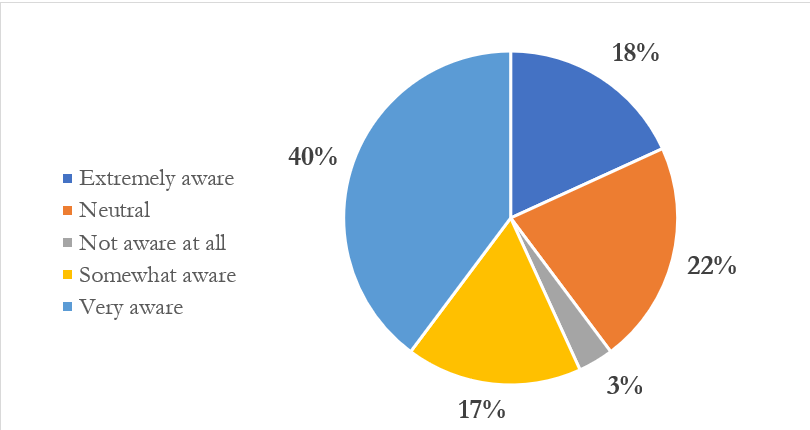
Financial inclusion remains a pressing challenge in rural Africa, where many smallholder farmers are still excluded from formal financial systems. This paper examined how digital payment systems influence financial inclusion among farmers in Cross River State, Nigeria, focusing on awareness, usage, and the impact of digital payment systems on inclusion. Survey data from 121 farmers were analyzed using descriptive statistics and a Propensity Score Matching (PSM) model. Results revealed that Awareness was relatively high (75%), though understanding differed with level of education attained. Adoption was uneven: 28 farmers reported moderate use, 25 frequent, 21 occasional, 13 very frequent, and 1 rare use. Logistic regression results, which preceded the PSM, showed that education, income, and loan access encouraged adoption, while farming experience and male gender reduced it. Propensity score matching estimated a 27% increase in financial inclusion among users of the payment systems. The findings also showed that digital payment systems are already expanding access to financial services among farmers, but their impact is uneven. Without improvements in infrastructure and literacy, existing inequalities may widen, leaving poorer and less educated farmers behind. Policymakers and financial providers can use this evidence to design targeted strategies that make digital finance more inclusive and responsive to rural realities. This study offers empirical evidence on the role of digital payment systems in expanding financial access for rural farmers, while drawing attention to the uneven benefits across socio-economic groups.
References
Adegbite, O. O., & Machethe, C. L. (2021). Revisiting the measurement of financial inclusion of rural smallholder farmers in Nigeria. Agricultural Finance Review, 81(4), 554-567. DOI: https://doi.org/10.1108/AFR-02-2021-0015
Agada, G. O., Achike, A. I., Chukwuone, N. A., & Omeje, J. E. (2023). Analysis of Impact of Financial Inclusion on Rural Farming Households in Nigeria: A Review. Nigerian Agricultural Policy Research Journal, 10(1), 65–76.
Ajah, E.A., Etowa, E.B., Effa, E.B., Ofem, U.I., Iso, H.E., Ettah, O.I., & Asuquo, I.A. (2024). Financial Inclusion of Agro-processors: Effect of Credit on Poverty Status of Roasted Plantain Vendors in Calabar, Nigeria. African Journal of Food, Agriculture, Nutrition and Development, 24(2): 25468-25488.
Aker, J. C., & Mbiti, I. M. (2010). Mobile Phones and Economic Development in Africa. Journal of Economic Perspectives, 24(3): 207–232.
Atta-Aidoo, J., Antwi-Agyei, P., Dougill, A.J., Ogbanje, C.E., Akoto-Danso, E.K., & Eze, S. (2022). Adoption of Climate-smart Agricultural Practices by Smallholder Farmers in Rural Ghana: An Application of the Theory of Planned. PLOS Climate, 1(10): 1-18.
Beck, R., Jakubik, P., & Piloiu, A. (2015). Key Determinants of Non-Performing Loans: New Evidence from a Global Sample. Open Economic Review, 26: 525-550. DOI 10.1007/s11079-015-9358-8
Central Bank of Nigeria (CBN) (2024). Data and Statistics. Available online at https://www.cbn.gov.ng
Central Bank of Nigeria. (2022). National Financial Inclusion Strategy 3.0(NFIS 3.0)| Policy.ng. Available online at https://www.cbn.gov.ng/policy.ng
Cross River State Government. (2024). Official website of Cross River State Government.
Demirgüç-Kunt, A., Klapper, L., Singer, D., & Ansar, S. (2022). The Global Findex Database 2021: Financial Inclusion, Digital Payments, and Resilience in the Age of COVID-19. World Bank, Washington, DC
Enhancing Financial Innovation & Access (EFInA). (2023). Access to financial services in Nigeria 2023 survey – Key highlights.
Enhancing Financial Innovation & Access EFInA). (2016). Access to Financial Services in Nigeria 2016 Survey
Fowowe, B. (2020). The Impact of Financial Inclusion on Agricultural Productivity in Nigeria. African Development Review, 32(4), 496–508.
Global System for Mobile Communications Association (GSMA). The Mobile Economy 2023. Available online at https://www.gsmaintelligence.com.
Jack, W., & Suri, T. (2014). Risk Sharing and Transaction Costs: Evidence from Kenya's Mobile Money Revolution. American Economic Review, 104(1), 183–223.
Jack, W., & Suri, T. (2016). The Economics of M-PESA. National Bureau of Economic Research Working Paper No. 16721.
Khatun, M.N., Sarker, N.I. & Mitra, S. (2024). Adoption Of Mobile Banking to Promote Financial Inclusion Among Rural Farming Communities: Drivers and Satisfaction Level Perspective. Journal of Agriculture and Food Research, 18 (10):14-48.
National Population Commission. (2023). Nigeria’s Population Report 2023, Abuja, Nigeria.
Nigerian Bureau of Statistics. (2024). National Bureau of Statistics, Abuja, Nigeria.
Okeke, T.C. & Eze, G.A. (2018). Exploring Mobile Money Adoption Among the Informal Sector in Anambra State, Nigeria. International Journal of Development and Sustainability, 7(12):2927-2942.
Olowa, O. W., & Olowa, O. A. (2022). Determinants of Adoption of Mobile Financial Service in Rural Nigeria: Evidence from Ogun State. Farm Economist, 22(2), 100-110.
Oluwatayo, I. B. (2013). Mobile Phones as a tool for Financial Inclusion Among Farming Households in Rural Southwest Nigeria. Journal of Agricultural and Food Information, 14(1), 90–101.
Otitoju, M. A., Adelere, O. E., Akinbola, A. O., & Abah, E. G. (2023). Implications of Digital Financial Inclusion for Smallholder Farmers in Nigeria: A Review. International Journal of Social Science and Humanities Research, 11(3), 152-157.
Sekabira, H., & Qaim, M. (2017). Mobile Money, Agricultural Marketing, and Off-farm Income in Uganda. Agricultural Economics, 48(5), 597-611.
Siano, A., Raimi, L., Palazzo, M. & Panait, M.C. (2020). Mobile Banking: An Innovative Solution for Increasing Financial Inclusion in Sub-Saharan African Countries: Evidence from Nigeria. Sustainability, 12(23): 1-24
Sodipo, J.A., Ikue, N.J., Zeb-Omoni, S., Uche, O.I., Enegesi, L.B., Taenyi, E.R., Ekuase, E.M., Simeon, M., Alalibo, B.G. (2021). Mobile Money Operations, Financial Inclusion, and Socioeconomic Factors in the Niger-Delta Region of Nigeria. International Journal of Research in Business & Social Science, 10(5), 224–234.
Suri, T., Jack, W., & Stoker, T. M. (2012). Documenting the Birth of a Financial Economy. Proceedings of the National Academy of Sciences USA, 109(26), 10257-10262.
United Nations -UN (2015). The 17 Goals- Sustainable Development Goals. Available online at https://sdgs.un.org
World Bank. (2024). Financial inclusion overview. Washington, DC
Downloads
Published
Issue
Section
Categories
License
Copyright (c) 2026 Innocent Asuquo, Innocent Eyong

This work is licensed under a Creative Commons Attribution 4.0 International License.