Terpenoid Profiling, Biological Activity, Biodegradability and Toxicological Evaluation of Euphorbia kamerunica Pax and Euphorbia poisonii Pax Extracts
DOI:
https://doi.org/10.33003/fjs-2026-1017-5913Keywords:
acetylcholinesterase, biodegradability, Euphorbia kamerunica, Euphorbia poisonii, terpenoids, GC-MSAbstract
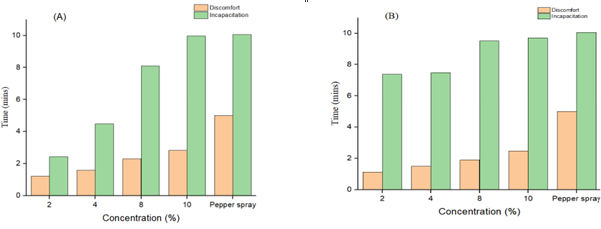
Conventional synthetic antiriot agents are effective, toxic and environmentally persistent, giving rise to the need to search for renewable and potentially biodegradable alternatives whose biological activity and toxicological profiles require systematic evaluation that can be derived from natural sources. Plant-based phytochemicals, such as alkaloids, phenolics and terpenoids from our flora have been reported as useful alternatives to synthetic incapacitating agents. In this study, the terpenoidal contents of the aerial parts of Euphorbia kamerunica Pax and stems of Euphorbia poisonii Pax were investigated for their composition, antiriot potential, acetylcholinesterase (AChE) inhibitory activity, biodegradability and toxicological profiles. . Statistically significant differences were determined using one-way analysis of variance (ANOVA), followed by Tukey-Kramer post-hoc comparison at p < 0.05. Profiling and quantification of crude chloroform extracts of Euphorbia kamerunica (Ek) and Euphorbia poisonii (Ep) using gas chromatography-mass spectrometry revealed a significant mixture of sesquiterpenoids (55.25%) and triterpenoids (43.58%) in Ek and significant presence of sesquiterpenoids (96 %) in Ep. Evaluation of the antiriot potential of each extract at varying concentrations (2-10%) using the spray-induced discomfort and incapacitation model revealed that activity for both extracts was dose-dependent and compared favourably well with that of commercial pepper spray (3%) at 10%. Forty-five male mice were used for the study and randomly assigned into nine groups of five animals each.
References
Abbas, M. A. (2020). Modulation of TRPV1 channel function by natural products in the treatment of pain. Chemico-Biological Interactions, 330, 109178. https://doi.org/10.1016/j.cbi.2020.109178
Agatonovic-Kustrin, S., Gegechkori, V., Mohammed, E. U. R., Ku, H., & Morton, D. W. (2022). Isolation of bioactive pentacyclic triterpenoid acids from olive tree leaves with flash chromatography. Applied Sciences, 12(3), 996. https://doi.org/10.3390/app12030996
Alara, O. R., Abdurahman, N. H., & Ukaegbu, C. I. (2021). Extraction of phenolic compounds: A review. Current Research in Food Science, 4, 200–214. https://doi.org/10.1016/j.crfs.2021.03.011
Andrei, C., Zanfirescu, A., Nițulescu, G. M., Olaru, O. T., & Negreș, S. (2023). Natural Active Ingredients and TRPV1 Modulation: Focus on Key Chemical Moieties Involved in Ligand–Target Interaction. Plants, 12(2), 339. https://doi.org/10.3390/plants12020339
Ashwaq T. Althobaiti. (2023). Taxonomic Studies on Family Euphorbiaceae Based on Some Morphological, Biochemical and Molecular Characteristics. Journal of Advanced Zoology, 44(S6), 1801–1823. https://doi.org/10.17762/jaz.v44iS6.2621
Awe, F. E., Adeyemi, M. M., Yakassai, J. B., & Kolawale, E. A. (2023). Evaluation of Euphorbia poissoniipax for the formulation of an -incapacitating agent. Scientia Africana, 21(3), 145–152. https://doi.org/10.4314/sa.v21i3.12
Baba, R. T., Oluboyo, B. O., Egbebi, A. H., Aladodo, M., Soliu, M. A., AbdulRahman, A. O., Babatunde, S. K., Muhammed, T. O., & Yakubu, F. (2025). Acute and sub-acute toxicity studies of Euphorbia hirta on mice and Wistar rats. International Journal of Current Science Research and Review, 8(7), 3213–3220. https://doi.org/10.47191/ijcsrr/V8-i7-07
Habibi, M., Etemad, L., Balali-Mood, M., & Moshiri, M. (2024). Non-lethal weapons. In Encyclopedia of Toxicology (4th ed., pp. 957–970). Elsevier. https://doi.org/10.1016/B978-0-12-824315-2.00582-0
Bamps, D., Vriens, J., De Hoon, J., & Voets, T., (2021). TRP Channel Cooperation for Nociception: Therapeutic Opportunities. Annu. Rev. Pharmacol. Toxicol. 61, 655–677. https://doi.org/10.1146/annurev-pharmtox-010919-023238.
Benjamaa, R., Moujanni, A., Kaushik, N., Choi, E. H., Essamadi, A. K., & Kaushik, N. K. (2022). Euphorbia species latex: A comprehensive review on phytochemistry and biological activities.Frontiers in Plant Science, 13, 1008881. https://doi.org/10.3389/fpls.2022.1008881
Brown, J. L., Lyons, C. E., Toddes, C., Monko, T., & Tyshynsky, R. (2021). Re-evaluating tear gas toxicity and safety. Inhalation Toxicology, 33(6–8), 205–220. https://doi.org/10.1080/08958378.2021.1963887
Crowley, M., & Dando, M. R. (2022). Toxin and bioregulator weapons: Preventing the misuse of the chemical and life sciences. Palgrave Macmillan. https://doi.org/10.1007/978-3-031-10164-9
Crowley, M., & Dando, M. (2024). Regulation of toxins and bioregulators under the Chemical Weapons Convention and the Biological and Toxin Weapons Convention. Journal of Biosafety and Biosecurity, 6(2), 99–112. https://doi.org/10.1016/j.jobb.2024.03.003
De Oliveira Barbosa, C., & Câmara Neto, J. F. (2024). Turmeric and Alzheimer’s disease: Therapeutic effects of curcuminoids, curcumin, and turmerone. In M. Rai & C. M. Feitosa (Eds.), Curcumin and neurodegenerative diseases: From traditional to translational medicines (pp. 159–174). Springer Nature Singapore. https://doi.org/10.1007/978-981-99-7731-4_8
Dimitroglou, Y., Rachiotis, G., & Hadjichristodoulou, C. (2015). Exposure to the Riot Control Agent CS and Potential Health Effects: A Systematic Review of the Evidence. International Journal of Environmental Research and Public Health, 12(2), 1397–1411. https://doi.org/10.3390/ijerph120201397
Divekar, P.A., Narayana, S., Divekar, B.A., Kumar, R., Gadratagi, B.G., Ray, A., Singh, Achuit Kumar, Rani, V., Singh, V., Singh, Akhilesh Kumar, Kumar, A., Singh, R.P., Meena, R.S., & Behera, T.K., (2022). Plant Secondary Metabolites as Defense Tools against Herbivores for Sustainable Crop Protection. Int. J. Mol. Sci. 23, 269–285. https://doi.org/10.3390/ijms23052690.
Du, H., Yang, K., Yang, J., Wan, J., Pan, Y., Song, W., Xu, S., Chen, C., & Li, J. (2025). Euphorbia humifusa Willd. ex Schltdl. mitigates liver injury via KEAP1-NFE2L2-mediated ferroptosis regulation: Network pharmacology and experimental validation. Veterinary Sciences, 12(4), 350. https://doi.org/10.3390/vetsci12040350
Fadipe, L. A., Ajemba, C., Lawal, B. A., Ahmadu, A. A., & Ibikunle, G. F. (2020). Phytochemical and In-vivo Antimalarial Investigations of Dichrostachyscinerea (L.) Wight &Arn. (Fabaceae) Root Bark. Tropical Journal of Natural Product Research, 4(11), 1007–1014. https://doi.org/doi.org/10.26538/tjnpr/v1i4.5
Ferreira, D. C. M., Carneiro, C. R., Miranda Júnior, J. R., Coimbra, J. S. D. R., Pelissari, F. M., & de Oliveira, E. B. (2026). Environmental fate, biodegradation pathways, and phytotoxicological risks of biopolymer-based packaging: A critical review. Environmental Science and Pollution Research, 33(11), 4657–4676. https://doi.org/10.1007/s11356-026-37565-7
Fischer, M. J. M., Ciotu, C. I., & Szallasi, A. (2020). The Mysteries of Capsaicin-Sensitive Afferents. Frontiers in Physiology, 11, 554195. https://doi.org/10.3389/fphys.2020.554195
Fraga, B.M., Hernández, M.G., & Guillermo, R., (2022). Biotransformation of the diterpene 15β-hydroxy-18(4→3)-abeo-ent-kaur-4(19),16-diene by the fungus Fusarium fujikuroi Phytochemical Letters 50, 36–39. https://doi.org/10.1016/j.phytol.2022.05.003
Gao, N., Li, M., Wang, W., Liu, Z., & Guo, Y. (2024). The Dual Role of TRPV1 in Peripheral Neuropathic pain: Pain switches caused by its sensitization or desensitization. Frontiers in Molecular Neuroscience, 17, 1400118. https://doi.org/10.3389/fnmol.2024.1400118
Gheorghe, V., Gheorghe, C. G., Bondarev, A., & Somoghi, R. (2023). Ecotoxicity of o-Chlorobenzylidene Malononitrile (CBM) and Toxicological Risk Assessment for SCLP Biological Cultures (Saccharomyces sp., Chlorella sp., Lactobacillus sp., Paramecium sp.). Toxics, 11(3), 285. https://doi.org/10.3390/toxics11030285
International Council for Standardization in Haematology. (2023). Standard document on haematological parameters for liver and kidney function tests.
International Federation of Clinical Chemistry and Laboratory Medicine. (2023). IFCC reference intervals for biochemical parameters. http://ifcc.org
Izunya, A. M., Akpamu, U., Uzzi, H. O., Oaikhena, G. A., & Ujaddughe, O. M. (2024). Effects of ethanolic extract of Euphorbia hirta leaf on the biochemical parameters and histology of liver and kidney in rats. FUOYE Journal of Biomedical Research, 1(2), 148–158. https://fjbr.fuoye.edu.ng/index.php/public_html/article/view/25/18
Jozwiak, A., Sonawane, P.D., Panda, S., Garagounis, C., Papadopoulou, K.K., Abebie, B., Massalha, H., Almekias-Siegl, E., Scherf, T., & Aharoni, A., (2020). Plant Terpenoid Metabolism Co-opts a Component of the Cell Wall Biosynthesis Machinery. Nat. Chem. Biol. 16, 740–748. https://doi.org/10.1038/s41589-020-0541-x.
Kgosiemang, I. K. R., Lefojane, R., Adegoke, A. M., Ogunyemi, O., Mashele, S. S., & Sekhoacha, M. P. (2025). Pharmacological significance, medicinal use, and toxicity of extracted and isolated compounds from Euphorbia species found in Southern Africa: A review. Plants, 14(3), 469. https://doi.org/10.3390/plants14030469
Li, Q., Wang, L., Fu, Y., Lin, D., Hou, M., Li, X., Hu, D., & Wang, Z. (2023). Transformation of soil organic matter subjected to environmental disturbance and preservation of organic matter bound to soil minerals: A review. Journal of Soils and Sediments, 23(3), 1485–1500. https://doi.org/10.1007/s11368-022-03381-y
Li, Y., Zhang, J., & Chen, X. (2024). Microbial conversion of CO₂ to organic compounds. Energy & Environmental Science, 17(19), 7017–7034. https://doi.org/10.1039/D4EE02262A
Lima, E., & Medeiros, J. (2020). Terpenoid compounds in the latex of Euphorbia azorica from Azores. Biomedical Journal of Scientific & Technical Research, 26(1), 19680–19682. https://doi.org/10.26717/BJSTR.2020.26.004303
Lin, N., Kwarteng, L., Godwin, C., Warner, S., Robins, T., Arko-Mensah, J., Fobil, J.N., & Batterman, S., (2021). Airborne Volatile Organic Compounds at an E-waste Site in Ghana: Source apportionment, exposure and health risks. J. Hazard. Mater. 419, 126–140. https://doi.org/10.1016/j.jhazmat.2021.126353
Lu, Y., Tang, W., Zhang, H., Liu, J., & Zhong, S. (2024). Effect of hepatocyte damage in hepatic fibrogenesis of patients infected with Schistosoma japonicum. Infection and Immunity, 92(6), e00026-24. https://doi.org/10.1128/iai.00026-24
Ma, W., Wang, H., Wang, Z., Chen, D., Yuan, L., Qin, L., & Mei, Z. (2024). Synthesis, Characterization and Irritant effects of nonivamide irritant riot control agent based on ionic liquids. Frontiers in Chemistry, 12, 1508396. https://doi.org/10.3389/fchem.2024.1508396
Miaffo, D., Kamgue, O. G., Kolefer, K., Dadaya, E., Mahamad, T. A., Maidadi, B., & Kamanyi, A. (2025). Acute and subacute toxicity of the aqueous extract of Cissus polyantha Glig and Bradt (Vitaceae) on biochemical and hematological parameters in Wistar rats. BMC Complementary Medicine and Therapies, 25(1), 288. https://doi.org/10.1186/s12906-025-05027-1
Noh, J.-W., Yoo, J.-H., & Lee, B.-C. (2024). Enhanced anti-obesity effects of Euphorbia kansui extract through macrophage and gut microbiota modulation: A real-world clinical and in vivo study. Pharmaceuticals, 17(9), 1131. https://doi.org/10.3390/ph17091131
Obiandu, C., Laz-Okenwa, J. O., Owhorji, B. I., Oriji, E. I., Tamuno-Opubo, A., & Asuzu-Samuel, H. O. (2023). Effects of extracts of Rhizophora mangle on some haematological parameters of Wistar rats. Asian Haematology Research Journal, 7(2), 51–56.
Organisation for Economic Co-operation and Development. (2017). Test No. 402: Acute dermal toxicity. OECD Guidelines for the Testing of Chemicals, Section 4. OECD Publishing. https://doi.org/10.1787/9789264070585-en
Oloninefa, S. D., Aisoni, J. E., Abalaka, M. E., Mohammed, N., & Na’inna, S. Z. (2023). Phytochemicals and haematological studies of aqueous crude extract of whole plant of Euphorbia heterophylla administered to Wistar albino rats. UMYU Journal of Microbiology Research, 8(2), 207–211. https://doi.org/10.47430/ujmr.2382.024
Orellana-Paucar, A. M. (2024). Turmeric essential oil constituents as potential drug candidates: A comprehensive overview of their individual bioactivities. Molecules, 29(17), 4210. https://doi.org/10.3390/molecules29174210
Patowary, P., Pathak, M.P., Zaman, K., Dwivedi, S. K., & Chattopadhyay, P., (2020). Innate inflammatory response to acute inhalation exposure of riot control agent oleoresin capsicum in female rats: An interplay between neutrophil mobilization and inflammatory markers. Exp. Lung Res. 46, 81–97. https://doi.org/10.1080/01902148.2020.1733709.
Praveen, G., Krishnamoorthy, K., Veeraraghavan, V.P., & Jayaraman, S., (2024). Antioxidant and Anti-Inflammatory Activity of the Ethanolic Extract of Euphorbia Hirta Leaf Extract: An In Vitro and In Silico Study. J. Pharm. Bio allied Sci. 16, 1304–1307. https://doi.org/10.4103/jpbs.jpbs_591_23.
Rani, L., Thapa, K., Kanojia, N., Sharma, N., Singh, S., Grewal, A. S., Srivastav, A. L., & Kaushal, J. (2021). An Extensive Review on the Consequences of Chemical Pesticides on Human Health and Environment. Journal of Cleaner Production, 283, 124657. https://doi.org/10.1016/j.jclepro.2020.124657
Rojas-Jiménez, S., Valladares-Cisneros, M.G., Salinas-Sánchez, D.O., Pérez-Ramos, J., Sánchez-Pérez, L., Pérez-Gutiérrez, S., & Campos-Xolalpa, N., (2024). Anti-Inflammatory and Cytotoxic Compounds Isolated from Plants of Euphorbia Genus. Molecules 29, 108–123. https://doi.org/10.3390/molecules29051083.
Rothenberg, C., Achanta, S., Svendsen, E. R., & Jordt, S. (2016). Tear gas: An Epidemiological and Mechanistic Reassessment. Annals of the New York Academy of Sciences, 1378(1), 96–107. https://doi.org/10.1111/nyas.13141
Schep, L.J., Slaughter, R.J., & McBride, D.I., (2023). Riot Control Agents: The Tear Gases CN, CS and OC: A medical review. J. R. Army Med. Corps 161, 94–99 https://doi.org/10.1136/jramc-2013-000165
Sidney, K.,& Harry, S., (2024). Incapacitating Agents and Technologies: A Review. Chem. Warf. Agents 3, 247–278.
Sultana, A., Hossain, M.J., Kuddus, M.R., Rashid, M.A., Zahan, M.S., Mitra, S., Roy, A., Alam, S., Sarker, M.M.R., & Naina-Mohamed, I., (2022). Ethnobotanical Uses, Phytochemistry, Toxicology, and Pharmacological Properties of Euphorbia neriifoliaLinn. against Infectious Diseases: A Comprehensive Review. Molecules 27, 43-74. https://doi.org/10.3390/molecules27144374
Sun, L., Wang, X.-M., Tang, Q., Xiao, Y., Xu, J.-B., Zhang, T.-T., Liu, Y.-J., Li, X., & Gao, F. (2024). Lathyrane and premyrsinane Euphorbia diterpenes against Alzheimer's disease: Bioinspired synthesis, anti-cholinesterase and neuroprotection bioactivity. Bioorganic Chemistry, 147, 107377. https://doi.org/10.1016/j.bioorg.2024.107377
Tanko, E., Dauda, B. E. N., Mann, A., Oyeleke, S. B., Fadipe, L. A., & Mathew, J. T. (2020). Phytochemical and antibacterial studies of Ensete gilletii (E. A. J. De Wildman) stem extract and fractions. Nigerian Research Journal of Engineering and Environmental Sciences, 5(1), 390–398.
Yang, L., Zou, Y., Jia, Z., Luo, Y., Qin, L., Jiang, M., & Yu, Z. (2025). Iron reduction promotes carbon mineralization and nutrient release of iron-associated organic matter in anoxic environments. Water Research, 284, 124032. https://doi.org/10.1016/j.watres.2025.124032
Yiannis, D., Rachiotis, G.,& Hadjichristodoulou, C., (2025). Exposure to the Riot Control Agent CS and Potential Health Effects: A Systematic Review of the Evidence. Int. J. Environ. Res. Public. Health 12, 1397–1411. https://doi.org/10.3390/ijerph120201397
Zhang, Q., Huang, S., Soladoye, O.P., Zhang, Y., & Fu, Y., (2024). Preparation, Pungency, and Bioactivity of Capsaicin: A Review. Int. J. Food Sci. Technol. 59, 6659–6687. https://doi.org/10.1111/ijfs.17291
Downloads
Published
Issue
Section
Categories
License
Copyright (c) 2026 Labake Ajoke Fadipe, Gideon Philip Azaki, Rahmat Suleiman, Modupe Munirat Adeyemi, Alexander Ikechukwu Ajai, Musa Bola Busari

This work is licensed under a Creative Commons Attribution 4.0 International License.