
Urinary Schistosomiasis in HIV Infected and Uninfected Women in Three Southern Local Government Areas of Adamawa State
DOI:
https://doi.org/10.33003/fjs-2026-1018-5609Keywords:
Urinary schistosomiasis, Schistosoma heamatobium, HIV/AIDS, WomenAbstract
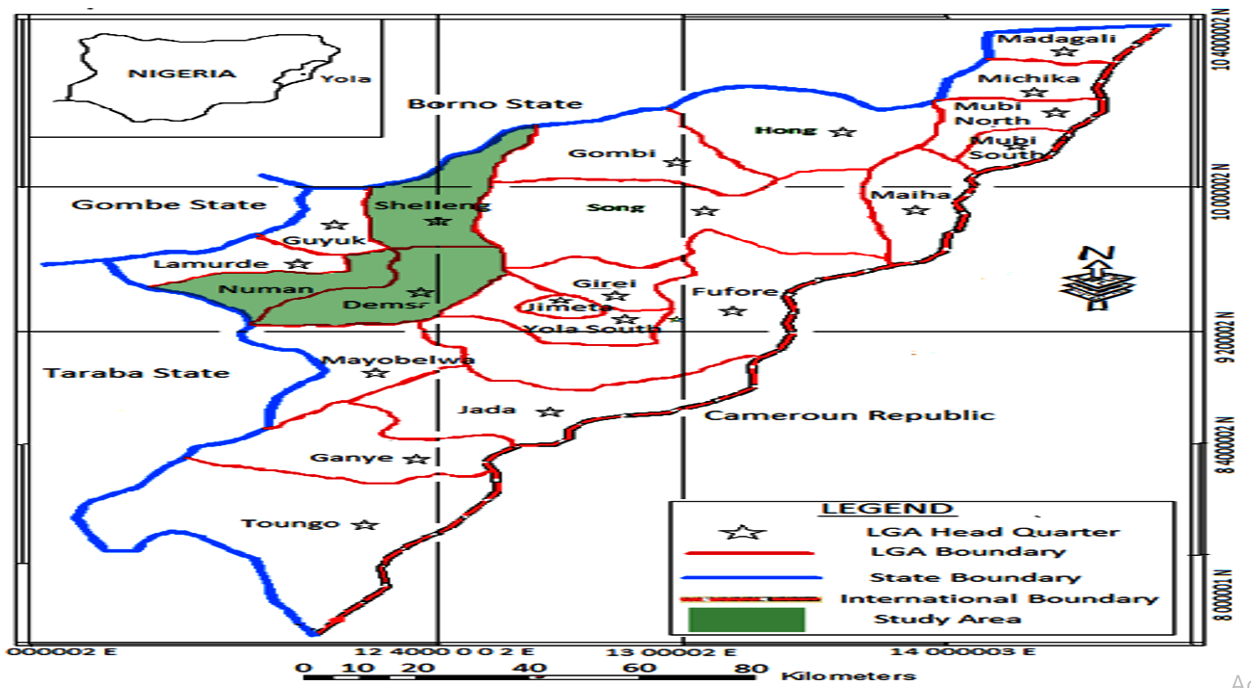
Urinary schistosomiasis is one of the major illnesses in the communities of Shelleng, Numan and Demsa LGAs. This cross-sectional community-based study was carried out to investigate the prevalence of urinary schistosomiasis in HIV infected and uninfected women between January and July2026.Structured questionnaires wereadministered to obtain socio-demographicdata, including age, educational status and marital status of the participants. A total of 423 urine samples (HIV infected 326, uninfected 97) urine samples were collected in sterile containers, packaged in a specimen box with ice packs, and taken to the Parasitology Laboratory, Zoology Department, Modibbo Adama University. Urine samples were analysed using the sedimentation (centrifugation) technique and examined microscopically to detect ova of Schistosomahaematobium. The overall prevalence of urinary schistosomiasis across the three study areas was 36.0%(153/423). The prevalence of urinary schistosomiasis was found to be highest among HIV uninfected women (43.9%) and lowest among the HIV infected women(10.3%) (P≤0.05).High infection burdens were particularly pronounced among HIV-uninfected participants residing in Numan(Bilachi), older adults aged 51 and above, secondary school students, and single individuals. In contrast, HIV-infected participants demonstrated lower overall prevalence, with the highest co-infection rates observed among older individuals, participants in Shelleng, secondary students, and married women. Statistical analysis confirmed that the differences across age, educational status, marital status, and location (Numan, Demsa, and Shelleng) in HIV-uninfected individualsare statistically significant(P<0.05), suggesting that HIV status may be a critical factor influencing the risk or susceptibility to urinary schistosomiasis co-infection, which is supported by distinct immunological mechanisms.
References
Abubakar, A., Chessed, G., & Birma, J. S. (2016). Prevalence of urinary schistosomiasis in communities around Kiri Lake, Shelleng Local Government Area, Adamawa State, Nigeria. International Journal of Research Studies in Biosciences, 4(3), 15–20.
Alexander, A., Sambo, E., &Gajere, J. J. (2026). Urogenital schistosomiasis among primary school children in Nman Local Government Area of Adamawa State. Journal of Frontiers in Multidisciplinary Research, 1(1), 37–44. DOI: https://doi.org/10.5281/zenodo.12740263
Aliyu, H. (2024). Prevalence and risk factors of urinary schistosomiasis among school-aged children in Shawara and Bakwarga communities in Jigawa. Science World Journal, 19(2), 185–191.
Aribodor, O. B., Azugo, N. O., Jacob, E. C., Ngenegbo, U. C., Onwusulu, N. D., Obika, I., Obikwelu, E. M., &Nebe, O. J. (2024). Assessing urogenital schistosomiasis and female genital schistosomiasis (FGS) among adolescents in Anaocha, Anambra State, Nigeria: implications for ongoing control efforts. BMC Public Health, 24(1), Article 10988871. https://doi.org/10.1186/s12889-024-18378-0
Awosolu, O. B., Shariman, Y. Z., Haziqah, M. T. F., &Olusi, T. A. (2020). Prevalence, intensity, risk factors and knowledge assessment among some rural communities in Southwestern Nigeria. Pathogens, 9(2), 128.
Balla, H. J., &Babakena, M. (2015). Urinary schistosomiasis among residents of Kiri in Shelleng Local Government Area of Adamawa State, Nigeria. Journal of Medical and Applied Biosciences, 7(1), 12–21.
Birma, J. S., Chessed, G., Shadrach, P. A., Nganjiwa, J. I., Yako, A. B., Vandi, P., &Laurat, T. (2017). Urinary Schistosomiasis in Communities around Kiri Lake, Shelleng Local Government Area, Adamawa State, Nigeria. Journal of Applied Science Environmental Management, 21(1), 128–134.
Birma, J.S., Chessed, G., Shadrach, P.A., Nganjiwa, J.I., Yako, A.B., Vandi, P., &Laurat, T. (2017). Urinary Schistosomiasis in Communities around Kiri Lake, Shelleng Local Government Area, Adamawa State, Nigeria. Journal of Applied Science Environmental Management,21 (1): 128-134. https://doi.org/10.4314/jasem.v21i1.14
Brodish, P. H., & Singh, K. (2016). Study on S. haematobium and HIV in Mozambique. The American Journal of Tropical Medicine and Hygiene 94(5), 1040-1044.
Brodish, P. H., & Singh, K. (2016). Study on S. haematobium and HIV in Mozambique. The American Journal of Tropical Medicine and Hygiene, 94(5), 1040–1044.
Cheesbrough, M. (2006). Medical Laboratory Manual for Tropical Countries. 2nd Ed. Cambridge University Press, London, pp. 323–341.
Colley, D. G., Bustinduy, A. L., Secor, W. E., & King, C. H. (2014). Human schistosomiasis. Lancet 383(9936), 2253–2264. https://doi.org/10.1016/S0140-6736(13)61949-2
Colley, D. G., Bustinduy, A. L., Secor, W. E., & King, C. H. (2014). Human schistosomiasis. The Lancet, 383(9936), 2253–2264.
Ekpo, U. F., Hurliman, E., Schur, N., Oluwole, A. S., Abe, E. M., Mafe, M.A., Nebe, O.J., Isiyaku, S., Olamiju, F., Kadiri, M., Poopola, T.O.S., Braide, E.I., Saka, Y., Mafiana, C. F., Kristensen, T.K., Utzinger, J., and &Vounatsou, P. (2013). Mapping and prediction of schistosomiasis in Nigeria using compiled survey data and Bayesian geospatial modelling. Geospatial Health 7(2), 355-366.
Ekpo, U. F., Hurlimann, E., Schur, N., Oluwole, A. S., Abe, E. M., Mafe, M. A., Nebe, O. J., Isiyaku, S., Olamiju, F., Kadiri, M., Popoola, T. O. S., Braide, E. I., Saka, Y., Mafiana, C. F., Kristensen, T. K., Utzinger, J., &Vounatsou, P. (2013). Mapping and prediction of schistosomiasis in Nigeria using compiled survey data and Bayesian geospatial modelling. Geospatial Health, 7(2), 355–366.
Ekpo, U. F., Odeyemi, O. M., Sam-Wobo, S. O., Onunkwor, O. B., Mogaji, H. O., Oluwole, A. S., Abdussalam, H. O., & Stothard, J. R. (2017). Female Genital Schistosomiasis (FGS) in Ogun State: A pilot survey of genital symptoms and clinical findings. Parasitology Open, 3, e10.
Ekpo, U.F., Odeyemi, O.M., Sam-Wobo, S.O., Onunkwor, O.B., Mogaji, H.O., Oluwole, A.S., Abdussalam, H.O., & Stothard, J.R. (2017). Female Genital Schistosomiasis (FGS) in Ogun State: A pilot survey of genital symptoms and clinical findings. Parasitology Open, 3(10). https://doi.org/10.1017/pao.2017.11
Hotez, P. J., Harrison, W., Fenwick, A., Bustinduy, A. L., Ducker, C., Mbabazi, P. S., Engels, D., & Kjetland, E. F. (2019). Female genital schistosomiasis and HIV/AIDS: Reversing the neglect of girls and women. PLOS Neglected Tropical Diseases, 13(4), e0007025.
Houmsou, R. S., Amuta, E. U., Sar, T. T., &Adagba, D. N. (2017). Epidemiological study of schistosomiasis in Numan Local Government Area of Adamawa State, Nigeria. IOSR Journal of Pharmacy and Biological Sciences, 12(5), 53–57. https://doi.org/10.9790/3008-1205055357
Karuga, R., Ouma, M., Mulupi, S., Pillay, L., Pensotti, C., Gamba, V., Kalume, C., Schlosser, D., Umbelino-Walker, I., Tabiita, R., Wakesho, F., Nawari, P., Jeckonia, P., Owiti, T., Njaanake, K., Ndupa, H., Auinde, J., Mugoha, N., Mafimbo, N., Leli, H., Ndenge, A., Otiso, L., & Jacobson, J. (2025). Acceptability and feasibility of integrating female genital schistosomiasis and sexual and reproductive health interventions in Kenya: A demonstration study. PLOS Global Public Health, 5(9), e0004938.
Kjetland, E. F., Ndhlovu, P. D., Mduluza, T., Gomo, E., Gwanzura, L., Mason, P.R., Kurewa, E.N., Midzi, N., Friis, H., & Gundersen, S.G. (2005). Simple clinical manifestations of genital Schistosoma haematobium infection in rural Zimbabwean women. American Journal of Tropical Medicine and Hygiene 72(3), 311-319. https://doi.org/10.4269/ajtmh.2005.72.311 / 15764645.
Matee, M.I., Mbwambo, J.K., &Lwambo, N.J. (2021). Prevalence and risk factors associated with schistosomiasis among women living with HIV/AIDS in lower Moshi, Kilimanjaro, Tanzania. Population Medicine, 3, 164. https://doi.org/10.18332/popmed/164635
Mijah, A. K., Jerry, J. T., Solomon, A., Abdulrasheed, M. H., & Agere, H. I. J. (2024). Prevalence and Correlates of Intestinal Parasitic Infections in Demsa Local Government Area, Adamawa State, Nigeria. African Journal of Medical and Health Sciences, 3(1), 45–56.
Naphtali, R. S., &Ngwamah, A. (2019). Prevalence and intensity of urinary schistosomiasis among residents: A case study in River Benue, Adamawa State, North Eastern Nigeria. Asian Journal of Research in Zoology, 2(2), 1–10.
Nwokedi, E. E., Olanipekun, A., Omoregie, R., & Okeke, O. (2011). Proportion of urinary schistosomiasis among HIV-infected subjects in Benin City, Nigeria. Journal of Research in Medical Sciences, 16(3), 328–331. DOI: https://doi.org/10.1016/S1995-7645(11)60088-3
Nwosu, D. C., Obeagu, E. I., Ozims, S. J., Ezeama, M. C., &Uduli, H. I. (2015). Prevalence of urinary schistosomiasis infection among primary school pupils in Ezza-North Local Government Area, Ebonyi State, Nigeria. International Journal of Current Microbiology and Applied Sciences, 4(5), 329–335.
Okwori, E. E., & Alao, O. O. (2014). Prevalence of urinary schistosomiasis among AIDS patients in Otukpo, Benue State, Nigeria. Asian Pacific Journal of Tropical Disease, 4(2), 122–125. DOI: https://doi.org/10.1016/S2222-1808(14)60327-0
Onile, O.S., Anumudu, C.I., &Agbalaya, O.O. (2011). Proportion of urinary schistosomiasis among HIV-infected subjects in Benin City, Nigeria. Oman Medical Journal, 26(6), 448–450. https://doi.org/10.5001/omj.2011.112
Osinoiki, O., Imhansoloeva, M., Oluwole, A. S., Nebe, O. J., Irinyenikan, T. A., Abdussalam, H. O., Olatunji, G., Jacob, S. M., Dogo, E., Madaki, S., Babalola, O., Gulumbe, F. A., Ntuen, G. U., Urude, O. R., Augustine, V. S., Umah, I. O., Jeyam, A., Shuaibu, J., Schmidt, E., & Selby, R. (2025). The burden and risk factors of female genital schistosomiasis in two schistosomiasis-endemic states of Nigeria. International Health, 17(1), i73–i82.
Otuneme, O. G., Ojurongbe, O., Ouefio, A. S., Akindele, A. A., &Ojurongbe, T. A. (2019). Prevalence of schistosomiasis in a neglected community, South Western Nigeria. African Health Sciences, 19(3), 2390–2398. DOI: https://doi.org/10.4314/ahs.v19i3.12
Patel, P., Rose, C. E., Kjetland, E. F., Downs, J. A., Mbabazi, P. S., Sabin, K., Chege, W., Watts, D. H., & Secor, W. E. (2021). Association of schistosomiasis and HIV infections: A systematic review and meta-analysis. International Journal of Infectious Diseases, 102, 544–553.
Tidi, S. K., Akogun, O. B., &Akogun, M. O. (2015). Urinary schistosomiasis among residents of Kiri in Shelleng Local Government Area of Adamawa State, Nigeria. Journal of Environmental Toxicology and Public Health, 1, 18–24. DOI: https://doi.org/10.5281/zenodo.218250
Ugbomoiko, U. S., Dalumo, V., Ofoezie, I. E., &Heukelbach, J. (2019). Socio-environmental factors associated with urinary schistosomiasis in two neighboring endemic communities in Osun State, Nigeria. Parasite, 26, Article 4. DOI: https://doi.org/10.1051/parasite/2019004
Usman A., Eberemu, N C, & Orpin, J.B. (2025). Epidemiology study of Schistosomiasis and its Associated risk factors among primary pupils in Jibia local government area of Katsina state Nigeria. FUDMA Journal of Sciences(FJS), Vol 9(5), pp 56-60.,
World Health Organisation. (2022, February 1). Schistosomiasis. World Health Organisation. https://www.who.int/news-room/fact-sheets/detail/schistosomiasis
Yaro, M. B., Naphtali, R. S., & Alo, E. B. (2020). Prevalence and intensity of urinary schistosomiasis among residents along River Benue, Adamawa State, Nigeria. Nigerian Journal of Pure and Applied Sciences, 33(1), 3583–3591. DOI: https://doi.org/10.48198/NJPAS/19.B07
Downloads
Published
Issue
Section
Categories
License
Copyright (c) 2026 Ruth Sami, Chessed Godly, Joseph Maitandu Manu, Buduwara Jibril Hamman, Abdullahi Aliyu Isah, Lewi Mariah Tafem

This work is licensed under a Creative Commons Attribution 4.0 International License.


