
PREVALENCE AND RISK FACTORS ASSOCIATED WITH INTESTINAL HELMINTH INFECTIONS AMONG SCHOOL CHILDREN IN ADAMAWA CENTRAL ZONE, NIGERIA
DOI:
https://doi.org/10.33003/fjs-2026-1004-4468Keywords:
Soil-transmitted helminths, risk factors, hygiene, sanitation, school children, Adamawa Central ZoneAbstract
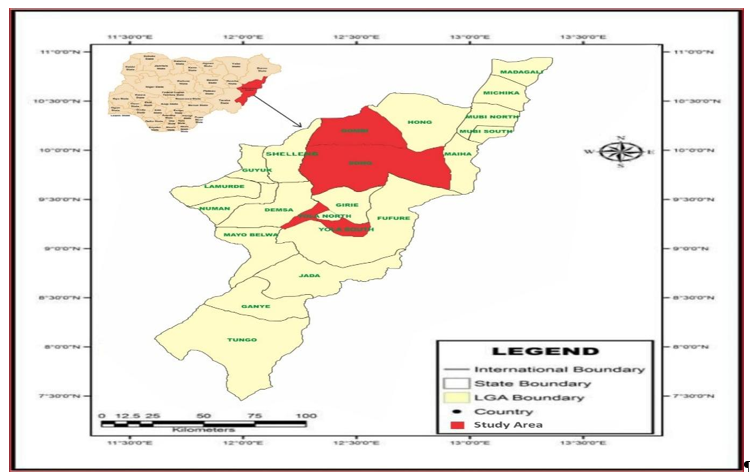
Intestinal helminth infections continue to pose substantial public health challenges in many parts of Nigeria, particularly in rural and peri-urban communities with inadequate sanitation and unsafe water sources. This study investigated behavioural and environmental risk factors associated with intestinal helminth infections among 1,496 school-aged children in Adamawa Central Zone. Stool samples were examined using the formol-ether concentration technique, while structured questionnaires assessed sanitation practices, water sources, hygiene habits, and household environmental conditions. A total of 578 pupils were infected, representing an overall prevalence of 38.6%. Significant associations were observed between infection and sanitation facility used, source of drinking and cooking water, handwashing practices, nail trimming, wearing of shoes, standing water around homes, domestic animal ownership, and proximity to health facilities (p < 0.05). River/stream water users, children practicing open defecation, and those with poor hygiene practices exhibited higher infection burdens. These findings underscore the importance of integrating mass deworming with improvements in water, sanitation, hygiene (WASH), environmental management, and community health outreach to achieve sustainable reduction in transmission.
References
Abah, A. E., & Arene, F. O. (2015). Status of intestinal parasitic infections among primary school pupils in Rivers State, Nigeria. Nigerian Journal of Parasitology, 36(1), 65–70.
Adebayo, A. A., & Tukur, A. L. (1999). Adamawa State in maps. Paraclete Publishers.
Adeleke, M. A., Olafimihan, O., & Dairo, M. D. (2023). Footwear behaviour and hookworm prevalence in endemic communities. International Journal of Infectious Diseases, 131, 150–156.
Adeoye, G. O., & Akinsanya, B. (2023). Anthropogenic factors influencing soil-transmitted helminth distribution in Nigeria. Pan African Medical Journal, 46, 52.
Ahmed, A., Musa, J., & Umar, K. (2024). Environmental determinants of helminth transmission in northern Nigeria. Journal of Tropical Medicine and Parasitology, 25(1), 33–42.
Ajayi, I. O., & Adebayo, A. M. (2022). Water sources and intestinal parasitic infections in southwestern Nigeria. Journal of Public Health in Africa, 13, 2065.
Akinbo, F. O., Adeleke, O. C., & Omoregie, R. (2023). Influence of hygiene behaviour and environment on intestinal helminths. Heliyon, 9, e14256.
Asaolu, S. O., & Ofoezie, I. E. (2003). The role of sanitation in the control of soil-transmitted helminths. Acta Tropica, 86, 283–294.
Awoleye, S. A., & Olatunji, O. P. (2025). Epidemiological overview of helminthiasis in northern Nigeria. Nigerian Journal of Parasitology, 45(1), 89–98.
Bethony, J., Brooker, S., Albonico, M., Geiger, A., Loukas, A., & Diemert, D. (2006). Soil-transmitted helminth infections: Ascariasis, trichuriasis, and hookworm. The Lancet, 367, 1521–1532.
Blanchard, A., Guégnard, F., Charvet, C., et al. (2018). Cholinergic anthelmintic sensitivity in nematodes: Differences between Caenorhabditis elegans and parasitic species. PLoS Pathogens, 14(2), e1006854.
Brooker, S., Bethony, J., & Hotez, P. (2006). Human hookworm infection in the 21st century: Epidemiology, impact, and control. The Lancet, 367, 1521–1532.
Eke, S. S., Nwosu, A. B., & Ifeanyi, C. (2021). Relationship between domestic animals and transmission of helminths among children. Parasitology International, 83, 102375.
Ekpenyong, E. A., & Dike, A. (2022). Water quality and helminth infection prevalence among rural dwellers in Nigeria. Environmental Health Insights, 16, 1–10.
Eyo, J. E., & Iboh, C. I. (2021). Health hygiene behaviour and intestinal parasitism in rural schoolchildren. Journal of Parasitology Research, 2021, 6654328.
Gebrezgabiher, G., Mekonnen, Z., & Erko, B. (2024). Epidemiology of soil-transmitted helminths in East Africa: A systematic review. Parasite Epidemiology and Control, 17, e00245.
Hotez, P. J., & Kamath, A. (2009). Neglected tropical diseases in sub-Saharan Africa: Review of soil-transmitted helminth burden. New England Journal of Medicine, 362, 777–779.
Montresor, A., Mupfasoni, D., & Mikhailov, A. (2021). Soil-transmitted helminth control in sub-Saharan Africa: Progress, challenges, and perspectives. PLoS Neglected Tropical Diseases, 15(6), e0009482.
Mupfasoni, D., & Montresor, A. (2022). Operational challenges in helminth control programs in Africa. Tropical Medicine & International Health, 27(11), 1084–1092.
Ngui, R., Wekesa, A., & Ajayi, A. O. (2023). Persistent burden of intestinal parasitic infections in Nigerian schoolchildren: A public health challenge. Journal of Infection and Public Health, 16(7), 1025–1033.
Nwaneri, A. C., & Ibeabuchi, M. N. (2023). Impact of water access on child health outcomes in Nigeria. African Journal of Environmental Science and Technology, 17(5), 201–210.
Ochei, K. C., Adamu, S., & Usman, R. (2022). Sanitary conditions and helminth infections among schoolchildren in northern Nigeria. Nigerian Journal of Parasitology, 43(1), 112–120.
Oluwole, A. S., Ekpo, U. F., & Karagiannis-Voules, D. A. (2015). Bayesian geostatistical modelling of helminth risk in Nigeria. Parasites & Vectors, 8, 427.
Oyewole, F., Ariyo, S., & Bolaji, O. (2023). Hygiene practices and intestinal parasitic infections among Nigerian schoolchildren. African Health Sciences, 23(1), 455–464.
Salawu, S. A., & Isa, A. Y. (2020). The role of health facilities in controlling parasitic infections in underserved communities. African Journal of Medicine and Medical Sciences, 49(3), 45–52.
Tchuem Tchuenté, L. A. (2024). Control strategies for helminth infections in Africa. Current Opinion in Infectious Diseases, 37(2), 105–112.
Udonwa, N. E., Etim, S. E., & Nkwocha, C. (2023). Sanitation-related determinants of geohelminth infections in rural communities of Nigeria. Nigerian Journal of Parasitology, 44(2), 305–314.
World Bank Global Road Safety Facility. (2023). Understanding WASH challenges in West Africa. World Bank.
World Health Organization. (2022). Preventive chemotherapy in human helminthiasis. World Health Organization.
World Health Organization. (2023). Soil-transmitted helminth infections: Key facts. World Health Organization.
Downloads
Published
Issue
Section
Categories
License
Copyright (c) 2026 Patricia Oseamehon, Mahamud Abdul Qadeer, Chessed Godly

This work is licensed under a Creative Commons Attribution 4.0 International License.


