
Microplastic Contamination in Edible Tissues of Broiler and Free -Range Chickens (Gallus gallus domesticus) from Nigeria: Polymer and Morphological Characterisation Using ATR-FTIR and SEM with Comparison of KOH and Fenton Digestion Protocols
DOI:
https://doi.org/10.33003/fjs-2026-1015-5607Keywords:
Microplastics, Emerging Contaminant, Fenton Oxidation, KOH Digestion, Food Safety, Poultry TissuesAbstract
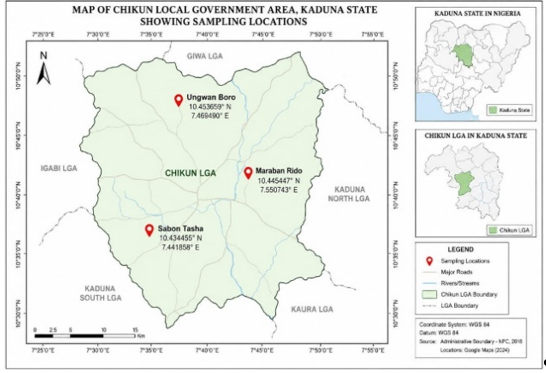
Microplastic (MP) contamination of commercially consumed poultry tissues represents an emerging but poorly characterized food safety risk, particularly in sub-Saharan Africa where plastic waste management infrastructure is severely inadequate. This study aims to identify and characterize MPs from liver, heart, and breast muscle of broiler and local chickens (Gallus gallus domesticus) in Chikun LGA, Kaduna State, Nigeria using ATR-FTIR and SEM, compare KOH and Fenton digestion efficiency, A total of 30 samples (liver, heart and muscle) from ten chickens were processed using two independent digestion protocols: Alkaline (10% w/v KOH) and Fenton oxidative (H2O2/Fe2+), each applied to separate samples across three tissues. Isolated particles were characterized by Attenuated Total Reflectance Fourier Transform Infrared (ATR-FTIR) spectroscopy and Scanning Electron Microscopy (SEM). ATR-FTIR identified five polymer types: polyethylene (PE) at 63.2%, polystyrene (PS) and polyethylene terephthalate (PET) at 47.4%, polypropylene (PP) 15.7% and polyvinyl chloride (PVC) 10.5%. Broiler tissues showed consistently more accumulation and polymer diversity. A tissue-specific accumulation hierarchy was demonstrated: with liver showing the highest MPs accumulation and polymer diversity. Fenton oxidative digestion produced higher detection frequency of PET polymer among analysed samples and efficient in dissolving lipid rich biological tissues. SEM analysis of 19 MP-positive filter samples revealed four morphological categories: fragments, fibers, foam and spheres. This study provides preliminary evidence of MPs contamination in edible tissues of chickens which suggests that poultry tissues may represent a potential exposure pathway in humans. It also recommends Fenton digestion as the protocol for tissues with high fat content in MP analysis.
References
1. Wu, R.-T., Cai, Y.-F., Chen, Y.-X., Yang, Y.-W., Xing, S.-C., & Liao, X.-D. (2021). Occurrence of microplastic in livestock and poultry manure in south China. Environmental Pollution, 277, 116790.
2. Dhairjkar, M., Jawre, S., Rayput,N. (2022). Impact of Plastic Pollution on Wildlife and its Natural Habitant. The Pharm Innovation Journal, 141-143.
3. Susanti, N.K.Y., Mardiastutil, A., Wardiatno, Y. (2020). Microplastics and the Impact of Plastic on Wildlife: A Literature Review. IOP Conference Series: Earth and Environmental Science. 528, 12013.
4. Bilal, M., Taj, M., Hassan, H., Yaqub, A., Shah, M. I. A., Sohail, M., Rafiq, N., Atique, U., Abbas, M., & Sultana, S. (2023). First report on microplastics quantification in poultry chicken and potential human risk in Pakistan. Toxics, 11, 612. https://doi.org/10.3390/toxics11070612
5. Thompson, R. C. (2004). Lost at sea: Where is all the plastic? Science, 304, 838.
6. Barnes, D. K. A., Galgani, F., Thompson, R. C., & Barlaz, M. (2009). Accumulation and fragmentation of plastic debris in global environments. Philosophical Transactions of the Royal Society B: Biological Sciences, 364(1526), 1985–1998.
7. Bergmann, M., Mutzel, S., Primpke, S., Tekman, M. B., Trachsel, J., & Gerdts, G. (2015). White and wonderful? Microplastics prevail in snow from the Alps to the Arctic. Science Advances, 5(8), eaax1157.
8. Dumbili, E., Henderson, L., & Letcher, T. M. (2020). The challenge of plastic pollution in Nigeria. Plastic waste and recycling (pp. 569–583). Academic Press.
9. Babayemi, O. J., Ogundiran, M. B., & Osibanjo, O. (2018). Initial inventory of plastic import in Nigeria, bias for more sustainable management policies. Journal of Health Pollution, 8(38), 1–7.
10. Food and Agriculture Organization. (2020). The state of food and agriculture. FAO.
11. Kughur, G.P., Anonguku, I., Okodo, C.C. (2019). Analysis of Local and improved Chicken Consumption in Olamaboro Local Government Area of Kogi State, Nigeria. Environment and Animal Sciences. 4(2), 127-133.
12. Huerta, E., Mendoza Vega, J., Quej, V.K., Chi, J.D.L.A., Seguru, G.E., Gertsen, H., Salanki, T., VanderPloeg, M. (2017). Field Evidence for Transfer of Plastics Debris along a Terrestrial Food chain. Science Report. 7, p. 14071.
13. Maganti, S. S., & Akkina, R. C. (2023). Detection and characterization of microplastics in animal feed. Online Journal of Animal and Feed Research, 13(5), 348–356. https://dx.doi.org/10.51227/ojafr.2023.50
14. Sharma, P., & Vidyarthi, V. K. (2024). Impact of microplastic intake via poultry products: Environmental toxicity and human health. Journal of Hazardous Materials Advances, 14. https://doi.org/10.1016/j.hazadv.2024.100426
15. Chen, J., Chen, G., Peng, H., Qi, L., Zhang, D., Nie, Q., & Luo, W. (2023). Microplastic exposure induces muscle growth but reduces meat quality and muscle physiological function in chickens. Science of the Total Environment, 882, 163305. https://doi.org/10.1016/j.scitotenv.2023.163305
16. Yu, S., Chen, J., Zhang, Z., Zhao, Y., & Zhang, Y. (2025). Enhanced extraction of microplastics from terrestrial animals intestinal tissues via optimized Fenton oxidation. Journal of Hazardous Materials, 493. https://doi.org/10.1016/j.jhazmat.2025.138427
17. Yin, K., Wang, D., Zhang, Y., Lu, H., Wang, Y., & Xing, M. (2023). Dose-effect of polystyrene microplastics on digestive toxicity in chickens (Gallus gallus): Multiomics reveals critical role of gut-liver axis. Journal of Advanced Research, 52, 3–18.
18. Li, A., Wang, Y., Kulyar, M. F. E. A., Iqbal, M., Lai, R., Zhu, H., & Li, K. (2023). Environmental microplastics exposure decreases antioxidant ability, perturbs gut microbial homeostasis and metabolism in chicken. Science of the Total Environment, 856, 159089.
19. Zou, W., Lu, S., Wang, J., Xu, Y., Shahid, M. A., Saleem, M. U., & Li, K. (2023). Environmental microplastic exposure changes gut microbiota in chickens. Animals, 13(15), 2503.
20. Leslie, H. A., Van Velzen, M. J., Brandsma, S. H., Vethaak, A. D., Garcia-Vallejo, J. J., & Lamoree, M. H. (2022). Discovery and quantification of plastic particle pollution in human blood. Environment International, 163, 107199.
21. Jenner, L. C., Rotchell, J. M., Bennett, R. T., Cowen, M., Tentzeris, V., & Sadofsky, L. R. (2022). Detection of microplastics in human lung tissue using µFTIR spectroscopy. Science of the Total Environment, 831, 154907.
22. Ragusa, A., Svelato, A., Santacroce, C., Catalano, P., Notarstefano, V., Carnerali, O., & Papa, F. (2021). Plasticenta: First evidence of microplastics in human placenta. Environment International, 146, 106274.
23. Ragusa, A., Notarstefano, V., Svelato, A., Belloni, A., Gioacchini, G., Blondeel, C., & Giorgini, E. (2022). Raman microspectroscopy detection and characterization of microplastics in human breast milk. Polymers, 14, 2700.
24. Wu, C., Zhang, K., Huang, X., & Liu, J. (2022). Human exposure and accumulation of microplastics: Assessment and health implications. Science of the Total Environment.
25. Yalwaji, B., John-Nwagwu, H. O., & Sogbanum, T. O. (2022). Plastics pollution in Nigeria: A systematic review of the sources, distribution, research gaps and policy needs. Scientific African, 16, e01220.
26. Thiele, C. J., Hudson, M. D., & Russell, A. E. (2019). Evaluation of existing methods to extract microplastics from bivalve tissue: Adapted KOH digestion protocol improves filtration at single-digit pore size. Marine Pollution Bulletin, 142, 384–393.
27. Benavides, G., & Geovanna, V. (2024). Determination of microplastics in beef and chicken blood [Unpublished thesis]. Repositorio Institucional-UCE.
28. Adewuyi, T. O., & Olofin, E. A. (2018). Mitigation of land degradation for agricultural space using agroforestry system in Chikun Local Government Area, Kaduna State, Nigeria. Journal of Applied Sciences and Environmental Management, 22(5), 743–748.
29. Masura, J., Baker, J., Foster, G., & Aurther, C. (2015). Laboratory methods for the analysis of microplastics in the marine environment. NOAA Technical Memorandum NOS-OR&R-48.
30. Dawson, A. L., Motti, C. A., & Kroon, F. J. (2020). Solving a sticky situation: Microplastic analysis of lipid-rich tissue. Frontiers in Environmental Science, 8. https://doi.org/10.3389/fenvs.2020.563565
31. Joint Research Centre. (2022). Guidance on monitoring of marine litter in European seas. European Commission, JRC Technical Report.
32. Veerasingam, S., Ranjani, M., Venkatachalapathy, R., Bagaev, A., Mukhanov, V., Litvinyuk, D., Mugilarasan, M., Gurumoorthi, K., Guganathan, L., Aboobacker, V. M., & Vethamony, P. (2021). Contributions of Fourier Transform Infrared spectroscopy in microplastic pollution research: A review. Critical Reviews in Environmental Science and Technology, 51(22), 2681–2743.
33. Tikey, A., & Upadhyay, L. S. B. (2021). Microplastics: An overview on separation, identification and characterisation of microplastics. Marine Pollution Bulletin, 170, 112604.
34. Shifa, M.F. and Mostafa, M.G. (2026). Microplastic Contamination in Commercial Poultry Feed and Edible Chicken Tissues: An Emerging Environment Concern. Journal of Chemistry and Environment. 5(1), 12-22.
35. Bessa, F., Ratcliff, N., Otero, V., Sobral, P., Marques, J.C., Waluda, C.M., Trathan, P.N., Xavier, J.C. (2019). Microplastics in Gentoo Penguins from the Antarctic Region. Scientific Reports. 9, 14191.
36. Tokunaga, Y., Okochi, H., Tani, Y., Nilda, Y., Tachibana, T., Saigawa, K., Moriguchi, S., Kato, T., &Hajama, S. (2023). Airborne Microplastics Detected in the Lungs of Wild Birds in Japan. Chemosphere. 32, https://doi.org/10.1016/j.chemosphere.2023.138032.
37. Tatli, H.H., Parmaksiz, A., Uztemur, A., Altunisik, A. (2025). Microplastic Accumulation in Various Birds Species in Turkey. Environmental Toxicology and Chemistry. 44(2), 386-396. doi:10.1093/etojnl/vgae061
38. Rodriguez-Seijo, A. and Pereira, R. (2017). Morphology and Characterization of Microplastics. Comprehensive Analytic Chemistry. 75, 49-66.
39. Cowger, W., Gray, A., Christainsen, S.H., Fond, H., Deshpande, A.D., Hemabessiere, l., Lee, E., Mill, L. (2020). Critical Review of Processing and Classification Technique for Images and Spectra on Microplastic Research. Applied Spectroscopy. 74, 989-1010. Doi:10.1177/0003702820929064.
40. Soliz, L. D., Gonzalez, G. P., Munoz-Amanz, J., Bravo-Yague, J. C., Hernando, F., & Martinez, R. G. (2024). Identification and morphological characterization of different types of plastic microparticles. Heliyon, 10(11). https://doi.org/10.1016/j.heliyon.2024.e30749
41. Bhattacharjee, S., Rathore, C., Naik, A., Saha, M., Tudu, P., Datidar, P.G., Boer, J., Chaudhuri, P. (2024). Do Microplastic Accumulate in Penguin Internal Organs? Evidence from Svenner Island Antarctica. Science of the Total Environment. 951, 175361.
42. Dong, C., Xu, H., Zhang, B., Lin, Y., Song, J., Yu, J., Ma, D. (2024). Microplastic Accumulation in the Endometrial Cancer Tissues and its Metabolic Impact. Environmental Pollution. 127005.
43. Turner, A. (2020). Foamed Polystyrene in the Marine Environment: Sources, Additives, Transport, Behavior and Impacts. Environmental Science and Technology. 54, 17, 10411-10420. https://doi.10.1021/acs.est.0c03221.
44. Zhao, S., Zhu, L., Li, D. (2016). Microscopic Anthropogenic litter in Terrestrial Birds from Shanghai, China: Not only Plastics but also Natural Fibers. Science of the Total Environment. 550, 1110-1115.
45. Weitzel, S.L., Feura, J.M., Rush, S.A.,Iglay, R.B., Woodrey, M.S. (2021). Availability and Assessment of Microplastic Ingestion by Marsh Birds in Mississipi Gulf Coastal Tidal Marshes. Marine Pollution Bulletin. 166,112187.
46. Deoniziak, K., Cichowska, A., Niedzroiecki, S., Pol, W.(2022). Thrushes (Aves: Passeriformes) as Indicators of Microplastics Pollution in Terrestrial Environments. Science of the Total Environment. 853, 158621
47. Carrasco, L., Jimenez-Mora, E., Utrilla, J.M., Pizarro, T.I., Reglero, M.M., Roman, L.R., Martin-Maldonado, B. (2025). Birds as Bioindicators: Revealing the Widespread Impact of Microplastcs. Birds. 6 (1) 10. Doi.org/10.3390/birds6010010.
48. Alvarez, G., Barros, A., Velando, A. (2018). The Use of European Shag Pellets as Indicators of Microplastic fibres in the Marine Environment. Marine Pollution Bulletin. 137, 444-448.
49. Jeong, I.Y., Seo, J.H., Yoo, J.C. (2023). First Report on the Detection of Microplastics from the Feathers of Black- Tailed Gulls in South Korea. Marine Pollution Bulletin. 196, 115592.
50. Rani, A. (2024). Types and Sources of Microplastics; The Ubiquitous Environment Contaminant: A Review. Journal of Polymer Materials. 39, (1-2), 17-35.
51. Fiore, C.D., Ishikwa, Y., Wright, S.L (2024). A Review on the Methods for Extracting and Quantifying Microplastics in Biological Tissues. Journal of Hazardous Materials. 464, 132991.
52. Huang, H., Wu, Z., Song, K. (2026). Assessing the feasibility of Fenton’s Reagent for Microplastic Extraction from Mussels and its application to Coastal Pollution Monitoring in Zhejiang, China. Analytical Methods. 18(13), 2715-2724. https://doi.org/10.1039/d5ay01760b.
53. Lui, S., Fu, C., Shen, B., Zhang, J., Xu, M., You, S., Qi, W., Wang, M. (2025). Efficient Hydrolysis of Polyethylene Terephthalate and Product Extraction Using an Aqueous Two-Phase System. Industrial & Engineering Chemistry Research. 64(10),5756-5764. https://doi.10.1021/acs.iecr.4c04596.
54. Collard, F., Gilbert, B., Compere, P., Gauthier, E., Das, K., Jauniaux, T., Parmentier, E. (2017). Microplastics in Liver of European Anchovies (Engraulis encrasicolus, L.). Environmental Pollution. 229, 1000-1005.
55. Haave, M., Gomiero, A., Schonheit, J., Nilsen, H., Olsen, A.B. (2021). Documentation of Microplastics in Tissues of Wild Costal Animals. Frontiers Environmental Sciences. 9. Doi:10.3389/fenvs.2021.575058.
56. Zhang, Y., Kang, S., Allen, S., Allen, D., Gao, T., & Sillanpaa, M. (2022). Atmospheric microplastics: A review on current status and perspective. Earth-Science Reviews, 203, 103118.
57. Valencia-Castaneda, G., Medina-Lopez, J.A., Frias-Espericueta, M.G., Paez-Osuna, F. (2024). Farm Stage(age)-dependent Accumulation and Size of Microplastics in Litopenaeus vannamei Shrimps Reared in a Super-Intensive Controlled System. Sciences of the Total Environment. 918,170575
58. Duniya, A.M, Mamza, A.O., Yusuf, S.Z (2015). Local Chicken Management in Rural Borno State, Nigeria. Journal of Biology, Agriculture and Healthcare. 5 (4). 2224-3208.
59. Wang, C., Hou, M., Shang, K., Wang, H., Wang, J. (2022). Microplastic (Polystyrene) Exposure induces Metabolic Changes in the Liver of Rare Minnow (Gobiocypris varus). Molecules. 27, 584.
Downloads
Published
Issue
Section
Categories
License
Copyright (c) 2026 Mercy O. Boyi, Adetutu Oluwakemi Aliyu, Saidu Garba, Abdulafeez Akorede

This work is licensed under a Creative Commons Attribution 4.0 International License.