
Development of High-Fidelity DenseNet Framework for Multi-Disease Real-Time Crop Health Surveillance and Farming Recommendation in Maize (Zea Maize) Cultivation in Nigeria
DOI:
https://doi.org/10.33003/fjs-2026-1013-5595Keywords:
Deep Learning, DenseNet-121, Maize Disease Detection, 4IRAbstract
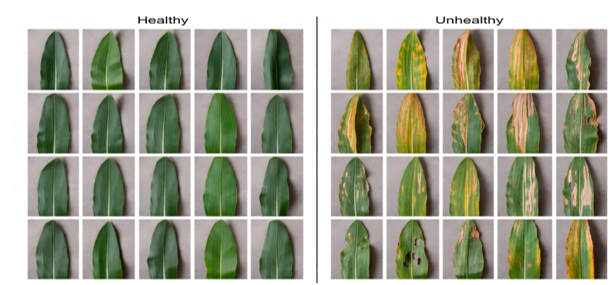
In Nigeria, maize is the most widely cultivated grain, largely supporting food security for about half of the population. Research has indicated that there is annual production is declaiming to approximately 50% in maize, this is due to crop diseases and pest damage. This research presents a deep learning surveillance system for crop disease prediction and pesticides recommendations based on a DenseNet-121 architecture for continuous video streams. The research was evaluated on a curated field dataset collected from three states in Nigeria; Adamawa, Borno, and Taraba State. The system achieved a mean accuracy of 98.2% and a mean F1-score of 0.982. The results reflect a strong discriminative capacity across the diverse textural maize diseases.
References
Food and Agriculture Organisation of the United Nations. (2025). FAOSTAT: Maize production data for Nigeria 2023–2024. FAO, Rome.
Federal Ministry of Agriculture and Rural Development [FMARD]. (2022). National Agricultural Technology and Innovation Policy (NATIP) 2022–2027. FMARD, Abuja.
Wise, K., Bergstrom, G., Price, T., Robertson, A., & Tenuta, A. (2023). An overview of northern corn leaf blight. Crop Protection Network, CPN-2022. https://doi.org/10.31274/cpn-20230425-0
Benson, J. M., Poland, J. A., Benson, B. M., Stromberg, E. L., & Nelson, R. J. (2015). Resistance to gray leaf spot of maize: Genetic architecture and mechanisms elucidated through nested association mapping and near-isogenic line analysis. PLoS Genetics, 11(3), e1005045. https://doi.org/10.1371/journal.pgen.1005045.
Ahumada, D. (2023). Corn Rusts: Common and Southern Rust. NC State Extension, Raleigh. https://content.ces.ncsu.edu/catalog/author/9801/daisy-ahumada?
Yaméogo, I. S., Latévi, K., Ouattara, D., Agboyi, L. K., Dabiré, R. A., Zallé, S., Kenis, M., Gnankiné, O., & Nacro, S. (2024). Level of damage and yield losses associated with the fall armyworm (Spodoptera frugiperda) on maize (Zea mays), millet (Pennisetum glaucum) and sorghum (Sorghum bicolor) on station in Burkina Faso. Crop Protection, 182, 106743. https://doi.org/10.1016/j.cropro.2024.106743
Gómez-Brandón, M., Beesigamukama, D., Probst, M., Klammsteiner, T., Su, J.-Q., Zhu, Y.-G.,&Tanga, C. M. (2025). Microbial composition and bioremediation in frass fertilizers from insect-based agri-food waste valorization. Journal of Environmental Management, 386, 125774. https://doi.org/10.1016/j.jenvman.2025.125774
Igwe, A. N., Eyo-Udo, N. L., Toromade, A. S., & Adewale, T. T. (2024). The Impact of Fourth Industrial Revolution (4IR) Technologies on Food Pricing and Inflation. International Journal of Engineering Inventions, 13(9), 189–200.
Liu, L., Qiao, S., Chang, J., Ding, W., Xu, C., Gu, J., Sun, T., & Qiao, H. (2024). A multi-scale feature fusion neural network for multi-class disease classification on the maize leaf images. Heliyon, 10(7), e28264. https://doi.org/10.1016/j.heliyon.2024.e28264
Nirupama, V. (2025). MobileNet-V2: An enhanced skin disease classification by attention and multi-scale features. Journal of Imaging Informatics in Medicine, 38(3), 1734–1754. https://doi.org/10.1007/s10278-024-01271-y.
Downloads
Published
Issue
Section
Categories
License
Copyright (c) 2026 Aisha Muhammad Hussein, Alhassan AbdulMutallib, Hyellamada Simon, Solomon Makasda Dickson, Sani Umar, Suleiman Muhammad Aliyu, Ruth Samuel

This work is licensed under a Creative Commons Attribution 4.0 International License.


