
Structural and Morphological Characterization of Graphene Oxide (GO), Reduced Graphene Oxide (rGO), and Nitrogen-Doped Graphene Oxide (N-GO) for Electrochemical Water Treatment
DOI:
https://doi.org/10.33003/fjs-2026-1013-5503Keywords:
Graphene Oxide, N-doping, Hummers Method, Electrochemical Water Treatment, Structural CharacterizationAbstract
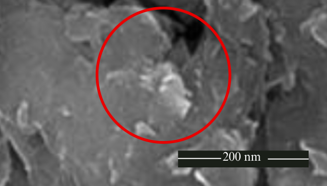
Developing efficient electrode materials is essential for improving electrochemical water treatment technologies. In this study, we synthesized and compared three materials: graphene oxide (GO), reduced graphene oxide (rGO), and nitrogen-doped graphene oxide (N-GO). GO was produced using a modified Hummers method, followed by chemical reduction to obtain rGO and hydrothermal nitrogen doping to obtain N-GO. Scanning Electron Microscopy (SEM) showed clear morphological changes, evolving from the flat and exfoliated sheets of GO to the highly crumpled and porous three-dimensional structure of N-GO, which offers a larger surface area for contaminant adsorption. X-ray diffraction (XRD) confirmed an expanded interlayer spacing of about 0.86 nm in GO and the reappearance of the graphitic (002) peak near 25 degrees after reduction and nitrogen doping. Raman spectroscopy provided additional structural insights, showing a blue shift of the G band to around 1595 cm⁻¹ and an ID/IG ratio of 1.11 in N-GO, indicating successful nitrogen incorporation and the formation of active defect sites. These combined structural improvements, especially the restored conductivity and increased defect density in N-GO demonstrate its strong electrochemical potential for removing pollutants from water. This work offers a solid structural foundation for designing optimized graphene-based electrodes for high-performance water purification systems.
References
Dreyer, D. R., Park, S., Bielawski, C. W., & Ruoff, R. S. (2010). The chemistry of graphene oxide. Chemical Society Reviews, 39(1), 228–240.
Dybowski, K., Romaniak, G., Kula, P. et al. Composite carbon electrode with a coating of nanostructured, reduced graphene oxide for water electrodialysis. J Appl Electrochem 55, 131–145 (2025). DOI: https://doi.org/10.1007/s10800-024-02157-1
Ferrari, A. C., & Robertson, J. (2000). Interpretation of Raman spectra of disordered and amorphous carbon. Physical Review B, 61(20), 14095–14107.
Geng, D., et al. (2011). Nitrogen doping increases active sites for oxygen reduction reaction in carbon materials. Journal of Physical Chemistry C, 115(35), 17667–17670.
Li, P., et al. (2022). Nitrogen-doped graphene oxide with enhanced bio-electrocatalytic activity for wastewater treatment. Journal of Cleaner Production, 335, 130308.
Li, X., Cai, W., An, J., Kim, S., Nah, J., Yang, D., Piner, R., Velamakanni, A., Jung, I., Tutuc, E., Register, L. F., Banerjee, S. K., Ruoff, R. S. (2009). Large-Area Synthesis of High-Quality and Uniform Graphene Films on Copper Foils. Science, 324(5932), 1312-1314.
Liu, X., et al. (2018). Graphene-based materials for capacitive deionization. Journal of Materials Chemistry A, 6, 13882–13900.
Novoselov, K. S., Geim, A. K., Morozov, S. V., Jiang, D., Zhang, Y., Dubonos, S. V., Grigorieva, I. V., & Firsov, A. A. (2004). Electric field effect in atomically thin carbon films. Science, 306(5696), 666-669.
Pei, S., & Cheng, H.-M. (2012). The reduction of graphene oxide. Carbon, 50(9), 3210–3228.
Qu, L., Liu, Y., Baek, J.-B., & Dai, L. (2010). Nitrogen-doped graphene as efficient metal-free electrocatalyst for oxygen reduction. ACS Nano, 4(3), 1321–1326.
Stankovich, S., et al. (2007). Synthesis of graphene-based nanosheets via chemical reduction of exfoliated graphite oxide. Carbon, 45(7), 1558–1565.
Veleva, S. (2025). Mixing approaches in enhancing the capacitive performance of hybrid rGO composites. Materials, 18(11), 2460.
Voiry, D., et al. (2016). Conducting MoS₂ nanosheets as catalysts for hydrogen evolution reaction. Science, 353(6301), 1413–1416.
Zhou, M., et al. (2014). Vertically aligned graphene nanosheets for high-performance electrochemical water treatment. ACS Applied Materials & Interfaces, 6(16), 13967–13974.
Zhou, C., et al. (2024). Nondestructive analysis of plastic debris from micro to nano sizes: A state-of-the-art review on Raman spectroscopy-based techniques. TrAC Trends in Analytical Chemistry, 172, 117565..
Downloads
Published
Issue
Section
Categories
License
Copyright (c) 2026 Alhassan Abidemi Bello, Abdul Dahiru Buba, Abubakar Muhammad Ramalan

This work is licensed under a Creative Commons Attribution 4.0 International License.


