
A Comparative Evaluation of Deep Convolutional Neural Networks for Uterine Fibroid MRI Classification
DOI:
https://doi.org/10.33003/Keywords:
Uterine Fibroid, Magnetic Resonance Imaging, Deep Convolutional Neural Networks, GoogleNet, MobileNet, Classification, Medical Image ClassificationAbstract
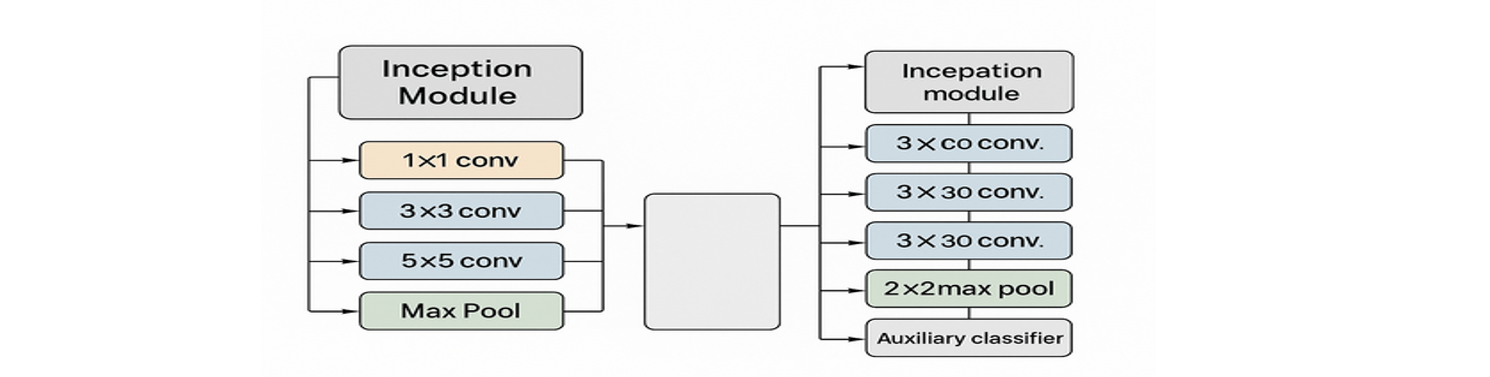
Uterine fibroids are among the most common benign gynaecological tumours affecting women of reproductive age and are associated with significant reproductive and gynaecological complications. Accurate classification of uterine fibroids from magnetic resonance imaging (MRI) is essential for effective diagnosis, treatment planning, and clinical decision-making. Although deep convolutional neural networks (CNNs) have shown promising performance in medical image analysis, limited studies have comparatively evaluated their effectiveness for uterine fibroid MRI classification. This study presents a comparative performance analysis of two pre-trained CNN architectures, GoogleNet and MobileNet, for an automated uterine fibroid MRI classification system. A total of 300 MRI images obtained from the University of Minnesota (UMD) dataset on Figshare were preprocessed through image resizing, normalisation, and data augmentation before deep feature extraction. Model performance was evaluated using accuracy, precision, recall, and F1-score. The experimental results showed that GoogleNet outperformed MobileNet, achieving an overall classification accuracy of 81.1% and a recall of 61.0%, compared with 59.6%, 59.8%, and 56.7%, respectively, for MobileNet. The class-wise evaluation further produced F1-scores of 0.59 and 0.60 for the No Fibroid and Fibroid classes, indicating balanced classification performance. The superior performance of GoogleNet is attributed to its Inception architecture, which effectively captures multi-scale image features from MRI images. The findings demonstrate that GoogleNet provides a more reliable approach for automated uterine fibroid MRI classification and has the potential to support computer-aided diagnosis in clinical practice.
References
Bulun, S. E. (2013). Uterine fibroids. The New England Journal of Medicine, 369(14), 1344–1355. Doi: https://doi.org/10.1056/NEJMra1209993
Butt, A., & Bach, B. (2025). Deep learning ensemble approaches in medical image classification. Journal of Medical Imaging Research, 12(3), 145-159.
Howard, A. G., Zhu, M., Chen, B., Kalenichenko, D., Wang, W., Weyand, T., Andreetto, M., &. Inba, M., Watson, S., & Visumathi, J. (2023). Comparative analysis of image-based uterus fibroid detection and classification using deep learning. In Proceedings of the International Conference on Advances in Computing, Communication and Applied Informatics (pp. 1–6).
LeCun, Y., Bengio, Y., & Hinton, G. (2015). Deep learning. Nature, 521(7553), 436–444. Doi: https://doi.org/10.1038/nature14539
Munro, M. G., Critchley, H. O. D., Broder, M. S., & Fraser, I. S. (2011). The FIGO classification system for causes of abnormal uterine bleeding in nongravid women of reproductive age. International Journal of Gynecology & Obstetrics, 113(1), 3–13.
Ogundokun, R. O., Misra, S., Akinrotimi, A. O., & Ogul, H. (2023). MobileNet-SVM: A lightweight deep transfer learning model to diagnose BCH scans for IoMT-based imaging sensors. Sensors, 23(2), 656. Doi: https://doi.org/10.3390/s23020656
Hahzad, A., Mushtaq, A., Sabeeh, A. Q., Ghadi, Y. Y., Mushtaq, Z., Arif, S., Ur Rehman, M. Z., Qureshi, M. F., & Jamil, F. (2023). Automated Uterine Fibroids Detection in Ultrasound Images Using Deep Convolutional Neural Networks. Healthcare, 11(10), 1493. Doi: https://doi.org/10.3390/healthcare11101493
Szegedy, C., Liu, W., Jia, Y., Sermanet, P., Reed, S., Anguelov, D., Erhan, D., Vanhoucke, V., & Rabinovich, A. (2015). Going deeper with convolutions. Proceedings of the IEEE Conference on Computer Vision and Pattern Recognition (CVPR), 1–9. Doi: https://doi.org/10.1109/CVPR.2015.7298594
Downloads
Published
Issue
Section
Categories
License
Copyright (c) 2026 Doris Jonah Kyado, Ahmadu, Shiaki Nzukwen Keneth, Daniel Richard, Manaseh Maiyaki David

This work is licensed under a Creative Commons Attribution 4.0 International License.


