
Potentials of Mangifera indica L. and Jatropha curcas Linn Essential Oils as Valuable Natural Antioxidants
DOI:
https://doi.org/10.33003/fjs-2026-1019-5395Keywords:
Antioxidant activity, DPPH, Mangifera indica, Jatropha curcas, Essential oilAbstract
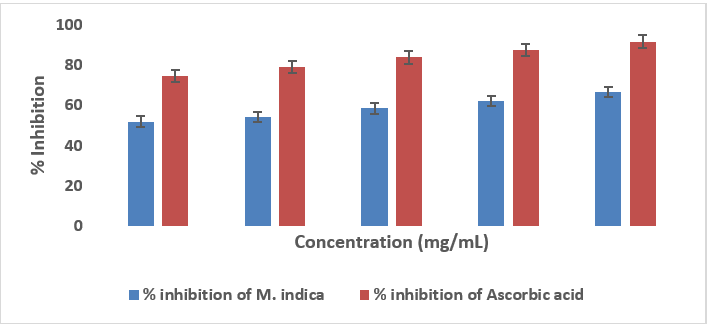
Antioxidants are chemical compounds that mitigate oxidative stress by neutralizing excess free radicals. The study aimed at investigating the antioxidant activity of the essential oils extracted from the leaves of Mangifera indica and Jatropha curcas. The essential oils from Mangifera indica and Jatropha curcas air-dried leaves was extracted via hydrodistillation method using a Clevenger-type apparatus and the antioxidant activities of each plant’s essential oils were carried out using 2,2-diphenyl-1-picrylhydrazyl (DPPH) assay with ascorbic acid as the standard. M. indica appeared as a cloudy light yellow liquid while that of J. curcas was cloudy whitish liquid, and both had a strong scene. The essential oils of M. indica and J. curcas afforded 0.83% and 0.41% (v/w) weight respectively. The percentage inhibition values for M. indica varied between 51.89% at 0.2 mg/mL to 66.65% at 2.0 mg/mL, while that of J. curcas % inhibition ranges between 54.70% at 0.2 mg/mL to 78.07% at 2.0 mg/mL. The corresponding Ascorbic acid showed higher inhibition compared to both plants at similar concentration. Summarily, the DPPH assay indicated that both oils exhibited moderate to strong free radical scavenging activity, reflecting significant antioxidant potential. These shows that the essential oils derived from both plants could serve as valuable natural antioxidants with potential applications in pharmaceuticals, cosmetics, and food industries.
References
Ademola, O. A., Oluwafemi, O. O and Nicole, L. B. (2014). In vitro study of the antioxidant potentials of the leaves and fruits of Nauclea latifolia. Hindawi Publishing Corporation, Scientific World Journal, 8, 1-6. https://doi.org/10.1155/2014/437081
Adeneye, A. A., Awodele, O., Aiyeola, S. A. and Benebo, A. S. (2015). Modulatory potentials of the aqueous stem bark extract of Mangifera indica on carbon tetrachloride-induced hepatotoxicity in rats. J Tradit Complement Med. 5 (2), 106-15. https://doi.org/10.4103/2227-9067.156949
Adeosun, T. E., Ogunwande, I. A., Avoseh, O. N., Raji, I. P. and Lawal, O. A. (2017). Composition and Anti-inflammatory Activity of Essential Oil of Jatropha curcas, 12 (3), 439-440. https://doi.org/10.1177/1934578X1701200333
Agbogidi, O. M. and Ekeke, E. A. (2011). Jatropha curcas Linn: An important but neglected plant species in Nigeria. Journal of Biological and Chemical Research, 8 (1), 52-62. https://www.jbcr.in
Ahmed, A. M., Ibrahim, M. M., El-said, M. A. A. E., Elsadek, B. E. (2020). Anti-Cancer Activity of Curcin and Latex Isolated from Jatropha Plant (Jatropha Curcas L.). Journal of Agricultural Chemistry and Biotechnology, 11, 339-344.
https://doi.org/10.21608/jacb.2020.128902
Aiyelaagbe, O. O., Adeyeni, B. A., Fatunsin, O. F and Arimah, B. D. (2007). In vitro antimicrobial activity and Phytochemical analysis of Jatropha curcas roots. Int. J. Pharmacol., 3 (1),106-110. https://doi.org/10.3923/ijp.2007.106.110
Ali, B. A., Alfa, A. A., Tijani, K. B., Idris, E. T., Unoyiza, U.S. and Junaidu, Y. (2020). Nutritional Health Benefits and Bioactive Compounds of M. indica L (Mango) Leaves Methanolic Extracts. Asian Plant Res J., 6, 41-51.
https://doi.org/10.9734/APRJ/2020/v6i230126
Amran, M. S., Sultan, M. Z., Rahman, A., Rashid, M. A. (2013). Antidiabetic activity of compounds isolated from the kernel of Mangifera indica in alloxan induced diabetic rats. Dhaka Univ J Pharm Sci., 12 (1), 77-81. https://doi.org/10.3329/dujps.v12i1.16304
Ang, L. Z. P., Hashim, R., Sulaiman, S. F., Coulibaly, A. Y., Sulaiman, O., Kawamura, F., and Salleh, K. M. (2015). In vitro antioxidant and antidiabetic activities of Gluta torquata. Industrial Crops and Products, 76, 755-760. https://doi.org/10.1016/j.indcrop.2015.07.050
Aruoma, O.I. (1998). Free radicals, oxidative stress, and antioxidants in human health and disease. J. Am. Oil Chem. Soc., 75, 199-212. https://doi.org/10.1007/s11746-998-0032-9
Atewolara-Odule, O. C., Olubomehin, O. O., Adesetan, T. O., Yussuf, S. T., Ogunmoye, A. O. and Towolawi, O. R. (2019). Isolation and Characterization of Essential Oil of Nauclea latifolia Leaves and its Antioxidant and Antimicrobial Activities. International Journal of Multi-Disciplinary in Education Research and Development (IJMERD), 1 (1), 24-31.
Auwal, A., Shagal, M. H. and Milam, C. (2024) Isolation and Characterisation of Essential oils of Mango (M. indica) Leave, Biology, Medicine, & Natural Product Chemistry. 13 (1), 1-6. https://doi.org/10.1111/bcn.2024.13
Babahmad, R. A., Aghraz, A., Boutafda, A., Papazoglou, E. G., Tarantilis, P. A., Kanakis, C., Hafidi, M., Ouhdouch, Y., Outzourhit, A. and Ouhammou, A. (2018). Chemical composition of essential oil of Jatropha curcas L. leaves and its antioxidant and antimicrobial activities, Industrial Crops and Products,121, 405-410,
https://doi.org/10.1016/j.indcrop.2018.05.030
Bastos, E. M. S., da Silva, A. B., Coelho, P. L. C., Borges, J. M. P., da Silva, V. D. A., da Cunha, V. H. M., Costa, S. L. (2021). Anti-inflammatory activity of Jatropha curcas L. in brain glial cells primary cultures. Journal of Ethnopharmacology, 264, 1-12.
https://doi.org/10.1016/j.jep.2020.113152
British Pharmacopoeia (1980). Her Majesty’s Stationary Office: Atlantic House, Holborn Viaduct, London, England, 2, 109.
Dhital, K. S. (2017). Phytochemical screening of and antioxidant activities of Mangifera indica leaves grown in temperate region of the Nepal. Journal of Pharmacognosy and Phytochemistry 6 (3), 205-209.
Duarte, L. G., Laurindo, L. F., Bishayee, A., Casarcia, N., Detregiachi, C. R. P., Otoboni, A. M. M., de Alvares Goulart, R., Catharin, V. M. C. S., Baldi, E., Jr, Catharin, V. C. S., Guiguer, E. L., Sanches Silva, A., Barbalho, S. M. and Bishayee, A. (2025). Mango (Mangifera indica L.) By-products in Food Processing and Health Promotion. Nutr Rev., 83 (7), 1290-1313. https://doi.org/10.1093/nutrit/nuae214
Chetan, S., Kulkarni, A. R., Mannasaheb, B. A, Gajare, R. (2014). Immunomostimulant phytoconstituents from Mangifera indica L. bark oil. J. Phytopharmacol, 3 (2), 139-48. https://doi.org/10.31254/PHYTO.2014.3210
Džamic, A. M., Marin, P. D., Gbolade, A. A., Ristic, M. S. (2010). Chemical Composition of Mangifera indica Essential Oil From Nigeria. Journal of Essential Oil Research, 22, 123-125.
https://doi.org/10.1080/10412905.2010.9700279
Ellong, E. , Adenet, S. and Rochefort, K. (2015) Physicochemical, Nutritional, Organoleptic Characteristics and Food Applications of Four Mango (Mangifera indica) Varieties. Food and Nutrition Sciences, 6, 242-253. https://doi.org/10.4236/fns.2015.62025
Ghosh, A., Majumder, S., Saha, S., Bhattacharya, M. (2020). Characterization of non polar and polar solvent extracts from some tea plantation shade tree leaves with special reference to antioxidant and antibacterial activities. Res Plant Biol., 10, 15-21.
https://doi.org/10.25081/ripb.2020.v10.6235
Gudeta, T. B. (2016). Chemical Composition, Bio-Diesel Potential and Uses of Jatropha curcas L. (Euphorbiaceae). American Journal of Agriculture and Forestry, 4(2), 35-48.
https://doi.org/10.11648/j.ajaf.21060402.15
Gülçin, I., Elmastas, M. and Aboul-Enein, H. Y. (2012). Antioxidant activity of clove oil - A powerful antioxidant source. Arabian Journal of Chemistry, 5, 489-499.
https://doi.org/10.1016/j.arabjc.2010.09.016
Huang, S. L., Wang, W. H., Zhong, X. Y., Lin, C. T., Lin, W. S., Chang, M. Y., & Lin, Y. S. (2020). Antioxidant Properties of Jatropha curcas L. Seed Shell and Kernel Extracts. Applied Sciences, 10 (9), 3279. https://doi.org/10.3390/app10093279
Idstein, H., Schreier, P. (1985). Volatile constituents of ‘Alphonso’ mango (Mangifera indica). Phytochemistry, 24, 313-2316. https://doi.org/10.1016/S0031-9422(00)83033-2
Irshad, N., Naeem, H., Shahbaz, M., Imran, M., Mujtaba, A., Hussain, M., Al Abdulmonem, W., Alsagaby, S. A., Yehuala, T. F., Abdelgawad, M. A., Ghoneim, M. M., Mostafa, E. M., Selim, S., & Al Jaouni, S. K. (2024). Mangiferin: An effective agent against human malignancies. Food Science & Nutrition, 12, 7137–7157.
https://doi.org/10.1002/fns3.4434
Islam, A. K. M. A., Yaakob, Z. and Anuar, N. (2011) Jatropha: A multipurpose plant with considerable potential for the tropics, Scientific Research and Essays, 6 (13), 2597-2605.
https://doi.org/10.5897/SRE10.611
Jongschaap, R. E., Corre, W. J., Bindraban, P. S. and Brandenburg, W. A. (2007). Claims and facts on Jatropha curcas L. Plant Research International, 7, 20-28.
Jumare, F. I., Maigandi, Z. R., Ibrahim, S. G., Zayyan, Y. M. and Musa M. I. (2023). Phytochemical and Proximate Analysis of Jatropha curcas Lam Leaves. Tropical Journal of Science and Technology, 4 (1), 46 - 51. https://doi.org/10.47524/tjst.v4i1.47
Kamatou, G.P.P.; Viljoen, A.M. A review of the application and pharmacological properties of α-bisabolol and α-bisabolol-rich oils. J. Am. Oil Chem. Soc. 2010, 87, 1-7. https://doi.org/10.1007/s11746-009-1483-3
Karamanoli, K., Bouligaraki, P., Constantinidou, H. I. and Lindow, S. E. (2011). Poly phenolic compounds on leaves limit iron availability and affect growth of epiphytic bacteria. Ann. Appl. Biol., 159, 99-108. https://doi.org/10.1111/j.1474-2632.2011.00743.x
Khan, N., Khushtar, M., Ahmad, N., Hasan, N., Khan, Z., Idris, S., Ahmad, A. and Zishan, M. (2017). Nutritional importance and pharmacological activity of Mangifera indica. World journal of pharmacy and pharmaceutical sciences, 6 (05), 258-273. https://doi.org/10.53893/wjpps.v6i05.258
Khandare, M. S. (2016). Mangifera indica (Mangifera indica Linn) A medicinal and holy plant. Journal of Medicinal Plants Studies, 4 (4),44-46. www.plantsjournal.com
Kumar, A., Rao, S. S. P., Anjaneyulu, P. S. R., Anjaneyulu, K. S. R. and Anjaneyulu, P. S. R. (2014). "Evaluation of antioxidant and antibacterial properties of Jatropha curcas leaves." International Journal of Medicinal Chemistry, Article ID 349812.
Kumar, M., Saurabh, V., Tomar, M., Hasan, M., Changan, S., Sasi, M., Maheshwari, C., Prajapati, U., Singh, S., Prajapat, R. K., Dhumal, S., Punia, S., Amarowicz, R. and Mekhemar, M. (2021) Mango (Mangifera indica L.) Leaves: Nutritional Composition, Phytochemical Profile, and Health-Promoting Bioactivities. Antioxidants (Basel),16;10(2):299.
https://doi.org/10.3390/antiox10020299.
Kung, L. Jr., P. Williams, R. J. Schmidt, and W. Hu. 2008. A blend of essential plant oils used as an additive to alter silage fermentation or used as a feed additive for lactating dairy cows. J. Dairy Sci. 91:4793–4800. https://doi.org/10.3168/jds.2008-1402
Lenucci, M.S.; Tornese, R.; Mita, G.; Durante, M. Bioactive Compounds and Antioxidant Activities in Different Fractions of Mango Fruits (Mangifera indica L., Cultivar Tommy Atkins and Keitt). Antioxidants 2022, 11, 484. https://doi.org/10.3390/antiox11030484
Maestri, D.M.; Nepote, V.; Lamarque, A.L.; Zygadlo, J.A. (2006). Natural products as antioxidants. In Phytochemistry: Advances in Research; Imperato, F., Ed.; Research Signopost: Kerala, India, pp. 105-135.
https://www.scirp.org/reference/referencespapers?referenceid=1678099
Maharaj, A., Naidoo, Y., Dewir, Y. H. and Rihan, H. (2022) Phytochemical Screening, and Antibacterial and Antioxidant Activities of Mangifera indica L. Leaves. Horticulturae 8, 909.
https://doi.org/10.3390/horticulturae8100909
Majumder, S., Saha, S., Ghosh, A., Chakraborty, S., Acharyya, S., Sarkar, S. and Bhattacharya, M. (2022). Comparative in vitro biological characterization of black and green tea infusions fermented with brewer's yeast and SCOBY with special emphasis on antioxidant activity. International Journal on Nutraceuticals, Functional Foods and Novel Foods, 1, 357-369. https://doi.org/10.17470/NF-022-0045
Makkar, H. P. S and Becker, K. (2009). Nutritional studies on rats and fish (carp Cyprinuscarpio) fed diets containing unheated and heated Jatropha curcas meal of a non-toxic provenance. Plant Food Hum Nutr., 53, 183-192.
https://doi.org/10.1023/A:1008087627894
Miguel, M. G. (2010). Antioxidant and Anti-Inflammatory Activities of Essential Oils: A Short Review. Molecules 15, 9252-9287; https://doi.org/10.3390/molecules15129252
Moghaddam, M. M., Ebrahimzadeh, M. R., Farimani, S. R, Nabavi, S. R. and Nabavi, S. M. (2017). "Antioxidant activity, total phenolic and flavonoid content of Mangifera indica leaf extracts." Avicenna Journal of Phytomedicine, 7 (1), 41-46. https://ajp.mums.ac.ir/
Mohan, C. G. Deepak, M. Viswanatha, G. L. et al., (2013) “Anti-oxidant and anti-inflammatory activity of leaf extracts and fractions of Mangifera indica,” Asian Pacific Journal of Tropical Medicine, 6(4),311-314. https://doi.org/10.1016/S1995-7645(13)60062-0
Morton, J. (1987). Mango. Fruits of Warm Climates. J.F. Morton, Miami, Chapter Mango Mangifera indica L. 6 (3), 7-8.
Naqvi SBS (1985). Studies on antibacterial activity of compounds of plant origin and isolation of active components from Sphaeranthus indicus Linn, Department of Pharmaceutics, University of Karachi.
Narayan, G.R., Kartik, V., Manoj, P., Singh, P.S., & Alka, G. (2010). Antibacterial activities of ethanolic extracts of plants used in folk medicine. International journal of research in ayurveda and pharmacy, 1, 529-535. www.ijrap.net
Núñez-Sellés, A. J., Agüero, J. A. and Paz, L. N. (2021). GC-MS analysis of mango stem bark extracts (Mangifera indica L.), Haden variety. Possible contribution of volatile compounds to its health effects. Open Chemistry, 19, 27–38. https://doi.org/10.1515/chem-2021-0192
Ogundajo, A. L., Nnaemeka, C. O., Olawunmi, R. O. and Ogunwande, I. A. (2016). Chemical Constituents of Essential oil of Ethretia cymosa Thonn. British Journal of Applied science and Technology. 14 (4), 1-6. https://doi.org/10.12816/0040152
Ogunmoye, A. O., Ibikunle, A. A., Sanyaolu, N. O., Ogundare, S. A., Yussuf, S. T., Hashimi, M. A. and Onajobi, I. B. (2023). Essential Oil Compositions and Antioxidant Activity of the Fresh Leaves of Talinum triangulare (Jacq.) Willd From Nigeria. Scientia Africana, 22 (2), 125-134. https://doi.org/10.4314/sa.v22i2.13
Okoh SO, Iweriebor BC, Okoh OO, Nwodo UU, Okoh AI. (2016) Antibacterial and Antioxidant Properties of the Leaves and Stem Essential Oils of Jatropha gossypifolia L. Biomed Res Int. 2016; 2016:9392716. https://doi.org/10.1155/2016/9392716
Okoli, R. I., Aigbe, O., Ohafu-Obode, J. O. and Mensah, J. K. (2007). Medicinal herbs used for managing some common ailments among Esan people Edo State, Nigeria. Pakistan Journal of Nutrition, 6 (5), 470-490. https://doi.org/10.3923/pjn.2007.490.496
Oliver-Beaver B. (2006). Medicinal plants in tropical West Africa. Cambridge University Press. London. https://doi.org/10.2307/2806966
Oluwakayode O, Ejike Onwudiegwu O, Michael G I, Emeka Emea O, Joel O O. (2023). Essential oil Composition, Antioxidant and Antibacterial Activities of Jatropha tanjorensis (Euphorbiaceae). Ann Rev Resear. 9(1): 555751.
https://doi.org/10.19080/ARR.2023.09.555751
Oyetayo, V. O. and Temenu, O. E. (2025) Comparative Study on The Phytochemical, Antistaphylococcal and Antioxidant Properties of the Stem Bark of Jatropha curcas L and Jatropha gossypifolia L, Sultan Qaboos University Journal For Science, 28 (1), 17-24. https://doi.org/10.53539/squjs
Patil, R. N., Patil, R. Y., Ahirwar, B. and Ahirwar, D. (2011). Evaluation of antidiabetic and related actions of some Indian medicinal plants in diabetic rats. Asian Pac J Trop Med., 4 (1), 20-3. https://doi.org/10.1016/S1995-7645(11)60025-4
Pino, J. A., Mesa, J., Munoz, Y., Marti, M. P. and Marbot, R. (2005). Volatile components from Mango (Mangifera indica L.) cultivars. J Agric Food Chem., 53, 2213-2223. https://doi.org/10.1021/jf0402633
Pourmortazavi, S.M. & Hajimirsadeghi, S.S. (2007) Supercritical fluid extraction in plant essential and volatile oil analysis. J. Chromatogr. 1163, 2-24.
https://doi.org/10.1016/j.chroma.2007.06.021
Prasad, D. M. R., Izam, A. and Maksudur Rahman Khan, M. D. (2012) Jatropha curcas: Plant of medical benefits. Journal of Medicinal Plants Research, 6 (14), 2691-2699. https://doi.org/10.5897/JMPR10.977
Qasim, M., Islam, W., Ashraf, H.J., Ali, I., Wang, L. (2020). Saponins in Insect Pest Control. In: Merillon, JM., Ramawat, K. (eds) Co-Evolution of Secondary Metabolites. Reference Series in Phytochemistry. Springer, Cham. https://doi.org/10.1007/978-3-319-76887-8_39-1
Quintana, S. E., Salas, S., García-Zapateiro, L.A. (2021). Bioactive compounds of mango (Mangifera indica): a review of extraction technologies and chemical constituents. J Sci Food Agric., 101 (15), 6186-6192. https://doi.org/10.1002/jsfa.11455
Rathore, H. S., Nema, R. N., Saxena, S. K. and Singh, S. K. (2013). "In vitro antioxidant activity of Jatropha curcas L. seed oil and its potential application in the food industry." Antioxidants, 2(3), 310-316. https://doi.org/10.3390/antioxidants2030310
Rubiolo, P., Sgorbini, B., Liberto, E., Cordero, C. and Bicchi, C. (2010), Essential oils and volatiles: sample preparation and analysis. A review. Flavour Fragr. J., 25: 282-290. https://doi.org/10.1002/ffj.1984
Saleh, Z. M., Abdel Azeiz, A. Z., Mehany, A. B. M. and El-Swaify, Z. A. S. (2023). Anticancer and Antimicrobial Activity of Jatropha’s Leaves Extracts. Egypt. J. Bot., 63 (2), 621-634. https://ejbo.journals.ekb.eg/
Shah, K. A., Patel, M. B., Patel, R. J. and Parmar, P. K. (2010). Mangifera indica (Mangifera indica), Phcog Rev., 4, 42-48. https://doi.org/10.4103/0973-7847.65325
Sharma, A. K., Gangwar, M., Tilak, R., Nath, G., Sinha, A. S. K., Tripathi, Y. B. and Kumar, D. (2012). Comparative in vitro Antimicrobial and Phytochemical Evaluation of Methanolic Extract of Root, Stem and Leaf of Jatropha curcas Linn, Pharmacognosy Journal, 4 (30), 34-40. https://doi.org/10.5530/PJ.2012.30.7
Shetty, S., Udupa, S. L., Udupa, A. L. and Vollala, V. R. (2006). Wound healing activity of bark extract of Jatropha curcas L. in albino rats. Saudi Med. J. 27 (10),1473-1476. PMID: 17013466. https://pubmed.ncbi.nlm.nih.gov/17013466/
Solesi, O. A., Adesina, F. C., Adebayo-Tayo, B. C., Abiodun, A. S. (2020). Gas chromatography/mass spectrometry (GC-MS) analysis of Jatropha curcas latex and its antimicrobial activity on clinical isolates. World Journal of Advanced Research and Reviews, 8, 12-18. https://doi.org/10.52284/wjarr.8.1.230
Zengin, G., Mahomoodally, M. F., Sinan, K. I., Ak, G., Etienne, O. K., Sharmeen, J. B., Brunetti, L., Leone, S., Di Simone, S. C., Recinella, L., Chiavaroli, A., Menghini, L., Orlando, G., Jekő, J., Cziáky, Z., & Ferrante, C. (2021). Chemical Composition and Biological Properties of Two Jatropha Species: Different Parts and Different Extraction Methods. Antioxidants, 10 (5), 792. https://doi.org/10.3390/antiox10050792
Downloads
Published
Issue
Section
Categories
License
Copyright (c) 2026 Abdulrazaq Ogunmoye, Oseyemi Olubomehin, Odunayo Atewolara-Odule, Adeola Ibikunle, Sodiq Yussuf, Emmanuel Ogunlade, Gbenro Rowaiye

This work is licensed under a Creative Commons Attribution 4.0 International License.


