
Occurrence, Toxic Equivalency and Human Health Risk Assessment of Dioxin-like and Non-Dioxin-Like Polychlorinated Biphenyls in Sanitary Pads Produced in Nigeria
DOI:
https://doi.org/10.33003/fjs-2026-1008-5015Keywords:
Dioxins, PCB Congeners, Toxic Equivalency, Sanitary Pads, Human Health Risk, NigeriaAbstract
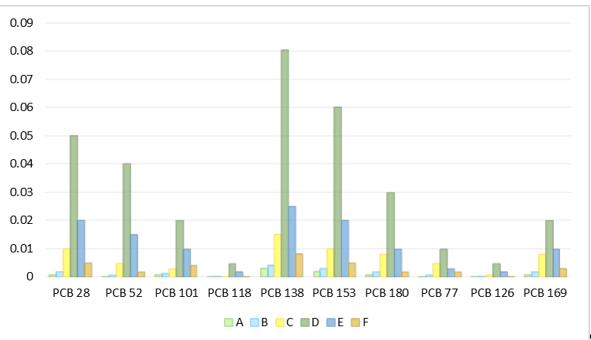
Dioxins and polychlorinated biphenyls (PCBs) are persistent organic pollutants recognised for their environmental persistence, bioaccumulative potential, and adverse toxicological effects. Despite the association of PCBs with chemical contamination in consumer products, limited information exists on their occurrence in feminine hygiene products. This study investigated the occurrence, toxicity equivalency (TEQ), and potential health risks associated with PCB congeners in sanitary pads produced in Nigeria. Six brands were randomly purchased from retail outlets in Lagos, Abuja, and Porthacourt. Samples were extracted in a mixture of hexane and acetone and analysed using gas chromatography coupled with mass spectrometer. Ten PCB congeners were detected across all brands, with total concentrations ranging from 0.0102 to 0.3200 ng.g-1. Two-way Analysis of Variance (ANOVA) indicated significant variability in sanitary pad brands, PCB congener type, and interactions between the two (p<0.001). The results indicated PCB contamination were influenced by sanitary pad brands, and PCB congeners, as well as their interactions. TEQ calculations identified PCB-126 as complicit in overall toxicity contribution. with estimated daily intake values ranging from 0.00064 to 0.01761 pg.kg-1.day-1, and hazard quotient values below unity. Lifetime cancer risk estimates varied between 1.2 x 10⁻⁷ and 3.5 x 10⁻⁶, Multivariate statistical analysis, including principal component analysis and hierarchical cluster, indicated similar contamination patterns among most brands. Although calculated risk levels were low, the presence of persistent organic pollutants in sanitary hygiene products highlights the need for continuous monitoring and improved regulatory oversight.
References
Farage, M. A., & Maibach, H. I. (2004). Lifetime changes in the vulva and vagina. Archives of Gynecology and Obstetrics, 273(4), 195–202. https://doi.org/10.1007/s00404-004-0703-8
International Agency for Research on Cancer (IARC). (2012). Chemical agents and related occupations (IARC Monographs on the Evaluation of Carcinogenic Risks to Humans, Volume 100F). IARC Press.
Rogan, W. J., & Ragan, N. B. (2007). Some evidence of effects of environmental chemicals on the endocrine system in children. International Journal of Hygiene and Environmental Health, 210(5), 659–667. https://doi.org/10.1016/j.ijheh.2007.07.005
Schecter, A., Birnbaum, L., Ryan, J. J., & Constable, J. D. (2006). Dioxins: An overview. Environmental Research, 101(3), 419–428. https://doi.org/10.1016/j.envres.2005.12.003
United Nations Environment Programme. (2019). Global monitoring plan for persistent organic pollutants under the Stockholm Convention. UNEP.
United States Environmental Protection Agency. (2012). Integrated Risk Information System (IRIS): Dioxin and dioxin-like compounds. U.S. EPA.
World Health Organization (WHO). (2016). Dioxins and their effects on human health. Iris.who.int.
Downloads
Published
Issue
Section
Categories
License
Copyright (c) 2026 Francis Oladapo

This work is licensed under a Creative Commons Attribution 4.0 International License.


