
MULTI-TARGET NEUROPROTECTIVE POTENTIAL OF CAMELLIA SINENSIS PHYTOCHEMICALS AGAINST PARKINSON’S DISEASE: AN INTEGRATED COMPUTATIONAL STUDY
DOI:
https://doi.org/10.33003/fjs-2026-1007-4973Keywords:
Camellia sinesis phytochemicals, Density Functional Theory, Parkinson’s disease, Molecular docking, Molecular dynamics, Pharmacokinetics, Drug-likenessAbstract
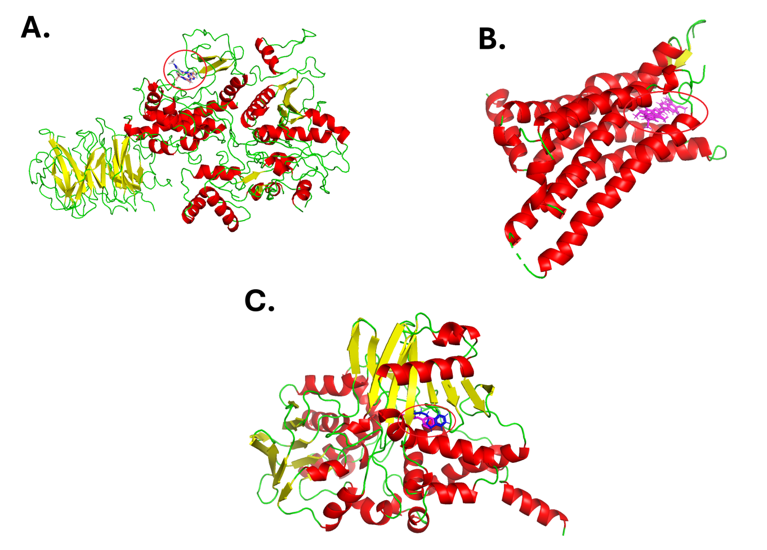
Neurodegenerative diseases, especially Parkinson’s disease (PD), have been a huge challenge to humanity, emphasizing the need for urgent attention towards finding more potent and less toxic treatment strategies. In this regard, this study employed a multi-faceted approach using density functional theory, molecular docking, molecular dynamics simulations, MM/PBSA free energy calculation, and in silico pharmacokinetic analysis to investigate the effectiveness of 25 phytochemicals extracted from Camellia sinensis on three PD-related targets: LRRK2, adenosine A2A receptor (A2AR), and monoamine oxidase-B (MAO-B). Docking analysis results revealed Petunidin, Cyanidin, and Epigallocatechin as potent compounds with high affinity for the targets. MD simulation results further corroborated this finding with stable ligand-target interactions. MM-PBSA results revealed Petunidin as the most potent multi-target compound with a high binding free energy of -38.48 kcal/mol for LRRK2 and -44.49 kcal/mol for MAO-B, surpassing the potency of reference compounds. Cyanidin ranked second. Among the compounds, Epigallocatechin showed the highest affinity for A2AR with a free energy of -36.43 kcal/mol. Stability analysis revealed a constant RMSD value for the compounds, indicating a stable complex. The pharmacokinetic profile revealed that the compounds complied with Lipinski’s rule of five and showed high gastrointestinal absorption alongside and potential of CYP1A2 inhibition. DFT analysis revealed Malvidin and Petunidin with the lowest HOMO-LUMO gap of approximately 5.90 eV, indicating high reactivity. Cyanidin showed the highest electrophilicity index of 10.266 eV. NBO and MEP analysis revealed a high charge delocalization effect, with hydroxyl groups being electron-rich, facilitating hydrogen bonding and π-π interactions with the target proteins.
Downloads
Published
Issue
Section
Categories
License
Copyright (c) 2026 Abosede Adejoke Badeji

This work is licensed under a Creative Commons Attribution 4.0 International License.


