
Ensuring Drug Authenticity: A Blockchain-Based Framework for Drug Supply Chain Traceability and Forensics
DOI:
https://doi.org/10.33003/fjs-2026-1012-4941Keywords:
Blockchain Technology, QR code, Smart Contracts, Drug Authentication, IoT-EnabledAbstract
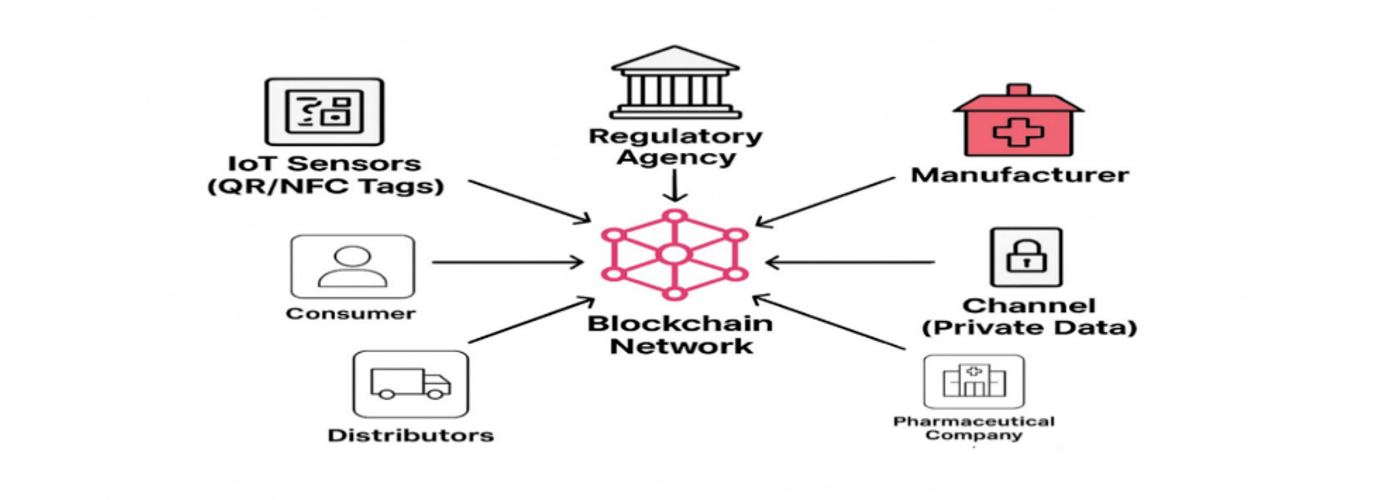
The spread of counterfeit and substandard drugs is a major global health and economic problem especially in the developing world. This paper introduces a drug authentication and registration system using blockchain which aims to establish greater transparency, security and trust in the pharmaceutical supply chain. Using the platform of Hyperledger blockchain, smart contracts, decentralized applications (dApps), and APIs, the system will automate the drug registration process, the process of drug verification, and tracking. The drug information added by the manufacturer, such as name, form, expiry date, manufacturing date, and use instructions, are inseparably stored in the blockchain. With the successful registration and execution of a smart contract, a unique barcode is automatically created by the system that allows consumers to check the authenticity of drugs with the help of mobile devices. In order to be robust, the design will include both hardware (servers, nodes, mobile devices, barcode scanners, and encryption hardware) and software (smart contracts, APIs, analytics tools, and user interfaces) requirements. The results indicate that the system effectively logs and authenticates drugs in real time and the audit trail is immutable and cannot be tampered with by even the drug manufacturers. The blockchain-based architecture also leads to a higher level of traceability, mitigating the impact of a counterfeit distribution and increasing user confidence through correct and disclosed verification. The adoption has shown that blockchain technology can play a major role in enhancing the fight against fake drugs.
References
Abunike, U. E., & Ibe, R. C. (2025). The Global Impact of Counterfeit Pharmaceuticals from Africa’s Industrial Hubs: Public Health Risks, Economic Consequences, And Regulatory Challenges. Estaga Journal of Interdisciplinary Perspectives.
Agarwal, U., Rishiwal, V., Yadav, M., Alshammari, M., Yadav, P., Singh, O., & Maurya, V. (2024). Exploring Blockchain and Supply Chain Integration: State-of-the-Art, Security Issues, and Emerging Directions. IEEE Access, 12, 143945–143974. https://doi.org/10.1109/ACCESS.2024.3471340
Asrade Mekonnen, B., Getie Yizengaw, M., & Chanie Worku, M. (2024). Prevalence of substandard, falsified, unlicensed and unregistered medicine and its associated factors in Africa: a systematic review. In Journal of Pharmaceutical Policy and Practice (Vol. 17, Number 1). Taylor and Francis Ltd. https://doi.org/10.1080/20523211.2024.2375267
Aulia, M., Saha, N., & Rahman, M. M. (2024). Protected QR Code-based Anti-counterfeit System for Pharmaceutical Manufacturing.
Bapatla, A. K., Mohanty, S. P., Kougianos, E., Puthal, D., & Bapatla, A. (2023). PharmaChain: A blockchain to ensure counterfeit-free pharmaceutical supply chain. IET Networks, 12(2). https://doi.org/10.1049/ntw2.12041
Bhuvaneshwari, P., Robinson, Y. H., & Lakshmi, M. B. (2025). BSVA: blockchain-enabled secured vertical aggregation algorithm for transactions management in drug traceability framework. Scientific Reports, 15(1). https://doi.org/10.1038/s41598-025-12641-z
Chandras, A., Agrawal, S., Chaudhary, M., Deshmukh, A., & Shinde, S. (2023). Drug Authentication and Counterfeit Drug Detection Using Blockchain. 2023 7th International Conference on Computing, Communication, Control and Automation, ICCUBEA 2023. https://doi.org/10.1109/ICCUBEA58933.2023.10392025
Chen, C. L., Deng, Y. Y., Li, C. T., Zhu, S., Chiu, Y. J., & Chen, P. Z. (2020). An IoT-Based Traceable Drug Anti-Counterfeiting Management System. IEEE Access, 8, 224532–224548. https://doi.org/10.1109/ACCESS.2020.3036832
Chijioke M, O., Nkiru N, E., & Chinelo, E. (2024). Experiences of Consumers on the Health Effects of Fake and Adulterated Medicines in Nigeria. Archives of Pharmacy and Pharmaceutical Sciences, 8(1), 075–081. https://doi.org/10.29328/journal.apps.1001059
Cit, A., John, A., & Elly, A. (2024). Developing AI-Based Systems for Detecting and Preventing Fraud in Nuclear Medicine Supply Chains. https://doi.org/10.20944/preprints202411.1922.v1
Dhingra, S., Raut, R., Naik, K., & Muduli, K. (2024). Blockchain Technology Applications in Healthcare Supply Chains - A Review. IEEE Access, 12, 11230–11257. https://doi.org/10.1109/ACCESS.2023.3348813
Dogruer Erkok, S., Kimani, M. M., Lanzarotta, A., & McCord, B. (2026). Detecting fentanyl analogs in counterfeit pharmaceuticals by surface-enhanced Raman spectroscopy using handheld Raman spectrometers. Forensic Science International, 378, 112679. https://doi.org/10.1016/J.FORSCIINT.2025.112679
Friedman, J., & Ciccarone, D. (2025). The public health risks of counterfeit pills. In The Lancet Public Health (Vol. 10, Number 1, pp. e58–e62). Elsevier Ltd. https://doi.org/10.1016/S2468-2667(24)00273-1
Gomasta, S. S., Dhali, A., Tahlil, T., Anwar, M. M., & Ali, A. B. M. S. (2023). PharmaChain: Blockchain-based drug supply chain provenance verification system. Heliyon, 9(7). https://doi.org/10.1016/j.heliyon.2023.e17957
Hajleh, M. N. A., Al-Samydai, A., Aloosi, Z., Abuhamdan, R., Naimat, S. Al, Abdelfattah, L., & Al-Halaseh, L. (2021). Factors affecting purchasing behaviors of generic drugs versus originator counterparts in Jordan. Journal of Applied Pharmaceutical Science, 11(9), 009–017. https://doi.org/10.7324/JAPS.2021.110902
Haque, E. U., Shah, A., Iqbal, J., Ullah, S. S., Alroobaea, R., & Hussain, S. (2024). A scalable blockchain based framework for efficient IoT data management using lightweight consensus. Scientific Reports, 14(1). https://doi.org/10.1038/s41598-024-58578-7
Kavita Kumari. (2019). CFDD (CounterFeit Drug Detection) using Blockchain in the Pharmaceutical Industry. International Journal of Engineering Research And, V8(12). https://doi.org/10.17577/ijertv8is120292
Khangan, V. R., & Tiple, R. H. (2025). The Challenge of Counterfeit Drugs in Indian Market: A Comprehensive Review. Indian Journal of Pharmacy Practice, 18(4), 352–361. https://doi.org/10.5530/ijopp.20250285
Kumar, S., Mehra, R., & Arya, R. (2025). Enhancing Pharmaceutical Supply Chain Security: Counterfeit Drug Detection Using Blockchain Technology. https://ssrn.com/abstract=5039786
Kumarswamy, S., & Sampigerayappa, P. A. (2024). Leveraging Blockchain Technology to Establish a Transparent and Counterfeit-Resistant Pharmaceutical Supply Chain. Journal Europeen Des Systemes Automatises, 57(5), 1429–1443. https://doi.org/10.18280/jesa.570518
Musamih, A., Salah, K., Jayaraman, R., Arshad, J., Debe, M., Al-Hammadi, Y., & Ellahham, S. (2021). A blockchain-based approach for drug traceability in healthcare supply chain. IEEE Access, 9, 9728–9743. https://doi.org/10.1109/ACCESS.2021.3049920
Nayyar, G. M. L., Breman, J. G., & Herrington, J. E. (2015). The global pandemic of falsified medicines: laboratory and field innovations and policy perspectives. The American Journal of Tropical Medicine and Hygiene, 92(6). https://doi.org/10.4269/ajtmh.15-0221
Oluwafemi, I. O., Clement, T., Adanigbo, O. S., Gbenle, T. P., & Adekunle, B. I. (2021). Evaluating the Efficacy of DID Chain-Enabled Blockchain Frameworks for Real-Time Provenance Verification and Anti-Counterfeit Control in Global Pharmaceutical Supply Chains. International Journal of Multidisciplinary Research and Growth Evaluation, 2(2), 436–444. https://doi.org/10.54660/.ijmrge.2021.2.2.436-444
Padma, A., & Ramaiah, M. (2024). Blockchain based solution for secure information sharing in pharma supply chain management. Heliyon, 10(22). https://doi.org/10.1016/j.heliyon.2024.e40273
Riedel, T. (2024). Addressing Challenges: Adopting Blockchain Technology in the Pharmaceutical Industry for Enhanced Sustainability. Sustainability (Switzerland), 16(8). https://doi.org/10.3390/su16083102
Said, Prof. A. G., Gawali, T., Chavan, M., Bendgude, S., & Hande, R. (2023). Fake Drug Detection Using Blockchain Technology. International Journal for Research in Applied Science and Engineering Technology, 11(5). https://doi.org/10.22214/ijraset.2023.52290
Schwarz, N., Enke, M., Gruschwitz, F. V., Winkler, D., Franzmann, S., Jescheck, L., Hanf, F., & Schneeberger, A. (2024). 3D Screen Printing Offers Unprecedented Anticounterfeiting Strategies for Oral Solid Dosage Forms Feasible for Large Scale Production. Pharmaceutics, 16(3). https://doi.org/10.3390/pharmaceutics16030368
Seun Adeyemo, K., Obianuju Mbata, A., & Destiny Balogun, O. (2024). Combating Counterfeit Drugs in the U.S. Pharmaceutical Supply Chain: The Potential of Blockchain and IoT for Public Health Safety. International Journal of Advanced Multidisciplinary Research and Studies, 4(6), 1730–1739. https://doi.org/10.62225/2583049x.2024.4.6.4103
Tegegne, A. A., Feissa, A. B., Godena, G. H., Tefera, Y., Hassen, H. K., Ozalp, Y., & Suleman, S. (2024). Substandard and falsified antimicrobials in selected east African countries: A systematic review. PLoS ONE, 19(1 January). https://doi.org/10.1371/journal.pone.0295956
Threats of trade in counterfeit pharmaceutical products. (2022). HORIZONS.A, 31. https://doi.org/10.20544/horizons.a.31.2.22.p01
Vo, K. T., Nguyen, H. T., & Nguyen-Hoang, T. A. (2025). An Integrated Decision-Making Framework for Enhancing Blockchain Scalability and Efficiency: Layer-2, Off-chain Storage, and Smart Contracts. In IEEE Access. Institute of Electrical and Electronics Engineers Inc. https://doi.org/10.1109/ACCESS.2025.3596021
Wagiealla, W. W., Shantier, S. W., & Gadkariem, E. A. (2022). Public’s awareness and attitude towards counterfeit medicines in Sudan: A cross-sectional study. Journal of Applied Pharmaceutical Science, 12(6), 115–121. https://doi.org/10.7324/JAPS.2022.120610
World Health Organization. (2024). WHO Global Surveillance and Monitoring System. World Health Organization 2017.
Wosu, J., Chukwudebe, G., Ezema, L., Agubor, C., Mfonobong, E. B., & Nwanga, M. E. (2025). Development of a Blockchain-Based Anti-Counterfeiting System Leveraging Product Inherent Features and Location Information. Nigerian Journal of Technology, 44(2), 282–292. https://doi.org/10.4314/njt.v44i2.12
Yli-Huumo, J., Ko, D., Choi, S., Park, S., & Smolander, K. (2016). Where is current research on Blockchain technology? - A systematic review. PLoS ONE, 11(10). https://doi.org/10.1371/journal.pone.0163477
Downloads
Published
Issue
Section
Categories
License
Copyright (c) 2026 Oluwaseun Adeniyi Ojerinde, Ramatu Abubakar, Enesi Femi Aminu, Ayobami Ekundayo

This work is licensed under a Creative Commons Attribution 4.0 International License.


