
Structural Modification of Reduced Graphene Oxide Thin Film Via Thermal Annealing
DOI:
https://doi.org/10.33003/fjs-2026-1013-4792Keywords:
Reduced Graphene Oxide, Thermal Annealing, Spin Coating, Thin Films, SEM, EDS, XRDAbstract
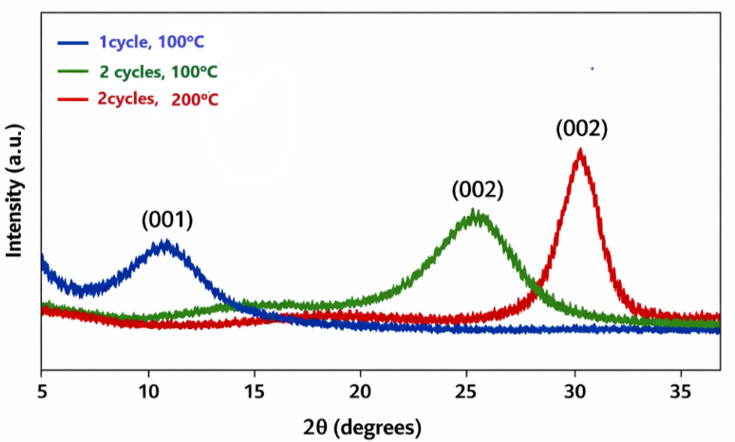
Reduced graphene oxide (rGO) is a promising material for thin film applications owing to its excellent structural, electrical, and mechanical properties. This study investigated the effects of thermal annealing and spin-coating cycles on the structural evolution of chemically reduced graphene oxide thin films. Graphene oxide (GO) was synthesized using the modified Hummers' method, chemically reduced with ascorbic acid, and deposited onto soda lime glass substrates by spin coating using one and two deposition cycles. The deposited films were thermally annealed at 100 °C and 200 °C under a N2/H2 atmosphere. Structural characterization was carried out using scanning electron microscopy (SEM), energy-dispersive X-ray spectroscopy (EDS), and X-ray diffraction (XRD). SEM analysis showed that increasing the annealing temperature improved film continuity, reduced surface agglomeration, and enhanced morphological uniformity, while increasing the number of spin-coating cycles increased the film thickness from approximately 150 nm to 350 nm, resulting in improved substrate coverage. EDS analysis revealed an increase in carbon content from 0.14 at.% to 66.20 at.% and a corresponding decrease in oxygen concentration from 1.87 at.% to 0.02 at.%, indicating progressive deoxygenation. XRD analysis confirmed the transformation from the graphene oxide (001) reflection to the graphitic (002) reflection, demonstrating partial restoration of the sp² carbon network and improved crystallographic ordering. The findings indicate that thermal annealing primarily enhances structural ordering, whereas additional spin-coating cycles improve film thickness and surface coverage, providing an effective approach for fabricating high-quality rGO thin films for electronic and energy-related applications.
References
Ahmad, F., Mohammed A., Lease, J., Zheng, A., Lim T., Subota, T., Andou, Y. (2024). Structural Metamorphosis of Graphitic Derivatives Produced from Fractionated. ACS Sustainable Resource Management. https://doi.org/10.1021/acssusresmgt.3c00048
Antidormi, A., Roche, S., Colombo, L. (2020). Impact of oxidation morphology on reduced graphene oxides upon thermal annealing. Journal of Physics: Materials.1(3), 2020. https://doi.org/10.1088/2515-7639/ab5ef2.
Bamboo L., Ahmad F., Mohammed A., Lease, J., Zheng, A., Tsubota, T., Andou, Y. (2024). Structural Metamorphosis of Graphitic Derivatives Produced from Fractionated. ACS Sustainable Resource Management. 1(1). https://doi.org/10.1021/acssusresmgt.3c00048
Carotenuto, M., Longo G. (2022). A Brief Review: The Use of L-Ascorbic Acid as a Green Reducing Agent of Graphene Oxide. Materials (Basel).15(18), 6456. https://doi.org/10.3390/ma15186456.
Farooq, N., Rehman, Z., Hareem, A., Masood, R., Ashfaq, R., Fatimah, I., Hussain, S., Ansari, S., & Parveen, N. (2024). Graphene Oxide and Based Materials: Synthesis, Properties, and Applications -A Comprehensive Review. MatSci Express. 1. 185-231. https://doi.org/10.69626/mse.2024.0185.
Giang T., Le, J., Manyam, P., Opaprakasit, N., Chanlek, N., Grisdanurak, P. (2018). Divergent mechanisms for thermal reduction of graphene oxide and their highly different ion affinities. Diamond and Related Materials. Volume 89, 2018, Pages 246-256. https://doi.org/10.1016/j.diamond.2018.09.006
Guo M., Yuan H., Ni K., Ye C., Pan F., Xiong J., Zhu Y. (2025). Structural Repair of Reduced Graphene Oxide Promoted by Single-Layer Graphene. Adv Sci (Weinh). 12(7). https://doi.org/10.1002/advs.202410088.
Kanishka K., De Silva, H., Hsin-Hui H., Rakesh J., Masamichi Y. (2020). Restoration of the graphitic structure by defect repair during the thermal reduction of graphene oxide. Carbon. Volume 166. https://doi.org/10.1016/j.
Mohammed S., Pegah S. M., Kenta N., Garrett St., Michael G., Ilkeun L., Mahesh R. N., Ashok M. (2022). Synthesis of pristine graphene-like behaving rGO thin film: Insights into what really matters, Carbon, Volume 186, Pages 437-451, ISSN 0008-6223, https://doi.org/10.1016/j.carbon.2021.10.011.
Murphy, B., Apollo, N., Unegbu, P.,Posey, T., Rodriguez, N.;Hendricks, Q., Cimino, F., Richardson, G., Vitale, F. (2022). Vitamin C-reduced graphene oxide improves the performance and stability of multimodal neural microelectrodes. iScience, 25 (7). 2022 https://doi.org/doi.org/10.1016/j.isci.2022.104652
Owoeye V, Adewinbi S., Salau A., Orelusi A., Adeoye A, Akindadelo A. (2023). Effect of precursor concentration on stoichiometry and optical properties of spray pyrolyzed nanostructured NiO thin films. Heliyon. 9(1). https://doi.org/10.1016/j.heliyon.2023.e13023.
Palomba M, Carotenuto G, Longo A. (2022). A Brief Review: The Use of L-Ascorbic Acid as a Green Reducing Agent of Graphene Oxide. Materials (Basel). 15(18), 2022. https://doi.org/10.3390/ma15186456
Pasindu V, Yapa P, Dabare S, Munaweera I. Multifunctional transition metal oxide/graphene oxide nanocomposites for catalytic dye degradation, renewable energy, and energy storage applications. RSC Adv. 2025 Sep 12;15(40):33162-33186. https://doi.org/10.1039/d5ra04806k
Priyank V., Neelkanth M., Guan-Yu C., Zeyang L., Angela M., Jeffrey C. (2016). New insights into the thermal reduction of graphene oxide: Impact of oxygen clustering. Carbon, Volume 100, 2016. https://doi.org/10.1016/j.carbon.2015.12.087.
Rao, S., Upadhyay, J., Polychronopoulou, K., Umer, R., & Das, R. (2018). Reduced Graphene Oxide: Effect of Reduction on Electrical Conductivity. Journal of Composites Science, 2(2), 25. https://doi.org/10.3390/jcs2020025
Rout, P., Roy, S., Acharya, P. (2026). Graphene oxide–modified fly ash pellet lightweight concrete: Microstructure–property relationships and transition to structural-grade performance. Innovative Infrastructure Solutions. 11. https://doi.org/10.1007/s41062-026-02727-6.
Sekhar C. (2024). Application of graphene/graphene-oxide: A comprehensive review[J]. AIMS Materials Science, 2025, 12(3): 453-513. https://doi.org/10.3934/matersci.2025023
Shivang S., Akshay K., Naveen Y., Mohit K., Sharma, B. (2025). Defect evolution and structural transformation in graphene oxide during hydrogen assisted thermal annealing, Ceramics International, Volume 51, Issue 26, 49836-49844. https://doi.org/10.1016/j.ceramint.2025.08.222.
Siklitskaya A, Gacka E, Larowska D, Mazurkiewicz-Pawlicka M, Malolepszy A, Stobiński L, Marciniak B, Lewandowska-Andrałojć A, Kubas A. (2021). Lerf-Klinowski-type models of graphene oxide and reduced graphene oxide are robust in analyzing non-covalent functionalization with porphyrins. Sci Rep. 11(1):7977. https://doi.org/10.1038/s41598-021-86880-1.
Sun, P., Wang, Y., Liu, H., Wang, K., Wu, D., Xu, Z., Zh,u H. (2014). Structure evolution of graphene oxide during thermally driven phase transformation: is the oxygen content really preserved? PLoS One. 9(11). https://doi.org/10.1371/journal.pone.0111908.
Utkan, Guldem, Y., Gorkem, T., Beste, C., Ozturk, Tarik T. (2023). Production of Reduced Graphene Oxide by Using Three Different Microorganisms and Investigation of Their Cell Interactions, ACS Omega AmericanChemical Society, 8(34). https://doi.org/10.1021/acsomega.3c03213
Xu, X., Huang, J., Miao, G., Yan, B., Chen, Y., Zhou, Y., Zhang, Y., Zhang, X., & Cai, W. (2025). Visualizing Thermal Reduction in Graphene Oxide. Materials, 18(10), 2222. https://doi.org/10.3390/ma18102222
Zhou, B., Cai, Z., Wen, J., Liu, Huajie. (2024). Engineering Thermally Reduced Graphene Oxide for Synchronously Enhancing Photocatalytic Activity and Photothermal Effect. ACS Applied Bio Materials, 7 (9) 6249-6260. https://doi.org./10.1021/acsabm.4c00862.
Downloads
Published
Issue
Section
Categories
License
Copyright (c) 2026 Nurudeen Siyaka, Daniel Mikanjuola, Yunusa Nuhu, Jibril Idirisu

This work is licensed under a Creative Commons Attribution 4.0 International License.


