
IN VIVO BIOACCESSIBILTY AND BIODISTRIBUTION ANALYSIS OF HEAVY METALS IN LETTUCE OBTAINED FROM IRRIGATED DUMPSITES IN MUBI NORTH, ADAMAWA STATE. NIGERIA
DOI:
https://doi.org/10.33003/fjs-2026-1006-4756Keywords:
In vivo, Lettuce (lactuca Sativa), Metals, Bioaccessibilty, BiodistributionAbstract
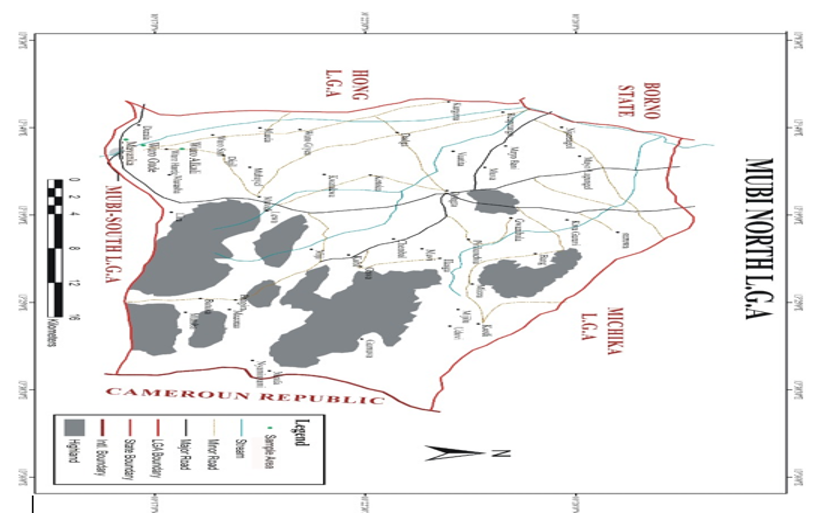
The cultivation and consumption of vegetables (mainly lettuce) from farm-land in Mubi environs is of major public health concern. This study was performed to assess the bioaccessibility and biodistribution analysis of some heavy metals in lettuce obtained from the three different irrigated dumpsites (Wuro-Alkali, Wuro-Gude and Mayanka). Using in vivo based method, a total of 15 rabbits were used and were randomly assigned to cages with five rabbits per cage. The rabbits were fed with lettuce harvested from the irrigated farm-lands for this experiment. The lungs, kidney and liver of the experimental animals were harvested and analyzed for cadmium (Cd), zinc (Zn), Iron (Fe), magnesium (Mg), chromium (Cr), manganese (Mn), lead (Pb) and copper (Cu) using Atomic Absorption Spectrophotometer (AAS).The values of Fe and Cr in kidney of Wuro-Alkali, Wuro-Gude and Mayanka are above the control values of Fe 3.63±0.04 mg/kg and Cr 0.07±0.01 mg/kg. Similarly, the value of Cr in lungs at the three dumpsites are below the control value of 0.16±0.01 mg/kg. Also, the value of Fe and Cr in liver at the three dumpsites are above the control value of Fe 0.71±0.03 mg/kg and the value of Cr in lungs at the three dumpsites are below the control value of 0.03±0.01 mg/kg. Heavy metals concentration in these dumpsites may not appear to pose very serious environmental problems at the moment. However, accumulation of these metals after several years may pose a threat to human health and the environment.
References
Adeniyi, A.A., (1996). Determination of cadmium, copper, iron, lead, manganese and zinc in water leaf (Talinum triangulare) in dumpsites. International Journal Environment, 22: 259-262.|
Ahmad, J.U. and Goni, M.A. (2010). Heavy metal contamination in water, soil, and vegetables of the industrial areas in Dhaka, Bangladesh. Environmental Monitoring and Assessment 166: 347-357.
Akan, J. C., Abdulrahman, F. I., Ogugbuaja, V. O. and Ayodele, J. T. (2009). Heavy Metals and Anion Levels in some samples of Vegetables grown within the Vicinity of Challawa Industrial
Alam, M.G., Snow, E.T. and Tanaka, A. (2003). Arsenic and heavy metal contamination of vegetables grown in samta village, Bangladesh. Science Total Environment, 308(1-3), 83-96.
Al-Saleh, I., Shinwari, N., El-Doush, I., Biuedo, G., Al-Amodi, M. and Khogali, F. (2004). Comparison of mercury levels in various tissues of albino and pigmented mice treated with two different brands of mercury skin-lightening creams. Biometals 2: 167-175.
Avenant - Oldewage A, and Marx, H. M. (2000). Bioaccummulation of chromium, copper and iron in the organs and tissues of clarias gariepinus in the Olifants River, Kruger National Park. ISSN 0378-4738 = Water S.A Vol.26 No.4
Bwatanglang, I. B., Garba, S. H., Lynna, I.D., Shinggu, D. Y., Magili, S. T and Musa. Y (2017).Systemic Effects of Nigerian Bituminous Coal Fly Ash in Albino Rats: Serum Biochemistry and Histopathological Evaluation. International Journal of Biochemistry Research and Review 20(2): 1- 10
Edem, O., Dosunmu, C., Miranda, I., Bassey, I. (2009). Distribution of Heavy Metals in leaves, stems and Roots of Fluted Pumpkin (Telfeiria occidentalis). Pakistan Journal of Nutrition Volume 8 Do; 10.3923/pjn.
Freig, D.I., T.M. Reid and L.A. Loeb, (1994) .Reactive oxygen species in tumorigenesis. Cancer Research., 54 : 1890 - 1894.
Gibb, H. and C. Chen, 1989. Evaluation of issues relating to the carcinogens risk assessment of chromium. Science of the Total Environmental Journal, 86: 181 - 186
Harmanescu, M., Alda, L. and Bordean, D. (2011). Heavy metals health risk assessment for population via consumption of vegetables grown in old mining area; a case study: Banat County, Romania. Chemistry Central Journal 5(1): 64.
Hartwig, A. (1998). Carcinogenicity of metal compounds: Possible role of DNA repair inhibition. Toxicol. Lett., 102-103: 235-239.
Huang l, Zhou Cu, Chen Zi Zhang (2016). Advances in the study of in vitro simulation Bioavailability of heavy metals in soil and crops. Journal of Yangtze University, 42-7(Natural sciences Edition.)
Islam, E.U., X. Yang, Z. He and Q. Mahnmood, (2007). Assessing potential ditary toxicity of heavy metals in selected vegetables and food crocks. Journal of Zhejiang Universal Science., 8: 1-13.
Itanna, F. (2002). Metals in leafy vegetables grown in Addis Ababa and toxicological implications. Ethiop. I. Health Dev. 16(3):295-302
Jang, C.S., Liu, C.W., Lin, K.H., and Wang, S.W. (2006). Spatial analysis of potential carcinogenic risks associated with ingesting arsenic in aquaculture tilapia (Oreochromis mossmbicus) in black foot disease hyperendemic areas. Journal of Environmental Science and Technology 40 (5): 11707 - 11713.
Jarup, L. (2003). Hazards of heavy metals contamination, Impact of Enviromental pollution on health, Balancing risk. British Medical Bulletin, 68:167-182.
Jing, Y.D., Z.L.He and X.E.Yang. (2007). Role of soil rhizobacteria in phytoremediation of heavy metal contaminated soils. Journal of Zhejiang Universal Sciences. B, 8: 192 -207.
Kashem, M..A. and B.R. Singh, (1999). Heavy metal contamination of soil and vegetation in the vicinity of industries in Bangladesh. Water Air Soil Pollution 115: 347-361.
Katz, S. H., and Weaver W.W. (2003). Encyclopedia of Food and Culture. New York; Schribner. ISBN 0684805685
Kim, S., Arora, M., Fernandez, C., Landero, J., Caruso, J., Chen, A. (2013) Lead,Mercury and Cadmiun exposure and attention deficit hyperactivity disorder in Children. Journal of Environmental Research.
Klaus-J.A. (2010). Definition of “Heavy Metals” and their role in biological systems. In: Sherameti, I. & Varma, A. (eds.) Soil Heavy Metals, Soil Biology. Germany: Springer Verlag Berlin Heidelberg
Ladipo, M. K. and Doherty, V. F. (2011). Heavy Metals Levels in Vegetables from selected Markets in Lagos, Nigeria. African Journal of Food Science and Technology. 2(1): 018 - 021
Li, J., Xie, Z.M., Xu, J.M. and Sun, Y.F. (2006). Risk assessment of safety of soils and vegetables around a lead/zinc mine. Journal of Environmental Geochemistry and Health 28: 37 - 44.
Lone, M.I. Z., He, P.J., Stoffella and X. Yang, (2008). Phytoremediation of heavy metal polluted soils and water: Progresses and perspectives. Journal Zhejiang Universal Science. 9: 210 - 220.
Lu, Y., Yin, W., Huang, L.B., Zhang, G.L. and Zhao, Y.G. (2011). Assessment of bio-accessibility and exposure risk of arsenic and lead in urban soils of Guangzhou City, China. Journal of Environmental Geochemistry and Health 33: 93-102.
Mansir, M. (2006).Livestock Marketing and Transportation in Nigeria.Expro@erols.com
Mashauri, D.A. and A. Mayo, (1990). The Environmental impact of Industrial and Domestic Wastewaterin Dar Es Salaam. In: Environmental Pollution and its Management in East Africa, Khan, M.R. and H.J. Gijzen, (Eds.). University of Dar Es Salaam, Tanzania, pp: 23-32.
Ogunyemi, S., Awodoyin ,R.O., Opadeji, T. (2003). Urban agricultural production: Heavy metal contamination of Amaranthus cruenties L. grown on domestic refuse landfill soil in Ibadan, Nigeria. Emirate Journal of Agricultural Science; 15 (2):87-94.
Okoronkwo, N.E., J.C. Igwe and E.C. Onwuchekwa, (2005) .Risk and health implications of polluted soils for crop production. African Journal Biotechnology, 4: 1521-1524.
Olarinoye, I.O., Sharifat, I., Kolo, M.T. (2010). Heavy metal content of soil samples from two major dumpsites in Minna. Journal of Natural and Appllied Science; 1119 – 9296:11 (1): 90 - 102.
Oluyemi, E.A., Feuyit, G., Oyekunle, J.A.O., Ogunfowokan, A.O. (2008). Seasonal variations in heavy metal concentrations in soil and some selected crops at a landfill in Nigeria. African Journal of Environmental Science and Technology; 2 (5): 089 - 096.
Othman, O.C., (2001). Heavy metals in green vegetables and soils from vegetable gardens in Dares Salaam, Tanzania. Tanzania Journal of Science Association. Crop Science., 27: 37 - 48.
Park, R.M., Bena, J.F., Stayner, L.T., Smith, R.J., Gibb, H.J. and Lees, P.S. (2004). Hexavalent chromium and lung cancer in the chromate industry: a quantitative risk assessment. Risk Analysis 24: 1099-1108
Pilot, CH., and Dragan, P.Y, (2006). Chemical carcinogenesis. toxicology International edition, Fifth Ed, PP:201-260.
Saplakoglu, U., M. Iscan and M. Iscan, (1997). DNA single-strand breakage in rat lung, liver and kidney after single and combined treatments of nickel and cadmium. Mutat. Res., 394: 133-140.
Scott, D., J.M. Keoghan and B.E. Allan, (1996). Native and low-input grasses-a New Zealand high country perspective. New Zealand Journal of Agriculture Research. 39: 499 - 512.
Sharma, R.K., M. Agrawal and F.M. Marshall, (2006). Heavy metal contamination in vegetables grown in wastewater irrigated areas of varanasi, India. Bull. Environ. Contaminat. Toxicol., 77: 312-318.
Shuo Sun., Xiaofang Zhou, Zhian Li , and Ping Zhuang (2019). In Vitro and In Vivo Testing to Determine Cd Bioaccessibility and Bioavailability in Contaminated Rice in Relation to Mouse Chow. International Journal of Environmental Research on Public Health , 16, 871.
Singh, A., Sharma, R.K., Agrawal, M. and Marshall, F.M. (2010). Health risk assessment of heavy metals via dietary intake of foodstuffs from the wastewater irrigated site of a dry tropical area of India. Journal of Food and Chemical Toxicology 48: 611-619.
Sinha, S., K. Pandey, A.K. Grupta and K. Bhatt, (2005). Accumulation of metals in vegetables and crops grown in the area irrigated with river water Bull. Environ Contaminat. Toxicol., 74: 210-218.
Trichopoulos, D., Lipworth,L., Petridou E.and Adami, H.O. (1997). Epidemiology of Cancer. In: Cancer, Principles and Practice of Oncology, DeVita, V.T., S. Hellman and S.A. Rosenberg (Eds.). Lippincott Company, Philadelphia, pp: 231-258.
Turkdogan, M.K., F. Kilicel, K. Kara, I. Tuncer and I. Uygan, (2002). Heavy metals in soil, vegetables and fruits in the endemic upper gastrointestinal cancer region of Turkey. Journal of Environmental Toxicology and Pharmacology. 13: 175-179.
Voutsa, D., Grimanis, A. and Samara, C. (1996). Trace elements in vegetables grown in an industrial area in relation to soil and air particulate matter. Jounal of Environmental Pollution . 94: 325 - 335.
Waalkes, M.P. and S. Rehm, (1994). Cadmium and prostate cancer. Journal of Toxicology and Environmental Health, 43: 251-269.
WHO, (1992). Cadmium environmental health criteria. World Health Organization, pp: 134. http://www.pjbs.org/pjnonline/fin1752.pdf.
Yusuf, K.A. and Osibanjo. O. (2006) .Trace metals in water and sediments from Ologe Lagoon, Southwestern Nigeria Pak. Journal of Science and Industrial Research.49: 88 -96.
Zhuang, P., McBride, M.B., Xia, H., Li, N. and Li, Z. (2009). Health risk from heavy metals via consumption of food crops in the vicinity of Dabaoshan mine, South China. Journal of Science of the Total Environment 407: 1551-1561.
Downloads
Published
Issue
Section
Categories
License
Copyright (c) 2026 Shinggu Danbaki Yamta, Bwatanglang Birma Ibrahim, Hyelnasinyi Chindapi, David Jonathan Ujewe

This work is licensed under a Creative Commons Attribution 4.0 International License.


