
Adsorption of Eosine Y Dye using Modified Eggshell Adsorbent for Sustainable Water Treatment
DOI:
https://doi.org/10.33003/fjs-2026-10(ANB-K)-5130Keywords:
Regulatory compliance, Water reuse, Freundlich isotherm, Dosage, Non-linearAbstract
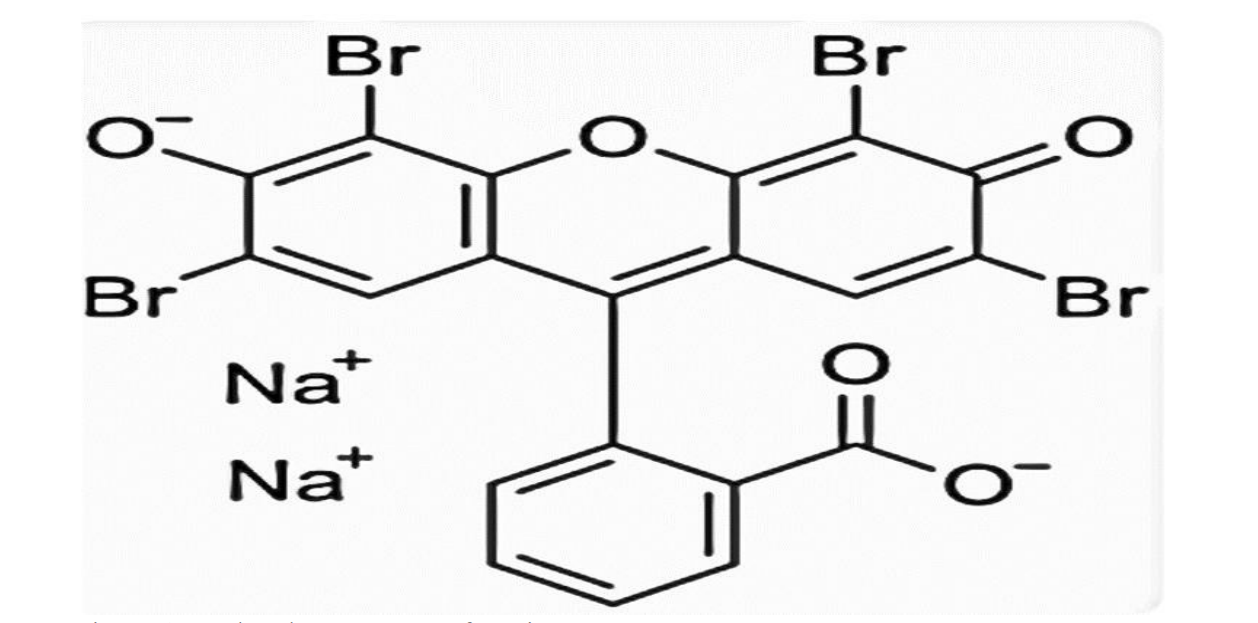
Synthesis and application of modified eggshell-based adsorbent (MESBA) for the removal of Eosine Y dye from simulated wastewater as alternative technologies for wastewater treatment were investigated. The MESBA was characterised for physicochemical properties with the use of Fourier Transform Infrared (FTIR), Scanning Electron Microscope (SEM), and Energy Dispersive Spectrometer (EDS) as characterization tools respectively. The effect of adsorbent dosage on percentage dye removal was assessed. The isotherm data were fitted to Langmuir and Freundlich isotherm models by employing the linear and non-linear forms of the equations. MESBA has pH (7.80), moisture content (12.90%), ash content (5.80%), volatile matter (9.90%) fixed carbon (71.40%), bulk density (1.33 g/cm3), particle size (300 µm) and surface area (800 m2/g). The adsorbent possessed high carbon content with large surface areas in addition to the availability of functional groups within the adsorbent’s surface that are good adsorption sites for the removal of ES-Y dyes from wastewater. The adsorbent percentage dye removal was dosage-dependent at optimum dosage of 0.8 g. MESBA has maximum percentage dye removal of 82% at optimum dosage. The isotherm model that fairly described the removal of ES-Y dyes from wastewater was Freundlich isotherm model with coefficient of determination values for both linear (R2 =0.6746) and non-linear (R2 = 0.8615) form of the equations. Largely, the prepared adsorbent is efficient, eco-friendly and economically feasible in remediating dye-polluted wastewater, ensuring water reuse and regulatory compliance.
References
Abdullahi, A., Tsafe, A. I., Liman, M. G., & Ibrahim, N. (2022). Characterization and Modification of Activated Carbon Generated from Annogeissus leiocarpus. Caliphate Journal of Science and Technology (CaJoST), 2, 151-159.
Abdulsalam, K. A., Giwa, A. A.., & Adelowo, M. (2020). Optimization studies for decolourization of textile wastewater using a sawdust-based adsorbent. Chemical Data Collections, 27: 100400.
Adeleke, E. A, Onifade, A. P, Sangoremi, A. A, Anifowose, A. J., & Olawoye, B. M. (2023). Adsorption of Pb2+, Co2+, and Cd2+ from Aqueous Solution Using Nitric Acid Modified Kola Nut Husk Adsorbent. Journal of Applied Sciences and Environmental Management. 27 (5): 919-925. https://dx.doi.org/10.4314/jasem.v27i5.5
Ahmed, T. A. E., Kulshreshtha, G., & Hinke, M. (2019a). Value-added uses of eggshell and eggshell membranes “in Eggs as functional food and Nutraceuticals for human Health, ed. J. Wu (London). Journal of Royal Society of Chemistry. 2019a: 359-397.
Ahmed, T. A. E., Wu, L., Younes, M., & Hincke, M. (2021). Biotechnological Application of Eggshell: Recent Advances. Frontiers in Bioengineering and Biotechnology, 6(2021):675364. https://doi.org/10.3389/fbioe.2021.675364
Ajala, L. O., and Ali, E. E. (2020). Preparation and Characterization of Groundnut Shell-Based Activated Charcoal. Journal of Applied Sciences and Environmental. Management, 24 (12):2139-2146.
Alam, S., Khan, M. S., Bibi, W., Zekker.-Burlakous, J., Ghangrekar, M. M., Bhowwick, G. D., Kallistova, A., Pimenov, N., & Zahoor, M. (2021). Preparation of Paulownia tomentosa as a efficient adsorbent for the removal of Acid Red 4 and Methylene blue present in water. Water, 13(11): 1453. https://doi.org/10.3390/w13111453
Alhawtali, S., El-Harhawi, M., Al-Harbawi, A. S., El Blidi, L., Alrashed, M., & Yin, C. Y. (2023) Enhanced adsorption of methylene blue using phosphoric acid-activated hydrothermal carbon microspheres synthesized from a variety of palm-based biowastes. Coating, 13(7): 1287.
Ayawei, N., Ebelegi, A. N., & Wankasi, D. (2017). Modelling and Interpretation of Adsorption Isotherms. Journal of Chemistry, 2017: 3039817. https://doi.org/10.1155/2017/3039817
Baharim, N. H., Sjahrir, F., Taib, R. M., Idris, N., & Daud, T. A. T (2023) Methylene blue adsorption by acid posttreated low temperature biochar derived from banaba (Musa acuminata) pseudo stem. Sains Malaysiana, 52(2): 547-561.
Bello, O. S., Awojuyigbe, E. S., Babatunde, M. A., & Folaranmi, F. E. (2017). Sustainable conversion of agro-wastes into useful adsorbent. Applied Water Science. 2017: 7:3561
Bello, O.S., Awojuyigbe, E.S., Babatunde, M.A., & Folaranmi, F.E. (2017). Sustainable conversion of agro-wastes into useful adsorbent. Applied Water Science 7, 3561-3571.
Budinoval, T., Ekinci, E., Yardim, F., Grimm, A., Bjornbom, E., Minkova, V., & Goranova, M. (2011). Characterization and application of activated carbon produced by H3PO4 and water vapour activation. Fuel Processing Technology 87, 899-905.
Fito, J, Abewas, M., & Mengistu, A., (2023). Adsorption of methylene blue from extile industrial wastewater using activated carbon developed from Rumex abyssinicus plant. Scientific reports,13 (1): 1-17.
Giwa A. A, Olajire A. A, Adeoye, D. O., & Ajibola T. A. (2015). Kinetics and Thermodynamic of Ternary Dye System Adsorption onto Melon (Citrilluslanatus) Seed Husk. American Chemical Science Journal, 7(1): 7-25.
Jabar, J. M., & Odusote Y. A. (2020). Removal of cibdcron blue 3G-A (CB) dye from aqueous solution using chemophysically activated biochar from palm empty fruit bunch fiber. Arabian Journal of Chemistry. 2020; 13:5417-5429.
Kuang, Y, Zhang X., & Zhou S. (2020). Adsorption of methylene blue in water onto activated carbon by surfactant modification. Water, 12(2): 587.
Lu, G., Qu, L., Lin, Z., Dang, Z., Yang, C., & Xi, Y. (2017). A kind of method using the acid agricultural land soil of eggshell heavy metal pollution to carry out improving. State intellectual Property office of the People’s Republic of China, CN106269841A. Inventor; south China University of technology, assignee, 2017; 1-10.
Munagapati, V. S., Vijaya, Y., Kwon M. L., & Dong-Su, K. (2018). Removal of anionic dyes (Reactive Black 5 and Congo Red) from aqueous solution using banana peel powder as adsorbent. Ecotoxicology and Environmental Safety, 148, 601-607.
Nandiyanto, A. B. D., Oktiani, R., & Ragadhita, R. (2019). How to Read and Interpret FTIR Spectroscope of Organic Material. Indonesian Journal of Science and Technology, 4 (1):97-118.
Nwabanne, J. T., Iheanacho, O. C., Obi, C. C., & Onu, C. E. (2022). Linear and nonlinear kinetic analysis and adsorption characteristics of packed bed column for phenol removal using rice husk-activated carbon. Applied Water Science, 12, 91. https://doi.org/10.1007/s13201-022-01635-1
Onawumi, O. O. E., Sangoremi, A. A., & Bello, O. S. (2021). Production and Characterization of Groundnut and Egg Shells Activated Carbon (AC) as Viable Precursors for Adsorption. Journal of Applied Science and Environmental Management, 25(9):1707-1713.
Rabeie, B., Mahkam, M., Mahmoodi, M. N., & Lan, C. Q. (2021). Graphene Quantum Dot incorporation in Zeolitic imidazole framework with sodalite (SOD) topology: Synthesis and improving the adsorption ability in liquid phase. Journal of environmental Chemical Engineering, 9(6): 106303.
Unuabonah, E. I., Agunbiade, F. O., Alfred, M. O., Adewumi, T. A., Okoli, C. P, Omorogie, M. O., Akanbi, M. O., & Ofomaja, A. E. (2017). Taubert A. Facile synthesis of new amino-functionalized agrogenic hybrid Composite Clay adsorbents for phosphate capture and recovery from water. Journal of Cleaner Production, 164, 652-663.
Ushedo, T. R, Adeyemi, O. G, Adewuyi, A., & Lau, W. (2022). Synthesis of N, N(1,3-Phenylene) dimethanimine. A useful resource for the removal of free fatty acid in waste vegetable oil. Scientific African. 16, e01188. https://doi.org/10.1016/j.sciaf.2022.e01188
Downloads
Published
Issue
Section
Categories
License
Copyright (c) 2026 Abidemi Anthony Sangoremi

This work is licensed under a Creative Commons Attribution 4.0 International License.


