
PREVALENCE AND SEVERITY PATTERNS OF ALCOHOLIC LIVER DISEASE AT A TERTIARY HOSPITAL IN BENIN CITY, NIGERIA
DOI:
https://doi.org/10.33003/Keywords:
Liver Function Test, ALD, De-Ritis Ratio, AST, ALT, Healthcare FacilityAbstract
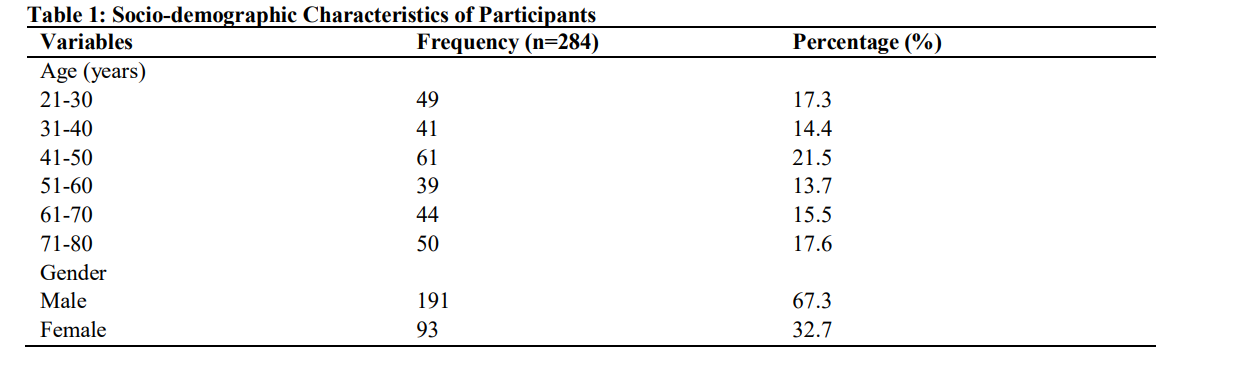
The ratio of Aspartate aminotransferase (AST) and Alanine aminotransferase (ALT) (De Ritis ratio) remains a vital biochemical marker in hepatology. Although both AST and ALT are indices of liver injury, the ratio of these two enzymes helps clarify the etiology and severity of liver disease. A retrospective analysis was conducted on 7,580 liver function test (LFT) requests received from May 2024 to May 2025 at the University of Benin Teaching Hospital (UBTH), Benin City, Nigeria. UBTH is a tertiary health facility with over 900 bed capacity, serving treatment, teaching, health, research and referral purposes for Edo State with its adjoining states. Of the 7,580 requests received, 284 (3.7%) cases demonstrated elevated levels of De Ritis Ratios (AST:ALT) greater than 2:1 indicating Alcoholic Liver Disease (ALD). These cases were further examined based on their gender, ethnicity and age. There was a marked male predominance (67.3%) compared to females (32.7%). The distribution across ethnic groups highlighted significant regional variability in which Delta (40%) was the highest, followed by Bini (24%), Ibo (15%), Yoruba (15%) and Hausa (6%). Age range of 40 to 49 (21.5%) had the highest number of De Ritis ratio. There was a higher prevalence of suspected ALD in males and a significant age-related distribution based on De ritis ratio values. The prevalence of liver disease is low (3.7%) in the population that accessed the health care facility within the period studied.
References
Akinyemiju T. F., Odusola A. O. & Oladipo O. (2022). Healthcare seeking behaviours and perceptions of healthcare services in Nigeria: A systematic review of recent studies. Nig. J. of Clin. Pract., 25(1), 1 13.
Ayal M. A., Dessie Y. A., Nega M. E., Negash W. T. & Berihun S. M. (2025). Treatment outcomes of chronic liver disease and associated factors among patients treated at hospitals in Bahir Dar city, north-west Ethiopia. BMC Gastroenterology 25:141 https://doi.org/10.1186/s12876-025-03719-z
Botros M. & Sikaris K.A. (2013). The De Ritis ratio: the test of time. Clin Biochem Rev., 34:117-130.
Chalasani N., Younossi Z., Lainez J. M., Arrebo M. A., Ratziu V., Ronksley P. E. & George, D. K. (2012). The diagnosis and management of nonalcoholic fatty liver disease: practice guideline by the American Association for the Study of Liver Diseases, American College of Gastroenterology and the American Gastroenterological Association. Hepatology, 55(6), 2005-2023.
Gan C., Yuan Y., Shen H., Gao J., Kong X., Che Z., Guo Y., Wang H., Dong E. & Xia J. (2025). Liver diseases: epidemiology, causes, trends and predictions. Signal Transduction and Targeted Therapy. 10:33. https://doi.org/10.1038/s41392-024-02072-z
Hussen N., Zhu L., Tetangco E. & Ellison S. (2018). Hepatoptosis in a Patient with Alcoholic Hepatitis. Am J Gastroenterol., 113(11):1581.
Idonije O.B. & Okojie F. O. (2012). Liver enzymes activities in Nigerian local gin (ogogoro) consumers. Central European journal of experimental biology 1(4): 131-133.
Karmen A., Wroblewski F. & Ladue J.S. (1955). "Transaminase activity in human blood". The J. of Clin. Investig. 34 (1): 126–131. doi:10.1172/jci103055
O’shea RS, Dasarathy S. & McCullough A. J. (2010). Alcohol liver disease. Hepathology, 51(1): 307-328.
Ordinioha B. & Brisibe S. (2015). Alcohol consumption among pregnant women attending the ante-natal clinic of tertiary hospital in south-south Nigeria. Nig. J. of Clin. Pract. 18(1): 13-17.
Ott J.J., Stevens G.A., Groeger J. & Wiersma S.T. (2012). Global epidemiology of hepatitis B specific HBsAg sero-prevalence and endemicity. Vaccine. 30(12): 2212-2219.
Portiho M. M., Martins P. P, Lampe E. & Vilar LM. (2012). A comparison of molecular methods for hepatitis B virus (HB) DNA detection from oral fluid samples”. J. of Med. Microbiol. 61:844-851.
Qishu L. & Wei L. (2025). Association between De-Ritis ratio (AST/ALT) and mortality in patients with chronic kidney disease: a retrospective cohort study. Scientific Reports 15:9649 https://doi.org/10.1038/s41598-025-93184-1 1
Rehn J., Shield K. D., Rehm M. X., Gmel G. & Frick U. (2013). Alcohol consumption, alcohol dependence, and attributable burden of disease in Europe: potential gains from effective interventions for alcohol dependence. Addiction, 108(2) 347-355.
Schilsky M. L. & Kaplowitz N. (1980). Severe acetaminophen hepatotoxicity: perspective study of initial evaluation and response to therapy. Gastroenterology, 78(4): 753-758.
Shaikh S. M., Varma A., Kumar S., Acharya S. & Patil R. (2024). Navigating Disease Management: A Comprehensive Review of the De Ritis Ratio in Clinical Medicine. Cureus. 16(7): e64447. DOI: 10.7759/cureus.64447
Umar T. P. & Agustini D. (2025). Research Trends of the Aspartate Aminotransferase/Alanine Aminotransferase (De Ritis Ratio) on Cancer: A Bibliometric Analysis of Global Publications from 1990 to 2024. J. Nat. and Sci. of Med., 9 (1): 25-32 DOI: 10.4103/jnsm.jnsm_22_25
Usifo S. F., Aika I. N., Ogugu O. N. & Odili V. U. (2018). Alcohol consumption: Prevalence, its predictors and knowledge of its harmful effects among pregnant women in Niger Delta, Nigeria J. of Sci. and Prac. of Pharm. 5(1):211-213.
Vyankatesh T. A. & Shilpa V. S. (2023). Evaluation of Deritis ratio (AST/ALT) in diagnosis of alcohol liver disease. International journal of pharmaceutical sciences review and research. 80(1)7-9.
Weiskirchen R., Weiskirchen S. & Tacke F. (2018). Recent advances in understanding liver fibrosis: bridging basic science and individualized treatment concepts. F1000Res. 7
Downloads
Published
Issue
Section
Categories
License
Copyright (c) 2026 Esther F. Adeogun, Victoria N. Mokwenye, Theophilus Iyayi

This work is licensed under a Creative Commons Attribution 4.0 International License.


