
ANTIBACTERIAL EFFICACY OF ‘OGI’ LIQUOR OBTAINED FROM ZEA MAYS ON CLINICAL STRAINS OF DIARRHOEAGENIC VIBRIO SPECIES
DOI:
https://doi.org/10.33003/fjs-2026-1008-5028Keywords:
‘Ogi’ Liquor, Antibacterial, Diarrhoea, Vibrio SpeciesAbstract
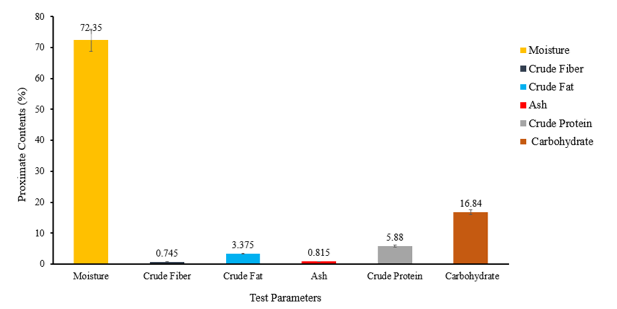
Diarrhoea infections are a frequent cause of illness given the high global morbidity rate. This study investigated the antibacterial efficacy of ‘ogi’ liquor on Vibrio species associated with diarrhea. The ‘ogi’ liquor was obtained in the laboratory from from yellow maize (Zea mays grains) which was allowed to ferment at ambient temperature of 28±1oC for 72 hours by the maize natural microflora. Proximate analysis, pH and titratable acidity of the ogi liquor was done using standard procedures. The antibacterial activity of the ‘ogi’ liquor on the test Vibrio isolates was carried out using agar well diffusion method. Moisture content recorded the highest in ogi liquor (72.35%), followed by carbohydrate which is 18.84%. The pH of the ogi liquor decreases ranging from 6.52 to 2.48 while the TTA increases ranging from 0.095 to 0.467. The ‘ogi’ liquor had inhibitory effect on most of the Vibrio isolates. The highest zone of inhibition was recorded for V. vulnificus and V. alginolyticus with 17.67 ± 2.52 mm and 16.67 ± 2.08 mm respectively. Ciprofloxacin used as positive control inhibited the growth of all the Vibrio isolates. The results obtained from this study showed the antibacterial efficacy of ogi liquor on the test Vibrio isolates and therefore could be used in the management of diarrhoea caused by these pathogens.
References
Abdus-Salaam, R. B., Adepoju, P. A., Olaleye, O. N. and Adeoye, I. A. (2014). Studies on the antimicrobial effect of corn steep liquor on some diarrhoea-causing organisms. African Journal of Biotechnology, 13(2); 332–335.
Acosta-Smith, E., Viveros-Jiménez, K., Canizalez-Román, A., Reyes-López, M., Bolscher, J. G. M., Nazmi, K., Flores-Villaseñor, H., Alapizco-Castro, G., de la Garza, M., Martínez-García, J. J., Velázquez-Román, J. and León-Sicairos, N. (2018). Bovine lactoferrin and lactoferrin-derived peptides inhibit the growth of Vibrio cholerae and other Vibrio species. Frontiers in Microbiology, 8; 2633. https://doi.org/10.3389/fmicb.2017.02633
Adebayo-Tayo, B. C. and Onilude, A. A. (2008). Screening of lactic acid bacteria strains isolated from some Nigerian fermented foods for antimicrobial activity. Journal of Applied Biosciences, 8; 379–384.
Adebayo-Tayo, B. C., Ogunjobi, A. A. and Oke, I. A. (2006). The antibacterial activities of metabolites of lactic acid bacteria isolated from Nigerian fermented foods. Journal of Applied Sciences Research, 2(11); 940–944.
Adebolu, T. T. and Adaramola, O. B. (2012). Evaluation of growth inhibitory activity of maize ogi subjected to continuous and discontinuous fermentation on selected diarrhoeal bacteria. Nigerian Journal of Microbiology, 24(1); 2129–2133.
Adebolu, T. T., Adediwura, O. V. and Aiyenuro, F. A. (2018). Antibacterial Activity of Sorghum “Ogi” on Diarrhoeagenic Escherichia coli. Journal of Advances in Microbiology. 12(4): 1-8.
Adebolu, T. T., Olodun, A. O. and Ihunweze, B. C. (2007). Evaluation of ogi liquor from different grains for antibacterial activities against some common diarrhoeal bacteria in southwest Nigeria. African Journal of Biotechnology, 6(9); 1140–1143. https://doi.org/10.5897/AJB2007.000-2147
Adebukunola, M. O., Uchechukwu, I. O., Adewale, O. O., Mobolaji, O. B. and Samuel, A. O. (2018). Microbiological assessment of maize ogi co-fermented with pigeon pea. Food Science & Nutrition, 6(1); 1238–1253.
Adeiza, Z. D., Amoka, A. G., Idris, E. T., Anoze, A. A., Moyosore, A. A., Boniface, M. T., Alabi, A. B., Danjuma, S. Y. and Omuya, A. G. (2025). Characterization of lactic acid bacteria from fermented cereal-based foods in Anyigba, Nigeria, for potential probiotic and biopreservation applications. Agriculture and Food Bioactive Compounds, 7(8), 171–182. https://doi.org/10.31989/AFBC.v2i8.1723
Adeoshun, F. G. and Ayeni, F. A. (2016). Antagonistic effect of four Lactobacillus spp. on multidrug-resistant Klebsiella sp. GF01 in coculture. African Journal of Pharmaceutical Research & Development, 8(2); 81–87.
Afolayan, A. O., Adetoye, A. and Ayeni, F. A. (2018). Beneficial microbes: Roles in the era of antimicrobial resistance. In Y. Kumar (Ed.), Antimicrobial resistance—A global threat. IntechOpen. https://doi.org/10.5772/intechopen.79635
Afolayan, A. O., Ayeni, F. A. and Ruppitsch, W. (2017). Antagonistic and quantitative assessment of indigenous lactic acid bacteria in different varieties of ogi against gastrointestinal pathogens. Pan African Medical Journal, 27, 22. https://doi.org/10.11604/pamj.2017.27.22.9707
Andriyono, S., Cahyono, T. D. and Masithah, E. D. (2022). Aktivitas antibakteri ekstrak kasar metanol teripang Phyllophorus sp. terhadap bakteri Vibrio alginolyticus dan Vibrio harveyi [Antibacterial activity of Phyllophorus sp. methanol crude extract on Vibrio alginolyticus and Vibrio harveyi]. Journal of Marine and Coastal Science, 11(3), 81–89.
AOAC (2012) Official Method of Analysis: Association of Analytical Chemists. 19th Edition, Washington DC, 121-130.
Ayeni, F. A., Adeniyi, B. A., Ogunbanwo, S. T. and Nader-Macias, M. E. F. (2011). Survival of Weissella confusa and Lactobacillus paracasei strains in fermented milks under cold storage and after freeze-drying. Milchwissenschaft, 66(1), 61–64.
Ayeni, F. A., Adeniyi, B. A., Ogunbanwo, S. T., Tabasco, R., Paarup, T., Peláez, C. and Requena, T. (2009). Inhibition of uropathogens by lactic acid bacteria isolated from dairy foods and cow’s intestine in western Nigeria. Archives of Microbiology, 191(8), 639–648. https://doi.org/10.1007/s00203-009-0492-9
Caplice, E. and Fitzgerald, G. F. (1999). Food fermentations: Role of microorganisms in food production and preservation. International Journal of Food Microbiology, 50(1), 131–149. https://doi.org/10.1016/S0168-1605(99)00082-3
DuPont, H. L. (2007). The growing threat of foodborne bacterial enteropathogens of animal origin. Clinical Infectious Diseases, 45(10), 1353–1361. https://doi.org/10.1086/522662
Elbashir, S., Parveen, S., Schwarz, J., Rippen, T., Jahncke, M. and DePaola, A. (2018). Seafood pathogens and information on antimicrobial resistance: A review. Food Microbiology, 70, 85–93.
Emelike, N. J. T., Ujong, A. E. and Achinewhu, S. C. (2020). Effect of ginger and cinnamon on the proximate composition and sensory properties of corn ogi. European Journal of Nutrition and Food Safety, 12, 78–85. https://doi.org/10.9734/EJNFS/2020/v12i730253
Faruque, S. M., Nair, G. B. and Mekalanos, J. J. (2018). Genetics of stress adaptation and virulence in toxigenic Vibrio cholerae. DNA and Cell Biology, 37(1), 1–8. https://doi.org/10.1089/dna.2017.3989
Ghannay, S., Aouadi, K., Kadri, A. and Snoussi, M. (2022). In Vitro and In Silico Screening of Anti-Vibrio spp., Antibiofilm, Antioxidant and Anti-Quorum Sensing Activities of Cuminum cyminum L. Volatile Oil. Plants, 11(17), 2236. https://doi.org/10.3390/plants11172236
González-Toril, E., Llobet-Brossa, E., Casamayor, E. O., Amann, R. and Amils, R. (2003). Microbial ecology of an extreme acidic environment, the Tinto River. Applied and Environmental Microbiology, 69(8), 4853–4865.
Ijarotimi, O. S., Oluwajuyitan, T. D., Olugbuyi, A. O. and Makanjuola, S. B. (2022). Comparative study on nutrient composition, functional property and glycaemic index of ogi in healthy rats prepared from selected cereal grains. Journal of Future Foods, 2(4), 380–387.
Kwasi, R. E., Aremu, I. G., Dosunmu, Q. O. and Ayeni, F. A. (2019). Viability of lactic acid bacteria in different components of ogi with anti-diarrhoeagenic E. coli activities. North African Journal of Food and Nutrition Research, 3(6), 206–213.
Letchumanan, V., Chan, K. G. and Lee, L. H. (2014). Vibrio parahaemolyticus: A review on the pathogenesis, prevalence, and advanced molecular identification techniques. Frontiers in Microbiology, 5, 705. https://doi.org/10.3389/fmicb.2014.00705
Nout, M. J. R. (2009). Rich nutrition from the poorest—Cereal fermentations in Africa and Asia. Food Microbiology, 26(7), 685–692. https://doi.org/10.1016/j.fm.2009.07.002
Ochelle, P. O. and Sogunle, K. A. (2026). Minerals, vitamins, and antinutritional contents of maize ogi enriched with African yam bean (Sphenostylis stenocarpa) soy flours (glycine max) and their protein isolates. Fudma Journal of Sciences, 10(6), 243-253. Https://Doi.Org/10.33003/Fjs-2026-1006-5122
Ojo, T. P., Jeje, O. A. and Omowaye-Taiwo, O. A. (2023). Phytochemical and proximate composition of “ogi” produced from sorghum, millet, maize and spices. International Journal of Recent Innovation in Food Science & Nutrition, 6(1), 44–51.
Olaniran, A. F. and Abiose, S. H. (2018). Proximate and antioxidant activities of bio-preserved ogi flour with garlic and ginger. F1000Research, 7, 1936. https://doi.org/10.12688/f1000research.17059.2
Onifade, A. K., Alaofin, S. and Owoyemi, O. O. (2019).Isolation and Characterization of Plasmid – Bearing Multiple Antibiotic Resistance Bacteria from Different Aquatic Sources in Akure, Nigeria. Microbiology Research Journal International; 27(4): 1-12.
Prescott, L. M., Harley, J. P. and Klein, D. A. (2005). Microbiology (6th ed.). McGraw-Hill.
Ramamurthy, T., Chowdhury, G., Pazhani, G. P. and Shinoda, S. (2014). Vibrio fluvialis: An emerging human pathogen. Frontiers in Microbiology, 5, 91. https://doi.org/10.3389/fmicb.2014.00091
Shittu, O. B., Ajayi, O. L., Bankole, S. O. and Popoola, T. O. S. (2016). Intestinal ameliorative effects of traditional Ogi-tutu, Vernonia amygdalina and Psidium guajava in mice infected with Vibrio cholera. African Health Sciences, 16(2), 620–628. https://doi.org/10.4314/ahs.v16i2.33
Tapia, M. S., Alzamora, S. M. and Chirife, J. (2020). Effects of water activity (a_w) on microbial stability as a hurdle in food preservation. In G. V. Barbosa-Cánovas, A. J. Fontana, Jr., S. J. Schmidt, & T. P. Labuza (Eds.), Water activity in foods: Fundamentals and applications (2nd ed., pp. 323–345). John Wiley & Sons. https://doi.org/10.1002/9781119196204.ch14
World Health Organization. (2023). Diarrhoeal disease: Key facts. https://www.who.int/news-room/fact-sheets/detail/diarrhoeal-disease
Yusuf, L. (2021). Antibacterial efficacy of pap slurry liquor on some diarrhogenic organisms. Global Journal of Medical Research, 21(3), 1–4
Downloads
Published
Issue
Section
Categories
License
Copyright (c) 2026 Omojoyegbe R. T., Muftau Oladunmoye, Makinde Olusola, Olayemi Olubukola

This work is licensed under a Creative Commons Attribution 4.0 International License.


