
BEYOND ‘DESCENDING THE ENERGY LADDER’: ASSESSING HOUSEHOLDERS’ ENERGY SATISFACTION IN KANO STATE, NIGERIA
DOI:
https://doi.org/10.33003/fjs-2026-1008-5209Keywords:
Descending Energy Ladder, Energy Price, Energy Type, SatisfactionAbstract
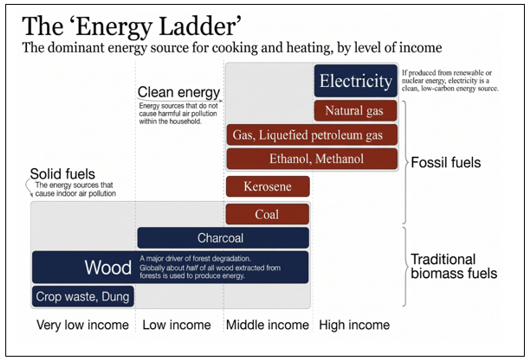
This study aims at investigating householders’ energy profile and degree of their satisfaction in Kano State, Nigeria. This study argues that apart from socioeconomic factors and energy ‘price shocks’, the energy poor using solid biomass are not always dissatisfied with their situation. This is psychologically and culturally rests on individual’s perception and worldview. The study employed a household survey, administering 972 questionnaires across Kano Metropolitan and Non-metropolitan zones. The findings reveal that more than half of the households at the bottom of the ladder are satisfied with the type of energy they are using (Metropolitan = 57%; non-metropolitan = 79%). The study concluded that this could be as a result of the availability of that energy type and socio-cultural factors such family size and food preference. The study recommended that the in any study of household energy transition, there should be qualitative data about the reasons of choosing a particular energy type.
References
Baiyegunhi, L. J. S., & Hassan, M. B. (2014). Rural household fuel energy transition: Evidence from Giwa LGA Kaduna State, Nigeria. Energy for Sustainable Development, 20, 30–35. http://doi.org/10.1016/J.ESD.2014.02.003
Bisu, D. Y., Kuhe, A., & Iortyer, H. A. (2016). Urban household cooking energy choice: an example of Bauchi metropolis, Nigeria. Energy, Sustainability and Society, 6(1), 12. http://doi.org/10.1186/s13705-016-0080-1
González-Eguino, M. (2015). Energy poverty: An overview. Renewable and Sustainable Energy Reviews, 47, 377–385. http://doi.org/10.1016/j.rser.2015.03.013
Hosier, R. H., & Dowd, J. (1987). Household fuel choice in Zimbabwe. Resources and Energy, 9(4), 347–361. http://doi.org/10.1016/0165-0572(87)90003-X
Hyman, E. (1994). Fuel substitution and efficient woodstoves: Are they the answers to the fuelwood supply problem in Northern Nigeria? Environmental Management, 18(1), 23–32. http://doi.org/10.1007/BF02393747
Maconachie, R., Tanko, A., & Zakariya, M. (2009). Descending the energy ladder? Oil price shocks and domestic fuel choices in Kano, Nigeria. Land Use Policy, 26(4), 1090–1099. http://doi.org/10.1016/j.landusepol.2009.01.008
Masera, O. R., Saatkamp, B. D., & Kammen, D. M. (2000). From Linear Fuel Switching to Multiple Cooking Strategies: A Critique and Alternative to the Energy Ladder Model. World Development, 28(12), 2083–2103. http://doi.org/10.1016/S0305-750X(00)00076-0
Mensah, J. T., & Adu, G. (2015). An empirical analysis of household energy choice in Ghana. Renewable and Sustainable Energy Reviews, 51, 1402–1411. http://doi.org/10.1016/j.rser.2015.07.050
Naibbi, A. I., & Healey, R. G. (2013). Northern Nigeria’s Dependence on Fuelwood: Insights from Nationwide Cooking Fuel Distribution Data. International Journal of Humanities and Social Science, 3(17), 160–173. Retrieved from http://www.ijhssnet.com/journals/Vol_3_No_17_September_2013/17.pdf
National Population Commission. (2009). 2006 Population and Housing Census of the Federal Republic of Nigeria. Official Gazette of the Federal Republic of Nigeria-Priority Table 1 (Vol. 1).
Odihi, J. (2003). Deforestation in afforestation priority zone in Sudano-Sahelian Nigeria. Applied Geography, 23(4), 227–259. http://doi.org/10.1016/j.apgeog.2003.08.004
Onyebuchi, E. I. (1989). Alternate Energy Strategies for the Developing World’s Domestic Use : A Case Study of Nigerian Households’ Fuel Use Patterns and Preferences Published by : International Association for Energy Economics Stable URL : http://www.jstor.org/stable/41323478, 10(3), 121–138.
Rahut, D. B., Das, S., De Groote, H., & Behera, B. (2014). Determinants of household energy use in Bhutan. Energy, 69, 661–672. http://doi.org/10.1016/J.ENERGY.2014.03.062
van der Kroon, B., Brouwer, R., & van Beukering, P. J. H. (2013). The energy ladder: Theoretical myth or empirical truth? Results from a meta-analysis. Renewable and Sustainable Energy Reviews, 20, 504–513. http://doi.org/10.1016/j.rser.2012.11.045
Vanguard News Paper, (2026) Economic Hardship: Nigerians Revert to Firewood as Cooking Gas, Kerosene Prices Surge. https://www.vanguardngr.com/2026/06/economic-hardship-nigerians-revert-to-firewood-as-cooking-gas-kerosene-prices-surge/
Zubairu, S.M., Mukhtar, I. Abdullahi, H., and Balarabe, A. (2022), Assessment of Drivers for Solar Renewable Energy Technologies Adoption in Kano State, Nigeria: A Qualitative Approach. Kaduna Journal of Geography. A publication of the Department of Geography, Kaduna State University, Kaduna. ISSN: 2636-530, 2 (2), 35-48.
Downloads
Published
Issue
Section
Categories
License
Copyright (c) 2026 SULE ZUBAIRU

This work is licensed under a Creative Commons Attribution 4.0 International License.