
Artificial Intelligence and Machine Learning for Asthma Care in Nigeria and Sub-Saharan Africa: Evidence, Opportunities, and Adoption Barriers
DOI:
https://doi.org/10.33003/fjs-2026-1020-6044Keywords:
Artificial Intelligence, Machine Learning, Asthma, Exacerbation Prediction, Nigeria, Sub-Saharan AfricaAbstract
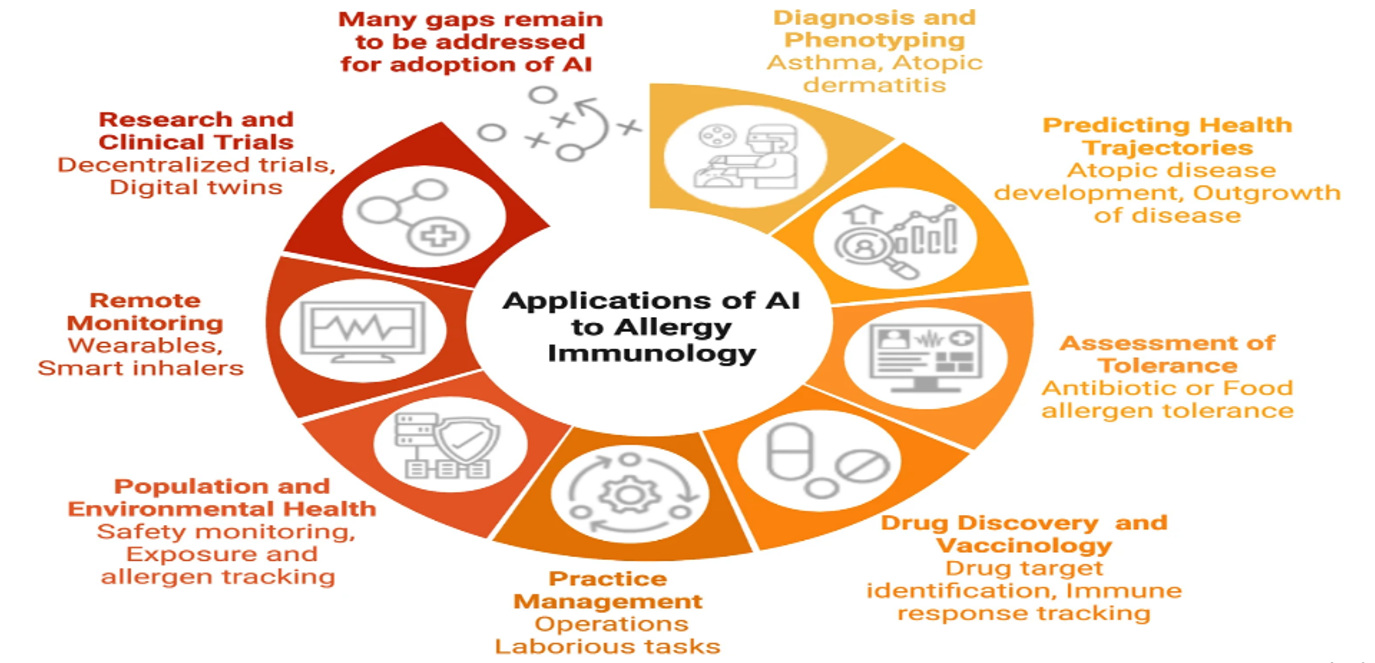
Asthma affects an estimated 363 million people worldwide and caused approximately 442,000 deaths in 2023. The burden of this disease falls disproportionately on low-income and middle-income countries where the disease is mostly underdiagnosed and under-treated. Artificial intelligence (AI) and machine learning (ML) have been presented as tools for earlier diagnosis, personalised treatment, exacerbation prediction, and remote monitoring. However, much of the supporting research originates from high-income settings. Our review evaluates what the supporting evidence offers for asthma care in Nigeria and the African region. We conducted a literature search across PubMed, IEEE Xplore, Google Scholar, and similar databases, with the resulting review library consisting of 170 screened records. 116 records were reviewed in full, while 31 were retained for in-depth review of their techniques, data sources, algorithms, conclusions, and implications. Four themes emerged: an expanding but unevenly equipped African AI ecosystem; AI/ML tools for diagnosis, exacerbation prediction, and digital monitoring developed and validated almost entirely outside Africa; persistent non-technical barriers to asthma care in sub-Saharan Africa, including under-diagnosis, restricted access to medications, and insufficient awareness among carers and educators; and unresolved ethical, legal, and data governance issues. The reviewed studies demonstrate technical feasibility in high-income settings but reveal a lack of African validation. We conclude that AI and ML can enhance asthma care in Nigeria only if models are validated on African data, integrated into existing care frameworks, and governed by explicit regulations. We therefore propose seven recommendations for policymakers, clinicians, and researchers.
References
Adebamowo, C. A., Callier, S., Akintola, S., Maduka, O., Jegede, A., Arima, C., Ogundiran, T., Adebamowo, S. N. and BridgELSI Project as part of the DS-I Africa Consortium (2023). The promise of data science for health research in Africa. Nature Communications, 14(1): 6084. https://doi.org/10.1038/s41467-023-41809-2
Adejumo, A. A., Alegbejo-Olarinoye, M. I., Akanbi, O., Ajamu, O. J., Akims, S. M. and Koroye, O.F. (2023). Artificial intelligence in medical practice: closing the gap for the present and creating opportunities for the future. The Nigerian Health Journal, 23(2): 580-586. https://www.tnhjph.com/index.php/tnhj/article/view/655
Al Meslamani, A. Z. (2023). How AI is advancing asthma management? Insights into economic and clinical aspects. Journal of Medical Economics, 26(1): 1489-1494. https://doi.org/10.1080/13696998.2023.2277072
Antalffy, T., De Simoni, A. and Griffiths, C. J. (2020). Promising peak flow diary compliance with an electronic peak flow meter and linked smartphone app. NPJ Primary Care Respiratory Medicine, 30(1): 19. https://doi.org/10.1038/s41533-020-0178-y
Botwe, B. O., Akudjedu, T. N., Antwi, W. K., Rockson, P., Mkoloma, S. S., Balogun, E. O., Elshami, W., Bwambale, J., Barare, C., Mdletshe, S., Yao, B. and Arkoh, S. (2021). The integration of artificial intelligence in medical imaging practice: Perspectives of African radiographers. Radiography, 27(3): 861-866. https://doi.org/10.1016/j.radi.2021.01.008
Donnelly, D. L. (2022). First do no harm: Legal principles regulating the future of artificial intelligence in health care in South Africa. Potchefstroom Electronic Law Journal, 25. https://doi.org/10.17159/1727-3781/2022/v25ia11118
Elegunde, A. F. and Osagie, R. (2020). Artificial intelligence adoption and employee performance in the Nigerian banking industry. International Journal of Management and Administration, 4(8): 189-205. https://doi.org/10.29064/ijma.734734
Feng, Y., Wang, Y., Zeng, C., and Mao, H. (2021). Artificial intelligence and machine learning in chronic airway diseases: Focus on asthma and chronic obstructive pulmonary disease. International Journal of Medical Sciences, 18(13): 2871-2889. https://doi.org/10.7150/ijms.58191
Global Asthma Network (2024). The Global Asthma Report 2024. Auckland, New Zealand: Global Asthma Network.
Hao, K. (2019, June 21). The future of AI research is in Africa. MIT Technology Review. https://www.technologyreview.com/2019/06/21/134820/ai-africa-machine-learning-ibm-google/
Holgate, S. T., Walker, S., West, B. and Boycott, K. (2019). The future of asthma care: Personalized asthma treatment. Clinics in Chest Medicine, 40(1): 227-241. https://doi.org/10.1016/j.ccm.2018.10.013
Janah, L. (2018, December 5). How East Africa trains AI. LinkedIn. https://www.linkedin.com/pulse/how-east-africa-trains-ai-leila-janah/
Kallis, C., Calvo, R. A., Schuller, B., and Quint, J. K. (2023). Development of an asthma exacerbation risk prediction model for conversational use by adults in England. Pragmatic and Observational Research, 14: 111-125. https://doi.org/10.2147/POR.S424098
Kaplan, A., and Haenlein, M. (2019). Siri, Siri, in my hand: Who’s the fairest in the land? On the interpretations, illustrations, and implications of artificial intelligence. Business Horizons, 62(1): 15-25.
Lugogo, N. L., DePietro, M., Reich, M., Merchant, R., Chrystyn, H., Pleasants, R., Granovsky, L., Li, T., Hill, T., Brown, R. W. and Safioti, G. (2022). A predictive machine learning tool for asthma exacerbations: Results from a 12-week, open-label study using an electronic multi-dose dry powder inhaler with integrated sensors. Journal of Asthma and Allergy, 15: 1623-1637. https://doi.org/10.2147/JAA.S377631
MacMath, D., Chen, M. and Khoury, P. (2023). Artificial intelligence: Exploring the future of innovation in allergy immunology. Current Allergy and Asthma Reports, 23(6): 351-362. https://doi.org/10.1007/s11882-023-01084-z
Magwenzi, P., Rusakaniko, S., Sibanda, E. N. and Gumbo, F. Z. (2022). Challenges in the diagnosis of asthma in children, what are the solutions? A scoping review of 3 countries in sub-Saharan Africa. Respiratory Research, 23(1): 254. https://doi.org/10.1186/s12931-022-02170-y
Masekela, R., Mortimer, K., Nantanda, R., Lesosky, M., Meme, H., Devereux, G. and Chakaya, J. (2022). Asthma care in sub-Saharan Africa: Mind the gap! Journal of the Pan African Thoracic Society, 3(2): 59-62.
Mortimer, K., Masekela, R., Ozoh, O. B., Bateman, E. D., Nantanda, R., Yorgancıoğlu, A. A., Chakaya, J. and Reddel, H. K. (2022). The reality of managing asthma in sub-Saharan Africa - Priorities and strategies for improving care. Journal of the Pan African Thoracic Society, 3(3): 105.
Naidoo, K. L., Dladla, S., Mphahlele, R. E., Mosler, G., Muyemayema, S., Ssemata, A. S., Mkutumula, E., Adeyeye, O. O., Moyo, M., Goodman, O., Kuyinu, Y., Nantanda, R., Ticklay, I., Mujuru, H. A., Grigg, J. and Masekela, R. (2023a). Barriers to childhood asthma care in sub-Saharan Africa: A multicountry qualitative study with children and their caregivers. BMJ Open, 13(9): e070784. https://doi.org/10.1136/bmjopen-2022-070784
Naidoo, K. L., Dladla, S., Mphahlele, R. E., Mosler, G., Muyemayema, S., Ssemata, A. S., Mkutumula, E., Adeyeye, O. O., Goodman, O., Kuyinu, Y., Nantanda, R., Addo-Yobo, E., Owusu, S. K., Arhin, B., Ticklay, I., Mujuru, H. A., Grigg, J. and Masekela, R. (2023b). A cross-country qualitative analysis of teachers’ perceptions of asthma care in sub-Saharan Africa. NPJ Primary Care Respiratory Medicine, 33(1): 31. https://doi.org/10.1038/s41533-023-00354-7
Nsier, H. (2023). Ethical considerations of using artificial intelligence to drive clinical decision support in pediatric medical settings. Pediatric Research, 94, 10-11. https://doi.org/10.1038/s41390-022-02452-7
OECD AI Policy Observatory (2023). AI strategies and policies in Nigeria. OECD.AI. https://oecd.ai/en/dashboards/countries/Nigeria.
Ogbonnaya, F. C., Amah, G. H., Anifowose, F., Adetayo, O. M., Oyebanjo, O. T. and Oladeinde, O. A. (2024). Role of tropical plants in asthma management. FUDMA Journal of Sciences, 8(5): 445-450. https://doi.org/10.33003/fjs-2024-0805-2431
Okeibunor, J. C., Jaca, A., Iwu-Jaja, C. J., Idemili-Aronu, N., Ba, H., Zantsi, Z. P., Ndlambe, A. M., Mavundza, E., Muneene, D., Wiysonge, C. S. and Makubalo, L. (2023). The use of artificial intelligence for delivery of essential health services across WHO regions: A scoping review. Frontiers in Public Health, 11: 1102185. https://doi.org/10.3389/fpubh.2023.1102185
Ozoh, O. B., Aderibigbe, S. A., Ayuk, A. C., Desalu, O. O., Oridota, O. E., Olufemi, O., Egbagbe, E., Babashani, M., Shopeyin, A., Ukwaja, K. and Dede, S. K. (2019). The prevalence of asthma and allergic rhinitis in Nigeria: A nationwide survey among children, adolescents, and adults. PLoS ONE, 14(9): e0222281. https://doi.org/10.1371/journal.pone.0222281
Su, Z., He, L., Jariwala, S. P., Zheng, K., and Chen, Y. (2022). “What is your envisioned future?”: Toward human-AI enrichment in data work of asthma care. Proceedings of the ACM on Human-Computer Interaction, 6(CSCW2): Article 267. https://doi.org/10.1145/3555157
Tong, Y., Lin, B., Chen, G., and Zhang, Z. (2022). Predicting continuity of asthma care using a machine learning model: Retrospective cohort study. International Journal of Environmental Research and Public Health, 19(3): 1237. https://doi.org/10.3390/ijerph19031237
World Health Organisation. (2023). Asthma [Fact sheet]. https://www.who.int/news-room/fact-sheets/detail/asthma.
Xiong, S., Chen, W., Jia, X., Jia, Y., and Liu, C. (2023). Machine learning for prediction of asthma exacerbations among asthmatic patients: A systematic review and meta-analysis. BMC Pulmonary Medicine, 23(1): 278. https://doi.org/10.1186/s12890-023-02570-w
Yu, G., Li, Z., Li, S., Liu, J., Sun, M., Liu, X., Sun, F., Zheng, J., Li, Y., Yu, Y., Shu, Q., and Wang, Y. (2020). The role of artificial intelligence in identifying asthma in pediatric inpatient setting. Annals of Translational Medicine, 8(21): 1367. https://doi.org/10.21037/atm-20-2501a
Zein, J. G., Wu, C. P., Attaway, A. H., Zhang, P. and Nazha, A. (2021). Novel machine learning can predict acute asthma exacerbation. Chest, 159(5): 1747-1757. https://doi.org/10.1016/j.chest.2020.12.051
Zuiderwijk, A., Chen, Y. C., and Salem, F. (2021). Implications of the use of artificial intelligence in public governance: A systematic literature review and a research agenda. Government Information Quarterly, 38(3): 101577.
Downloads
Published
Issue
Section
Categories
License
Copyright (c) 2026 Usman Yunusa Labaran, Peter Ogedebe, Rufai Aliyu Yauri, Isah Charles Saidu, Rislana Abdulazeez Kanya, Ahmad Nurudeen Tambaya

This work is licensed under a Creative Commons Attribution 4.0 International License.


