
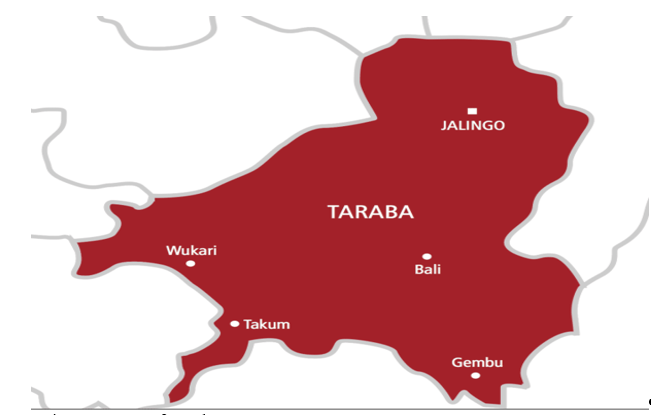
Geophysical Analysis of Soil Properties and Their Effect on Intensive Maize Farming in Jalingo, Taraba State
DOI:
https://doi.org/10.33003/fjs-2026-1017-6041Keywords:
Thermal conductivity, Soil properties, Geophysical analysis, Maize farming, Jalingo, Taraba State, Clay soil, Sandy soil, Loamy soilAbstract
This study investigated the geophysical properties of selected soil samples and their effects on intensive maize farming in Jalingo, Taraba State. Loamy, sandy and clay soils were analyzed in the laboratory to determine their physical and thermal characteristics, including mass, density, emissivity, thermal conductivity and thermal resistivity. The study applied the steady-state and cooling-curve methods to evaluate heat transfer through the soil samples. Results showed that clay soil had the highest thermal conductivity (1.0675 × 10⁻³ W/mK) and the lowest thermal resistivity (936.77 mK/W), indicating faster heat transfer. Sandy soil recorded moderate conductivity (8.0985 × 10⁻⁴ W/mK) and resistivity (1234.79 mK/W), while loamy soil had the lowest conductivity (2.45 × 10⁻⁴ W/mK) and highest resistivity (4000.00 mK/W). The findings indicate that loamy soil provides the most favorable thermal condition for maize cultivation because it supports stable root-zone temperature, better moisture retention and improved root development. Sandy and clay soils can also support maize production, but they require improved management practices such as mulching, organic matter addition, drainage control and proper irrigation. The study concludes that soil thermal behavior is an important factor in intensive maize farming and should be considered when selecting and managing farmland in Jalingo.
References
Adão, F., Pádua, L., & Sousa, J. J. (2025). Evaluating soil degradation in agricultural soil with ground-penetrating radar: A systematic review of applications and challenges. Agriculture, 15(8), 852.
Adnan, A. H. H. (2026). Effect of Tillage Systems and Soil Mulching on Soil Temperature at Different Depths during the Growth of Maize (Zea mays L.) in a Semi-Arid Environment. Dijlah Journal of Agricultural Sciences, 5(2), 23-35.
Ahmad, U., Hussain, M. A., Ahmad, W., Javed, J., Arshad, Z., & Akram, Z. (2024). Impact of global climate change on maize (Zea mays): physiological responses and modern breedingtechniques. Trends Biotech Plant Sci, 2(1), 62-77.
Al-Shammary, A. A. G., Al-Shihmani, L. S. S., Fernández-Gálvez, J., & Caballero-Calvo, A. (2025). A comprehensive review of impacts of soil management practices and climate adaptation strategies on soil thermal conductivity in agricultural soils. Reviews in Environmental Science and Bio/Technology, 24(2), 513-543.
Amaza, P., Mailumo, S., & Silong, A. (2021). The political economy of the maize value chain in Nigeria.
Chege, C., Onyango, K., Bodjrenou, S., Schmidt, M., Heike, H., & Ostermann, H. (2024). Adapting green innovation centers to climate change: Reducing post-harvest loss and improving processing for target groups.
Erenstein, O., Jaleta, M., Sonder, K., Mottaleb, K., & Prasanna, B. M. (2022). Global maize production, consumption and trade: trends and R&D implications. Food security, 14(5), 1295-1319.
Gozubuyuk, Z., Sahin, U., Ozturk, I., Celik, A., & Adiguzel, M. C. (2014). Tillage effects on certain physical and hydraulic properties of a loamy soil under a crop rotation in a semi-arid region with a cool climate. Catena, 118, 195-205.
He, R., Jia, N., Jin, H., Wang, H., & Li, X. (2021). Experimental study on thermal conductivity of organic‐rich soils under thawed and frozen states. Geofluids, 2021(1), 7566669.
Jamalludin, K. I., Goh, E. G., Ahmad, M. F., & Nawi, Z. M. (2025). Vapor Transport in Agricultural Soils from a Heat Transfer Perspective: A Review. International Journal of Heat & Technology, 43(5).
Kaul, J., Jain, K., & Olakh, D. (2019). An overview on role of yellow maize in food, feed and nutrition security. International Journal of Current Microbiology and Applied Sciences, 8(02), 3037-3048.
Kumar, H., & Tripathi, M. (2023). 7. AN INTRODUCTION OF SOIL COLLOIDS AND SOIL TEMPERATURE. BASIC INTRODUCTION OF SOIL SCIENCE, 79.
Mitchell, J. K., Soga, K., & O'Sullivan, C. (2025). Fundamentals of soil behavior. John Wiley & Sons. Kussiy .J. Jonathan.,Samuel.J. Karma., Garpiya .T.Bondima.,Ali.I.Jireh., Christopher Abednego., Omadewu.I. Lawrence and Yabwa Dlama (2025). Influence of Zinc Fertilizer on growth and quality of SAMAZ-14 Miaze (zea mays) in Jalingo, Nigeria Fudma Journal of Science(FJS)DOI: https://doi.org/10.33003/fjs-2025-0908-3673
Mondal, S., Ghosal, S., & Barua, R. (2016). Impact of elevated soil and air temperature on plants growth, yield and physiological interaction: a critical review. Scientia Agriculturae, 14(3), 293-305.
Pregitzer, K. S., & King, J. S. (2005). Effects of soil temperature on nutrient uptake. In Nutrient acquisition by plants: an ecological perspective (pp. 277-310). Berlin, Heidelberg: Springer Berlin Heidelberg.
Ranum, P., Peña‐Rosas, J. P., & Garcia‐Casal, M. N. (2014). Global maize production, utilization, and consumption. Annals of the New York academy of sciences, 1312(1), 105-112.
Regassa, A., Kibret, K., Selassie, Y. G., Kiflu, A., & Tena, W. (2023). Soil properties. In The soils of Ethiopia (pp. 111-156). Cham: Springer International Publishing.
Romero-Ruiz, A., O'leary, D., Zhao, D., Wu, Y., & Garré, S. (2025). Preface: Illuminating soil's hidden dimensions, a decade of progress and future directions in agrogeophysics research. Soil, 11(2), 1041-1051.
Ojeniyi, K., Ngonidzashe, C., Devkota, K., & Madukwe, D. (2024). Optimizing split-fertilizer applications for enhanced maize yield and nutrient use efficiency in Nigeria's Middle-belt. Heliyon, 10(19).
Santpoort, R. (2020). The drivers of maize area expansion in Sub-Saharan Africa. How policies to boost maize production, overlook the interests of smallholder farmers. Land, 9(3), 68.
Sharma, P. K., & Kumar, S. (2023). Soil temperature and plant growth. In Soil physical environment and plant growth: Evaluation and management (pp. 175-204). Cham: Springer International Publishing.
Shehu, B. M., Merckx, R., Jibrin, J. M., Kamara, A. Y., & Rurinda, J. (2018). Quantifying variability in maize yield response to nutrient applications in the Northern Nigerian Savanna. Agronomy, 8(2), 18.
Shiferaw, B., Prasanna, B. M., Hellin, J., & Bänziger, M. (2011). Crops that feed the world 6. Past successes and future challenges to the role played by maize in global food security. Food Security, 3(3), 307-327
Tang, H., Zhang, L., Xie, X., Wang, Y., Wang, T., & Liu, C. (2025). Resilience of maize to environmental stress: Insights into drought and heat tolerance. International Journal of Molecular Sciences, 26(11), 5274.
Umair, M., Hassan, M. I., Zia, H., Maqsood, F., Khalil, M. H., Ghafoor, I., & Mumtaz, T. (2025). Soil physical properties and their influence on plant growth. In Soils and Sustainable Agriculture: Interplay of Soil, Plant, Water and Environmental Systems for Sustainable Agriculture (pp. 79-131). Cham: Springer Nature Switzerland.
Vieira, A., Alberdi-Pagola, M., Christodoulides, P., Javed, S., Loveridge, F., Nguyen, F., ... & Radioti, G. (2017). Characterisation of ground thermal and thermo-mechanical behaviour for shallow geothermal energy applications. Energies, 10(12), 2044.
Waqas, M. A., Wang, X., Zafar, S. A., Noor, M. A., Hussain, H. A., Azher Nawaz, M., & Farooq, M. (2021). Thermal stresses in maize: effects and management strategies. Plants, 10(2), 293.
Wen, T., Song, Z., & Chen, Z. (2026). Hydro-thermal behavior of biochar-amended and saline granite residual soils under high compaction. Acta Geotechnica, 1-24.
Yoon, S., Lee, G. J., Lee, D. H., Lee, S., & Lee, M. (2026). Thermal conductivity evaluation of Ca-type bentonite-sand mixtures as buffer materials for a high-level radioactive waste repository. Nuclear Engineering and Technology, 104202.
Yu, C., Mawodza, T., Atkinson, B. S., Atkinson, J. A., Sturrock, C. J., Whalley, R., ... & Mooney, S. J. (2024). The effects of soil compaction on wheat seedling root growth are specific to soil texture and soil moisture status. Rhizosphere, 29, 100838.
Zhang, T., Wang, C. J., Liu, S. Y., Zhang, N., & Zhang, T. W. (2020). Assessment of soil thermal conduction using artificial neural network models. Cold Regions Science and Technology, 169, 102907.
Zhang, T., Cai, G., Liu, S., & Puppala, A. J. (2017). Investigation on thermal characteristics and prediction models of soils. International Journal of Heat and Mass Transfer, 106, 1074-1086.
Zuo, Y., Zeng, W., Ao, C., Chen, H., & Huang, J. (2023). Effects of multiwalled carbon nanotube and Bacillus atrophaeus application on crop root zone thermal characteristics of saline farmland. Heliyon, 9(2)
Downloads
Published
Issue
Section
Categories
License
Copyright (c) 2026 Kussiy J. Jonathan, Johnson Akwoga, Patrick K. Kefas, Yabwa Dlama

This work is licensed under a Creative Commons Attribution 4.0 International License.


