
Ethnobotany, Phytochemistry, Pharmacological Activities and Therapeutic Potential of Kigelia Africana: A Comprehensive Review
DOI:
https://doi.org/10.33003/fjs-2026-1018-5991Keywords:
African, Alternative medicine, Ethno medicine, Kigelia africanaAbstract
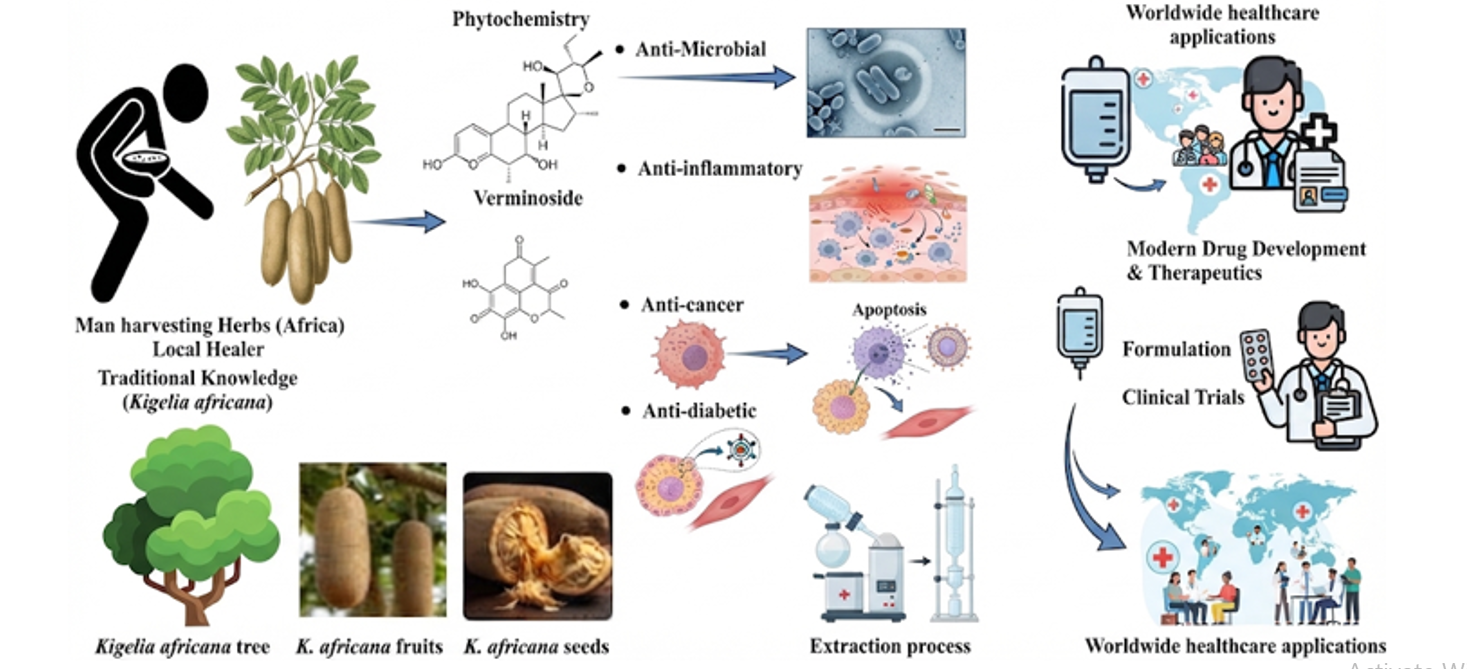
The present research comprehensively studies the ethnobotanical, phytochemical and pharmacological profile of Kigelia africana (Lam.) Benth. (Bignoniaceae) often known as the sausage tree. The main goal is to connect traditional healing practices in Africa with modern health care by gathering global literature on its biological use, structural parts and industrial prospects. This study assesses the peer-reviewed literature on the distribution, traditional use, extraction methods and therapeutic characteristics of the plant through a literature search that includes historical ethnobotanical records, regional pharmacopoeias and modern databases. The main phytochemical ingredients in different portions of the plant are a number of iridoids (for example, verminoside and catalpol), flavonoids (luteolin and kigelin derivatives), coumarins, naphthoquinones, phenolic acids (ferulic and chlorogenic acid), and important terpenoids. The traditional uses are supported by documented pharmacological actions with potent antibacterial, antioxidant, anti-inflammatory, wound-healing, anticancer and antidiabetic activities. Significant research shortcomings persist despite an abundance of documentation, including the absence of rigorous randomised clinical trials to confirm traditional claims, standardised methodologies for extraction to maximise yields of actives, comprehensive toxicological and pharmacokinetic profiling of unrefined fruit extracts, and sustainable conservation strategies to minimise habitat degradation from over-extraction. Filling these gaps will enable translation of Kigelia africana metabolites into standardised safe and efficacious modern pharmaceutical and cosmetic preparations.
References
Adonizio, A. L., Downum, K., Bennet, B. C., & Mathee, K. (2006). Anti-quorum sensing activity of medicinal plants in southern Florida. Journal of Ethnopharmacology, 15(3), 427–435.
African Herbal Pharmacopoeia. (2010). In T. Brendler, J. N. Eloff, A. Gurib-Fakim, & L. D. Phillips (Eds.), Association for African Medicinal Plants Standards (AAMPS) (p. 289). Republic of Mauritius.
Akunyili, D. N., Houghton, P. J., & Roman, A. (1991). Antimicrobial activities of the stem of Kigelia pinnata. Journal of Ethnopharmacology, 35(2), 173–177.
AL-Ishaq, R. K., Abotaleb, M., Kubatka, P., Kajo, K., & Büsselberg, D. (2019). Flavonoids and their anti-diabetic effects: Cellular mechanisms and effects to improve blood sugar level. Biomolecules, 9(9), Article 403.
Anastas, P., & Eghbali, N. (2010). Green chemistry: Principles and practice. Chemical Society Reviews, 39(1), 301–312.
Andrews, S. N., Jeong, E., & Prausnitz, M. R. (2013). Transdermal delivery of molecules is limited by full epidermis, not just the stratum corneum. Pharmaceutical Research, 30(4), 1099–1109.
Arkhipov, A., Rayan, P., McDonnell, A., & Cock, I. E. (2014a). An examination of the antibacterial, antifungal, anti-giardial and anticancer properties of Kigelia africana fruit extracts. Pharmacognosy Communications, 4(2), 1–9.
Arkhipov, A., Sirdaarta, J., Matthews, B., Cock, I. E., & Ighere, D. A. (2014b). Metabolomic profiling of Kigelia africana extracts with anti-cancer activity by high-resolution tandem mass spectroscopy. Pharmacognosy Communications, 4(1), 33–42.
Asekun, O. T., Olusegun, E., & Adebola, O. (2007). The volatile constituents of the leaves and flowers of Kigelia africana Benth. Flavour and Fragrance Journal, 22(1), 21–23.
Atawodi, O., & Olowoniyi, F. (2015). Pharmacological and therapeutic activities of Kigelia africana (Lam.) Benth. Annual Research & Review in Biology, 5(1), 1–17.
Atolani, O., Fabiyi, O. A., & Olatunji, G. A. (2014a). Isovitexin from Kigelia pinnata, a potential ecofriendly nematicidal agent. Tropical Agriculture, 41(2), 020067–020008.
Atolani, O., Olatunji, G. A., Fabiyi, O. A., Adeniji, A. J., & Ogbole, O. O. (2013). Phytochemicals from Kigelia pinnata leaves show antioxidant and anticancer potential on human cancer cell lines. Journal of Medicinal Food, 16(10), 878–885.
Aung, T., Qu, Z., Kortschak, R., & Adelson, D. (2017). Understanding the effectiveness of natural compound mixtures in cancer through their molecular mode of action. International Journal of Molecular Sciences, 18(3), Article 656.
Austin, D. F. (1978). Exotic plants and their effects in south-eastern Florida. Environmental Conservation, 5(1), 25–34.
Babbar, N., Oberoi, H. S., Sandhu, S. K., & Bhargav, V. K. (2014). Influence of different solvents in the extraction of phenolic compounds from vegetable residues and their evaluation as natural sources of antioxidants. Journal of Food Science and Technology, 51(10), 2568–2575.
Baert, B., Deconinck, E., Van Gele, M., Slodicka, M., Stoppie, P., Bode, S., Slegers, G., Vander Heyden, Y., Lambert, J., Beetens, J., & De Spiegeleer, B. (2007). Transdermal penetration behaviour of drugs: CART-clustering, QSPR and selection of model compounds. Bioorganic & Medicinal Chemistry, 15(22), 6943–6955.
Beckley-Kartey, S. A. J., Hotchkiss, S. A. M., & Capel, M. (1997). Comparative in vitro skin absorption and metabolism of coumarin (1,2-benzopyrone) in human, rat, and mouse. Toxicology and Applied Pharmacology, 145(1), 34–42.
Beidelman, T. O. (1964). Some Kaguru plants: Terms, names and uses. Man, 64, 79–82.
Bello, I., Shehu, M. W., Musa, M., Zaini Asmawi, M., & Mahmud, R. (2016). Kigelia africana (Lam.) Benth. (Sausage tree): Phytochemistry and pharmacological review of a quintessential African traditional medicinal plant. Journal of Ethnopharmacology, 189, 253–276. https://doi.org/10.1016/j.jep.2016.05.049
Bharti, N., Singh, S., Fermida, N., & Amir, A. (2006). Isolation and in vitro antiamoebic activity of iridoids isolated from Kigelia pinnata. Arkivoc, 2006(10), 69–76.
Boyle, P., & Levin, B. (2008). World Cancer Report 2008. International Agency for Research on Cancer.
Brand-Williams, W., Cuvelier, M. E., & Berset, C. (1995). Use of a free radical method to evaluate antioxidant activity. LWT - Food Science and Technology, 28(1), 25–30.
Burkill, H. M. (1985). The Useful Plants of West Tropical Africa. Royal Botanic Gardens.
Butler, M. S., Fontaine, F., & Cooper, M. A. (2014). Natural product libraries: Assembly, maintenance, and screening. Planta Medica, 80(12), 1161–1170.
Campbell, B. M., Clarke, J. M., & Gumbo, D. J. (1991). Traditional agroforestry practices in Zimbabwe. Agroforestry Systems, 14(2), 99–111.
Carey, M. W., Rao, N. V., Kumar, B. R., & Mohan, G. K. (2010). Anti-inflammatory and analgesic activities of methanolic extract of Kigelia pinnata DC flower. Journal of Ethnopharmacology, 130(1), 179–182.
Chenia, H. Y. (2013). Anti-quorum sensing potential of crude Kigelia africana fruit extracts. Sensors, 13(3), 2802–2817. https://doi.org/10.3390/s130302802
Chih-Cheng, L., Lu-Te, C., Yuan-Chen, W., Yan-Hong, T., Jia-Shang, L., Boakye, A., Glew, R. H., & Glew, R. S. (2012). Polyphenol and antioxidant content of Kigelia africana leaves from Ghana. Food, 6(1), 1–5.
Chinsembu, K. C., Hedimbi, M., & Mukaru, W. C. (2011). Putative medicinal properties of plants from the Kavango region, Namibia. Journal of Medicinal Plants Research, 5(28), 6787–6797.
Chinsembu, K., Hijarunguru, A., & Mbangu, A. (2015). Ethnomedicinal plants used by traditional healers in the management of HIV/AIDS opportunistic diseases in Rundu, Kavango East Region, and Namibia. South African Journal of Botany, 100, 33–42.
Chivandi, E., Cave, E., Davidson, B. C., Erlwanger, K. H., Mayo, D., & Madziva, M. T. (2012). Suppression of Caco-2 and HEK-293 cell proliferation by Kigelia africana, Mimusops zeyheri and Ximenia caffra seed oils. In Vivo, 26(1), 99–105.
Cock, I. E. (2008). Antibacterial activity of selected Australian native plant extracts. The Internet Journal of Microbiology, 4(1), 1–12.
Cock, I. E. (2013). Antimicrobial activity of Leptospermum bracteata and Leptospermum juniperium methanolic extracts. Pharmacognosy Communications, 3(3), 45–52.
Cock, I. E., & Van-Vuuren, S. F. (2014). Anti-Proteus activity of some South African medicinal plants: Their potential for the treatment and prevention of rheumatoid arthritis. Inflammopharmacology, 22(1), 23–36. https://doi.org/10.1007/s10787-013-0179-3
Cunningham, A. B. (1993). African medicinal plants: Setting priorities at the interface between conservation and primary health care. UNESCO.
Cuzzocrea, S., Riley, D. P., Caputi, A. P., & Salvemini, D. (2001). Antioxidant therapy: A new pharmacological approach in shock, inflammation, and ischemia/reperfusion injury. Pharmacological Reviews, 53(1), 135–159.
D’souza, D., Subhas, B. G., Shetty, S. R., & Balan, P. (2012). Estimation of serum malondialdehyde in potentially malignant disorders and post antioxidant treated patients: A biochemical study. Contemporary Clinical Dentistry, 3(4), 448–451.
Dampeirou, C. (2002). National Center for Biotechnology Information (2025). PubChem Patent Summary for US-2002176874-A1, Cosmetic compositions with high viscosity for female breast care containing kigelia extract. U.S. Patent No. US-2002176874-A1. https://pubchem.ncbi.nlm.nih.gov/patent/US-2002176874-A1
Ddhindsa, K. S. (2005). Chemical Investigation and Antimicrobial Activity of Kigelia Pinnata Dc [Doctoral dissertation, Chaudhary Charan Singh Haryana Agricultural University].
De Wet, H., & Ngubane, S. C. (2014). Traditional herbal remedies used by women in a rural community in northern Maputaland (South Africa) for the treatment of gynaecology and obstetrics complaints. South African Journal of Botany, 94, 129–139.
Dhungana, B. R., Jyothi, Y., & Das, K. (2017). Kigelia pinnata: Exploration of potential medicinal usage in human ailments. Journal of Pharmacy Research, 11(2), 138–142.
Eldeen, I. M. S., & Van Staden, J. (2007). In vitro pharmacological investigation of extracts from some trees used in Sudanese traditional medicine. South African Journal of Botany, 73(3), 435–440.
Eldeen, I. M. S., & Van Staden, J. (2008). Cyclooxygenase inhibition and antimycobacterial effects of extracts from Sudanese medicinal plants. South African Journal of Botany, 74(2), 225–229.
El-Sayyad, S. M. (1981). Flavonoids of the leaves and fruits of Kigelia pinnata. Fitoterapia, 52(4), 189–191.
Eyong, K. O., Ambassa, P., Yimdjo, M. C., Sidjui, L. S., & Folefoc, G. L. (2012). A new source of kojic acid isolated from Kigelia africana: A possible precursor for quinine biosynthesis. Rasayan Journal of Chemistry, 5(4), 477–480.
Fabricant, D. S., & Farnsworth, N. R. (2001). The value of plants used in traditional medicine for drug discovery. Environmental Health Perspectives, 109(Suppl 1), 69–75. https://doi.org/10.1289/ehp.01109s169
Fagbohun, O. F., Babalola, O. O., Agboola, F. K., Joseph, J. S., Malindisa, S., & Msagati, T. A. M. (2020a). Evaluation of phytochemicals, antioxidants, trace elements in Kigelia africana fruit extracts and chemical profiling analysis using UHPLC-qTOF-MS2 spectrometry. Biological Trace Element Research, 195(2), 679–695.
FAO. (1986). Some medicinal forest plants of Africa and Latin America. Food and Agriculture Organization.
Farah, H. M., Hussein, A. M., Khalid, H. E., & Osman, H. M. (2017). Toxicity of Kigelia africana fruit in rats. Advances in Research, 12(6), 1–9.
Farmer, F., Knaul, F. M., Shulman, L. N., Alleyne, G., Armstrong, L., & Gospodarowicz, M. (2010). Expansion of cancer care and control in countries of low and middle income: A call to action. Lancet, 376(9747), 1186–1193.
Ferlay, J., Bray, F., Pisani, P., & Parkin, D. M. (2001). Globocan 2000: Cancer incidence, prevalence and mortality worldwide, Version 1.0. IARC CancerBase.
Focho, D. A., Newu, M. C., Anjah, M. G., Nwana, F. A., & Ambo, F. B. (2009). Ethnobotanical survey of trees in Fundong, Northwest Region, Cameroon. Journal of Ethnobiology and Ethnomedicine, 5, Article 1.
Gabriel, O. A., & Olubunmi, A. (2009). Comprehensive scientific demystification of Kigelia africana: A review. African Journal of Pure and Applied Chemistry, 3(9), 158–164.
Gao, X. M., Zhang, T. M., Zhang, J. R., Guo, J. S., & Zhong, G. S. (2007). Chinese Materia Medica. China Press of Traditional Chinese Medicine.
Gessler, M. C., Msuya, D. E., Nkunya, M. H. H., Mwasumbi, L. B., Schär, A., Heinrich, M., & Tanner, M. (1995). Traditional healers in Tanzania: The treatment of malaria with plant remedies. Journal of Ethnopharmacology, 48(3), 131–144.
Gouda, Y. G., Abdel-Baky, A. M., Mohamed, K. M., Darwish, F. M., Kasai, R., & Yamasaki, K. (2006). Phenylpropanoid and phenylethanoid derivatives from Kigelia pinnata DC. fruits. Natural Product Research, 20(10), 935–939.
Govindachari, T. R., Patankar, S. J., & Viswanathan, N. (1971). Isolation and structure of two new dihydroisocoumarins from Kigelia pinnata. Phytochemistry, 10(7), 1603–1606.
Grace, O. M., & Davis, S. D. (2010). Kigelia africana (Lam.) Benth. In L. P. A. Oyen & R. H. M. J. Lemmens (Eds.), Plant resources of tropical Africa (Vol. 1, p. 13). PROTA.
Grace, O. M., Light, M. E., Lindsey, K. L., Mulholland, D. A., Van Staden, J., & Jäger, A. K. (2002). Antibacterial activity and isolation of active compounds from fruit of the traditional African medicinal tree Kigelia africana. South African Journal of Botany, 68(1), 220–222.
Grace, O. M., Prendergast, H. D. V., Jäger, A. K., van Staden, J., & van Wyk, A. E. (2003). Bark medicines used in traditional healthcare in KwaZulu-Natal, South Africa: An inventory. South African Journal of Botany, 69(3), 301–363.
Halder, S. (2017). A review on Kigelia africana. World Journal of Pharmaceutical Research, 6(8), 389–411.
Halder, S., & Sharma, A. (2017). A review on Kigelia africana. World Journal of Pharmaceutical Research, 6(11), 1–15. https://doi.org/10.20959/wjpr201711-9633
Harbourne, N., Marete, E., Jacquier, J. C., & O’Riordan, D. (2013). Conventional extraction techniques for phytochemicals. In Handbook of plant food phytochemicals (pp. 397–411). John Wiley & Sons.
Harris, B., & Baker, H. (1958). Pollination in Kigelia africana Benth. Journal of the West African Science Association, 4(1), 25–30.
Henry, J. (1949). Early pioneers of South Florida. Tequesta, 9, 61–72.
Higgins, C., Bell, T., Delbederi, Z., Feutren-Burton, S., McClean, B., O'Dowd, C., Watters, W., Armstrong, P., Waugh, D., & van den Berg, H. (2010). Growth inhibitory activity of extracted material and isolated compounds from the fruits of Kigelia pinnata. Planta Medica, 76(15), 1840–1846.
Hillary, K., Ronald, E. A., & William, H. H. (1998). Global burden of diabetes 1995–2025: Prevalence, numerical estimates and projections. Diabetes Care, 21(9), 1414–1441.
Houghton, P. J. (2002). The sausage tree (Kigelia pinnata): Ethnobotany and recent scientific work. South African Journal of Botany, 68(1), 14–20.
Houghton, P. J., Photiou, A., Uddin, S., Shah, P., Browning, M., Jackson, S. J., & Retsas, S. (1994). Activity of extracts of Kigelia pinnata against melanoma and renal carcinoma cell lines. Planta Medica, 60(5), 430–433.
Imran, I. Z., Elusiyan, C. A., Agbedahunsi, J. M., & Omisore, N. O. (2021). Bioactivity-directed evaluation of fruit of Kigelia africana (Lam.) Benth. used in the treatment of malaria in Iwo, Nigeria. Journal of Ethnopharmacology, 268, Article 113680. https://doi.org/10.1016/j.jep.2020.113680
Inoue, K., Inouye, H., & Chen, C. C. (1981). A naphthoquinone and a lignan from the wood of Kigelia pinnata. Phytochemistry, 20(9), 2271–2276.
International Diabetes Federation. (2021). IDF diabetes atlas (10th ed.). https://www.diabetesatlas.org
Jabeen, B., & Riaz, N. (2013). Isolation and characterization of limonoids from Kigelia africana. Zeitschrift für Naturforschung B, 68(9), 1041–1048.
Jackson, S. J., Houghton, P. J., Retsas, S., & Photiou, A. (2000). Cytotoxicity of norviburtinal and isopinnatal from Kigelia pinnata against cancer cell lines. Planta Medica, 66(8), 758–761.
Jeyachandran, R., & Mahesh, A. (2007). Antimicrobial evaluation of Kigelia africana (Lam). Research Journal of Microbiology, 2(8), 645–649.
Kanase, H. R., & Singh, K. N. M. (2018). Marine pharmacology: Potential, challenges, and future in India. Journal of Medical Sciences, 38(2), 49–53.
Kaur, H., Shyam, R., & Amutha, R. (2011). Kigelia africana fruit carbon as a low-cost adsorbent for removal of copper (II) ions from aqueous solution. Nature, Environment and Pollution Technology, 10(3), 419–422.
Khan, M. F., Dixit, P., Jaiswal, N., Tamrakar, A. K., Srivastava, A. K., & Maurya, R. (2012). Chemical constituents of Kigelia pinnata twigs and their GLUT4 translocation modulatory effect in skeletal muscle cells. Fitoterapia, 83(1), 125–129.
Kibirige, D., Lumu, W., Jones, A. G., Smeeth, L., Hattersley, A. T., & Nyirenda, M. J. (2019). Understanding the manifestation of diabetes in sub-Saharan Africa to inform therapeutic approaches and preventive strategies: A narrative review. Clinical Diabetes and Endocrinology, 5(1), Article 2. https://doi.org/10.1186/s40842-019-0077-8
Kibiti, C. M., & Afolayan, A. J. (2015). Herbal therapy: A review of emerging pharmacological tools in the management of diabetes mellitus in Africa. Pharmacognosy Magazine, 11(Suppl 2), S258–S274.
King, J. W. (2014). Modern supercritical fluid technology for food applications. Annual Review of Food Science and Technology, 5, 215–238.
Kumawat, R. B., Mali, P. C., & Sharma, R. A. (2018). Ethnomedicine and pharmacological activities of five traditionally used Indian medicinal plants: A review. Advances in Pharmacology and Toxicology, 19(3), 45–56.
Lal, S. D., & Yadav, B. K. (1983). Folk medicines of Kurukshetra district (Haryana), India. Economic Botany, 37(3), 299–305. https://doi.org/10.1007/BF02858885
Lim, T. K. (2012). Kigelia africana. In Edible medicinal and non-medicinal plants. Springer. https://doi.org/10.1007/978-90-481-8661-7_65
Luque de Castro, M. D., & García-Ayuso, L. E. (1998). Soxhlet extraction of solid materials: An outdated technique with a promising innovative future. Analytica Chimica Acta, 369(1–2), 1–10.
MaClean, C. U. M. (1969). Traditional healers and their female clients: An aspect of Nigerian sickness behavior. Journal of Health and Social Behavior, 10(3), 172–186.
Maheshwari, S., & Rajagopal, K. (2013). Biodiversity of endophytic fungi in Kigelia pinnata during two different seasons. Current Science, 104(4), 515–518.
Makado, I. (2003). Skincare preparation. Japanese Patent No. JP2003137763.
Maregesi, S. M., Ngassapa, O. D., Pieters, L., & Vlietinck, A. J. (2007). Ethnopharmacological survey of the Bunda district, Tanzania: Plants used to treat infectious diseases. Journal of Ethnopharmacology, 113(3), 457–470.
McGregor, J., Maruzane, D., & Mukwekwerere, M. (1989). Deforestation in Zimbabwe’s communal lands: Perceptions of forest resource scarcity and value (Geographical Paper No. 135). University of Reading.
Mohanty, S., & Cock, I. E. (2010). Bioactivity of Syzygium jambos methanolic extracts: Antibacterial activity and toxicity. Pharmacognosy Communications, 2(1), 4–9.
Moideen, S. V. K., Houghton, P. J., Rock, P., Croft, S. L., & Aboagye-Nyame, F. (1999). Activity of extracts and naphthoquinones from Kigelia pinnata against Trypanosoma brucei brucei and Trypanosoma brucei rhodesiense. Planta Medica, 65(6), 536–540.
Moll, E. J., Moll, G., & Page, N. (1994). Common trees of southern Africa. Zimbabwe Publishing House.
Moreira da Silva, F., Marques, A., & Chaveiro, A. (2010). Reactive oxygen species: A double-edged sword in reproduction. Veterinary Science Journal, 4(2), 127–133.
Moshi, M. J., Otieno, D. F., Mbabazi, P. K., & Weisheit, A. (2009). The ethnomedicine of the Haya people of Bugabo ward, Kagera Region, north-western Tanzania. Journal of Ethnobiology and Ethnomedicine, 5, Article 24. https://doi.org/10.1186/1746-4269-5-24
Mukavi, J. W., Mayeku, P. W., Nyaga, J. M., & Kituyi, S. N. (2020). In vitro anti-cancer efficacy and phytochemical screening of solvent extracts of Kigelia africana (Lam.) Benth. Heliyon, 6(7), Article e04481. https://doi.org/10.1016/j.heliyon.2020.e04481
Mwila, K. F., Bwembya, P. A., & Jacobs, C. (2019). Experiences and challenges of adults living with type 2 diabetes mellitus presenting at the University Teaching Hospital in Lusaka, Zambia. BMJ Open Diabetes Research & Care, 7(1), Article e000497.
Nabatanzi, A., Nkadimeng, S. M., Lall, N., Kabasa, J. D., & McGaw, L. J. (2020). Antioxidant and anti-inflammatory activities of Kigelia africana (Lam.) Benth. Evidence-Based Complementary and Alternative Medicine, 2020, Article 4352084. https://doi.org/10.1155/2020/4352084
Nabatanzi, A., Nkadimeng, S., Lall, N., Kabasa, J. D., & McGaw, L. J. (2020). Ethnobotany, phytochemistry and pharmacological activity of Kigelia africana (Lam.) Benth. (Bignoniaceae). Plants, 9(6), Article 753. https://doi.org/10.3390/plants9060753
National Toxicology Program. (2002). Butylated hydroxyanisole (BHA). Report on Carcinogens: Carcinogen Profiles, 10, 40–42.
Neuwinger, H. D. (1997). African ethnobotany: Poisons and drugs: Chemistry, pharmacology, and toxicology. Journal of Natural Products, 60(8), 864–865.
Newton, R. (2000). Molecular mechanisms of glucocorticoid action: What is important? Thorax, 55(7), 603–613.
Nsubuga, U. (2018, August 14). The fruit that cures syphilis. New Vision. https://www.newvision.co.ug/new_vision/news/1475477/fruit-cures-syphilis
Nutakki, A., Chomba, M., Chishimba, L., Zimba, S., Gottesman, R. F., Bahouth, M. N., & Saylor, D. (2021). Risk factors and outcomes of hospitalized stroke patients in Lusaka, Zambia. Journal of the Neurological Sciences, 424, Article 117404. https://doi.org/10.1016/j.jns.2021.117404
Nworu, V., & Akah, V. (2015). Anti-inflammatory medicinal plants and the molecular mechanisms underlying their activities. African Journal of Traditional, Complementary and Alternative Medicines, 12(6), 52–61.
Oboh, G., Puntel, R. L., & Rocha, J. B. T. (2007). Hot pepper (Capsicum annuum, Tepin and Capsicum chinense, Habanero) prevents $Fe^ {2+}$-induced lipid peroxidation in the brain in vitro. Food Chemistry, 102(1), 178–185.
Olatunji, A. G., & Atolani, O. (2009). Comprehensive scientific demystification of Kigelia africana: A review. African Journal of Pure and Applied Chemistry, 3(9), 158–164.
Olubukola Oyebimpe Akanni, Solomon Eduviere Owumi, & Oluwatosin Adekunle Adaramoye. (2014). In vitro studies to assess the antioxidative, radical scavenging and arginase inhibitory potentials of extracts from Artocarpus altilis, Ficus exasperata and Kigelia africana. Asian Pacific Journal of Tropical Biomedicine, 4(Suppl 1), S492–S499. https://doi.org/10.12980/APJTB.4.2014C581
Onyambu, M. O., Gikonyo, N. K., Nyambaka, H. N., & Thoithi, G. N. (2019). A review of trends in herbal drugs standardization, regulation and integration to the national healthcare systems in Kenya and the globe. International Journal of Pharmacognosy and Chinese Medicine, 3(3), Article 000168.
Owolabi, O. J., Omogbai, K. I., & Obasuyi, O. (2007). Antifungal and antibacterial activities of the ethanolic and aqueous extract of Kigelia africana (Bignoniaceae) stem bark. African Journal of Biotechnology, 6(14), 1677–1680.
Owolabi, O., & Nworgu, Z. (2009). Antiulcer effect of the ethanol extract of Kigelia africana (Lam.) Benth (Bignoniaceae). The Internet Journal of Pharmacology, 7(1), 1–6.
Oyelami, O. A., Yusuf, K. O., & Oyelami, A. O. (2012). The use of Kigelia africana in the management of polycystic ovary syndrome (PCOS). Chinese Medicine, 3(1), 1–3.
Packiavathy, I. A. S. V., Agilandeswari, P., Babu, R. R., Karutha, P. S., & Ravi, A. V. (2011). Anti-quorum sensing and antibiofilm potential of Capparis spinosa. Archives of Medical Research, 42(8), 658–668.
Packiavathy, I. A. S. V., Agilandeswari, P., Syed Musthafa, K., Pandian, S. K., & Ravi, A. V. (2012). Antibiofilm and quorum sensing inhibitory potential of Cuminum cyminum and its secondary metabolite methyl eugenol against Gram-negative bacterial pathogens. Food Research International, 45(1), 85–92.
Picerno, P., Autore, G., Marzocco, S., Meloni, M., Sanogo, R., & Aquino, R. P. (2005). Anti-inflammatory activity of verminoside from Kigelia africana and evaluation of cutaneous irritation in cell cultures and reconstituted human epidermis. Journal of Natural Products, 68(11), 1610–1614.
Pourmortazavi, S. M., & Hajimirsadeghi, S. S. (2007). Supercritical fluid extraction in plant essential and volatile oil analysis. Journal of Chromatography A, 1163(1–2), 2–24.
Punchard, N. A., Whelan, C. J., & Adcock, I. (2004). The Journal of Inflammation. Journal of Inflammation, 1(1), Article 1.
Quave, C. L., Pieroni, A., & Bennett, B. C. (2008). Dermatological remedies in the traditional pharmacopoeia of Vulture-Alto Bradano, inland southern Italy. Journal of Ethnobiology and Ethnomedicine, 4, Article 5.
Quave, C. L., Plano, L. R. W., & Bennett, B. C. (2011). Quorum sensing inhibitors of Staphylococcus aureus from Italian medicinal plants. Planta Medica, 77(2), 188–195.
Rådmark, O., & Samuelsson, B. (2009). 5-Lipoxygenase: Mechanisms of regulation. Journal of Lipid Research, 50(Suppl), S40–S45. https://doi.org/10.1194/jlr.R800062-JLR200
Raintree, J. B., & Hoskins, M. W. (1988). Appropriate research and development (R&D) support for forestry extension. In Planning forestry extension: Proceedings of an international symposium (pp. 24–48). FAO.
Rayan, P., Stenzel, D., & McDonnell, P. A. (2005). The effects of saturated fatty acids on Giardia duodenalis trophozoites in vitro. Parasitology Research, 97(3), 191–200.
Rombaut, N., Tixier, A. S., Bily, A., & Chemat, F. (2014). Green extraction processes of natural products as tools for biorefinery. Biofuels, Bioproducts and Biorefining, 8(4), 530–544.
Saini, S., Kaur, H., Verma, B., Ripudaman, & Singh, S. K. (2009). Kigelia africana (Lam.) Benth - An overview. Natural Product Radiance, 8(2), 190–197.
Sautron, C., & Cock, I. E. (2014). Antimicrobial activity and toxicity of Syzygium australe and Syzygium leuhmanii fruit extracts. Pharmacognosy Communications, 4(1), 53–60.
Setzer, M. C., Setzer, W. N., Jackes, B. R., Gentry, G. A., & Moriarity, D. M. (2001). The medicinal value of tropical rainforest plants from Paluma, North Queensland, Australia. Pharmaceutical Biology, 39(1), 67–78.
Shaikh, A. M., Shrivastava, B., Apte, K. G., & Navale, S. D. (2016). Medicinal plants as a potential source of anticancer agents: A review. Journal of Pharmacognosy and Phytochemistry, 5(2), 291–295.
Shi, Q. W., Li, L. G., Huo, C. H., Zhang, M. L., & Wang, Y. F. (2010). Study on natural medicinal chemistry and new drug development. Chinese Traditional and Herbal Drugs, 41(10), 1583–1589.
Shim, H., Jang, J. Y., Lee, S. H., & Lee, J. G. (2013). Correlation of the oxygen radical activity, antioxidants, and severity in the critically ill surgical patients-study protocol. World Journal of Emergency Surgery, 8, Article 18.
Sibongile, N., Sandy, V., Armorel, V. E., & de Wet, H. (2016). Plants used to treat skin diseases in northern Maputaland, South Africa: Antimicrobial activity and in-vitro permeability studies. Pharmaceutical Biology, 54(11), 2420–2436. https://doi.org/10.3109/13880209.2016.1158287
Sidjui, L. S., Melong, R., Mahiou-Leddet, V., Herbette, G., Tchinda, A. T., Ollivier, E., & Folefoc, G. N. (2015). Triterpenes and lignans from Kigelia africana. Journal of Applied Pharmaceutical Science, 5(1), 1–6.
Singh, A., Kumari, S., Singh, A. K., & Singh, N. K. (2018). Ethnopharmacology and pharmacology of Kigelia africana (Lam.) Benth. International Journal of Green Pharmacy, 11(4), S23–S31.
Singh, B. N., Singh, B. R., Singh, R. L., Prakash, D., Dhakarey, R., Upadhyay, G., & Singh, H. B. (2009). Quorum-sensing inhibitors and biofilms. Anti-Infective Agents in Medicinal Chemistry, 8(4), 315–326.
Smith, C. A. (1966). Common names of South African plants (Memoirs of the Botanical Survey of South Africa No. 35). Government Printer.
Smithies, S. I. (2003). Bignoniaceae. In Plants of southern Africa: An annotated checklist (Strelitzia 14, pp. 312–313). National Botanical Institute.
Sofowora, A. (1980). The present status of knowledge of the plants used in traditional medicine in Western Africa: A medical approach and chemical evaluation. Journal of Ethnopharmacology, 2(2), 109–118.
Steenkamp, V., Fernandes, A., & Van Rensburg, C. (2007). Screening of Venda medicinal plants for antifungal activity against Candida albicans. South African Journal of Botany, 73(2), 256–258. https://doi.org/10.1016/j.sajb.2006.11.003
Stephen, M., Njogu, S. M., Arika, W. M., Machocho, A. K., Ngeranwa, J. J. N., & Njagi, E. N. M. (2018). In vivo hypoglycemic effect of Kigelia africana (Lam): Studies with alloxan-induced diabetic mice. Journal of Evidence-Based Integrative Medicine, 23, 1–10.
Tabuti, J. R. S., Kukunda, C. B., Kaweesi, D., & Kasilo, O. M. (2012). Herbal medicine used in the districts of Nakapiripirit, Pallisa, Kanungu, and Mukono in Uganda. Journal of Ethnobiology and Ethnomedicine, 8, Article 35.
Truchado, P., Tomás-Barberán, F. A., Larrosa, M., & Allende, A. (2012). Food phytochemicals act as quorum-sensing inhibitors, reducing production and/or degrading Yersinia enterocolitica and Erwinia carotovora autoinducers. Food Control, 24(1–2), 78–85.
Umamaheswari, M., & Chatterjee, T. K. (2008). In vitro antioxidant activities of the fractions of Coccinia grandis L. leaf extract. African Journal of Traditional, Complementary and Alternative Medicines, 5(1), 61–73.
Van Wyk, B. E. (2011). The potential of South African plants in the development of new medicinal products. South African Journal of Botany, 77(4), 812–829.
Vattem, D. A., Mihalik, K., Crixell, S. H., & McLean, R. J. C. (2007). Dietary phytochemicals as quorum sensing inhibitors. Fitoterapia, 78(4), 302–310.
Venter, F., & Venter, J. A. (1996). Making the most of indigenous trees. Briza Publications.
Wang, J. C., Patel, B. G., Ehmann, C. W., & Lowe, N. (1987). The release and percutaneous permeation of anthralin products, using clinically involved and uninvolved psoriatic skin. Journal of the American Academy of Dermatology, 16(4), 812–821.
Watt, J. M., & Breyer-Brandwijk, M. G. (1962). The medicinal and poisonous plants of southern and eastern Africa: Being an account of their medicinal and other uses, chemical compositions, pharmacological effects and toxicology in man and animal. Livingstone.
Weiss, E. A. (1979). Some indigenous plants are used domestically by East African coastal fishermen. Economic Botany, 33(1), 35–51.
Wendelin, A. M., Kitabatake, N., & Mosha, T. C. E. (1997). The under-exploited indigenous alcoholic beverages of Tanzania: Production, consumption and quality of the undocumented "Denge". African Study Monographs, 18(1), 29–44.
Wild, S., Roglic, G., Green, A., Sicree, R., & King, H. (2004). Global prevalence of diabetes: Estimates for the year 2000 and projections for 2030. Diabetes Care, 27(5), 1047–1053.
World Health Organisation. (2010). World malaria report. World Health Organization.
World Health Organization. (2002). Traditional Medicine Strategy 2002–2005. World Health Organization.
Yuan, H., Ma, Q., Ye, L., & Piao, G. (2016). The Traditional Medicine and Modern Medicine from Natural Products. Molecules (Basel, Switzerland), 21(5), 559. https://doi.org/10.3390/molecules21050559eferences
Zofou, D., Kengne, A. B., Tene, M., Ngemenya, M. N., Tane, P., & Titanji, V. P. (2011). In vitro antiplasmodial activity and cytotoxicity of crude extracts and compounds from the stem bark of Kigelia africana (Lam.) Benth (Bignoniaceae). Parasitology Research, 108(6), 1383–1390.
Downloads
Published
Issue
Section
Categories
License
Copyright (c) 2026 Rabiah Orchewa Osumah, Theophilus Akande Dania

This work is licensed under a Creative Commons Attribution 4.0 International License.


