
Biomarker-Based Geochemical Characterization and Oil–Oil Correlation of Oredo (Nigeria) and Agadem (Niger Republic) Crude Oils”
DOI:
https://doi.org/10.33003/Keywords:
Biomarkers, Crude oil, GC–MS, Oil–oil correlationAbstract
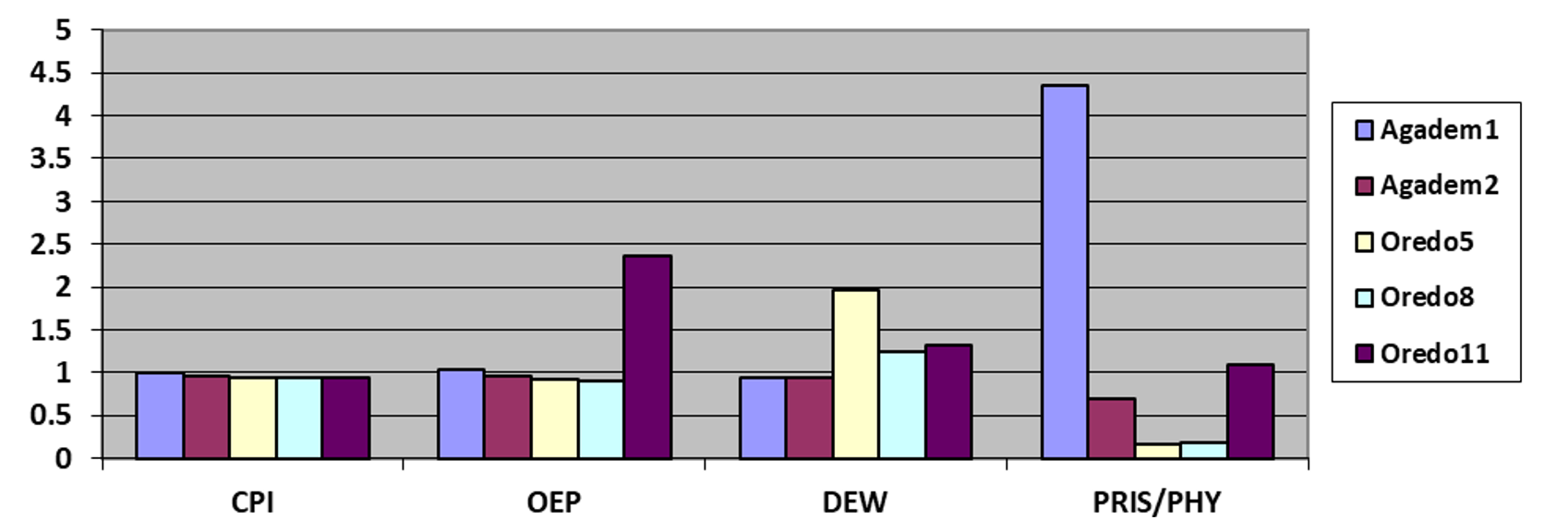
This study evaluated the geochemical characteristics and possible genetic relationship between Agadem crude oils from the Niger Republic and Oredo crude oils from the Niger Delta, Nigeria, based on thermal maturity, organic matter source characteristics, and depositional conditions. Five crude oil samples were investigated, comprising two samples collected from different oil wells in the Agadem oil field, Niger Republic, and three samples obtained from different oil wells in the Oredo oil field, Niger Delta, Nigeria. The samples were collected in clean glass bottles and analysed using gas chromatography–mass spectrometry (GC–MS) to characterise their hydrocarbon and biomarker compositions. The identified biomarkers included n-alkanes, hopanes, steranes, phenanthrenes, and triaromatic steroids. Molecular maturity and depositional-environment characteristics were assessed using carbon preference index (CPI), odd–even predominance (OEP), diagnostic equivalent weight (DEW), and pristane/phytane (Pr/Ph) ratios. The CPI values obtained were 1.0049 for Agadem1, 0.9524 for Agadem2, 0.9423 for Oredo5, 0.9477 for Oredo8, and 0.9482 for Oredo11, indicating that the oils generally exhibit CPI values close to unity and have undergone substantial thermal alteration. The Pr/Ph ratios ranged from 1.15 in Agadem1 to 0.18 in Oredo5, indicating variations in the redox conditions of the depositional environments. DEW and OEP values also showed variations among the samples, with DEW ranging from 0.94 to 2.34 and OEP from 0.83 to 1.02. The occurrence and distribution of the investigated biomarkers reveal appreciable similarities among the Agadem and Oredo crude oils, suggesting comparable source characteristics and depositional conditions.
References
Akinsola J. B. (2007): Identification of metalloporphyrins a determination of heavy metals in some Nigerian fossil fuels.M.Sc Dissertation, Department of pur and applied chemistry, Usmanu Danfodiyo University, Sokoto, 57-59(unpublished)
Azubike, A. N., Osuji, L. C., Onojake, M. C., & Achugasim, O. (2026). Utility of Biomarkers in Crude Oil Identification and Forensic Tracking of Spilled Oil. J Petro Chem Eng, 4(2), 311-321.
Brassel, S.C., (1993).Bisogeochemical laboratories.Department of geological sciences, Indiana University Bloomington, IN 47405-5101.
Hemler, C.L .and L.F Smith (2004), In R.A Meyers (Ed), Handbook of petroleum refining processes Mc Graw Hill,
Mohammed, S. S., Alkhafaji, M. W., Saleh, S. A. A., Zumberge, A., & Jasim, M. N. (2026). Aromatic Hydrocarbons Geochemistry of Crude Oils from East Baghdad Oilfield, Central Iraq. Petroleum Chemistry, 66(4), 405-419.
Patin, S (1999): Environmental impact of the offshore oil and gas industry.Eco-monitor publishing, East New York, NY, 425.
Peters K.E., and Moldowan J.M. (1993) The biomarker Guide:Interpreting molecular fossils in: Petroleum and Ancient Sediments: England Cliffs, N.J., Prentice Hall, XVI PP 363.
Peters K.E., Walters C.C and moldowan J.M.(2005). The biomarker guide: Biomarkers and isotopes in the environment and human history second edition, cambridge university press. Pp120-295
Riza, O., Yessimkhan, S., Zhadyrassyn, S., Aigul, G., Maral, K., Zhadra, S., & Emami-Meybodi, H. (2026). Separation of Genetic and Reservoir Controls on Oil Variability Using Integrated Biomarker Analysis and Oil Fingerprinting: A South Turgay Basin Case Study. Energies, 19(17), 4007.
Sarraj, R. H. A., and Mohialdeen, I. M. J. (2021). Organic geochemistry and thermal maturity assessment of cretaceous Balambo formation from selected Sites, Kurdistan, NE Iraq. Iraqi Journal of Science, 532-554.
Speight J.G. (2006). The chemistry and Technology of petroleum, Taylor and Francis, New York,.
Speight J.G. (2002). Handbook of of peroleum product analysis.John wiley and sons, New Jersey,
Speight J.G. (2001). Hand book of petroleum product analysis. John wiley and sons, New Jersey,
Takyi, B., Thompson, B. E., Kofi, B. F., Harrison, O., & Adansi, F. G. (2026). Biomarker Assessment of Crude Oil Biodegradation, A Case Study of the'Y'Field of the Niger Delta. Ghana Mining Journal, 26(1), 36-42.
Zhang, J., Liao, W., Fan, L., Li, Y., & Yin, X. (2026). Origin, Charging History, and Migration–Accumulation Patterns of Crude Oils in the Eocene Dainan Formation, Southeastern Gaoyou Sag, Subei Basin. Energies, 19(13), 2990.
Downloads
Published
Issue
Section
Categories
License
Copyright (c) 2026 Nasiru Abdullahi Sani, Bukar Wakil, Lawan Khalid Khalid, Muhammad, Zuru

This work is licensed under a Creative Commons Attribution 4.0 International License.


