
A Hybrid Radiomics–Deep Learning Feature-Fusion Framework with Explainable Artificial Intelligence for Accurate Liver Cancer Prediction from Computed Tomography Images
DOI:
https://doi.org/10.33003/fjs-2026-1018-5897Keywords:
Hepatocellular carcinoma, Radiomics, Deep learning, Feature-level fusion, Explainable artificial intelligence, XGBoostAbstract
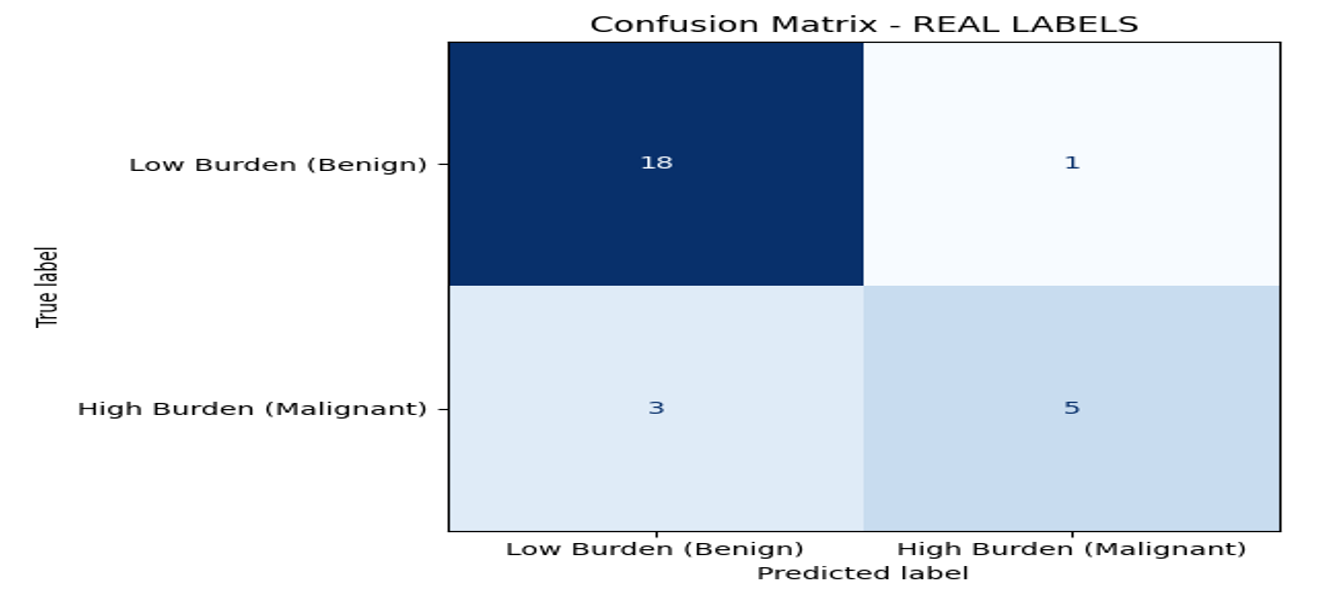
Hepatocellular Carcinoma (HCC) is one of the common cancer-related mortality causes across the world. The black-box nature (semantic opacity) of current deep learning models used in computer-aided detection hinders clinical management of HCC, particularly the lack of early and interpretable diagnosis. In this work, a hybrid fusion framework at the feature level is developed to enhance the accuracy and interpretability of predicting liver cancer using computed tomography (CT) images. CT volumes dataset from the multi-center Liver Tumor Segmentation (LiTS) benchmark were pre-processed using Hounsfield-Unit windowing, isotropic resampling and automated, spatial-pyramid-pooling-based segmentation. A 3-D deep feature was extracted using a 3-dimensional ResNet-10 backbone and a 562-dimensional hybrid vector was created by concatenation PyRadiomics descriptors selected by Lasso, balanced with Synthetic Minority Over-sampling Technique (SMOTE), an eXtreme Gradient Boosting (XGBoost) model optimized by GridSearchCV was then used for classification. To obtain both spatial and feature-level explainability, Gradient-weighted Class Activation Mapping (Grad-CAM) and SHapley Additive exPlanations (SHAP) are applied. The AUC-ROC of the optimized hybrid classifier was 0.921 and an overall accuracy of 85% and sensitivity of 0.95 for low tumor-burden cases were obtained. Predictions were shown to be based on biologically relevant regions of the tumor, and not on anatomical noise by using Grad-CAM heatmaps. The results suggest that a radiomics–deep learning fusion model with explainability and transparency has high diagnostic accuracy and clinical interpretability, and can be used as a reliable model for decision support in the field of hepatic oncology.
References
Bala Doma, A., Muhammad Auwal, A., Obini Nwaze, N., & Ibrahim Musa, S. (2025). Comparative survival models of patients with chronic hepatitis B: A case study at the Federal Medical Centre, Nguru. FUDMA Journal of Sciences, 9(12), 99–107. https://doi.org/10.33003/fjs-2025-0912-4158
Bo, Z., Song, J., He, Q., Chen, B., Chen, Z., Xie, X., Shu, D., Chen, K., Wang, Y., & Chen, G. (2024). Application of artificial intelligence radiomics in the diagnosis, treatment, and prognosis of hepatocellular carcinoma. Computers in Biology and Medicine, 173, 108337. https://doi.org/10.1016/j.compbiomed.2024.108337
Chowdhury, S. H., Mamun, M., Shaikat, T. A., Hussain, M. I., Iqbal, S., & Hossain, M. M. (2025). An ensemble approach for artificial neural network-based liver disease identification from optimal features through hybrid modeling integrated with advanced explainable AI. Medinformatics, 2(2), 107–119. https://doi.org/10.47852/bonviewMEDIN52024744
El Atifi, W., El Rhazouani, O., Khan, F. M., & Sekkat, H. (2025). Optimizing ensemble machine learning models for accurate liver disease prediction in healthcare. PLoS ONE, 20(8), e0330899. https://doi.org/10.1371/journal.pone.0330899
Grover, S., & Gupta, S. (2024). Automated diagnosis and classification of liver cancers using deep learning techniques: A systematic review. Discover Applied Sciences, 6(10), 508. https://doi.org/10.1007/s42452-024-06218-0
Hariharan, S., Anandan, D., Krishnamoorthy, M., Kukreja, V., Goyal, N., & Chen, S.-Y. (2025). Advancements in liver tumor detection: A comprehensive review of various deep learning models. Computer Modeling in Engineering & Sciences, 142(1), 91–117. https://doi.org/10.32604/cmes.2024.057214
Hu, W., Cai, X., Zhao, Y., Xu, Q., Wang, X., Song, Q., Yao, Y., & Liu, A. (2026). Interpretable deep learning framework based on contrast-enhanced MRI for predicting histological grade of hepatocellular carcinoma. Quantitative Imaging in Medicine and Surgery, 16(1), 86. https://doi.org/10.21037/qims-2025-269
Huang, Z., Huang, W., Jiang, L., Zheng, Y., Pan, Y., Yan, C., Ye, R., Weng, S., & Li, Y. (2025a). Decision fusion model for predicting microvascular invasion in hepatocellular carcinoma based on multi-MR habitat imaging and machine-learning classifiers. Academic Radiology, 32(4), 1971–1980. https://doi.org/10.1016/j.acra.2024.10.007
Huang, Z., Pan, Y., Huang, W., Pan, F., Wang, H., Yan, C., Ye, R., Weng, S., Cai, J., & Li, Y. (2025b). Predicting microvascular invasion and early recurrence in hepatocellular carcinoma using DeepLab V3+ segmentation of multiregional MR habitat images. Academic Radiology, 32(6), 3342–3357. https://doi.org/10.1016/j.acra.2025.02.006
Lal, B., Prasad, K. S., Vinmathi, M. S., Purohit, P., Ashutosh, P., & Tharsanee, R. M. (2025). Applying machine learning techniques for the diagnosis and prognosis of liver cancer. In V. Sharmila et al. (Eds.), Challenges in information, communication and computing technology (pp. 33–37). CRC Press. https://doi.org/10.1201/9781003559092-6
Li, Y., & Zhao, J. (2025). A liver tumor image segmentation method using convolutional attention. IAENG International Journal of Computer Science, 52(9), 3141–3147.
Ma, L., Li, C., Li, H., Zhang, C., Deng, K., Zhang, W., & Xie, C. (2024). Deep learning model based on contrast-enhanced MRI for predicting post-surgical survival in patients with hepatocellular carcinoma. Heliyon, 10(10), e31451. https://doi.org/10.1016/j.heliyon.2024.e31451
Mondol, P. K., Mozumder, M. A. I., Kim, H. C., Al-Onaizan, M. H. A., Hassan, D. S. M., Al-Bahri, M., & Muthanna, M. S. A. (2025). A ResNet-50–UNet hybrid with whale optimization algorithm for accurate liver tumor segmentation. Diagnostics, 15(23), 2975. https://doi.org/10.3390/diagnostics15232975
Pande, S. D., Kalyani, P., Nagendram, S., Alluhaidan, A. S., Babu, G. H., Ahammad, S. H., & Bonyah, E. (2025). Comparative analysis of the DCNN and HFCNN based computerized detection of liver cancer. BMC Medical Imaging, 25(1), 37. https://doi.org/10.1186/s12880-025-01537-z (DOI confirmed via publisher)
Saeed, F., Shiwlani, A., Umar, M., Jahangir, Z., Tahir, A., & Shiwlani, S. (2025). Hepatocellular carcinoma prediction in HCV patients using machine learning and deep learning techniques. Jurnal Ilmiah Computer Science, 3(2), 120–134. https://doi.org/10.58602/jics.v3i2.48
Sethia, K., Strakos, P., Jaros, M., Kubicek, J., Roman, J., Penhaker, M., & Riha, L. (2025). Advances in liver, liver lesion, hepatic vasculature, and biliary segmentation: A comprehensive review of traditional and deep learning approaches. Artificial Intelligence Review, 58(10), 299. https://doi.org/10.1007/s10462-025-11299-4
(typical pattern; confirm exact DOI if needed)
Shiwlani, A., Kumar, S., Hasan, S. U., Kumar, S., & Naguib, J. S. (2024). Advancing hepatology with AI: A systematic review of early detection models for hepatitis-associated liver cancer. International Journal of Innovative Science and Research Technology, 9(11), 2522–2529.
Yang, M., & Niu, H. (2026). Research on liver cancer pathology image recognition based on deep learning image processing. Scientific Reports, 16, 467. https://doi.org/10.1038/s41598-025-24834-7
Zhang, F., Zhao, X., Wei, J., & Wu, L. (2025). PathSynergy: A deep learning model for predicting drug synergy in liver cancer. Briefings in Bioinformatics, 26(2), bbaf192. https://doi.org/10.1093/bib/bbaf192
Zhao, Y., Wang, S., Wang, Y., Li, J., Liu, J., Liu, Y., Ji, H., Su, W., Zhang, Q., Song, Q., Yao, Y., & Liu, A. (2024). Deep learning radiomics based on contrast enhanced MRI for preoperatively predicting early recurrence in hepatocellular carcinoma after curative resection. Frontiers in Oncology, 14, 1446386. https://doi.org/10.3389/fonc.2024.1446386
Downloads
Published
Issue
Section
Categories
License
Copyright (c) 2026 Murtala Sahabo Abubakar, Kamil Kayode Saka, Morufat D. Gbolagade, Ismail Jamiu Okunlola, Ibrahim Nurudeen Olawale

This work is licensed under a Creative Commons Attribution 4.0 International License.


