
Phytochemical Examination, Anti-Inflammatory, Anti-Diabetic and Anti-Benign Prostatic Hyperplasia of Acalypha Indica Stem Extract
DOI:
https://doi.org/10.33003/fjs-2026-1018-5873Keywords:
Acalypha indica Linn, Antioxidaant, Anti-benign prostatic hyperplasia (BPH), Anti-inflammatory activity, Phytochemical profiling, Prostate Specific Antigen (PSA)Abstract
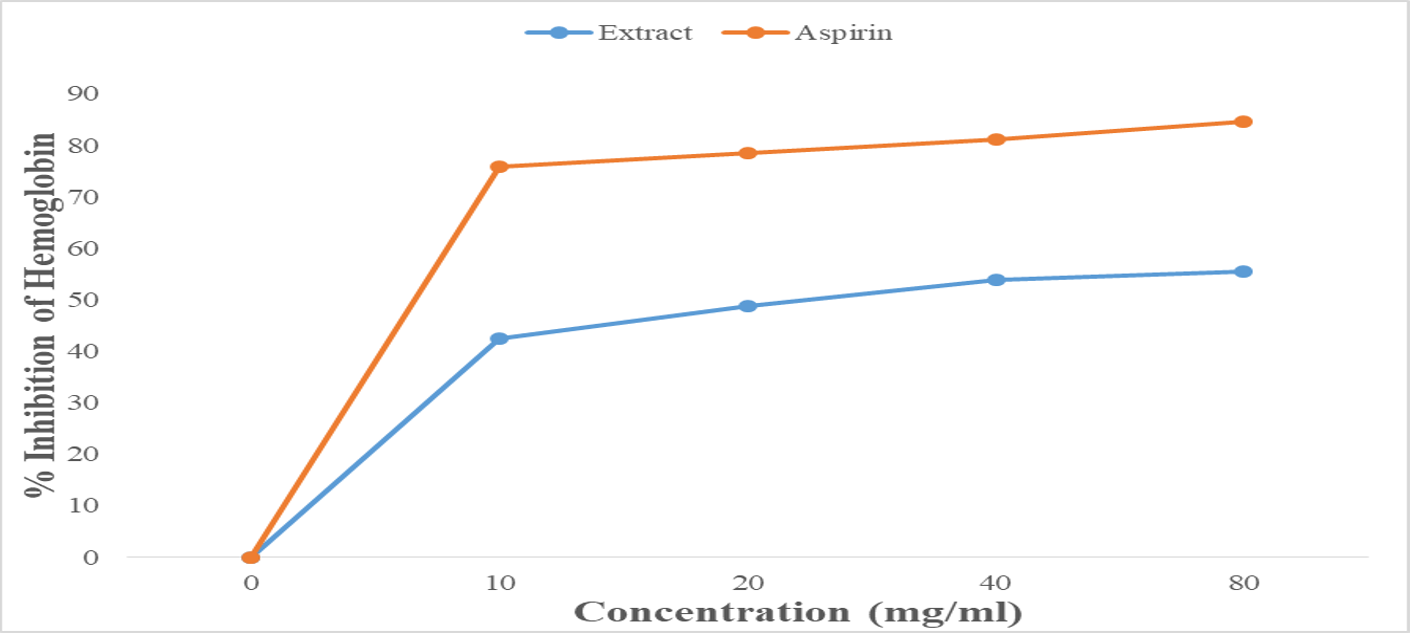
Acalypha indica is a common medicinal herb in Africa and Asian tradition with anti-inflammatory, antioxidant, antimicrobial and anti-BPH properties. Ethyl acetate extract of Acalypha indica Linn. Stem bark, obtained via cold maceration, was evaluated for its phytochemical composition alongside its anti-inflammatory, anti-diabetic, and anti-benign prostatic hyperplasia (BPH) activities. Quantitative GC–FID profiling revealed notable quantities of alkaloids and steroids, including ephedrine (19.21 mg/g) and cortisol (10.06 mg/g), along with flavonoids such as rutin (0.64 mg/g) and quercetin (0.50 mg/g), and phenolics like resveratrol (1.43 mg/g). Biologically, the extract displayed concentration-dependent total antioxidant capacity (15% to 19.7% across 0–80 mg/mL) and potent membrane-stabilizing effects by inhibiting heat-induced hemolysis by 45% to 55%. In anti-diabetic evaluations, glucose adsorption ranged from 1.38 to 0.17 mM/g (0–80 mg/mL glucose), outperforming acarbose at 20 mg/mL despite showing variable behavior across concentration levels. Crucially, in testosterone-induced BPH rat models, the extract significantly suppressed key disease biomarkers: serum prostate-specific antigen (PSA) dropped from 2.40 ± 0.64 ng/mL to near-normal levels of 1.07 ± 0.09 ng/mL, dihydrotestosterone (DHT) declined from 66.23 ± 11.03 ng/mL to 38.40 ± 4.33 ng/mL, and the 100 mg/kg dose markedly reduced prostate volume (0.06 ± 0.01 mL) and weight (0.190 ± 0.01 g) to levels comparable with the standard drug finasteride. Steady body weight gain over 14 days indicated strong in vivo tolerance, demonstrating that Acalypha indica stem extract possesses promising therapeutic potential for natural BPH management and justifies further toxicological and clinical investigation.
References
Adebayo, A. H., Sharma, R., and Sallau, B. A. (2019). Phytochemical and pharmacological investigations of selected Acalypha species. Journal of Medicinal Plants Research, 13(4), 79–88.
Adefegha, S. A. (2018). Functional foods and nutraceuticals as dietary intervention in chronic diseases; Novel perspectives for health promotion and disease prevention. Journal of Dietary Supplements, 15(6), 977–1009.
Aiwonegbe, A. E. ., Omoruyi, U. ., Ogbeide, O. K. ., Imoukhuede, B. O. ., & Gabrielsson, B. O. . (2022). Anxiolytic Effects, Antioxidant and Anti-inflammatory Activities of the Methanol Extract of Jatropha tanjorensis Leaf. Tanzania Journal of Science, 48(3), 596–606. https://doi.org/10.4314/tjs.v48i3.7
Anderson, R. (2024). Phytochemical Validation of Traditional Medicinal Plants: Bridging Ethnobotany with Modern Pharmacology. RRJ Botanical Sciences, 13, 004.
Bandyopadhyay, D., Ghosh, S., and Sen, S. (2022). Hydroquinone: A review on its chemistry, extraction, and therapeutic applications. Current Research in Pharmaceutical Sciences, 12(3), 184–192. https://doi.org/10.25033/crps.2022.v12i03.001
Barakat, M. A. (2011). New trends in removing heavy metals from industrial wastewater. Arabian Journal of Chemistry, 4(4), 361–377.
Bolton, S., and Shrestha, S. (2023). Ephedrine. In StatPearls [Internet]. StatPearls Publishing. https://www.ncbi.nlm.nih.gov/books/NBK549845/
Bouyahya, A., Bakri, Y. and Dakka, N. (2020) ‘Medicinal plant bioactive compounds in the management of inflammation’, Molecules, 25(14), p. 3076.
Braidy, N., Behzad, S., Habtemariam, S., Ahmed, T., Nabavi, S. F., Nabavi, S. M., & Sureda, A. (2017). Neuroprotective effects of citrus fruit-derived flavonoids, nobiletin and tangeretin, in Alzheimer’s and Parkinson’s disease. CNS & Neurological Disorders-Drug Targets, 16(4), 387–397. https://doi.org/10.2174/1871527316666170328113309
Cushnie, T. P. T., and Lamb, A. J. (2011). Antimicrobial activity of flavonoids. International Journal of Antimicrobial Agents, 38(2), 99–107. https://doi.org/10.1016/j.ijantimicag.2011.02.014
Emmanuel, E., and Igwe, C. (2013). Phytochemical constituents and antioxidant activity of Acalypha wilkesiana and Acalypha hispida. International Journal of Research in Pharmacy and Chemistry, 3(4), 903–909.
International Diabetes Federation. (2021). IDF diabetes atlas (10th ed.). Brussels: IDF.
Jayaprakash, G.k, Singh, R.P., and Sakariah, K.K. (2002). Antioxidant activity of grape seed (Vitis vinifere) extracts on peroxidation models in vitro. Food Chemistry, 77(4), 431 – 437. https://doi.org/10.1016/S0308-8146(01)00379-3
Kelly da and Nelson R. (2014) characterization and quantification by gas chromatography of Phytochemicals. J. -Braz. Chem. Soc. Vol 25.
Kumar, M., Kumar, A., & Lather, V. (2020). A review on medicinal properties of Acalypha indica. Journal of Pharmacognosy and Phytochemistry, 9(4), 1460–1465.
Lee, M. R. (2011). The history of Ephedra (ma-huang). The Journal of the Royal College of Physicians of Edinburgh, 41(1), 78–84. https://doi.org/10.4997/JRCPE.2011.116
Liguori, I., Russo, G., Curcio, F., Bulli, G., Aran, L., Della-Morte, D., et al. (2018). Oxidative stress, ageing and disease. Clinical Interventions in Ageing, 13, 757–772.
Loo, A. Y., Jain, K., and Darah, I. (2008). Antioxidant activity of compounds isolated from the pyroligneous acid of Rhizophora apiculata. Food Chemistry, 107(3), 1151–1160. https://doi.org/10.1016/j.foodchem.2007.09.044
Mani, R., and Natesan, V. (2018). Chrysin: Sources, beneficial pharmacological activities, and molecular mechanism of action. Phytochemistry, 145, 187–196. https://doi.org/10.1016/j.phytochem.2017.11.010
Nagarajan, S., Maruthappan, V. V., Krishnan, K. (2011). GC-MS analysis of bioactive components present in the whole plant of Acalypha indica L. Asian Journal of Pharmaceutical and Clinical Research, 4(3), 89–92.
Ogbeide O.K,, Sajere, O, Obukuru, IS, Akedayi, P, Omorefe, NO, Unachukwu, CI, Mbonu, R, Aghedo, NO, Iyekowa1, Uadia, JO. Comparative Studies on the Bioactive Chemical Composition, Antioxidant and Antimalarial potentials of Picralima nitida Leaves and Stem Bark Extracts. Benin Journal of Physical Sciences. 2024; 1(1):231-250
Ogbeide, O. K., Aghedo, O. N. and Uadia, J. O. (2022) • Anti-inflammatory and Analgesic Investigations of Methanol Extract of Ganoderma lucidum', Tropical Journal of Phytochemistry and Pharmaceutical Sciences, 1(1), pp. 17-22.
Ogbeide, O.K., and Akhigbe, I.U., (2019). antihaemolytic, anti-anaemic and biosafety examination of combined telfairia occidentalis and ipomoea batatas leaves extract. Journal of Pharmaceutical and Allied Sciences, 16(4), 3106 - 3113.
Ogbeide, O., Ogbonnaya, C., Asakitikpi, E., Uyi, D., Aluge, B., Nosakhare, O., Otahagwa, W., Ehigie, C., Omoruyi, U., Aifuwa, O., & Gabriel, B. (2019). Analgesic and Anti-inflammatory Activities of the Stem Bark of Yellow Flamboyant (Peltophorum pterocarpum). Journal of Applied Sciences and Environmental Management, 23(7), 1315–1322. https://doi.org/10.4314/jasem.v23i7.
Ogunjobi, J. A., and Afolayan, A. J. (2018). Effects of solvent polarity on the phytochemical composition and in vitro antioxidant and anti-diabetic activities of Senecio asperulus. Evidence-Based Complementary and Alternative Medicine, 2018, 1–11. https://doi.org/10.1155/2018/4571239
Oloyede, O. B. (2010). Chemical profile and antioxidant activity of some Nigerian medicinal plants. African Journal of Biotechnology, 9(8), 1030–1035.
Oni, M. E., Ovwero, E., & Ogbeide, K. O. (2026). Phytochemical, Nutritional, Metal Composition, Haematological and Antimalarial Evaluation of the Leaf Extract of Morinda Citrifolia L. (Noni). FUDMA Journal of Sciences, 10(14), 13-19.
Pitocco, D., Zaccardi, F., Di Stasio, E., Romitelli, F., Santini, S. A., Zuppi, C., & Ghirlanda, G. (2020). Oxidative stress and diabetes: The role of antioxidants. Diabetes/Metabolism Research and Reviews, 36(2), e331–e345.
Prakash, L., and Sivakumar, S. (2010). Antioxidant and phytochemical properties of Acalypha indica. Indian Journal of Pharmaceutical Sciences, 72(4), 591–595.
Remya, C., Dileep, K. V., Variyar, E. J., and Sadasivan, C. (2016). Cuscohygrine as a potential nicotinic acetylcholine receptor agonist: An in silico study. Journal of Biomolecular Structure and Dynamics, 34(10), 2119–2127. https://doi.org/10.1080/07391102.2015.1105260
Salehi, B., Venditti, A., Sharifi-Rad, M., Kręgiel, D., Sharifi-Rad, J., Durazzo, A., Lucarini, M., Santini, A., Souto, E. B., Novellino, E., Antolak, H., Azzini, E., Setzer, W. N., & Martins, N. (2019). The therapeutic potential of apigenin. International Journal of Molecular Sciences, 20(6), 1305. https://doi.org/10.3390/ijms20061305
Senthamil, S., Vijayan, R., and Rajan, R. (2020). Phytochemical profiling and antioxidant properties of Acalypha indica Linn. Journal of Ethnopharmacology, 247, 112266.
Sudha, S. S., Karthic, R., and Rengalakshmi, R. (2011). GC-MS analysis of bioactive compounds from Acalypha indica. International Journal of Pharma and Bio Sciences, 2(2), 575–580.
Thau, L., Gandhi, J., and Sharma, S. (2023). Physiology, Cortisol. In StatPearls [Internet]. StatPearls Publishing. https://www.ncbi.nlm.nih.gov/books/NBK538239/
WHO (2019). WHO global report on traditional and complementary medicine. Geneva: World Health Organisation.
Yilmaz, O., Batislam, E., Tuglu, D., Ferhat, M., & Bozkurt, M. (2019). The role of chronic inflammation in benign prostatic hyperplasia. Prostate International, 7(2), 49–54.
Zhao, C., Liu, Y., Lai, S., Cao, H., Guan, Y., Che, Y., Li, X., Chen, X., Sun, H., & Wang, Z. (2021). Phenolic compounds and their bioactivities of Acalypha species: A review. Phytochemistry Reviews, 20(3), 623–652
Downloads
Published
Issue
Section
Categories
License
Copyright (c) 2026 Osahon K. Ogbeide, Ogbonnia E. Okah, Onome Sajere, Julius U. Iyasele

This work is licensed under a Creative Commons Attribution 4.0 International License.


