
Technical Assessment of Diesel Obtained from Modular Refinery for Use in Industries and Transportation
DOI:
https://doi.org/10.33003/fjs-2026-1016-5864Keywords:
Modular refinery, diesel, fuel, physicochemical, quality assessment, ASTM standards, transportationAbstract
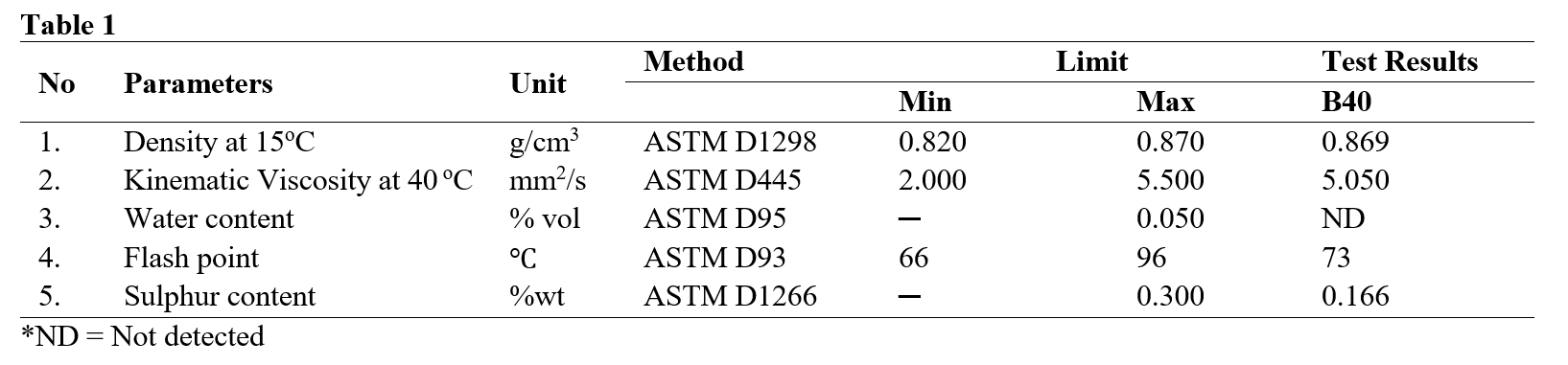
The growing use of modular refinery systems in Nigeria calls for a comprehensive analysis of the quality and performance properties of the petroleum products generated in such refineries. In this research, the technical analysis of diesel fuel produced from one of the modular refineries in Nigeria was done in order to determine its applicability in industries and transport vehicles. The collected diesel samples were tested by the standard ASTM test methods. The following physicochemical properties were determined: water content (ASTM D95); density (ASTM D1298); flash point (ASTM D93); kinematic viscosity (ASTM D445); sulfur content (ASTM D1266); and atmospheric distillation characteristics (ASTM D86). The analyses were carried out under controlled laboratory conditions and the measurements were repeated in duplicate for increased accuracy and consistency. The test results were then compared against the Nigerian regulatory standards and a number of international diesel fuel standards. It was found that the diesel sample exhibited desirable quality features, with no water content, density of 0.869 g/cm³, flash point of 73°C, kinematic viscosity of 5.05 mm²/s, and sulfur content of 0.1661 wt%. The atmospheric distillation analysis showed an initial boiling point of 180°C and a final boiling point of 380°C, which is below the Nigerian maximum limit of 385°C. Most of the properties under consideration complied with the Nigerian fuel quality standards, thus indicating good combustion, storage safety, lubricating performance, and environmental acceptability.References
Abdulfatai. J. (2004). The Use of Diesel Oil Treated with Inorganic Salt. An Alternative to Kerosene AU journal of technology, 8(1): 27-34
Abdulsalam R. Karim, Luqman O. Hamasalih, Diary I. Tofiq, Dler M. Salih. A Comparative Elemental Analysis of the Different Kurdistan Crude Oil Fields. American Journal of Science and Technology. Vol. 2, No. 2, 2015, pp. 74-78.
Al-Dahhan, W., & MA Mahmood, S. (2019). Classification of Crude Oils and its Fractions on the Basis of Paraffinic, Naphthenic and Aromatics. Al-Nahrain Journal of Science, 22(3), 35–42. https://doi.org/10.22401/anjs.22.3.05
ASTM International, ASTM D86-12: Standard Test Method for Distillation of Petroleum Products at Atmospheric Pressure, 2012
ASTM International. (2024). ASTM D975: Standard Specification for Diesel Fuel Oils. ASTM International, West Conshohocken, PA.
Bacha, J., Freel, J., Gibbs, A., Gibbs, L., Hemighaus, G., Hoekman, K., Horn, J., Ingham, M., Jossens, L., Kohler, D., Lesnini, D., McGeehan, J., Nikanjam, M., Olsen, E., Organ, R., Scott, B., Sztenderowicz, M., Tiedemann, A., Walker, C., & Freightliner. (2007). Diesel Fuels Technical Review. Chevron Corporation.
Bebeteidoh, O. L., Pazouki, K., & Norman, R. (2020). An experimental investigation of the physicochemical properties of locally refined diesel oil. Sustainable Chemistry and Pharmacy, 15, 100200. https://doi.org/10.1016/j.scp.2019.100200
Bello, M. N. (2018). Analysis for detection of performance characteristics of diesel fuel. International Journal of Trend in Scientific Research and Development, 3(1), 853–859. https://doi.org/10.31142/ijtsrd19054
Chukwu, A. J., Okwonna, O., & Muwarure, P. (2025). Sustainability of modular refinery operation in Nigeria: Product quality and value chain. World Journal of Advanced Engineering Technology and Sciences, 14(3), 425–431.
European Committee for Standardization (CEN). (2024). EN 590: Automotive Fuels – Diesel Requirements and Test Methods. Brussels, Belgium.
Faruq, U.Z. Runde,M.Danshehu, B.G. Yahaya, H.N., Zuru. A.A. and Muhammad,, A.B(2012). Comparative Studies of Gasoline Samples Used in Nigeria. Nigerian Journal of Basic and Applied Science, 20(2): 87-92
Nigerian Midstream and Downstream Petroleum Regulatory Authority (NMDPRA). (2026). Petroleum Industry Performance Reports and Fuel Quality Compliance Data. Abuja, Nigeria.
Soukayna, B., et al. (2018). Characterization and quality assessment of diesel fuel using standard analytical methods. Fuel Processing Technology, 176, 12–20.
Downloads
Published
Issue
Section
Categories
License
Copyright (c) 2026 Alfa Tijjani Abdulrahman, Muhammad Lawal, Haruna Muhammad Al amin, Ali Ibrahim Wada, Idris Umar

This work is licensed under a Creative Commons Attribution 4.0 International License.


