
Assessment of mycological profile and heavy metals concentration of Orogodo River in Delta State, Nigeria
DOI:
https://doi.org/10.33003/fjs-2026-1016-5855Keywords:
Mycology, Profile, Heavy Metals, Orogodo, River, Agbor, Delta, StateAbstract
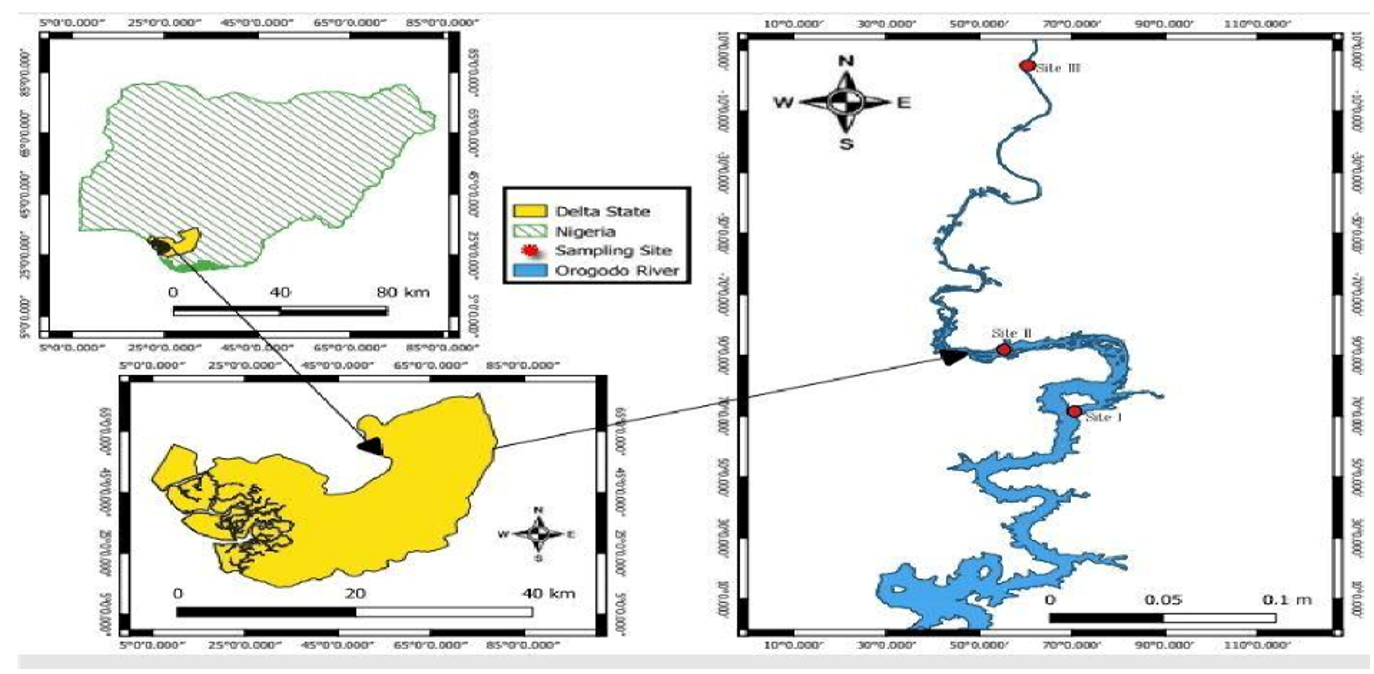
Fungal and heavy metals pollution of rivers are of public health concerns. The mycological and heavy metal characteristics of surface water from Orogodo River in Delta State, Nigeria, were assessed during a single sampling period (February, 2025), across three sampling stations namely; Mbiri, Owa Nta and Agbor, using standard analytical methods including culture-based fungal enumeration, morphological identification and atomic absorption spectrophotometry (AAS) for the determination of metals. Fungal colony forming units (CFUs) were recorded as 10.44 ± 2.14×10³ CFU/mL, 10.44 ± 2.26×10³ CFU/mL, and 9.88 ± 1.99×10³ CFU/mL for Site I (Mbiri), Site II (Owa Nta), and Site III (Agbor), with identified aquatic fungi; Saccharomyces sp., Aspergillus niger, Fusarium oxysporum, Penicillum chrysogenum and Rhizopus sp. Species distribution analysis revealed Saccharomyces sp. as the most prevalent isolate, present in the respective stations surveyed while Penicillium chrysogenum, Rhizopus sp., and Fusarium oxysporum were among the least common. Heavy metal analysis of the river’s surface water showed elevated concentrations of iron (0.76 mg/L) and cadmium (0.05 mg/L), both of which exceeded the World Health Organization and Nigeria Standards for Drinking Water Quality permissible limits (0.3 mg/L and 0.003 mg/L). These results suggest localized fungal and metal contamination and warrant broader seasonal monitoring.
References
Adeniyi, A. O., Ogunbanwo, S. T., & Akinyele, B. J. (2020). Mycological evaluation of selected surface water sources in Lagos State, Nigeria. African Journal of Microbiology Research, 14(6), 246–254.
Agbor, M. I., & Edogun, E. S. (2022). Water quality assessment of Orogodo River in Agbor. Nigerian Journal of Environmental Science, 9(2), 45–58.
Ali, H., Khan, E., & Ilahi, I. (2019). Environmental chemistry and ecotoxicology of hazardous heavy metals: Environmental persistence, toxicity, and bioaccumulation. Journal of Chemistry, 2019, Article 6730305.
Anyanwu, C. U., & Nwosu, B. C. (2019). Seasonal variation of physicochemical parameters of Agbor Rivers. International Journal of Water Resources, 5(3), 122–134.
Appannagari, R. R. (2017). Environmental pollution causes and consequences: a study. North Asian International Research Journal of Social Science & Humanities, 3(8), 151161.
Asibor, G. (2020). Status of discharged abattoir effluent and its effects on the physicochemical characteristics of Orogodo River, Delta State, Nigeria. International Journal of Environment and Pollution Research, 8(1), 1–15.
Aweto, A. O. (2008). Heavy metal pollution in Nigerian rivers: Implications for aquatic life. Journal of Environmental Pollution, 7(1), 10–20.
Baldrian, P. (2003). Interactions of heavy metals with whiterot fungi. Enzyme and Microbial Technology, 32(1), 78–91. https://doi.org/10.1016/S01410229(02)002454
Barnett, H. L., & Hunter, B. B. (1998). Illustrated Genera of Imperfect Fungi (4th ed.). APS Press.
Bauer, A. W., Kirby, W. M. M., Sherris, J. C., & Turck, M. (1966). Antibiotic susceptibility testing by a standardized single disk method. American Journal of Clinical Pathology, 45(4), 493–496.
Cheesbrough, M. (2006). District Laboratory Practice in Tropical Countries (2nd ed.). Cambridge University Press.
Chukwura, E. I., & Okpokwasili, G. C. (2020). Aquatic fungi as bioindicators of environmental pollution. Environmental Monitoring and Assessment, 192, Article 342.
Chukwura, E. I., & Okpokwasili, G. C. (2020). Assessment of fungal flora and their pollution indicators in freshwater resources. Journal of Applied Sciences and Environmental Management, 24(3), 461468.
Clinical and Laboratory Standards Institute (CLSI). (2023). Performance Standards for Antimicrobial Susceptibility Testing (33rd ed.). CLSI Supplement M100.
Das, M., Royer, T. V., & Leff, L. G. (2007). Diversity of fungi, bacteria, and actinomycetes on leaves decomposing in a stream. Applied and Environmental Microbiology, 73(19), 6443–6452.
Edegbai, B. O., & Amusan, O. A. (2021). Heavy metals contamination in Agbor surface waters:A review. Environmental Toxicology, 36(3), 351–363.
Ekundayo, F. O., & Olaniyan, T. O. (2017). Aquatic fungi diversity in Nigerian freshwaters. African Journal of Mycology, 6(2), 75–88.
Eze, P. U., & Okeke, O. E. (2018). Physicochemical properties of river waters in Delta State, Nigeria. Journal of Environmental StudiesJ, 44(1), 55–68.
Eze, S. N., Nwabanne, J. T., & Uchegbu, N. A. (2021). Fungal ecology and adaptation in metalpolluted urban streams of Nigeria. African Journal of Biotechnology, 20(12), 571–579.
Eze, V. C., Agbo, C. U., & Okoye, J. I. (2019). Evaluation of fungal and bacterial populations in selected rivers in SouthEastern Nigeria. International Journal of Environmental Research and Public Health, 16(9), 1532.
Eze, V. C., Agbo, C. U., & Okoye, J. I. (2019). Fungal contamination of surface waters and health implications. Nigerian Journal of Microbiology, 33(2), 2154–2161.
Forbes, B. A., Sahm, D. F., & Weissfeld, A. S. (2007). Bailey and Scott’s Diagnostic Microbiology (12th Ed.). Mosby Elsevier.
Gimba, U. S., Abdullahi, F. A., Moses, S. S., Shehu, G. M., & Sanda, B. J. (2026). Assessment
of Physicochemical Characteristics and Heavy Metal Contamination in River Kaduna, Nigeria: Implications for Water Quality and Ecosystem Health. FUDMA Journal of Sciences, 10 (13), 88-92. https://doi.org/10.33003/fjs-2026-1013-5699
Huo C L, Shang Y Y, Zheng J J, He R X, & He X S. (2017). The adsorption effect of three mushroom powder on Cu²⁺ of low concentration. International Symposium on Water Resource and Environmental Protection.
Idu, F. K., & Iduozee, F. U. (2021). Diversity of fungal species in tropical river ecosystems: Indicators of pollution and ecological degradation. Journal of Environmental Biology, 42(4), 897–903.
Ilechukwu, N. O., & Afolayan, O. T. (2020). Assessment of heavy metals in Nigerian freshwater bodies. Journal of Water and Health, 18(2), 224–237.
Ilechukwu, N. O., & Obot, I. B. (2022). Ecological impact of industrial effluents on Nigerian rivers. Environmental Research Letters, 17(1), Article 015002.
Ipeaiyeda, A. R., & Tesi, G. O. (2009). Assessment of trace heavy metal distribution in water and sediment of Orogodo River, Agbor, Delta State, Nigeria. Journal of Chemical Society of Nigeria, 34(2), 76–84.
Issa B.R, Arimoro F.O, Ibrahim M, Birma G.H, Fadairo E.A, (2011). Assessment of Sediment Contamination by Heavy Metals in River Orogodo (Agbor, Delta State, Nigeria). Current World Environent. 6(1); 29-38
Issa, F. O., Oladipo, F. O., & Ezekiel, O. O. (2011). Assessment of sediment contamination by heavy metals in River Orogodo, Agbor, Delta State, Nigeria. Current World Environment, 6(1), 29–38. https://doi.org/10.12944/CWE.6.1.04
Iwegbue, C. M. A., Arimoro, F. O., Nwajei, G. E., & Eguavoen, O. I. (2012). Concentrations and distribution of trace metals in water and streambed sediments of Orogodo River, Southern Nigeria. Soil and Sediment Contamination: An International Journal, 21(3), 382–406.
Iweriolor, O. R., & Anyiam, O. R. (2023). Status of discharged abattoir effluent and its effects on the physico-chemical characteristics of Orogodo River, Delta State, Nigeria. South Asian Journal of Research in Microbiology, 13(1), 11–20. https://doi.org/10.9734/sajrm/2023/v13i1240
Iwu, C. G., & Okoro, A. N. (2020). Heavy metal concentration in water and sediment of Orogodo River. International Journal of Environmental Chemistry, 10(4), 157–170.
Izegaegbe, J. I., Edoreh, J. A., & Onogbosele, C. O. (2022). Assessment of heavy metal content and human health risk of Orogodo River, Delta State, Nigeria. Journal of Aquatic Sciences, 37(1).
Izegaegbe, J. I., Ehi-Eromosele, C. O., & Otuokere, I. E. (2022). Human health risk assessment of heavy metals in surface water of Orogodo River, Agbor, Delta State, Nigeria. Journal of Applied Sciences and Environmental Management, 26(3), 475–482. https://doi.org/10.4314/jasem.v26i3.10
Jaboro, A. G., Akortha, E. E. and Obayagbona, O. N. (2013). Susceptibility of heavy metals and hydrocarbonclastic attributes of soil microbiota. International Journal of Agriculture and Biosciences 2(5), 206-212.
Kelly-Igumbor E. (2025). Mycological and heavy metal analysis of water sampled from Orogodo River in Agbor Town, Delta State. BSc Thesis, Department of Biological Sciences, University of Delta. 41pp.
Mohan, D. V., Kishore, K., & Gupta, N. (2016). Biosorption and bioaccumulation studies of heavy metals using fungal biomass. Bioremediation Journal, 20(3), 149–168.
Musa, N., Musa, N. F & Aliyu, M. A. (2025). Assessment of mycological profile and heavy metal concentrations of Romi River, Kaduna – Nigeria. Journal of Bioscience and Biotechnology, 14(1): 29-35.
Nnaji, O. M., & Eze, K. C. (2021). Anthropogenic effects on aquatic fungi in Nigerian rivers. African Journal of Ecology, 59(3), 345–357.
NSDWQ (2015). Nigerian Standard for Drinking Water Quality. Nigerian Industrial Standards, NIS 554:2015.
Odebode, A., Adekunle, A. A., & Stajich, J. (2020). Airborne fungi spores’ distribution in various locations in Lagos, Nigeria. Environmental Monitoring and Assessment, 192, Article 87.
Ogbe, R. O., & Arimoro, F. O. (2019). Occurrence of metaltolerant fungi in the Warri River, Nigeria: implications for bioremediation. Journal of Environmental Biology, 40(4), 738–745.
Onifade, A. K., & Agboola, A. O. (2018). Microbiological assessment of Ogun River in Southwest Nigeria. Journal of Water and Health, 16(1), 98–106.
Onifade, A. K., & Agboola, A. O. (2018). Mycological survey of water bodies in Ogun State. Water Research and Health, 14(3), 456–462.
Oyetibo, G. O., Adebusoye, S. A., Ilori, M. O., & Amund, O. O. (2023). Heavy metals assessment of ecosystem polluted with wastewaters. World Journal of Microbiology and Biotechnology.
Oyetibo, G. O., Ilori, M. O., Obayori, O. S., & Amund, O. O. (2021). Environmental and public health implications of fungal contamination in aquatic ecosystems. Environmental Science and Pollution Research, 28, 37723–37734.
Oyetibo, G. O., Ilori, M. O., Obayori, O. S., & Amund, O. O. (2021). Environmental and public health significance of aquatic fungi. Environmental Monitoring and Assessment, 193, 233.
Prince, N., Idowu, O. F., & Olufemi, O. (2020). Environmental pollution: Causes, effects, and control. International Journal of Environmental Studies and Environmental Sciences, 7(2), 41–52.
Sarkar, B., Ghosh, M., Bose, S., & Venkatesh, K. V. (2016). Heavy metal adaptation in fungi: mechanisms and importance in bioremediation. Journal of Applied Microbiology, 121(1), 15–30.
Singh, H., & Kumar, V. (2017). Bioremediation potential of fungal species in heavy metal removal. Environmental Pollution and Remediation, 6(2), 31–45.
Standard Organisation of Nigeria. (2015). Nigerian Standard for Drinking Water Quality (NIS 554:2015). Nigerian Industrial Standards.
Tchounwou, P. B., Yedjou, C. G., Patlolla, A. K., & Sutton, D. J. (2012). Heavy metal toxicity and the environment. EXS, 101, 133–164.
Ukaogo, P. O., Ewuzie, U., & Onwuka, C. V. (2020). Environmental pollution: causes, effects, and the remedies. In Microorganisms for sustainable environment and health (419429). Elsevier.
Ukaogo, P. O., Onyekwelu, J. C., & Eze, P. U. (2020). Environmental pollution and health implications: A case study of Rivers State, Nigeria. Nigerian Journal of Environmental Sciences and Technology, 4(2), 44–53.
Wangboje, O. M., Ogedegbe, S. A., & Ekpo, C. E. (2017). Heavy metal concentrations in water and fish from Orogodo River, Agbor, Delta State, Nigeria. Asian Journal of Environment & Ecology, 4(3), 1–11. https://doi.org/10.9734/AJEE/2017/35340
WHO (2022). Guidelines for Drinking water Quality: Fourth edition incorporating the first and second addenda. World Health Organization.
World Health Organization. (2022). Guidelines for drinking water quality (4th ed., incorporating 1st & 2nd addenda).
Zhou, L., Guo, C., & Huang, H. (2016). Fungal remediation of heavy metal contaminants in aquatic systems: A review. Environmental Chemistry Letters, 14(4), 387–398.
Downloads
Published
Issue
Section
Categories
License
Copyright (c) 2026 Austin Grandy Jaboro, Uzoma James Oghene, Eguono Judith Alari, Gift Nkechi Itila

This work is licensed under a Creative Commons Attribution 4.0 International License.


