
Production And Analysis of Potash from Sesame Seed Waste and Rice Husk
DOI:
https://doi.org/10.33003/fjs-2026-1016-5846Keywords:
Rice Husk, Sesame Waste, PotashAbstract
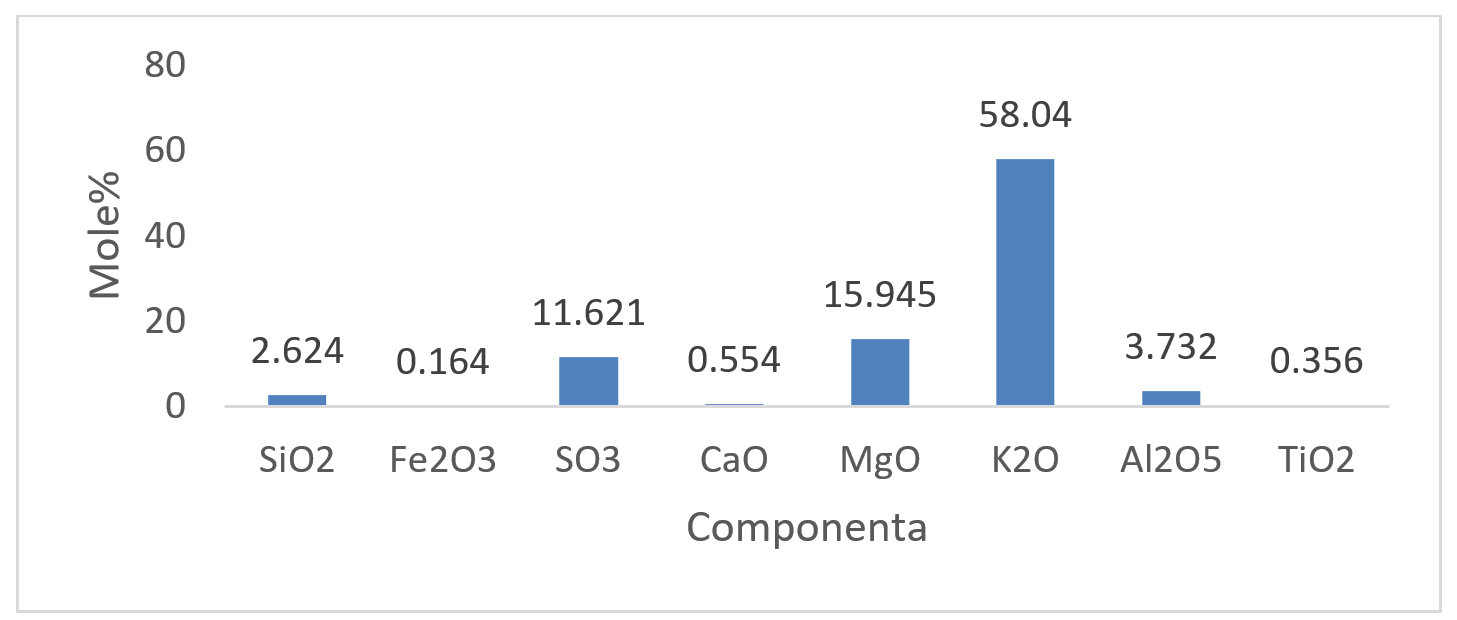
The global demand for potassium-based fertilizers, such as potash, has surged due to its essential role in agriculture. This study explores the potential of agricultural waste, specifically sesame seed waste and rice husks, as sustainable sources for potash production. The aim of the research was to determine the percentage composition of compounds and elemental concentrations in both materials, using X-ray diffraction (XRD) and Atomic Absorption Spectroscopy (AAS) techniques. Results revealed that rice husks contained 38.33% potassium oxide (K2O), 17.26% calcium oxide (CaO), and 6.25% sulfur trioxide (SO3), while sesame seed waste exhibited a higher potassium concentration of 58.04% K2O. Elemental concentration analysis showed rice husks to contain 35.49 mg/kg potassium, and sesame seed waste had a notably higher concentration of 55.91 mg/kg potassium. Both materials demonstrated promising potassium content, positioning them as viable alternatives for potash production. The use of agricultural waste for potash extraction not only offers a sustainable solution for waste management but also provides an eco-friendly, cost-effective source for fertilizer production. These findings suggest that further developments in potash extraction techniques from these materials could significantly contribute to global agricultural and industrial needs.
References
Abdelmonem, B. H., Kamal, L. T., Elbaz, R. M., & Khalifa, M. R. (2025). From contamination to detection: The growing threat of heavy metals. Heliyon, 11(e41713). https://doi.org/10.1016/j.heliyon.2025.e41713
Adamu, D. G. K., Dankawu, U. M., Maharaz, M. N., Chifu, E. N., Zarma, S. S., Silkwa, N. W., & Ahmadu, M. (2023). Evaluation of chemical compositions of rice husk from local rice species using X-ray fluorescence technique. FUDMA Journal of Sciences, 7(4), 82–89. https://doi.org/10.33003/fjs-2023-0704-1777
Akinyele, O. A., Adejumo, B. A., & Ogunjobi, K. O. (2019). Comparative analysis of potash content in selected agricultural waste materials. Journal of Agricultural Research, 34(2), 45-53.
Gahane, D., & Mandavgane, S. A. (2024). Biogenic potassium: Sources, method of recovery, and sustainability assessment. Reviews in Chemical Engineering, 40(6), 707. https://doi.org/10.1515/revce-2023-0035
Nguyen, T. T., Sasaki, Y., Nasukawa, H., & Katahira, M. (2024). Recycling potassium from cow manure compost can replace potassium fertilizers in paddy rice production systems. Science of the Total Environment, 912, 168823. https://doi.org/10.1016/j.scitotenv.2023.168823
Nouri, M., Amiri, S., & Zeynali, M. (2022). Potassium extraction from agricultural waste materials: An environmentally sustainable approach. Journal of Environmental Management,310,1131-1139.
Nutrient Recovery Strategies and Agronomic Performance in Circular Farming: A Comprehensive Review. (2025). Sustainability, 6(3), 80.
Osei, M. Y., Boateng, E., & Asare, A. K. (2020). Evaluation of cocoa pod husk ash as a source of potash for industrial applications. International Journal of Industrial Chemistry, 29(4), 112-125.
Padsuwan, P., Thanachit, S., & Anusontpornperm, S. (2024). Potential use of burnt rice husk to substitute for potassium applied for cassava grown in a low K-reserve soil. Agriculture and Natural Resources, 58(2).
Phyo, Z., Ngwe, K., Win, T., & Moe, K. (2024). Effects of rice husk ash and potassium fertilizer application on yield and yield components of rice (Oryza sativa L.). AGPE The Royal Gondwana Research Journal of History, Science, Economic, Political and Social Science, 5(1), 1–10.
Rouhani, A., Pidlisnyuk, V., & Al Souki, K. S. (2024). Characterizations of ash derived from the crops’ waste biomass for soil improvement and assisted phytoremediation. Bioresource Technology Reports, 26, 103456. https://doi.org/10.1016/j.biteb.2024.103456
Sangokunle, A.A., & Adeniran, O.A. (2020). Rice husk as a renewable source of potash for sustainable agriculture: A Nigerian case study. Journal of Agricultural Waste Management, 14(3), 45-56.
Wang, Y., Li, X., Zhang, Y., Chen, L., & Liu, H. (2024). Sesame (Sesamum indicum L.) growth properties and yield attributes are associated with potassium level in response to drought stress. Journal of Plant Nutrition, 47(9). https://doi.org/10.1080/01904167.2024.2308194
Zou, X., Zhang, Z., & Liu, Y. (2020). Utilization of sesame husks for the production of potash: A sustainable waste management approach. Waste and Biomass Valorization, 11(5), 2341-2350
Downloads
Published
Issue
Section
Categories
License
Copyright (c) 2026 Fai Fredrick Yirankinyuki, Lamai Danbature Wilson, Pius Philip, Muhamad Adam Ibrahim, Ibrahim Muhammad Umar, Elizabeth John

This work is licensed under a Creative Commons Attribution 4.0 International License.


