
Comparative Phytochemical, FTIR and GC–MS Characterization of Aqueous and Ethanolic Leaf Extracts of Azadirachta indica, Psidium guajava and Ocimum gratissimum
DOI:
https://doi.org/10.33003/fjs-2026-1013-5814Keywords:
Medicinal Plant, Extraction Yield, Ethanol, Phytochemicals, Bioactive CompoundAbstract
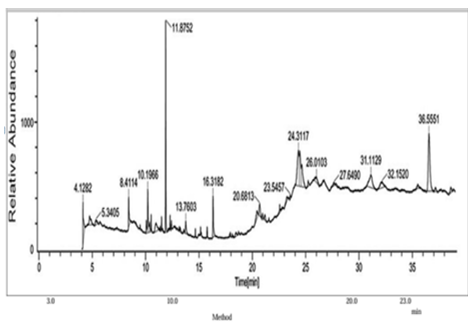
Medicinal plants are important sources of bioactive compounds with potential pharmaceutical applications. This study comparatively evaluated the extraction yield, phytochemical composition, Fourier Transform Infrared (FTIR) characteristics, and Gas Chromatography–Mass Spectrometry (GC–MS) profiles of aqueous and ethanolic leaf extracts of Azadirachta indica, Psidium guajava, and Ocimum gratissimum were collected from Kaduna state, Nigeria. Leaf powders were extracted separately by cold maceration using distilled water and ethanol. The extracts were subjected to qualitative and quantitative phytochemical analyses, FTIR spectroscopy, and GC–MS characterization using standard analytical procedures. Ethanolic extraction produced higher yields (9.4–11.3%) than aqueous extraction (7.6–8.2%) across all plant species. Phenols, flavonoids, tannins, alkaloids, saponins, and terpenoids were detected in all extracts, although their concentrations varied among plant species and extraction solvents. Ocimum gratissimum exhibited the highest phenolic (11.21 ± 1.62 mg/g) and flavonoid (6.13 ± 1.35 mg/g) contents, whereas Psidium guajava contained the highest tannin concentration (5.74 ± 1.72 mg/g). FTIR analysis confirmed the presence of characteristic functional groups associated with phenolics, alcohols, esters, aromatic compounds, and other oxygenated metabolites. GC–MS analysis identified diverse bioactive constituents, predominantly fatty acids, fatty acid derivatives, long-chain hydrocarbons, esters, and related compounds with documented antimicrobial and antioxidant activities. The observed variations in extraction yield and phytochemical contents among plant species and extraction solvents were statistically significant (p < 0.05) based on one-way ANOVA. The findings demonstrate that ethanol is a more efficient extraction solvent than water and highlight the rich phytochemical diversity of these medicinal plants.
References
Abdul Mueed, A., Ali, A., Abbas, M., Ullah, I., Khan, M. A., Khan, N. U., & Shah, M. (2023). Extraction, characterization of polyphenols from certain medicinal plants and evaluation of their antioxidant, antitumor, antidiabetic, antimicrobial properties, and potential use in human nutrition. Frontiers in Nutrition, 10, 1125106. https://doi.org/10.3389/fnut.2023.1125106
Abubakar, A. R., & Haque, M. (2020). Preparation of medicinal plants: Basic extraction and fractionation procedures for experimental purposes. Journal of Pharmacy & Bioallied Sciences, 12(1), 1–10. https://doi.org/10.4103/jpbs.JPBS_175_19
Altemimi, A. B., Alhelfi, N., Ali, A., & Pasqualone, A. (2023). Phytochemicals: Extraction, isolation, and identification of bioactive compounds from plant extracts. Plants, 12(3), 511. https://doi.org/10.3390/plants12030511
Azwanida, N. N. (2015). A review on the extraction methods use in medicinal plants, principle, strength and limitation. Medicinal & Aromatic Plants, 4(3), 196. https://doi.org/10.4172/2167-0412.1000196
Batiha, G. E. S., Beshbishy, A. M., Ikram, M., Mulla, Z. S., El-Hack, M. E. A., Taha, A. E., Algammal, A. M., & Elewa, Y. H. A. (2020). The pharmacological activity, biochemical properties, and pharmacokinetics of the major natural polyphenolic flavonoid: Quercetin. Foods, 9(3), 374. https://doi.org/10.3390/foods9030374
Beltrán-Noboa, A., Cedeño-Castro, B., Mendoza-Taco, M., & colleagues. (2023). Exploring the chemistry of Ocimum species under specific extractions and chromatographic methods: A systematic review. ACS Omega, 8(12), 10747–10756. https://doi.org/10.1021/acsomega.3c00043
Farhadi, F., Khameneh, B., Iranshahi, M., & Iranshahy, M. (2019). Antibacterial activity of flavonoids and their structure–activity relationship: An update review. Phytotherapy Research, 33(1), 13–40. https://doi.org/10.1002/ptr.6208
Gutierrez-Montiel, D., Guerrero-Barrera, A. L., Chávez-Vela, N. A., Avelar-González, F. J., & Ornelas-García, I. G. (2023). Psidium guajava L.: From byproduct and use in traditional Mexican medicine to antimicrobial agent. Frontiers in Nutrition, 10, 1108306. https://doi.org/10.3389/fnut.2023.1108306
Khameneh, B., Iranshahy, M., Soheili, V., & Bazzaz, B. S. F. (2021). Review on plant antimicrobials: A mechanistic viewpoint. Antimicrobial Resistance & Infection Control, 10, 118. https://doi.org/10.1186/s13756-021-00969-4
Lepe de Alba, S., García-González, C., Coronado Ortega, M. A., Ayala Bautista, J. R., Montero Alpírez, G., & Montes Núñez, D. G. L. (2023). Extraction methods and applications of bioactive compounds from Neem (Azadirachta indica): A mini-review. Current Bioactive Compounds, 20(7), 644–654.
Martins, R., Barbosa, A., Advinha, B., Sales, H., Pontes, R., & Nunes, J. (2023). Green extraction techniques of bioactive compounds: A state-of-the-art review. Processes, 11(8), 2255. https://doi.org/10.3390/pr11082255
Mehra, N. (2023). A comparative study on conventional and advance techniques for plant extraction and effect on the extract yield: Review. Current Perspectives on Medicinal and Aromatic Plants, 6(2), 108–116. https://doi.org/10.38093/cupmap.1365128
Plaskova, A., & Mlček, J. (2023). New insights of the application of water or ethanol-water plant extract rich in active compounds in food. Frontiers in Nutrition, 10, 1118761. https://doi.org/10.3389/fnut.2023.1118761
Salehi, B., Ata, A., Anil Kumar, N. V., Sharopov, F., Ramírez-Alarcón, K., Ruiz-Ortega, A., Abdulmajid Ayatollahi, S., Valere Tsouh Fokou, P., Kobarfard, F., Amiruddin Zakaria, Z., Iriti, M., Taheri, Y., Martorell, M., Sureda, A., Setzer, W. N., Durazzo, A., Lucarini, M., Santini, A., Capasso, R., Ostrander, E. A., & Sharifi-Rad, J. (2019). Antimicrobial potential of alkaloids: A key emphasis to combat antibiotic resistance. Molecules, 24(23), 4279. https://doi.org/10.3390/molecules24234279
Salehi, B., Sharifi-Rad, J., Quispe, C., Llaique, H., Villalobos, M., Smeriglio, A., Trombetta, D., Ezzat, S. M., Salem, M. A., Zayed, A., & others. (2020). Phytosterols: From preclinical evidence to potential clinical applications. Frontiers in Pharmacology, 11, 599959. https://doi.org/10.3389/fphar.2020.599959
Sharmeen, J. B., Mahomoodally, M. F., Zengin, G., & Maggi, F. (2021). Essential oils as natural sources of fragrance compounds for cosmetics and cosmeceuticals. Molecules, 26(3), 666. https://doi.org/10.3390/molecules26030666
Tian, S., Wang, Y., Li, J., Zhang, Y., & Xu, D. (2024). Advances in extraction technologies and bioactivity evaluation of medicinal plant phytochemicals: A review. Plants, 13, 1124. https://doi.org/10.3390/plants13081124
Abdul Mueed, A., Ali, A., Abbas, M., Ullah, I., Khan, M. A., Khan, N. U., & Shah, M. (2023). Extraction, characterization of polyphenols from certain medicinal plants and evaluation of their antioxidant, antitumor, antidiabetic, antimicrobial properties, and potential use in human nutrition. Frontiers in Nutrition, 10, 1125106. https://doi.org/10.3389/fnut.2023.1125106
Abubakar, A. R., & Haque, M. (2020). Preparation of medicinal plants: Basic extraction and fractionation procedures for experimental purposes. Journal of Pharmacy & Bioallied Sciences, 12(1), 1–10. https://doi.org/10.4103/jpbs.JPBS_175_19
Akinjogunla, O. J., & Itah, A. Y. (2024). GC-MS profiling and in vitro antibacterial efficacy of aqueous leaf extracts of Ocimum gratissimum Linn. and Vernonia amygdalina Del. FUDMA Journal of Sciences, 8(6), 346–354. https://doi.org/10.33003/fjs-2024-0806-2995
Altemimi, A. B., Alhelfi, N., Ali, A., & Pasqualone, A. (2023). Phytochemicals: Extraction, isolation, and identification of bioactive compounds from plant extracts. Plants, 12(3), 511. https://doi.org/10.3390/plants12030511
Azwanida, N. N. (2015). A review on the extraction methods use in medicinal plants, principle, strength and limitation. Medicinal & Aromatic Plants, 4(3), 196. https://doi.org/10.4172/2167-0412.1000196
Batiha, G. E. S., Beshbishy, A. M., Ikram, M., Mulla, Z. S., El-Hack, M. E. A., Taha, A. E., Algammal, A. M., & Elewa, Y. H. A. (2020). The pharmacological activity, biochemical properties, and pharmacokinetics of the major natural polyphenolic flavonoid: Quercetin. Foods, 9(3), 374. https://doi.org/10.3390/foods9030374
Beltrán-Noboa, A., Cedeño-Castro, B., Mendoza-Taco, M., et al. (2023). Exploring the chemistry of Ocimum species under specific extractions and chromatographic methods: A systematic review. ACS Omega, 8(12), 10747–10756. https://doi.org/10.1021/acsomega.3c00043
Farhadi, F., Khameneh, B., Iranshahi, M., & Iranshahy, M. (2019). Antibacterial activity of flavonoids and their structure–activity relationship: An update review. Phytotherapy Research, 33(1), 13–40. https://doi.org/10.1002/ptr.6208
Gutierrez-Montiel, D., Guerrero-Barrera, A. L., Chávez-Vela, N. A., Avelar-González, F. J., & Ornelas-García, I. G. (2023). Psidium guajava L.: From byproduct and use in traditional Mexican medicine to antimicrobial agent. Frontiers in Nutrition, 10, 1108306. https://doi.org/10.3389/fnut.2023.1108306
Khameneh, B., Iranshahy, M., Soheili, V., & Bazaar, B. S. F. (2021). Review on plant antimicrobials: A mechanistic viewpoint. Antimicrobial Resistance & Infection Control, 10, 118. https://doi.org/10.1186/s13756-021-00969-4
Lepe de Alba, S., García-González, C., Coronado Ortega, M. A., Ayala Bautista, J. R., Montero Alpírez, G., & Montes Núñez, D. G. L. (2023). Extraction methods and applications of bioactive compounds from neem (Azadirachta indica): A mini-review. Current Bioactive Compounds, 20(7), 644–654.
Martins, R., Barbosa, A., Advinha, B., Sales, H., Pontes, R., & Nunes, J. (2023). Green extraction techniques of bioactive compounds: A state-of-the-art review. Processes, 11(8), 2255. https://doi.org/10.3390/pr11082255
Mehra, N. (2023). A comparative study on conventional and advanced techniques for plant extraction and effect on the extract yield: Review. Current Perspectives on Medicinal and Aromatic Plants, 6(2), 108–116. https://doi.org/10.38093/cupmap.1365128
Plaskova, A., & Mlček, J. (2023). New insights of the application of water or ethanol-water plant extract rich in active compounds in food. Frontiers in Nutrition, 10, 1118761. https://doi.org/10.3389/fnut.2023.1118761
Salehi, B., Ata, A., Anil Kumar, N. V., Sharopov, F., Ramírez-Alarcón, K., Ruiz-Ortega, A., Abdulmajid Ayatollahi, S., Valere Tsouh Fokou, P., Kobarfard, F., Amiruddin Zakaria, Z., Iriti, M., Taheri, Y., Martorell, M., Sureda, A., Setzer, W. N., Durazzo, A., Lucarini, M., Santini, A., Capasso, R., Ostrander, E. A., & Sharifi-Rad, J. (2019). Antimicrobial potential of alkaloids: A key emphasis to combat antibiotic resistance. Molecules, 24(23), 4279. https://doi.org/10.3390/molecules24234279
Salehi, B., Sharifi-Rad, J., Quispe, C., Llaique, H., Villalobos, M., Smeriglio, A., Trombetta, D., Ezzat, S. M., Salem, M. A., Zayed, A., et al. (2020). Phytosterols: From preclinical evidence to potential clinical applications. Frontiers in Pharmacology, 11, 599959. https://doi.org/10.3389/fphar.2020.599959
Sharmeen, J. B., Mahomoodally, M. F., Zengin, G., & Maggi, F. (2021). Essential oils as natural sources of fragrance compounds for cosmetics and cosmeceuticals. Molecules, 26(3), 666. https://doi.org/10.3390/molecules26030666
Tian, S., Wang, Y., Li, J., Zhang, Y., & Xu, D. (2024). Advances in extraction technologies and bioactivity evaluation of medicinal plant phytochemicals: A review. Plants, 13, 1124. https://doi.org/10.3390/plants13081124
Downloads
Published
Issue
Section
Categories
License
Copyright (c) 2026 Imelda Ada Oyong, Ali Haroun Ahmed, Magaji Yakubu, Umar Hassan Abba, Kereakade Ebipada, Nwankwo Cornelius

This work is licensed under a Creative Commons Attribution 4.0 International License.


