
To Evaluate the Effects of Land Degradation on Selected Flood Plains Around Wukari Area, Taraba State
DOI:
https://doi.org/10.33003/fjs-2026-1013-5785Keywords:
Land degradation, Floodplain soils, Bulk density, Particle size distribution, Soil compaction, Physical soil properties, WukariAbstract
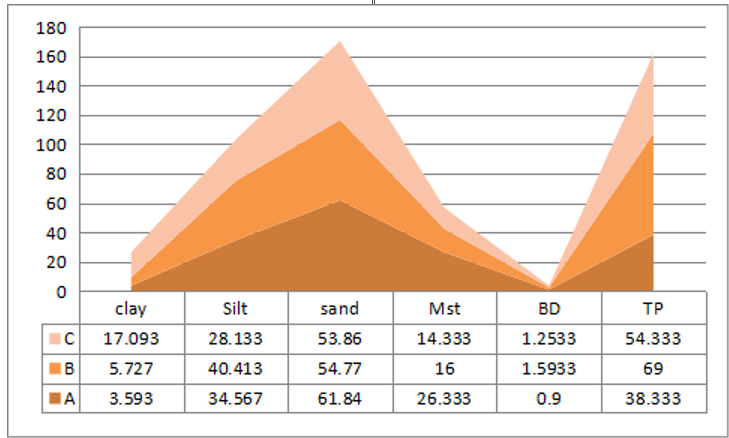
Land degradation is a major constraint to sustainable agricultural production, particularly in floodplain ecosystems that support intensive farming. This study evaluated the effects of physical land degradation on selected floodplains around Wukari, Taraba State, Nigeria. Three floodplain locations (Gindin Dorowa, Newsite, and Tsokundi) were selected for field assessment and soil sampling. Soil samples were analyzed for selected physical properties, including particle size distribution, moisture content, bulk density, total porosity, and water-holding capacity using standard laboratory procedures. Data obtained were subjected to analysis of variance (ANOVA), and treatment means were separated at the 5% probability level. The results revealed significant variations among the study locations. Location A was characterized by the highest sand content (61.84%) and the lowest bulk density (0.90 g cm⁻³), indicating greater susceptibility to erosion despite lower soil compaction. Location B recorded the highest bulk density (1.59 g cm⁻³), reflecting severe soil compaction and reduced structural quality resulting from intensive land use. Location C exhibited comparatively better soil structural conditions due to its higher clay content and moderate bulk density. The overall assessment indicated that Location B experienced the greatest degree of physical land degradation, while Location A was primarily vulnerable to erosion because of its coarse soil texture. The study demonstrates that soil physical properties are effective indicators for evaluating land degradation in floodplain environments and highlights the need for sustainable land management practices, including controlled grazing, reduced tillage, erosion control measures, and improved vegetation cover to minimize further degradation and sustain agricultural productivity.
References
Adenle, A. A., Eckert, S., Adedeji, O. I., Ellison, D., Ifejika Speranza, C., & others. (2020). Human-induced land degradation dominance in the Nigerian Guinea Savannah between 2003–2018. Remote Sensing Applications: Society and Environment, 19, 100360. https://doi.org/10.1016/j.rsase.2020.100360
Al-Kaisi, M. M., Lowery, B., & Lal, R. (2022). Soil Conservation and Management for Sustainable Agriculture. CRC Press.
Bouyoucos, G. J. (1927). The hydrometer as a new method for the mechanical analysis of soils. Soil Science, 23(5), 343–353.
Casanova, M., Tapia, E., Seguel, O., & Salazar, O. (2016). Direct measurement and prediction of bulk density in soils. In Methods of Soil Analysis. Soil Science Society of America.
Food and Agriculture Organization of the United Nations (FAO). (2011). The State of the World's Land and Water Resources for Food and Agriculture (SOLAW). Rome: FAO.
Food and Agriculture Organization of the United Nations (FAO). (2021). Soil degradation. https://www.fao.org/soils-portal/soil-degradation-restoration/en/
Ferrara, A., Salvati, L., Sabbi, A., & Colantoni, A. (2020). Soil degradation, land-use change and sustainable land management: A review. Sustainability, 12, 4538.
Gani, A., & Awwal, A. (Remove unless it is a published journal article or thesis that can be verified.)
Gani, A., et al. (2022). (Keep only if it is a verifiable published source; otherwise replace with official climate data from the Nigerian Meteorological Agency.)
ISO. (2017). ISO 11272: Soil quality—Determination of dry bulk density. Geneva: International Organization for Standardization.
Madhu, M., Kumar, S., & Kumar, P. (2014). Laboratory Manual for Soil Physical Analysis. New Delhi: New India Publishing Agency.
Mohammed, A., Ibrahim, A., & Musa, U. (2019). (Retain only if this is a published and verifiable source.)
Muchena, F. N. (2005). Indicators for Sustainable Land Management in Kenya's Context. World Agroforestry Centre (ICRAF).
Obalum, S. E., Chibuike, G. U., Peth, S., & Ouyang, Y. (2017). Soil organic matter as sole indicator of soil degradation. Environmental Monitoring and Assessment, 189(4), Article 176. https://doi.org/10.1007/s10661-017-5881-y
PubMed
Yusuf, M. B., Mustafa, F. B., & Salleh, K. O. (2017). Farmer perception of soil erosion and investment in soil conservation measures: Emerging evidence from northern Taraba State, Nigeria. Soil Use and Management, 33(1), 163–173. https://doi.org/10.1111/sum.12332
Downloads
Published
Issue
Section
Categories
License
Copyright (c) 2026 Adamu Aliyu Muhammad, James Mono Galadima, Khallah Ibrahim Yasir

This work is licensed under a Creative Commons Attribution 4.0 International License.


