
Isolation, Identification, Characterization, and Screening of Hydrocarbon-Utilizing Bacterial and Fungal Isolates from Composted Organic Materials
DOI:
https://doi.org/10.33003/fjs-2026-1013-5728Keywords:
Bioremediation, Bacteria, Fungi, Hydrocarbon Utilization, Microbial IsolatesAbstract
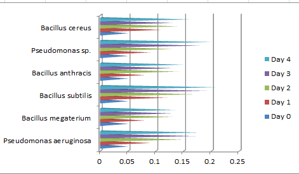
Bacteria and fungi from composted organic materials (COMs) are diverse, readily cultivable, and promising for bioremediation of hydrocarbon-polluted environments. This study isolated and identified microbial species from COMs and evaluated their hydrocarbon-degradation potential using contaminated soils from four sites in Sokoto Metropolis, Nigeria. Viable counts of (9.37 ± 0.67) × 10⁶ CFU/g for bacteria and (5.1 ± 3.5) × 10³ CFU/g for fungi were recorded. Six bacterial species were isolated, with Bacillus cereus (30%) predominant, followed by Pseudomonas sp. and Bacillus anthracis (20% each); Bacillus megaterium, Pseudomonas aeruginosa, and Bacillus subtilis each accounted for 10%. Biochemical tests confirmed broad metabolic capabilities, including starch hydrolysis, sugar fermentation, and catalase activity. Fungal characterization identified Saccharomyces cerevisiae as dominant (50%), followed by Aspergillus niger and Fusarium solani (16.7% each), with Aspergillus fumigatus and A. flavus at 8.3% each. S. cerevisiae formed smooth, cream-coloured colonies, while A. niger and F. solani showed distinct mycelial morphologies. Hydrocarbon utilization by bacterial isolates, tracked over four days via OD₆₀₀, showed Bacillus subtilis (0.21) and Pseudomonas sp. (0.20) as the most active degraders, followed by P. aeruginosa (0.178), B. cereus (0.16), B. anthracis (0.15), and B. megaterium (0.134). Fungal hydrocarbon utilization over 12 days showed A. niger (OD₆₀₀ = 1.8) and A. fumigatus (OD₆₀₀ = 1.5) with the highest growth, indicating strong degrading capacity, while A. flavus, F. solani, and S. cerevisiae showed moderate activity (OD₆₀₀ = 0.7–0.9). These findings underscore the potential of COM-derived microbial consortia for eco-friendly bioremediation of hydrocarbon-contaminated soils.
References
Adeleye, A. O., Yerima, M. B. Nkereuwem, M. E., Onasanya, G. O., Onokebhagbe, V. O., Raji, M. (2022). Biochemical and PCR-based identification of hydrocarbonoclastic bacteria isolated from spent engine oil polluted soil. Sule Lamido University Journal of Science and Technology, 3(1-2), 23-34.
Abdullahi, S., Fardami, A. Y., Farouq, A. A., Ibrahim, U. B., Shehu, A. A., Mode, A. A., ... & Simon, C. (2025). Heavy Metals from Tannery Waste: Focus on Chromium Pollution and Bioremediation Technologies. Journal of Science, Technology, and Education (JSTE), 354-378.
Adeleye, A. O., Yerima, M. B., Nkerenwem, M. E., Onokebhagbe, V. O., Shiaka, P. G., Amoo, F. K. and Aliyu, A. (2020). Enhanced degradation of hydrocarbons in spent engine oil contaminated soil by Pseudomonas aeruginosa and Alcaligenes faecalis. FUW Trends in Science & Technology Journal, 5(2), 437-444.
Adepoju, A. O., Femi-Adepoju, A., Jalloh, A., & Faeflen, S. (2024). Soil pollution and management practices. In Environmental Pollution and Public Health (pp. 187-236). Elsevier.
Adipah, S. (2019). Introduction of petroleum hydrocarbons contaminants and its human effects. Journal of Environmental Science and Public Health, 3(1), 1-9.
Akinnibosun, F. I., & Ashegbare, A. (2018). Isolation and characterization of hydrocarbon-degrading fungi from Ogbe-Ijoh oil creek, Warri, Delta State, Nigeria. Ovidius University Annals of Chemistry, 29(2), 72-76.
Ameh, A. A., & Kawo, A. H. (2017). Enumeration, isolation and identification of bacteria and fungi from soil contaminated with petroleum products using layer chicken droppings as an amendment. Bayero Journal of Pure and Applied Sciences, 10(1), 219-225.
Babayemi, J. O., Ogundiran, M. B., & Osibanjo, O. (2016). Overview of environmental hazards and health effects of pollution in developing countries: a case study of Nigeria. Environmental Quality Management, 26(1), 51-71.
Bashar, M. A. (2015). A History of Kolanut Trade in Sokoto City: C. 1900-2014.
Bottone, E. J. (2010). Bacillus cereus, a volatile human pathogen. Clinical microbiology reviews, 23(2), 382-398.
Cachada, A., Rocha-Santos, T., & Duarte, A. C. (2018). Soil and pollution: an introduction to the main issues. In Soil pollution (pp. 1-28). academic press.
Cheesbrough, M. (2006). District laboratory practice in tropical countries (part 2, 3rd Edition. Cambridge University press, Publisher, UK. Pp: 178-88.
Chuku, A. (2018). Effective diagnostic techniques in the identification of medically important fungi: a developing world perspective. Ann Res Rev Biol, 28, 1-9.
Daccò, C. (2021). Selection of new fungal strains and development of a microbial consortium for the bioremediation of complex hydrocarbon mixtures.
Dangi, A. K., Sharma, B., Hill, R. T., & Shukla, P. (2019). Bioremediation through microbes: systems biology and metabolic engineering approach. Critical reviews in biotechnology, 39(1), 79-98.
Das, A., Das, N., Rajkumari, J., Pandey, P., & Pandey, P. (2024). Exploring the bioremediation potential of Bacillus spp. for sustainable mitigation of hydrocarbon contaminants. Environmental Sustainability, 1-22.
Das, N., & Chandran, P. (2011). Microbial degradation of petroleum hydrocarbon contaminants: an overview. Biotechnology research international, 2011(1), 941810.
Doganay, M., & Metan, G. (2009). Human anthrax in Turkey from 1990 to 2007. Vector-Borne and Zoonotic Diseases, 9(2), 131-140.
Ekanem, J. O., & Ogunjobi, A. A. (2017). Hydrocarbon degradation potentials of bacteria isolated from spent lubricating oil contaminated soil. Journal of Applied Sciences and Environmental Management, 21(5), 973-979.
Epstein, E. (2017). The science of composting. CRC press.
Garba, N. Y., Fardami, A. Y., Adamu, A. A., Shehu, A. A., Ibrahim, L., Abdullahi, S., ... & Abdulrahman, M. (2025). The beneficial roles of microbes in food production and preservation: a review. Int. J. Sci. Glob. Sustain, 11, 76-92.
Garrett, S. D. (2013). Soil fungi and soil fertility: an introduction to soil mycology. Elsevier.
Gellatly, S. L., & Hancock, R. E. (2013). Pseudomonas aeruginosa: new insights into pathogenesis and host defenses. Pathogens and disease, 67(3), 159-173.
Ghosh, S., Rusyn, I., Dmytruk, O. V., Dmytruk, K. V., Onyeaka, H., Gryzenhout, M., & Gafforov, Y. (2023). Filamentous fungi for sustainable remediation of pharmaceutical compounds, heavy metal and oil hydrocarbons. Frontiers in Bioengineering and Biotechnology, 11, 1106973.
Gupta, G., Kumar, V., & Pal, A. K. (2016). Biodegradation of polycyclic aromatic hydrocarbons by microbial consortium: a distinctive approach for decontamination of soil. Soil and Sediment Contamination: An International Journal, 25(6), 597-623.
Hashim, S., Waqas, M., Rudra, R. P., Khan, A. A., Mirani, A. A., Sultan, T., ...&Saifullah, M. (2022). On-Farm Composting of Agricultural Waste Materials for Sustainable Agriculture in Pakistan. Scientifica, 2022.
Hoang, S. A., Lamb, D., Seshadri, B., Sarkar, B., Choppala, G., Kirkham, M. B., & Bolan, N. S. (2021). Rhizoremediation as a green technology for the remediation of petroleum hydrocarbon-contaminated soils. Journal of Hazardous Materials, 401, 123282.
Kaviya, N., Upadhayay, V. K., Singh, J., Khan, A., Panwar, M., & Singh, A. V. (2019). Role of microorganisms in soil genesis and functions. Mycorrhizosphere and pedogenesis, 25-52.
Kodiya, M. A., Modu, M. A., Ishaq, K., Yusuf, Z., Wakili, A. Z., Dayyabu, N., ... & Babangida, M. U. (2025). Environmental Pollution in Nigeria: Unlocking Integrated Strategies for Environmental Sustainability. African Journal of Environmental Sciences and Renewable Energy, 18(1), 30-50.
Kurakov, A. V., & Bilanenko, E. N. (2023). Dynamics of mycobiota during composting of cow manure and straw. Eurasian Soil Science, 56(4), 453-469.
Lashani, E., Amoozegar, M. A., Turner, R. J., & Moghimi, H. (2023). Use of microbial consortia in bioremediation of metalloid polluted environments. Microorganisms, 11(4), 891.
Lynch, John, and Benjamin Land treatment of hydrocarbon contaminated soils Principles and Practices for Petroleum Contaminated Soils. Routledge, 2019. 409-422.
Mahmoudi, Nagissa, et al. "Sequential bioavailability of sedimentary organic matter to heterotrophic bacteria." Environmental microbiology 19.7 (2017): 2629-2644.
Mas’ud Bello, P. D., & Tijjani, A. (2023). REFLECTIONS ON THE STATE, ECONOMY AND SOCIETY OF ZAMFARA PRIOR TO THE ESTABLISHMENT OF THE SOKOTO CALIPHATE. LAPAI JOURNAL OF NIGERIA HISTORY, 15(1),
Medić, A. B., & Karadžić, I. M. (2022). Pseudomonas in environmental bioremediation of hydrocarbons and phenolic compounds-key catabolic degradation enzymes and new analytical platforms for comprehensive investigation. World Journal of Microbiology and Biotechnology, 38(10), 165.
Misra, R. V., R. N. Roy, and H. Hiraoka. On-farm composting methods. Rome, Italy: UN-FAO, 2003.
Mkandawire, D. (2022). Chemical and biological characterization of municipal solid waste at Chunga landfill for potential use as compost (Doctoral dissertation, The University of Zambia).
Mnif, I., Mnif, S., Sahnoun, R., Maktouf, S., Ayedi, Y., Ellouze-Chaabouni, S., & Ghribi, D. (2015). Biodegradation of diesel oil by a novel microbial consortium: comparison between co-inoculation with biosurfactant-producing strain and exogenously added biosurfactants. Environmental Science and Pollution Research, 22, 14852-14861.
Mohanta, S., Pradhan, B., & Behera, I. D. (2024). Impact and remediation of petroleum hydrocarbon pollutants on agricultural land: a review. Geomicrobiology Journal, 41(4), 345-359.
Namakka, M., Rahman, M. R., Said, K. A. B. M., Devi Karuppasamy, B., & Shehu, A. A. (2026). PVDF-TiO2-nZVI Nanocomposite Membranes for the Remediation of Heavy Metal Contaminated Wastewater. Journal of Inorganic and Organometallic Polymers and Materials, 1-25.
Oghoje, S. U., Omoruyi, C. I., Ojeomo, C., Ukpebor, J. E., & Ifijen, I. H. (2023). Revolutionizing soil remediation: Harnessing the potential of chicken manure digestates for petroleum hydrocarbon contamination. Chemistry Africa, 6(6), 3175-3184.
Paradelo, R., Navarro-Pedreño, J., Glaser, B., Grobelak, A., Kowalska, A., & Singh, B. R. (2023). Potential and Constraints of Use of Organic Amendments from Agricultural Residues for Improvement of Soil Properties. Sustainability, 16(1), 158.
Parapouli, M., Vasileiadis, A., Afendra, A. S., & Hatziloukas, E. (2020). Saccharomyces cerevisiae and its industrial applications. AIMS microbiology, 6(1), 1.
Pokhrel (2015). test- principle, procedure, result interpretation and limitation. http://microbiologynotes.com/cetrimide-test-principleprocedure-result-interpretation-and-limitation procedure-results/
Raimi, M. O., Iyingiala, A. A., Sawyerr, O. H., Saliu, A. O., Ebuete, A. W., Emberru, R. E., ... & Osungbemiro, W. B. (2022). Leaving no one behind: impact of soil pollution on biodiversity in the global south: a global call for action. In Biodiversity in Africa: potentials, threats and conservation (pp. 205-237). Singapore: Springer Nature Singapore.
Ramesh, R., Saran, A., Damodaran, G., Lavanya, A., Periya Nayagi Shilpa, A., Liakath Ali Khan, F., & Kaviyarasu, K. (2024). Compostable Wastes Generated from Biomass. In New Technologies for Energy Transition Based on Sustainable Development Goals: Factors Contributing to Global Warming (pp. 461-493). Singapore: Springer Nature Singapore.
Rani, M. H. S., Nandana, R. K., Khatun, A., Brindha, V., Midhun, D., Gowtham, P., ... & Muthukumar, S. (2024). Three strategy rules of filamentous fungi in hydrocarbon remediation: An overview. Biodegradation, 35(6), 833-861.
Rezaei, Z., & Moghimi, H. (2024). Fungal-bacterial consortia: A promising strategy for the removal of petroleum hydrocarbons. Ecotoxicology and Environmental Safety, 280, 116543.
Riddech, N., Theerakulpisut, P., Ma, Y. N., & Sarin, P. (2025). Bioorganic fertilizers from agricultural waste enhance rice growth under saline soil conditions. Scientific Reports, 15(1), 8979.
Saadaoui, M., Faize, M., Rifai, A., Tayeb, K., Omri Ben Youssef, N., Kharrat, M., ... & Venisse, J. S. (2024). Evaluation of Tunisian wheat endophytes as plant growth promoting bacteria and biological control agents against Fusarium culmorum. Plos one, 19(5), e0300791
Shehu, A. A., Maiyaki, F. U., Yahaya, M. H., & Aliyu, S. (2020). Stakeholders’ views on ways to reduce the use of plastic bags and its environmental and public health impacts in Sokoto Metropolis, Sokoto State, Nigeria. environment, 30, 192-200.
Shehu, A. A., Rabah, A. B., Ibrahim, U. B., & Mu’azu, H. (2025). ADVANCES IN MICROBIAL BIOREMEDIATION OF HYDROCARBON-CONTAMINATED SOILS USING COMPOST-DERIVED BACTERIA AND FUNGI: A COMPREHENSIVE REVIEW. Science World Journal, 20(4), 1772-1778.
Singh, A. K., Bilal, M., Iqbal, H. M., Meyer, A. S., & Raj, A. (2021). Bioremediation of lignin derivatives and phenolics in wastewater with lignin modifying enzymes: Status, opportunities and challenges. Science of the Total Environment, 777, 145988.
Sintim, H. Y., Bary, A. I., Hayes, D. G., Wadsworth, L. C., Anunciado, M. B., English, M. E., ... & Flury, M. (2020). In situ degradation of biodegradable plastic mulch films in compost and agricultural soils. Science of the Total Environment, 727, 138668.
Thirumalaivasan, N., Gnanasekaran, L., Kumar, S., Durvasulu, R., Sundaram, T., Rajendran, S., ... & Kanagaraj, K. (2024). Utilization of fungal and bacterial bioremediation techniques for the treatment of toxic waste and biowaste. Frontiers in Materials, 11, 1416445.
Umoh, H. P. (2022). Characterization Of Staphylococcus Aureus Isolated from Door Handles in the College Of Humanities, Management and Social Sciences, Mountain Top University
Wang, Y. F., Chen, P., Wang, F. H., Han, W. X., Qiao, M., Dong, W. X., ... & Zhu, Y. G. (2022). The ecological clusters of soil organisms drive the ecosystem multifunctionality under long-term fertilization. Environment International, 161, 107133.
Winding, A., Modrzyński, J. J., Christensen, J. H., Brandt, K. K., & Mayer, P. (2019). Soil bacteria and protists show different sensitivity to polycyclic aromatic hydrocarbons at controlled chemical activity. FEMS microbiology letters, 366(17), fnz214.
Zhang, J., Zeng, G., Chen, Y., Yu, M., Yu, Z., Li, H., ... & Huang, H. (2011). Effects of physico-chemical parameters on the bacterial and fungal communities during agricultural waste composting. Bioresource technology, 102(3), 2950-2956.
Zhang, X., Wang, K., Sun, C., Yang, K., & Zheng, J. (2021). Differences in soil physical properties caused by applying three organic amendments to loamy clay soil under field conditions. Journal of Soils and Sediments, 22(1), 43-55
Downloads
Published
Issue
Section
Categories
License
Copyright (c) 2026 Aliyu Abubakar Shehu, Abdullahi Bako Rabah, Umar Balarabe Ibrahim, Haliru Mu’azu, Murtala Namakka

This work is licensed under a Creative Commons Attribution 4.0 International License.


