
Molecular Identification and Characterization of Lipolytic Bacteria Isolated from Palm Oil Mill Effluent in Osun State, Nigeria
DOI:
https://doi.org/10.33003/fjs-2026-1016-5717Keywords:
Palm Oil Mill Effluent, Lipolytic Bacteria, Lipase activity, 16S rRNA sequencing, BioremediationAbstract
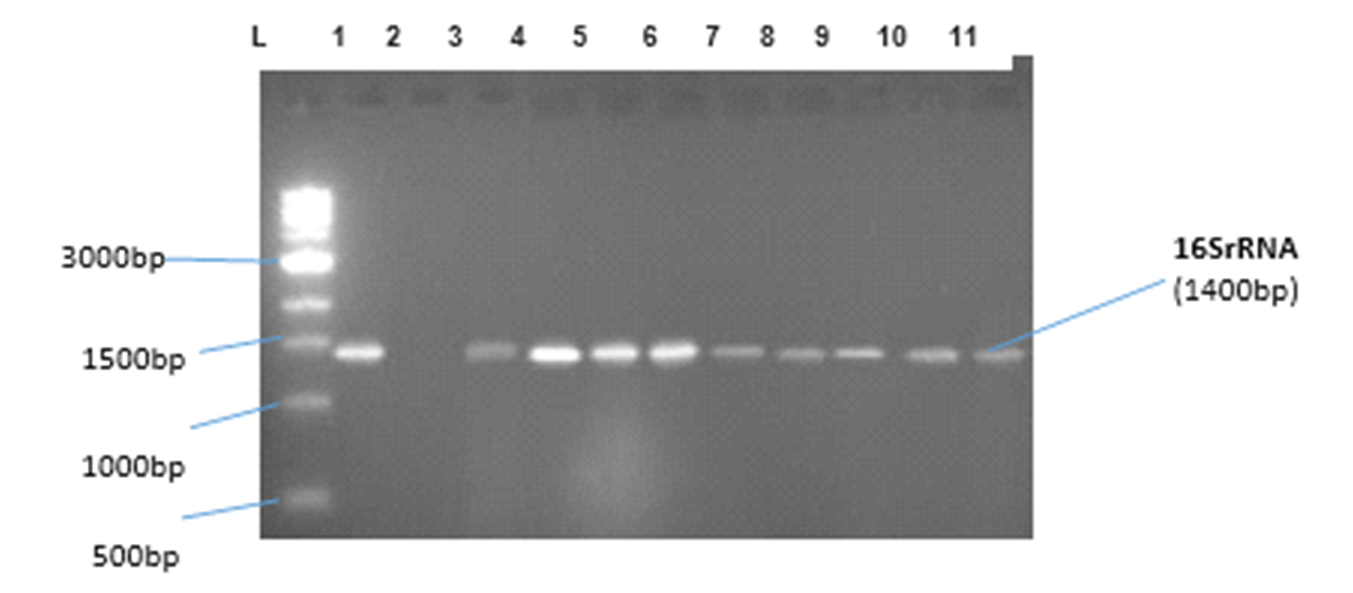
This study focused on the molecular characterization of lipolytic bacteria isolated from Agbogbo stream impacted by Palm Oil Mill Effluent (POME) in Nigeria, utilizing 16S rRNA gene sequencing. Lipolytic bacteria play a crucial role in the degradation of lipids present in POME, offering potential for bioremediation. The study identifies and characterizes bacterial isolates with lipolytic activity, providing insights into their potential for bioremediation in POME-impacted environments. Raw POME samples and water samples were collected from the palm oil mill processing unit and designated sampling location respectively for bacteriological analysis. The pure bacterial isolates were further identified by microscopic and biochemical examination. Bacterial isolates were screened for lipolytic activity using tributyrin Agar by spot inoculation on modified agar medium and Molecular characterization was subsequently performed. A total of fifteen (15) bacterial species were isolated from palm oil processing effluent and screened for lipase production while ten (10) bacterial isolates were selected as the lipase-producing organisms and subjected to 16S rRNA gene sequencing.PCR amplification. The results showed that Geobacillus sp, Bacillus altitudinis, Staphylococcus equoroum, Morganella morganii, Staphylococcus Saprophyticus, Acinetobacter johnsonii, Bacillus cabrialesii, Klebsiella pneumoniae, Escherichia coli, and Bacillus cereus were isolated across the stations of Agbogbo stream. The presence of diverse lipolytic bacteria in the POME-impacted stream suggests their potential role in the natural degradation of lipids, may possess significant bioremediation significances.
References
Abdullah, R. H., & Hassoni, A. A. (2024). A novel method of extraction and purification of bacterial DNA for PCR detection of mecA, 16S rRNA. European Journal of Medical Genetics and Clinical Biology, 1(4):43–51. https://doi.org/10.61796/jmgcb.v1i4.403
Ajadi, I. F., & Ojo, E. J. (2024). Assessment of the potentials of autochthonous lipase-producing bacteria in the treatment of palm oil mill effluent. Biology and Environmental Sciences Journal for the Tropics, 20(3), 106–120. https://doi.org/10.4314/bestj.v20i3.11
Akpoka, O. A., Imade, O. S., Obi, T. E., & Okwu, M. U. (2020). Biochemical characterization of bacteria and fungi isolates associated with post-harvest spoilage of avocado pear (Persea americana) sold in two fruit markets in the Benin City Metropolis, Nigeria. Bacterial Empire, 3(1), 1–4. https://doi.org/10.36547/be.2020.3.1.1-4
Ansar, R. N. R., Mubarik, N. R., & Kurniatin, P. A. (2025, October). Characterization and molecular identification of lipolytic bacteria from palm oil mill effluent (POME). In IOP Conference Series: Earth and Environmental Science (Vol. 1550, No. 1, Article 012029). IOP Publishing.
Bady, E. A., Al-Fadal, S. A. M., Abdul-Jabar, R., & Al-Rubeai, D. B. (2021). Identification of novel bacteria by using 16S rRNA from clinical and soil samples. Indian Journal of Forensic Medicine & Toxicology, 15(2), 4252–4259. https://doi.org/10.37506/ijfmt.v15i2.15038
Ibiyemi, M. F., Julius, O. O., Oluwatobi, F. B., & Arotupin, D. J. (2022). Optimization, purification, and characterization of lipase by Pseudomonas aeruginosa isolated from palm oil processing cottage industries in Ekiti State, Nigeria. Asian Journal of Biotechnology and Bioresource Technology, 8(1), 12–25. https://doi.org/10.9734/ajb2t/2022/v8i130116
Korotkov, K. V., & Sandkvist, M. (2019). Architecture, function, and substrates of the type II secretion system. EcoSal Plus, 8(2), 10–128. https://doi.org/10.1128/ecosalplus.ESP-0034-2018
Nazina TN, Lebedeva EV, Poltaraus AB, Tourova TP, Grigoryan AA, Sokolova DS, Lysenko AM, Osipov GA. (2024): Geobacillus gargensis sp. nov., a novel thermophile from a hot spring, and the reclassification of Bacillus vulcani as Geobacillus vulcani comb. nov. Int J Syst Evol Microbiol 5. 2004, 4: https://doi.org/10.1099/ijs.0.02932-0
Nwuche, C. O., Aoyagi, H., & Ogbonna, J. C. (2014). Treatment of palm oil mill effluent by a microbial consortium developed from compost soils. International Scholarly Research Notices, 2014, Article 762070. https://doi.org/10.1155/2014/762070
Okore, C., Nwaehiri, L., Mbanefo, O., Ogbulie, T., Ogbuka, I., & Ugenyi, A. (2017). The use of random amplified polymorphic DNA (RAPD) to study the genetic variation of biosurfactant-producing bacteria. Academic Journal of Science, 7(3), 267–286.
Saputera, W. H., Amri, A. F., Mukti, R. R., Suendo, V., Devianto, H., & Sasongko, D. (2021). Photocatalytic degradation of palm oil mill effluent (POME) waste using BiVO₄-based catalysts. Molecules, 26(20), Article 6225. https://doi.org/10.3390/molecules26206225
Downloads
Published
Issue
Section
Categories
License
Copyright (c) 2026 Fatimah Adenike Ajadi, Rabiu Akeem Ganiyu, Ayobami Elias Ajadi, Sheriffdeen Issa Bale, Tomisin Bodunde

This work is licensed under a Creative Commons Attribution 4.0 International License.


