
Evaluation of I Gene Expression in Tomato Plants Against Fusarium oxysporum f.sp. lycopersici Managed Using Green Synthesized Magnesium Oxide Nanoparticles
DOI:
https://doi.org/10.33003/fjs-2026-1013-5682Keywords:
Fusarium Pathogen, MgO Nanoparticles, I Gene, Level of ExpressionAbstract
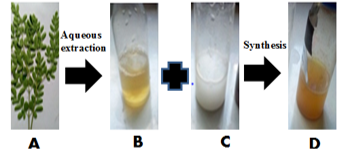
Tomato plants possess specific resistance genes known as I genes (immunity genes), which provide resistance to different physiological races of the Fusarium pathogens. The I genes in tomato plants are identified to basically encode a membrane-anchored leucine-rich repeat receptor-like protein and S-receptor-like kinase located on chromosomes 11 and 7, respectively. Once the tomato plant recognizes effectors, it activates a defense response that restricts Fusarium pathogen growth. In this study, magnesium oxide nanoparticles were synthesized using leaf extract of Moringa oleifera with magnesium oxide precursor solution and characterized using UV-Vis spectrophotometric and dynamic light scattering techniques. The in vivo study revealed that magnesium oxide nanoparticles were effective in controlling Fusarium wilt disease in the infected tomato crops. The overall percentage disease incidence in tomato crops treated with magnesium oxide nanoparticles was significantly reduced to 10%, compared to the untreated control with 100% disease incidence after 30 days of post inoculation. Also, the research highlighted that the I gene expression levels in the roots and stems of tomato plants treated with MgO nanoparticles were relatively the same with the actin gene, which serves as the reference gene, with slight variation compared to the controls. The study established that MgO nanoparticles effectively control tomato wilt disease, but through a mechanism other than I gene expression, as study results showed slight differences in expression levels between nanoparticle-treated and control tomato crops.
References
AgriosGN (2005). Plant Pathology. Elsevier Academic Press, London. 922p.
Ahmed S., Ahmed M., Swami B. L. & Ikram S. (2016). A review on plant extract mediated synthesis of silver nanoparticles for antimicrobial applications: A green expertize. Journal of Advanced Research, 7, 17 – 28.
AL-Janabi A., Ahmed A. A., Jawad K., Laith A. H. & Ali F. M. (2017). The expression of resistance genes in tomato induced by abiotic and biotic factors against Fusarium oxysporum f. sp. Lycopersici. International Journal of Chemical Technical Research, 10 (6), 838 - 850.
Amjad M. H., Aafreen S. & Souliha R. C. (2018). Host-pathogen interaction in Fusariumoxysporum interaction: where do we stand? Current Review, 12(9), 889 - 898.
Bohn G. W. & Tucker C. M. (1940). Immunity to Fusarium wilt in the tomato. Science, 91, 603–604.
Chakraborty N., Chandra S. & Acharya K. (2017). Biochemical basis of improvement of defense in tomato plant against Fusarium wilt by CaCl2. Physiological Molecular Biology Plants, 23(3), 581 - 596.
Etebu E, Nwauzoma A. B., & Bawo D. D. S. (2013). Postharvest spoilage of tomato (Lycopersiconesculentum Mill.) and control strategies in Nigeria. Journal of Biology, Agriculture and Healthcare, 3(10), 34 - 45.
Gordon T. R. (2017). Fusarium oxysporum and the Fusarium wilt syndrome. Annals Review of Phytopathology, 55, 23 - 39
Huang C. C. & Lindhout P. (1997). Screening for resistance in wild tomato species to Fusarium wilt. Euphytica, 93, 145–153.
Huber D. M. & Jones J. B. (2013). The role of magnesium in plant disease. Plant and Soil, 368, 73 - 85.
Igiehon E., Shittu H. O., Eremwanrue A. O., Ojiagbe R.E., Momoh M. O., & Agbontian M. A. (2020). In vitro evaluation of Magnesium oxide nanoparticles for the control of Fusarium wilt disease of tomato (Solanum lycopersicum L). Nigerian Journal of Mycology, 12(2), 26 – 33
Imada K., Sakai S., Kajihara H., Tanaka S. & Ito S. (2014). MgO nanoparticles induced systemic resistance in tomato against bacterial wilt disease. Plant Pathology 65: 551 - 560.
Jones D.A, Atanzariti A. & Lim G. T. T. (2015). The tomato I-3 gene: a novel gene for resistance to Fusarium wilt disease. New Phytologist, 207, 106 - 118.
McGrath, D. J., Gillespie, D., & Vawdrey, L. L. (1987). Inheritance of resistance to Fusarium wilt race 2 in tomato. Euphytica, 36, 729–733.
Jones, J. D. G. & Dangl, J. L. (2006). The plant immune system. Nature, 444, 323–329.
Mes J. J., Van Doorn A. A., Wijbrandi J., Simons G., Cornelissen B. J. C & Haring M. A. (2000). Expression of the Fusarium resistance gene I-2 colocalizes with the site of fungal containment. Plant Journal, 23, 183 – 193.
Okungbowa F. I. & Shittu H. O. (2012). Fusarium wilts: An overview. Environmental Research Journal, 6(2), 83 – 102.
Parmar P. & Subramanian R. B. (2013). Isolation of NBS-LRR class resistant gene (I2 gene) from tomato cultivar Heamsona. African Journal of Biotechnology, 12(42), 6076 -6078.
Prihatna C, Barbetti M. J. & Barker S. J. (2018). A novel tomato Fusarium wilt tolerance gene. Frontier Microbiology, 9, 1226 - 1233.
Sharma G, Soni R. & Jasuja D. N. (2017). Phyto-assisted synthesis of magnesium oxide nanoparticles with Swertia chirayaita. Journal of Taibah University for Science, 11, 471- 477.
Simons G.(1998). Dissection of the Fusarium I2 gene cluster in tomato reveals six homologs and one active resistance gene. The Plant Cell, 10, 1055–1068.
Srinivas C, Devi D. N., Murthy K. N., Mohan C. D. M., Lakshmeesha T. R., Singh B., Kalagatur N. K., Niranjana S. R., Hashem A., Alqarawi A. A., Tabassum B., Abd_Allah E. F. & Nayaka S. C. (2019). Fusarium oxysporum f. sp. lycopersici causal agent of vascular wilt disease of tomato: Biology to diversity- A review. Saudi Journal of Biological Sciences. https://doi.org/10.1016/j.sjbs.2019.06.002
Surega R., Ramakrishnan S., Anita B., Gunasekaran S. & Nakkeeran S. (2015). Antifungal effect of plant mediated silver nanoparticles against Fusarium oxysporum f sp lycopersici. International Journal of tropical Agriculture, 33, 157 – 160.
Weeraratne W. A. P. G. & De Costa1 D. M. (2018). Molecular Identification of Fusarium spp. from Wilt-infected Tomato and Brinjal Plants in Selected Regions of Sri Lanka and Endophytic Bacteria as a Potential Option for Disease Management. Tropical Agricultural Research, 30 (1), 32 – 43..
Downloads
Published
Issue
Section
Categories
License
Copyright (c) 2026 Evans Igiehon, Shittu Hakeem Olalekan, Samuel Darwin Ijesuosehmwen, Victoria Aniju Nwakaego Victoria Aniju Nwakaego

This work is licensed under a Creative Commons Attribution 4.0 International License.


