
Artificial Intelligence in Food Innovation: A Critical Review of Emerging Ingredients and New Product Development
DOI:
https://doi.org/10.33003/fjs-2026-1013-5649Keywords:
Artificial Intelligence, Food Innovation, Critical Review, Emerging Ingredients, New Product DevelopmentAbstract
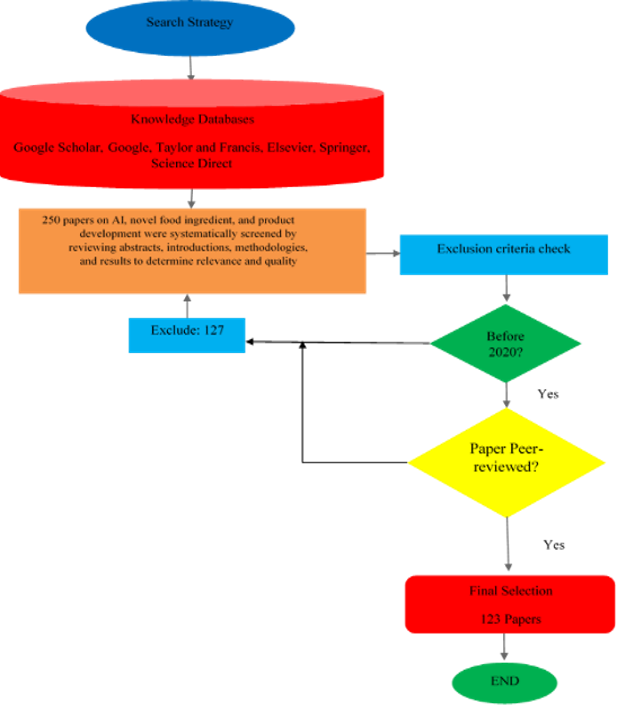
Global population growth, climate change, and evolving consumer demands are reshaping the food industry and intensifying the need for innovation. This review explores recent advancements in food innovation, with a particular focus on the transformative role of Artificial Intelligence (AI) in emerging ingredients and new product development. A systematic analysis of 123 publications published between 2020 and 2025 was conducted to evaluate how AI and sustainable ingredient sourcing are transforming the global food system. The review highlights how unconventional ingredients such as plants, insects, fungi, microalgae, seaweeds, and agro-waste derivatives are valued for their nutritional density rich in proteins, fibres, antioxidants, and essential fatty acids as well as their techno-functional properties like emulsification, gelation, and water retention. Modern processing methods including high pressure processing, pulsed electric field, ultrasound, and 3D printing proved to be potential processes for developing new food products. AI-driven technologies such as machine learning, deep learning, computer vision, IoT, and robotic are accelerating ingredient discovery, optimising formulation, and improving transparency across food value chains. They enable efficient screening of bioactive compounds, predictive modelling of sensory and nutritional properties, and real-time monitoring of safety risks. By shifting product development from conventional trial-and-error approaches to data-driven systems, AI enhances resource efficiency, reduces development time, and supports sustainability goals. Although challenges remain in large-scale and consumer acceptance, AI-enabled systems demonstrate strong potential to shorten development timelines and enhance resilience. Therefore, AI-integrated approaches could be positioned as critical enablers in advancing sustainable ingredient transformation and new food product development.
References
Ahmad, S., Jan, K., Sahu, J. K., Habib, M., Jan, S., and Bashir, K. (2025). A comprehensive review on recent trends and utilization of algal β-glucan for the development of nutraceuticals and functional foods. Food Reviews International, 41(2), 469-490.
Ahmadzadeh, S., Barekat, S., and Ubeyitogullari, A. (2025). Enhancing lutein and anthocyanins stability and bioaccessibility through simultaneous encapsulation using coaxial 3D food printing. Science of Food, 9(1), 96.
Ajayeoba, T. A., and Ijabadeniyi, O. A. (2025). Transforming Food for the Future: Precision Fermentation as a Key to Sustainability, Nutrition, and Health. Nutrition, and Health.
Akkem, Y., Biswas, S.K., Varanasi, A. (2023) Smart farming using artificial intelligence: a review. Eng Appl Artif Intell 120: 105899. https://doi.org/10.1016/j.engappai.2023.105899
Alasi, S. O., Sanusi, M. S., Sunmonu, M. O., Odewole, M.
M., and Adepoju, A. L. (2024). Exploring recent developments in novel technologies and AI integration for plant-based protein functionality: A review. Journal of Agriculture and Food Research, 15, 101036.
Aliabbasi, N., and Emam‐Djomeh, Z. (2024). Application of nanotechnology in dairy desserts and ice cream formulation with the emphasize on textural, rheological, antimicrobial, and sensory properties. eFood, 5(4), e170.
Altemimi, A. B., Awlqadr, F. H., Al‐Hatim, R. R., Qadir, S. A., Saeed, M. N., Faraj, A. M., ... and Cacciola, F. (2025). AI‐Powered Advancements in Food Analysis and Safety: Ensuring Quality, Protection, and Precision in Modern Food Systems: A Review. eFood, 6(4), e70076.
Augustin, M. A., Hartley, C. J., Maloney, G., and Tyndall, S. (2024). Innovation in precision fermentation for food ingredients. Critical reviews in food science and nutrition, 64(18), 6218-6238.
Bagheri, H., and Abbaszadeh, S. (2020). Effect of cold plasma on quality retention of fresh-cut produce. Journal of Food Quality, 2020, 1–8.
Balaska, V., Adamidou, Z., Vryzas, Z., and Gasteratos, A. (2023). Sustainable Crop Protection via Robotics and Artificial Intelligence Solutions. Machines, 11(8), Article 774. https://doi.org/10.3390/machines11080774
Barani, Y. H., Zhang, M., Mujumdar, A. S., and Chang, L. (2022). Preservation of color and nutrients in anthocyanin‐rich edible flowers: Progress of new extraction and processing techniques. Journal of Food Processing and Preservation, 46(9), e16474.
Barthwal, R., Kathuria, D., Joshi, S., and Arora, S. (2024). New trends in the development and application of artificial intelligence in food processing. Innovative Food Science and Emerging Technologies, 92, 103600. https://doi.org/10.1016/j.ifset.2024.103600
Basha, M. Y. (2023). Using Okara powder as a fiber source in beef burger. Al-Azhar Journal of Agricultural Research, 48(1), 259-265.
Benvenutti, L., Moura, F. M., Zanghelini, G., Barrera, C., Seguí, L., and Zielinski, A. A. F. (2025). An Upcycling Approach from Fruit Processing By-Products: Flour for Use in Food Products. Foods, 14(2), 153.
Bhatlawande, A. R., Ghatge, P. U., Shinde, G. U., Anushree, R. K., and Patil, S. D. (2024). Unlocking the future of smart food packaging: Biosensors, loT, and nano materials. Food Science and Biotechnology, 33(5), 1075-1091. https://link.springer.com/content/pdf/10.1007/s10068-023 -01486-9.pdf
Bidyalakshmi, T., Jyoti, B., Mansuri, S. M., Srivastava, A., Mohapatra, D., Kalnar, Y. B., ... and Indore, N. (2025). Application of artificial intelligence in food processing: Current status and future prospects. Food Engineering Reviews, 17(1), 27-54.
Biswas, R., Alam, M., Sarkar, A., Haque, M. I., Hasan, M. M., and Hoque, M. (2022). Application of nanotechnology in food: processing, preservation, packaging and safety assessment. Heliyon, 8(11).
Boukid, F., Hassoun, A., Zouari, A., Tülbek, M. Ç., Mefleh, M., Aït-Kaddour, A., and Castellari, M. (2023). Fermentation for designing innovative plant-based meat and dairy alternatives. Foods, 12(5), 1005.
British Standards Institution. (2024). Navigating ethical challenges in an AI-enabled food industry. Food Science and Technology, 38(3), 40-47.
Burak, L. (2024). Influence of electric field technology on quality and nutritional value of juices. A review. ART STUDIES, 45.
Charoenkwan, P., Nantasenamat, C., Hasan, M. M., Manavalan, B., andShoombuatong, W. (2021). BERT4Bitter: a bidirectional encoder representations from transformers (BERT)-based model for improving the prediction of bitter peptides. Bioinformatics, 37(17), 2556-2562.
Chatzimitakos, T., Athanasiadis, V., Kalompatsios, D., Mantiniotou, M., Bozinou, E., and Lalas, S. I. (2023). Pulsed electric field applications for the extraction of bioactive compounds from food waste and by-products: a critical review. Biomass, 3(4), 367-401.
Chen, X., Zhang, L., Li, Y., and Xu, Z. (2024). The effects of cold-plasma technology on the quality properties of fresh-cut produce. Foods, 13(4), 789.
Cheseto, X., Ochieng, B. O., Subramanian, S., and Tanga, C. M. (2024). Unravelling the nutritional and health benefits of marketable winged termites (Macrotermes spp.) as sustainable food sources in Africa. Scientific reports, 14(1), 9993.
Choi, S., Kim, H., and Park, J. (2024). Deep learning approaches in food science: Applications in safety, nutrition, and consumer preference prediction. Applied Sciences, 15(12), 7626. https://doi.org/10.3390/app15127626
Cui, Z., Qi, C., Zhou, T., Yu, Y., Wang, Y., Zhang, Z., ... and Liu, Y. (2025). Artificial intelligence and food flavor: How AI models are shaping the future and revolutionary technologies for flavor food development. Comprehensive Reviews in Food Science and Food Safety, 24(1), e70068.
Dakhia, Z., Russo, M., Merenda, M. (2025) AI-Enabled IoT for Food Computing: Challenges, Opportunities, and Future Directions. Sensors 25, 2147. https://doi.org/10.3390/s25072147.
Davies, T., Louie, J. C. Y., Scapin, T., Pettigrew, S., Wu, J. H., Marklund, M., andCoyle, D. H. (2021). An innovative machine learning approach to predict the dietary fiber content of packaged foods. Nutrients, 13(9), 3195.
de Souza, A. B., Stephani, R., and Tavares, G. M. (2024). Stability of milk proteins subjected to UHT treatments: challenges and future perspectives. Critical reviews in food science and nutrition, 64(33), 12352-12362.
Din, A. U., Muhammad, R., Ali, S., Khan, A., Shah, S., Sultan, Q. A., ... and Bilal, M. (2025). Towards sustainable agri-food systems 4.0: machine learning and data engineering synergies for intelligent, scalable, and sustainable food production and food science innovation. Spectrum of Engineering Sciences, 1344-1375.
Duguma, A.L., Bai, X. How the internet of things technology improves agricultural efficiency. Artif Intell Rev 58, 63 (2025). https://doi.org/10.1007/s10462-024-11046-0
Eazhumalai, G., Gracy T. K., R., and Annapure, U. S. (2025). Cold plasma enhanced gelation and thermal properties of oat protein and its application in a selected model food system. Sustainable Food Technology, 3, 1203–1217. https://doi.org/10.1039/D5FB00129C
Elhalis, H. (2025). Exploring Fungal Mycelium Technology for Sustainable Food Solutions: From Biomass Utilization to Byproduct Innovation. Food Reviews International, 1-33.
Fadda, A., Sanna, D., Sakar, E. H., Gharby, S., Mulas, M., Medda, S., Yesilcubuk, N. S., Karaca, A. C., Gozukirmizi, C. K., Lucarini, M., Lombardi-Boccia, G., Diaconeasa, Z., and Durazzo, A. (2022). Innovative and sustainable technologies to enhance the oxidative stability of vegetable oils. Sustainability, 14, Article 2. https://doi.org/10.3390/su14020849
Fernandes, F. A. N., and Rodrigues, S. (2024). Cold plasma technology for sustainable food production: meeting the United Nations sustainable development goals. Sustainable Food, 3, 32–53. https://doi.org/10.1039/D4FB00209A
Galanakis, C. M. (2024). The future of food: Sustainable food production, food security, digitalization of the supply chain, and circular bioeconomy. Foods, 13(4), 506. https://doi.org/10.3390/foods13040506
Gantner, M., Sadowska, A., Piotrowska, A., Kulik, K., Sionek, B., and Kostyra, E. (2024). Wheat bread enriched with house cricket powder (Acheta domesticus L.) as an alternative protein source. Molecules, 29(3), 711.
Garcia-Garcia, G., Azanedo, L., and Rahimifard, S. (2021). Embedding sustainability analysis in new food product development. Trends in Food Science and Technology, 108, 236-244.
Giancaterino, M., and Jaeger, H. (2023). Impact of pulsed electric fields (PEF) treatment on the peeling ability of tomatoes and kiwi fruits. Frontiers in Food Science and Technology, 3, 1152111. https://doi.org/10.3389/frfst.2023.1152111
Gomez Romero, S., andBoyle, N. (2023). Systems biology and metabolic modeling for cultivated meat: A promising approach for cell culture media optimization and cost reduction. Comprehensive Reviews in Food Science and Food Safety, 22(4), 3422-3443.
Gorantla, S., Wadhwa, G., Jain, S., Sankar, S., Nuwal, K., Mahmood, A., ... and Singhvi, G. (2022). Recent advances in nanocarriers for nutrient delivery. Drug delivery and translational research, 12(10), 2359-2384.
Grossmann, L., and Weiss, J. (2021). Alternative protein sources as techno-functional food ingredients. Annual Review of Food Science and Technology, 12, 93–117. https://doi.org/10.1146/annurev-food-062520-093642
Habib, M., Singh, S., Jan, S., and Bashir, K. (2025). The future of the future foods: understandings from the past towards SDG-2. npj Sci Food 9, 138 (2025). https://doi.org/10.1038/s41538-025-00484-x
Harry, A. (2025). Integrating AI, Deep Learning, and Robotics: Transforming Healthcare, Cyber security, and Food Systems for a Sustainable Future. Global Journal of Emerging AI and Computing, 1(2), 51–72. https://doi.org/10.70445/gjeac.1.2.2025.51-72
Idhalama, O. U., and Makori, E. O. (2024). Artificial intelligence, deep learning, machine learning, robotics and digital transformation: Applications, implications and future. Ukrainian Journal of Educational Studies and Information Technology, 12(3), 1–21.
Idrishi, R., Aggarwal, D., and Sharma, V. (2022). Upcycling technologies in the food industry. In Smart and Sustainable Food Technologies (pp. 367-392). Singapore: Springer Nature Singapore.
Ikram, A., Mehmood, H., Arshad, M. T., Rasheed, A., Noreen, S., and Gnedeka, K. T. (2024). Applications of artificial intelligence (AI) in managing food quality and ensuring global food security. CyTA-Journal of Food, 22(1), 2393287.
Jadhav, H. B., Annapure, U. S., and Deshmukh, R. R. (2021). Non-thermal technologies for food processing. Frontiers in Nutrition, 8, 657090.
Jeyaraj, E. J., Lim, Y. Y., and Choo, W. S. (2021). Extraction methods of butterfly pea (Clitoria ternatea) flower and biological activities of its phytochemicals. Journal of Food Science and Technology, 58(6), 2054–2067. https://doi.org/10.1007/s13197-020-04745-3
Ji, W., Huang, X., Wang, S., and Wu, P. (2023). A comprehensive review of the research of the “eye–brain–hand” harvesting system in smart agriculture. Agronomy, 13(9), 2237. https://doi.org/10.3390/agronomy13092237
Jia, N., Schutyser, M. A. I., Tian, N., Boom, R. M., and Joye, H. (2021). Assessing functional properties of rapeseed protein concentrate versus isolate for food applications. Innovative Food Science and Emerging Technologies, 68, 102636. https://doi.org/10.1016/j.ifset.2021.102636
Kehinde, A. O., Onafowokan, M. A., and Onalaja, O. O. (2025). Leveraging Machine Learning Techniques for the Prediction and Enhancement of Food Safety Standards in Nigeria: A Data-Driven Approach to Identifying and Mitigating Contamination Risks. Fudma Journal of Sciences, 9(4), 130-136.
Knychala, M. M., Boing, L. A., Ienczak, J. L., Trichez, D., and Stambuk, B. U. (2024). Precision fermentation as an alternative to animal protein, a review. Fermentation, 10(6), 315.
Koch, Y., Witt, J., Lammerskitten, A., Siemer, C., and Toepfl, S. (2022). The influence of Pulsed Electric Fields (PEF) on the peeling ability of different fruits and vegetables. Journal of Food Engineering, 322, 110938. https://doi.org/10.1016/j.jfoodeng.2021.110938
Kuhl, E. (2025). AI for food: accelerating and democratizing discovery and innovation. npj Science of Food, 9(1), 82.
Lee, J. Y., Wong, C. Y., Koh, R. Y., Lim, C. L., Kok, Y. Y., and Chye, S. M. (2024). Natural bioactive compounds from macroalgae and microalgae for the treatment of Alzheimers disease: A review. The Yale Journal of Biology and Medicine, 97(2), 205.
Li, J., Wang, Y., Zhang, H., and Chen, G. (2024). Food-derived peptides with hypocholesterolemic activity. Trends in Food Science and Technology, 139, 123–135.
Lin, S. H., Chang, C. K., Lin, C. T., Gavahian, M., Li, P. H., Tsai, S. Y., ... and Hsieh, C. W. (2024). Pulse electric field pretreatment delays the texture deterioration of sweet persimmon (Diospyros kaki L.) during postharvest storage. LWT, 191, 115711. https://doi.org/10.1016/j.lwt.2023.115711
Lisboa, H. M., Pasquali, M. B., dos Anjos, A. I., Sarinho, A. M., de Melo, E. D., Andrade, R., ... and Barros, A. (2024). Innovative and sustainable food preservation techniques: Enhancing food quality, safety, and environmental sustainability. Sustainability, 16(18), 8223.
Lohita, B., and Srijaya, M. (2024). Novel technologies for shelf-life extension of food products as a competitive advantage: A review. Food production, diversity, and safety under climate change, 285-306.
Lun, Z., Wu, X., Dong, J., and Wu, B. (2025). Deep Learning-Enhanced Spectroscopic Technologies for Food Quality Assessment: Convergence and Emerging Frontiers. Foods, 14(13), 2350. https://doi.org/10.3390/foods14132350
Luo, T., Ninan, N., Truong, V. K., He, S., Haji Alhaji, J., and Binobead, M. A. (2025). Impact of microwave processing and high-pressure processing on omega-3 fatty acid-enriched snack of microalgae (Nannochloropsissp)-cocoa balls. International Journal of Food Science and Technology, 60(1), vvaf005.
Machireddy, J. R. (2024). Artificial intelligence and machine learning application in food processing and its potential in industry 4.0. Journal ID, 9339, 1263.
Matei, J. C., Oliveira, J. A. D. S., Pamphile, J. A., and Polonio, J. C. (2021). Agro-industrial wastes for biotechnological production as potential substrates to obtain fungal enzymes. Ciência E Natura, 43(72), 1-28.
McClements, D. J., Barrangou, R., Hill, C., Kokini, J. L., Lila,
M. A., Meyer, A. S., and Yu, L. (2021). Building a resilient, sustainable, and healthier food supply through innovation and technology. Annual review of food science and technology, 12(1), 1-28.
Mittal, M., Gupta, V., and Aamash, M. (2024). ML for pest detection and infestation prediction: a comprehensive review. WIREs Data Mining and Knowledge Discovery, 1, 15–51. https://doi.org/10.1002/widm.1551
Mondor, M., and Hernández-Álvarez, A. J. (2022). Processing technologies to produce plant protein concentrates and isolates. In Plant protein foods (pp. 61-108). Cham: Springer International Publishing.
Mosibo, O. K., Ferrentino, G., and Udenigwe, C. C. (2024). Microalgae proteins as sustainable ingredients in novel foods: recent developments and challenges. Foods, 13(5), 733.
Murtaza, M. A., Irfan, S., Hafiz, I., Ranjha, M. M. A., Rahaman, A., Murtaza, M. S., ... and Siddiqui, S. A. (2022). Conventional and novel technologies in the production of dairy bioactive peptides. Frontiers in Nutrition, 9, 780151.
Mustakova, P., Ivanov, I., and Milkova-Tomova, I. (2025). Physical and techno-functional properties of commercially available plant-based proteins. Bulgarian Chemical Communications, 51.
Nadeeshani, H., Senevirathne, N., Somaratne, G., and Bandara, N. (2022). Recent trends in the utilization of pulse protein in food and industrial applications. ACS Food Science and Technology, 2(5), 722-737.
Namkhah, Z., Fatemi, S. F., Mansoori, A., Nosratabadi, S., Ghayour-Mobarhan, M., and Sobhani, S. R. (2023). Advancing sustainability in the food and nutrition system: a review of artificial intelligence applications. Frontiers in Nutrition, 10, 1295241.
Neamah, H. A., and Tandio, J. (2024). Towards the development of foods 3D printer: Trends and technologies for foods printing. Heliyon, 10, e33882.
Nikkhah, A., Rohani, A., Zarei, M., Kulkarni, A., Batarseh, F. A., Blackstone, N. T., et al. (2023). Toward sustainable culture media: using artificial intelligence to optimize reduced-serum formulations for cultivated meat. Science of the Total Environment, 894, 164988.
Nonglait, D. L., Chukkan, S. M., Arya, S. S., Bhat, M. S., and Waghmare, R. (2022). Emerging non-thermal technologies for enhanced quality and safety of fruit juices. International Journal of Food Science and Technology, 57(10), 6368–6377. https://doi.org/10.1111/ijfs.16017
Nowosad, K., Sujka, M., Pankiewicz, U., and Kowalski, R. (2021). The application of PEF technology in food processing and human nutrition. Journal of Food Science and Technology, 58(2), 397-411.
Obeng-Ofori, D., Atianashie, M., and Kuffour, M. K. (2025). The role of artificial intelligence and robotics in shaping the future of sustainable agriculture. Academia Engineering, 2, Article 7626. https://doi.org/10.20935/AcadEng7626
Oleandro, E., Stanzione, M., Buonocore, G. G., and Lavorgna, M. (2024). Zein-based nanoparticles as active platforms for sustainable applications: Recent advances and perspectives. Nanomaterials, 14(414). https://doi.org/10.3390/nano14050414
Olusola-Ilori, O. O., and Afolaranmi, A. O (2025). Artificial Intelligence (AI) and Agrivangelism: Leveraging Technology for Agricultural Evangelism towards Poverty Alleviation in Nigeria.
Pathania, N., and Dubey, P. K. (2025). A review on high-frequency sound waves and nutrients: influence of ultra-sonication on nutritional aspect of fruit juice blends. International Journal of Food Science and Technology, 60(1), vvae086. https://doi.org/10.1093/ijfood/vvae086
Peng, B., Qin, J., Li, Y., Wu, K., Kuang, Y., and Jiang, F. (2024). Recent advances in nanomaterials-enabled active food packaging. Food Control, 163, 110542. https://doi.org/10.1016/j.foodcont.2024.110542
Sahoo, M., Vishwakarma, S., Panigrahi, C., and Kumar, J. (2021). Nanotechnology: Current applications and future scope in food. Food Frontiers, 2(1), 3-22.
Pennells, J., Watkins, P., Bowler, A. L., Watson, N. J., and Knoerzer, K. (2025). Mapping the AI Landscape in Food Science and Engineering: A Bibliometric Analysis Enhanced with Interactive Digital Tools and Company Case Studies. Food Engineering Reviews, 1-25.
Pereira, T., Barroso, S., and Gil, M. M. (2021). Food texture design by 3D printing: A review. Foods, 10(2), 320.
Petraru, A., and Amariei, S. (2024). Rapeseed—An Important Oleaginous Plant in the Oil Industry and the Resulting Meal a Valuable Source of Bioactive Compounds. Plants, 13(21), 3085.
Pizarro-Oteíza, S., Salazar, F., Cea, R., Cavieres, O., and Meenu, M. (2025). Impact of High Hydrostatic Pressure, Ultrasound, and Pulsed Electric Field in Beverages Fermentation: A Review of Nutritional, Functional, and Sensory Aspects and the Future. Foods, 14(20), 3576.
Prithviraj, V., Puente Díaz, L., Lemus-Mondaca, R., Ullah, A., and Roopesh, M. S. (2025). Emerging advancements in 3D food printing. Frontiers in Food Science and Technology, 5, 1607449.
Qin, Z., Li, Z., Huang, X., Du, L., Li, W., Gao, P., ... and Shen, T. (2025). Advances in 3D and 4D printing of gel-based foods: Mechanisms, applications, and future directions. Gels, 11(2), 94.
Rabadán, A., Nieto, R., and Bernabéu, R. (2021). Food innovation as a means of developing healthier and more sustainable foods. Foods, 10(9), 2069. https://doi.org/10.3390/foods10092069
Rani, H., Sharma, S., and Bala, M. (2021). Technologies for extraction of oil from oilseeds and other plant sources in retrospect and prospects: A review. Journal of Food Process Engineering, 44(11), e13851.
Rashvand, M., Kazemi, A., Nikzadfar, M., Javed, T., Luke, L. P., Kjær, K. M., Feyissa, A. H., Millman, C., and Zhang, H. (2025). The potential of pulsed electric field in the postharvest process of fruit and vegetables: A comprehensive perspective. Food and Bioprocess Technology, 18, 5117–5145.
Rodriguez, I., Ayestaran, R. G., and Yavuz, S. C, Celik, A. E., (2024). Decentralized System Synchronization among Collaborative Robots via 5G Technology. Sensors, 24(17), 5382. https://doi.org/10.3390/s24175382
Rodríguez-Herrera, V. V., Umeda, T., Kozu, H., and Kobayashi, I. (2024). Formation and Texture Analysis of Extrusion-Based 3D Printed Foods Using Nixtamalized Corn and Chickpea Flours: Effect of Cooking Process. Applied Sciences, 14(16), 7315
Roobab, U., and Maqsood, S. (2024). Recent developments on utilizing diverse plant seed flours as novel functional ingredients for noodle formulation and their impact on quality attributes. International Journal of Food Science and Technology, 59(2), 1082-1093.
Sai, S., Kumar, S., Gaur, A., Goyal, S., Chamola, V., Hussain, A. (2025) Unleashing the Power of Generative AI in Agriculture 4.0 for Smart and Sustainable Farming. Cogn. Comput. 17, 1–18.
Sanusi, M. S., Bello, A. B., Ajayi, K. K., Adedeji, I. B., Abdulazeez, A. L., and Adeponle, O. V. (2025). Impact of Cirina butyrospermi treated with ultrasound and boiling, and effect of baking temperature on some quality attributes of rice cookies. Food Science and Technology International, 10820132251387876.
Sanusi, M. S., Bello, A. B., Oke, O. L., Sholabomi, R. M., Adedeji, I. B., Olaleye, S. A., Idowu, M. O., Imam, M. A., Tajudeen, A. A., Alasi, S. O., Olaniran, T. B., Henshaw, F., and Sunmonu, M. O. (2024). Optimization of non-thermal treatment methods and extrusion temperature on quality of rice pasta enriched with Cirina butyrospermi. Nigerian Journal of Technological Development, 21(3), 173–182. https://doi.org/10.4314/njtd.v21i3.8
Sanusi, M. S., Oke, O. L., Raji, A. O., Henshaw, F., and Bello, A. B. (2025). Effects of boiling and ultrasound treatment on proximate composition, minerals and in vitro protein digestibility of Cirina butyrospermi powder. Journal of Agriculture and Food Research, 19, 101608. https://doi.org/10.1016/j.jafr.2024.101608
Saravana, P. S., Ummat, V., Bourke, P., and Tiwari, B. K. (2023). Emerging green cell disruption techniques to obtain valuable compounds from macro and microalgae: a review. Critical Reviews in Biotechnology, 43(6), 904-919 https://doi.org/10.1080/07388551.2022.2089869
Satpal, D., Kaur, J., Bhadariya, V., and Sharma, K. (2021). Actinidia deliciosa (Kiwi fruit): A comprehensive review on the nutritional composition, health benefits, traditional utilization, and commercialization. Journal of Food processing and Preservation, 45(6), e15588.
Sayem, A. S. M., Talukder, S., Akter, S. S., Alam, M., Rana, M. R., and Alam, M. M. (2024). Utilization of fruits and vegetables wastes for the dietary fibre enrichment of biscuits and its quality attributes. Journal of Agriculture and Food Research, 15, 101077.
Shanthakumar, P., Klepacka, J., Bains, A., Chawla, P., Dhull, S. B., and Najda, A. (2022). The current situation of pea protein and its application in the food industry. Molecules, 27(16), 5354.
Shehzad, K. (2025). Predictive AI models for food spoilage and shelf-life estimation. Global Trends in Science and Technology, 1(1), 75–94.
Shi, Y., Wang, X., Borhan, M. S., Young, J., Newman, D., Berg, E., and Sun, X. (2021). A review on meat quality evaluation methods based on non-destructive computer vision and artificial intelligence technologies. Food science of animal resources, 41(4), 563.
Singh, A., and Kumar, S. (2025). Exploring the Functionality of Microbes in Fermented Foods: Technological Advancements and Future Directions. Fermentation, 11(6), 300.
Singla, A., Gupta, O. P., Sagwal, V., Kumar, A., Patwa, N., Mohan, N., ... and Singh, G. (2024). Beta-glucan as a soluble dietary fibre source: Origins, biosynthesis, extraction, purification, structural characteristics, bioavailability, biofunctional attributes, industrial utilization, and global trade. Nutrients, 16(6), 900.
Sohel, A., Sahu, S., Mitchell, G. R., and Patel, M. K. (2025). 3D food printing: a comprehensive review and critical analysis on technologies, food materials, applications, challenges, and future prospects. Food Engineering Reviews, 1-29.
Streimikyte, P., Viskelis, P., and Viskelis, J. (2022). Enzymes-assisted extraction of plants for sustainable and functional applications. International journal of molecular sciences, 23(4), 2359.
Syamala, A., Dubey, K., and Salunke, P. (2024). Milk and Dairy Products Analogues. In Food Analogues: Emerging Methods and Challenges (pp. 35-74). Cham: Springer Nature Switzerland.
Ta, M. D.-P., Wendt, S., and Sigurjonsson, T. O. (2024). Applying artificial intelligence to promote sustainability. Sustainability, 16(12), 4879. https://doi.org/10.3390/su16124879
Tachie, G., Oduro, I., and Amaglo, N. K. (2023). Trends and innovations in the formulation of plant-based foods. Food Production, Processing and Nutrition, 5(1), 1–19. https://doi.org/10.1186/s43014-023-00129-0
Taneja, A., Nair, G., Joshi, M., Sharma, S., Sharma, S., Jambrak, A. R., ... andPhimolsiripol, Y. (2023). Artificial intelligence: Implications for the agri-food sector. Agronomy, 13(5), 1397.
Ukhurebor, K.E., Aidonojie, P.A. The influence of climate change on food innovation technology: review on topical developments and legal framework. Agric and Food Secur 10, 50 (2021). https://doi.org/10.1186/s40066-021-00327-4
Umutoni, L., and Samadi, V. (2024). Application of ML approaches in supporting irrigation decision making: a review. Agricultural Water Management, 294, 108710. https://doi.org/10.1016/j.agwat.2024.108710
Usov, A. I., Bilan, M. I., Ustyuzhanina, N. E., and Nifantiev, N. E. (2022). Fucoidans of brown algae: Comparison of sulfated polysaccharides from Fucus vesiculosus and Ascophyllum nodosum. Marine Drugs, 20(10), 638.
Wang, F., Hu, J., Qin, Y., Guo, F., and Jiang, M. (2025). Trajectory Tracking Control Based on Deep Reinforcement Learning for a Robotic Manipulator with an Input Deadzone.
Wang, X., Feng, Y., Wang, Y., Zhu, H., Song, D., Shen, C., and Luo, Y. (2025). Enhancing optical non-destructive methods for food quality and safety assessments with machine learning techniques: A survey. Journal of Agriculture and Food Research, 19, 101734.
Wang, X., Zhao, S., Xu, X., Zhang, H., and Lei, V. N. L. (2025). AI adoption in Chinese universities: Insights, challenges, and opportunities from academic leaders. Acta Psychologica, 258, 105160.
Wang, Y., Wang, Q., Han, X., Ma, Y., Zhang, Z., Zhao, L., ... and Ma, S. (2021). Fucoidan: a promising agent for brain injury and neurodegenerative disease intervention. Food and Function, 12(9), 3820-3830.
Wei, S., Kumar, A., Hailu, G. G., Choi, S. I., Lee, O. H., Chelliah, R., and Oh, D. H. (2025). Exploring the effects of novel food processing methods on food proteins: A review. Food Science and Nutrition, 13, e70373. https://doi.org/10.1002/fsn3.70373
Yu, J., Wang, L., and Zhang, Z. (2023). Plant-based meat proteins: processing, nutrition composition, and future prospects. Foods, 12(22), 4180.
Yuan, H., Chen, F., Zhang, J., Guo, X., Zhang, J., and Yan, W. (2025). Investigating the Synergistic Bactericidal Effects of Cold Plasma and Ultraviolet Radiation on Pseudomonas fragi. Foods, 14(4), 550.
Zatsu, V., Shine, A. E., Tharakan, J. M., Peter, D., Ranganathan, T. V., Alotaibi, S. S., ... and Nayik, G. A. (2024). Revolutionizing the food industry: The transformative power of artificial intelligence-a review. Food Chemistry: X, 24, 101867.
Zhang, W., et al. (2025). A comprehensive review on the recent technological advancements in the processing, safety, and quality control of ready-to-eat meals. Processes, 13(3), 901. https://doi.org/10.3390/pr13030901 .
Downloads
Published
Issue
Section
Categories
License
Copyright (c) 2026 Hafsat Funmilayo Bankole, Stella Kehinde Oladokun, Kaothar Oyinkansola Abdullahi, Fathiah Oluwagbemisola Hassan, Toheeb Babatunde Olaniran, Mayowa Saheed Sanusi

This work is licensed under a Creative Commons Attribution 4.0 International License.


