
Occurrence, Safety Assessment and Enterocinogenic Potential of Enterococcus Species Recovered from Retail Kilishi, a Traditional Ready-to-Eat Meat Product in Nigeria
DOI:
https://doi.org/10.33003/fjs-2026-1018-5638Keywords:
Enterococcus faecium, Kilishi, Enterocin, Antimicrobial Resistance, Virulence Determinants, Listeria monocytogenesAbstract
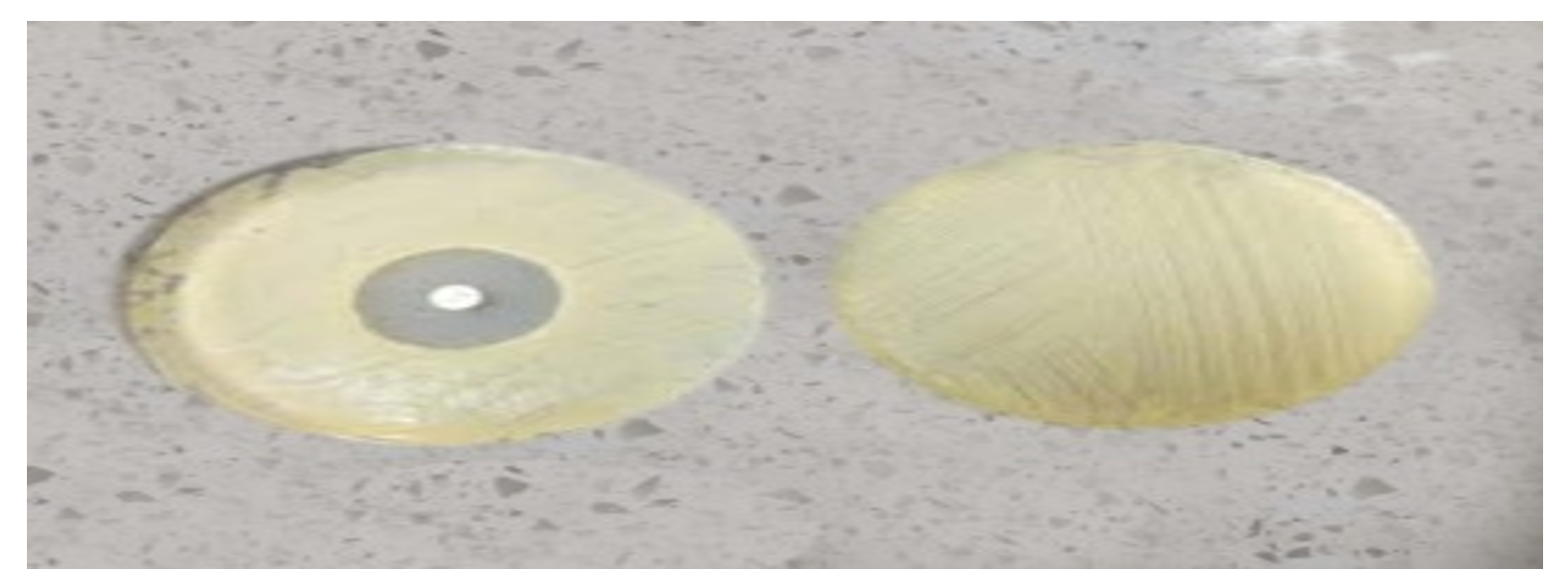
This study investigated the occurrence, safety characteristics and enterocinogenic potential of Enterococcus faecium isolated from retail Kilishi, a traditional Nigerian ready-to-eat dried meat product. A total of 201 retail Kilishi samples were homogenized in buffered peptone water, cultured on De Man, Rogosa, and Sharpe (MRS) agar, and phenotypically characterized isolates via Gram staining, catalase testing, and bile-esculin hydrolysis. Species specific PCR assays targeting E. faecium confirmed 54 distinct enterococci isolates. These confirmed isolates were systematically screened for phenotypic virulence traits (haemolysin, gelatinase, and aggregation substance) alongside critical virulence genes (gelE, esp and asa1) and antimicrobial resistance genes (ermB, vanA and vanB) via multiplex PCR. Antibiotic susceptibility profiles were found using the Kirby-Bauer disc diffusion method against CLSI guidelines. Isolates exhibiting ideal safety characteristics were subsequently screened for production of enterocin-like substances against Listeria monocytogenes. E. faecium predominated, accounting for 72.2% of the confirmed isolates, while E. faecalis constituted 27.8%. Most isolates exhibited low virulence potential, and four E. faecium isolates lacked the tested virulence genes and major antimicrobial resistance genes. Although resistance to some clinically important antibiotics was observed among a proportion of isolates, E. faecium KEC79 remained susceptible to all antibiotics evaluated and demonstrated the highest enterocin-like substance production (5120 AU mL⁻¹) together with the strongest inhibitory activity against Listeria monocytogenes. Retail kilishi therefore, harbours safe enterocin-producing E. faecium strains. Following comprehensive safety assessment, KEC79 in particular is found to be a promising candidate for biopreservation applications.
References
Arias, A.J., & Murray, B.E. (2012). The rise of the Enterococcus: Beyond vancomycin resistance. Nature Reviews Microbiology, 10(4), 266–278.
Aspri, M., Bozoudi, D., Tsaltas, D., & Papademas, P. (2022). Enterocins: Promising biopreservatives produced by Enterococcus sp. Microorganisms, 10(4), Article 793.
Barbosa, J., Gibbs, P. A., & Teixeira, P. (2010). Virulence factors among enterococci isolated from traditional fermented meat products produced in the North of Portugal. Food Control, 21(5), 651–656.
Belgacem, Z. B., Abriouel, H., Omar, N. B., Lucas, R., Martínez-Canamero, M., Gálvez, A., & Manai, M. (2010). Antimicrobial activity, safety aspects, and some technological properties of bacteriocinogenic Enterococcus faecium from artisanal Tunisian fermented meat. Food Control, 21(4), 462–470.
Cintas, L. M., Casaus, P., Håvarstein, L. S., Hernández, P. E., & Nes, I. F. (1997). Biochemical and genetic characterization of enterocin P, a novel sec-dependent bacteriocin from Enterococcus faecium P13 with a broad antimicrobial spectrum. Applied and Environmental Microbiology, 63(11), 4321–4330. https://doi.org/10.1128/aem.63.11.4321-4330.1997
Cleveland, J., Montville, T.J., Nes, I.F., & Chikindas, M.L. (2001). Bacteriocins: safe, natural antimicrobials for food preservation. International Journal of Food Microbiology, 71(1), 1–20.
Clinical and Laboratory Standards Institute. (2026). Performance standards for antimicrobial susceptibility testing (36th ed.). CLSI supplement M100.
Cotter, P.D., Ross, R.P. & Hill, C. (2013). Bacteriocins—A viable alternative to antibiotics? Nature Reviews Microbiology, 11(2), 95–105.
da Costa, R. J., da Silva, A. P., da Fonseca, R. N., de Oliveira Hübner, S., Nalério, E. S., de Lima Marques, J., Vitola, H. R. S., da Silva, W. P., Duval, E. H., & Fiorentini, Â. M. (2021). Characterization of Enterococcus faecium EO1 isolated from mutton and activity of bacteriocin-like substances in the control of Listeria monocytogenes in fresh mutton sausage. Lwt, 141, Article 110954.
Dahiru A. T, & K, M. A. (2019). Bacteriological Quality Assessment of Kilishi Produced in Kunchi Local Government Area, Kano State, Nigeria. UMYU Journal of Microbiology Research (UJMR), 4(1), 12–18. https://doi.org/10.47430/ujmr.1941.003
Daminabo, V., Isun, R., & Agarry, O. O. (2013). Isolation of enterococci from dried beef crackers (kilishi) and its antibiogram. African Journal of Parasitology Research, 1(1), 191–196.
Eaton, T.J. & Gasson, M.J. (2001). Molecular screening of Enterococcus virulence determinants and potential for genetic exchange between food and medical isolates. Applied and Environmental Microbiology, 67(4), 1628–1635.
Ennahar, S., Sashihara, T., Sonomoto, K., & Ishizaki, A. (2000). Class IIa bacteriocins: Biosynthesis, structure and activity. FEMS Microbiology Reviews, 24(1), 85–106.
Fisher, K., & Phillips, C. (2009). The ecology, epidemiology and virulence of Enterococcus. Microbiology, 155(6), 1749–1757.
Foulquié Moreno, M. R., Sarantinopoulos, P., Tsakalidou, E., & De Vuyst, L. (2006). The role and application of enterococci in food and health. International Journal of Food Microbiology, 106(1), 1–24.
Franz, C.M.A.P., Holzapfel, W.H. & Stiles, M.E. (1999). Enterococci at the crossroads of food safety? International Journal of Food Microbiology, 47(1-2), 1–24.
Franz, C.M.A.P., van Belkum, M.J., Holzapfel, W.H., Abriouel, H. & Gálvez, A. (2007). Diversity of enterococcal bacteriocins and their grouping in a new classification scheme. FEMS Microbiology Reviews, 31(3), 293–310.
Furlaneto-Maia, L., Ramalho, R., Rocha, K. R., & Furlaneto, M. C. (2020). Antimicrobial activity of enterocins against Listeria sp. And other food spoilage bacteria. Biotechnology Letters, 42(5), 797–806. https://doi.org/10.1007/s10529-020-02810-7
Gálvez, A., Abriouel, H., López, R. L., & Omar, N. B. (2007). Bacteriocin-based strategies for food biopreservation. International Journal of Food Microbiology, 120(1-2), 51–70.
Giraffa, G. (2002). Enterococci from foods. FEMS Microbiology Reviews, 26(2), 163–171.
Hanchi, H., Mottawea, W., Sebei, K., & Hammami, R. (2018). The genus Enterococcus: Between probiotic potential and safety concerns—An update. Frontiers in Microbiology, 9, Article 1791.
Hollenbeck, B. L., & Rice, L. B. (2012). Intrinsic and acquired resistance mechanisms in enterococcus. Virulence, 3(5), 421–433.
Holzapfel, W. H., Arzu, G., & Franz, C. M. A. P. (2018). Enterococcus faecium SF68 as a model for efficacy and safety of pharmaceutical probiotics. Journal of Clinical Gastroenterology, 52, S41–S45.
Klein, G. (2003). Taxonomy, ecology and antibiotic resistance of enterococci from food and the gastro-intestinal tract. International Journal of Food Microbiology, 88(2-3), 123–131.
Mahuku, G. S. (2004). A simple extraction method suitable for PCR-based analysis of plant, fungal, and bacterial DNA. Plant Molecular Biology Reporter, 22(1), 71–81. https://doi.org/10.1007/BF02773351
Mariam, S. H. (2021). A sampling survey of enterococci within pasteurized, fermented dairy products and their virulence and antibiotic resistance properties. PLOS ONE, 16(7), e0254390.
Ogier, J.-C., & Serror, P. (2008). Safety assessment of dairy microorganisms: The Enterococcus genus. International Journal of Food Microbiology, 126(3), 291–301.
Rashid, M., Sharma, S., Kaur, A., Kaur, A., & Kaur, S. (2023). Biopreservative efficacy of Enterococcus faecium-immobilised film and its enterocin against Salmonella enterica. AMB Express, 13(1), 11. https://doi.org/10.1186/s13568-023-01516-z
Semedo, T., Santos, M. A., Martins, P., Lopes, M. F. S., Figueiredo Marques, J. J., Tenreiro, R., & Barreto Crespo, M. T. (2003). Comparative study of virulence factors in Enterococcus spp. isolates of clinical, animal, and food origin. International Journal of Food Microbiology, 86(1-2), 147–153.
Vankerckhoven, V., Van Autgaerden, T., Vael, C., Lammens, C., Chapelle, S., Rossi, R., Jabes, D., Louie, M., Courvalin, P., & Goossens, H. (2008). Genotypic diversity, antimicrobial resistance, and virulence factors of Enterococcus faecium isolates from clinical and nonclinical sources. Journal of Clinical Microbiology, 46(7), 2246–2255.
Werner, G., Coque, T.M., Hammerum, A.M., Hope, R., Hryniewicz, W., Johnson, A., Klare, I., Kristinsson, K.G., Leclercq, R., Lester, C.H., Lollier, M., Marchello, A., Mayrhofer, S., Mensa, J., Monnet, D.L., Goossens, H., & Willems, R.J. (2013). Antibiotic resistant enterococci-tales of a drug resistance gene trafficker. International Journal of Medical Microbiology, 303(6-7), 360-379.
Yildirim, Z., Bilgin, H., Isleroglu, H., Tokatli, K., Sahingil, D., & Yildirim, M. (2014). Enterocin HZ produced by a wild Enterococcus faecium strain isolated from a traditional, starter-free pickled cheese. Journal of Dairy Research, 81(2), 164–172.
Downloads
Published
Issue
Section
License
Copyright (c) 2026 Adamu Idris, Abdulkadir Magaji Magashi, Usman Aliyu Dutsinma

This work is licensed under a Creative Commons Attribution 4.0 International License.