
Antioxidants and Nutrients Composition in Selected Cultivated African Vegetables and Herb: the Impact of Maturity and Drying
DOI:
https://doi.org/10.33003/fjs-2026-1016-5620Keywords:
Plants, Maturity stage, Drying, Antioxidants, Phyto-chemicalsAbstract
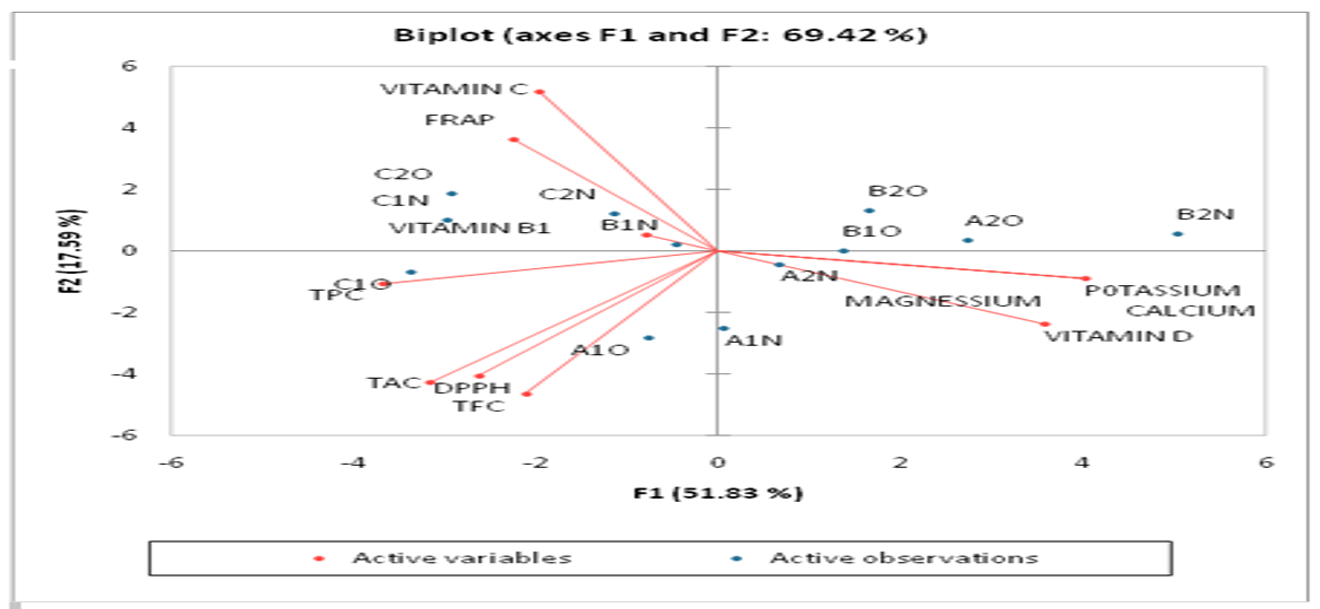
Ocimum gratissimum, Phyllanthus amarus and Lactuca taraxacifolia are good sources of phytochemicals and they have gained attention for their potential to provide natural remedies for various ailments. This study was carried out to evaluate the effect of maturity stages and drying methods (oven drying (50oC) and air drying at room temperature (28-32oC) on the antioxidative properties, vitamins and mineral contents of three cultivated plants. The plantas were harvested at two different stages of maturity and subjected to two different drying methods. The antioxidants of the plants ranged from 25.21-70.94 % (Reducing power (DPPH)), 0.57-0.73 mg/g (Total antioxidants contents (TAC)), 0.55- 4.66 mg/g (Total flavonoids contents (TFC)), 0.03-0.72mg/g (Free radicals scavenging ability (FRAP)) and 0.18-0.39 (Total phenolic content(TPC)).The vitamin composition varied from 2.45-3.41 mg/g (vitamin C), 0.01-0.35 mg/g (vitamin D), 0.13-0.14 mg/g (vitamins B1), while its mineral compositions ranged from 278.41-1360.66 mg/100g (K), 222.73-1088.53mg/100g (Ca), 213.27-612.08mg/100g (Mg). The PCA biplot revealed a data variance of about 69.42% and the preference for the samples A1O C1O (Ocimum gratissimum at young age oven dried at 50 oC) and C1O (Phyllatus amarus at young age oven dried at 500C) might be attributed to their high antioxidant capacities retention, while sample B1N (Lactuca taraxacifolia air dried at young age) might also be considered because of its richness in vitamin B1, vitamin C and FRAP.
References
Adetutu, A., Owoade, A. O., Aborisade, B. B., & Abubakar, F. A. (2020). Alkaloid and terpenoid fractions from the leaves of Launaea taraxacifolia (Willd.) repressed the proliferation of Plasmodium berghei in mice. Comparative Clinical Pathology, 29, 1023–1032.
Adinortey, M. B., Sarfo, J. K., Kwarteng, J., Adinortey, C. A., Ekloh, W., Kuatsienu, L. E., & Kwadwo, N. A. (2018). The ethnopharmacological and nutraceutical relevance of Launaea taraxacifolia (Willd.) Amin ex C. Jeffrey. Evidence-Based Complementary and Alternative Medicine, 2018, Article 7259146.
Agunbiade, O. S., Afolabi, O. B., Jaiyesimi, K. F., Adewale, O. B., Okoh, P. O., Adewole, E., & Agboola, E. K. (2024). Antioxidant capacities, antidiabetic potentials, and mineral compositions of pap aqua and aqueous extracts from Ocimum gratissimum L. Journal of Herbmed Pharmacology, 13(1), 43–51.
Ajayi, A. (2015). Mineral contents of Ocimum gratissimum leaves (African basil). Magnesium, 80, 0–11.
Anyanwu, B. C., Akoh, O. U., & Otuokere, I. E. (2022). Phytochemical screening and proximate analysis of the leaves of Launaea (Lactuca) taraxacifolia. Journal of Chemical Society of Nigeria, 47(2).
AOAC International. (2005). Official methods of analysis (15th ed.). Association of Official Analytical Chemists.
Asaolu, S. S., Adefemi, O. S., Oyakilome, I. G., Ajibulu, K. E., & Asaolu, M. F. (2012). Proximate and mineral composition of Nigerian leafy vegetables. Journal of Food Research, 1(3), 214–222.
Asfaw, T. B., Esho, T. B., Bachheti, A., Bachheti, R. K., Pandey, D. P., & Husen, A. (2022). Exploring important herbs, shrubs, and trees for their traditional knowledge, chemical derivatives, and potential benefits. In R. K. Bachheti, A. Bachheti, & A. Husen (Eds.), Herbs, shrubs, and trees of potential medicinal benefits (pp. 1–26). CRC Press.
Aung, H. T., Sein, M. M., Aye, M. M., & Thu, Z. M. (2016). A review of traditional medicinal plants from Kachin State, Northern Myanmar. Natural Product Communications, 11(3), 353–364.
Aye, M. M., Aung, H. T., Sein, M. M., & Armijos, C. (2019). A review on the phytochemistry, medicinal properties and pharmacological activities of 15 selected Myanmar medicinal plants. Molecules, 24(2), Article 293.
Bonazzi, C., & Dumoulin, E. (2011). Quality changes in food materials as influenced by drying processes. Modern Drying Technology, 3, 1–20.
Dambreville, A., Lauri, P. É., Normand, F., & Guédon, Y. (2015). Analysing growth and development of plants jointly using developmental growth stages. Annals of Botany, 115(1), 93–105.
Enenebeaku, U. E., Ahamefule, A. K., Asiwe, E. S., Ugenyi, A. U., Iheme, P. O., Eboh, O. J., & Opara, P. O. (2024). Exploring the phytochemistry and in vitro antioxidant potentials of hot water extract of Ocimum gratissimum (Scent Leaf). Journal of Pharmacognosy and Phytochemistry, 13(3), 326–332.
Etta, H. (2008). Effects of Phyllanthus amarus on litter traits in albino rats. Scientific Research and Essays, 3(8), 370–372.
Gbadamosi, I. T., Adeyi, A. O., Oyekanmi, O. O., & Somade, O. T. (2020). Launaea taraxacifolia leaf partitions ameliorate alloxan-induced pathophysiological complications via antioxidant mechanisms in diabetic rats. Metabolism Open, 6, Article 100029.
Ibobo, G. O., Okpoghono, J., & Onyesom, I. (2024). Polyphenol profile and antioxidant properties of various solvent fractions of Phyllanthus amarus. Tropical Journal of Phytochemistry and Pharmaceutical Sciences, 3(3), 246–253.
Khan, M. U., Gautam, G., Jan, B., Zahiruddin, S., Parveen, R., & Ahmad, S. (2022). Vitamin D from vegetable sources: Hope for the future. Phytomedicine Plus, 2(2), Article 100248.
Lamidi, R. O., Jiang, L., Pathare, P. B., Wang, Y., & Roskilly, A. (2019). Recent advances in sustainable drying of agricultural produce: A review. Applied Energy, 233–234, 367–385.
Min, Z., Navam, S., Hettiarachchy, R., Horax, P. C., & Over, K. F. (2009). Effect of maturity stages and drying methods on the retention of selected nutrients and phytochemicals in bitter melon (Momordica charantia) leaf. Journal of Food Science, 74(6), C441–C448.
Mohr, F. B., Lermen, C., Gazim, Z. C., Gonçalves, J. E., & Alberton, O. (2017). Antifungal activity, yield, and composition of Ocimum gratissimum essential oil. Genetics and Molecular Research, 16(4).
Nguyen, V. T., Van-Vuong, Q., Bowyer, M. C., Van-Altena, I. A., & Scarlett, C. J. (2015). Effects of different drying methods on bioactive compound yield and antioxidant capacity of Phyllanthus amarus. Drying Technology, 33(8), 1006–1017.
Ocran, J. (2012). Phytochemical screening, proximate and mineral composition of Launaea taraxacifolia leaves. Research Journal of Medicinal Plants, 6(2), 171–179.
Odukoya, J. O., & Oshodi, A. A. (2018). Evaluation of the nutritional qualities of the leaves of Parquetina nigrescens, Launaea taraxacifolia and Solanum nigrum. European Journal of Pure and Applied Chemistry, 5(1).
Ogbodo, E. C., Emeka, N. C., Ezeugwunne, I. P., Analike, R. A., Dike, C. C., & Njoku, M. C. (2017). Effect of ethanoic leaf extract of Phyllanthus amarus on fasting blood glucose, bilirubin, albumin and total protein on diabetic induced albino Wistar rats in College of Health Sciences, Nnamdi Azikiwe University, Nnewi Campus, Anambra State, Nigeria. GSJ, 5(7), 78–92.
Okunlola, G. O., Olatunji, O. A., Olowolaju, E. D., Refai, A. B., Makanjuola, A. O., & Adeosun, I. E. (2023). Assessment of nutritional value of selected underutilized green leafy vegetables in Southwestern Nigeria. Journal of Applied Sciences and Environmental Management, 27(10), 2265–2273.
Okwu, D. E., & Josiah, C. (2006). Evaluation of the chemical composition of two Nigerian medicinal plants. African Journal of Biotechnology, 5(4), 357–361.
Olaleye, M. T., & Rocha, J. B. T. (2008). Acetaminophen-induced liver damage in mice: Effects of some medicinal plants on the oxidative defense system. Experimental and Toxicologic Pathology, 59(5), 319–327.
Omoregie, F. O., Uchenna, H. I., Enigbokan, O. O. A., Olude, O. M., & Ojo, N. O. (2020). Phytochemical, nutritional and mineral evaluation of aqueous and ethanol extract of Phyllanthus amarus leaves. American Journal of Sciences and Engineering Research, 3(4), 52–58.
Onwuka, G. I. (2005). Food analysis and instrumentation: Theory and practice. Naphthali Print.
Oyagbemi, A. A., Hassan, F. O., Ajibade, T. O., Ola-Davies, O. E., Omobowale, T. O., Ajani, O. S., & Oguntibeju, O. O. (2022). Antihypertensive action of Launaea taraxacifolia and its molecular mechanism of action. Journal of Food Biochemistry, 46(11), Article e14399.
Patel, J. R., Tripathi, P., Sharma, V., Chauhan, N. S., & Dixit, V. K. (2011). Phyllanthus amarus: Ethnomedicinal uses, phytochemistry and pharmacology: A review. Journal of Ethnopharmacology, 138(2), 286–313.
Pham, B. A., Tran, T. Y. N., Nguyen, T. X. T., Dao, T. P., Ngo, H. D., & Vu, N. D. (2024). Evaluating polyphenol and ascorbic acid contents, tannin removal ability, and physical properties during hydrolysis and convective hot-air drying of cashew apple powder. Open Chemistry, 22(1), Article 20240067.
Raji, A. O., Adebayo, O. F., & Sanusi, S. M. (2022). Antioxidative potentials and storage stability of pasteurised mixed fruits juices from pineapple and bitter orange. Food Bioscience, 49, Article 101937.
Rao, T. S. B., & Murugan, S. (2021). Solar drying of medicinal herbs: A review. Solar Energy, 223, 415–436.
Rosine, B. T., Fidele, N., & David, M. (2022). Pharmacological potential of Launaea taraxacifolia leaf on blood glucose levels, lipid profile, and oxidative stress parameters in diabetic rats. Journal of Pharmaceutical and Biological Sciences, 10(1), 29–36.
Saini, R., Kumar, V., Upadhyay, N., Sharma, S., Sourirajan, A., Kumar, D., & Dev, K. (2024). Comparative analysis of medicinal and nutritional properties of three varieties of Phyllanthus emblica fruits of North-West Himalayas. Chemistry Africa, 7(2), 705–723.
Sarı, F., Kültür, Ş., & Koçyiğit, M. (2023). Traditional usages of some medicinal plants for pediatric diseases. Journal of Faculty of Pharmacy of Ankara University, 47(3), 1101–1118.
Shi, M., Gu, J., Wu, H., Rauf, A., Emran, T. B., Khan, Z., & Suleria, H. A. (2022). Phytochemicals, nutrition, metabolism, bioavailability, and health benefits in lettuce—A comprehensive review. Antioxidants, 11(6), Article 1158.
Tagnamas, Z., Kouhila, M., Bahammou, Y., Lamsyehe, H., Moussaoui, H., Idlimam, A., & Lamharrar, A. (2022). Drying kinetics and energy analysis of carob seeds (Ceratonia siliqua L.) convective solar drying. Journal of Thermal Analysis and Calorimetry, 147, 2281–2291.
Ujah, O. F., Mohammad, Y. Y., & Dewua, C. M. (2021). Quantification, antioxidant and free radical scavenging potentials of polyphenols from crude extracts of Phyllanthus amarus leaves. ChemSearch Journal, 12(1), 97–107.
Watanabe, F., Yoshimura, K., & Shigeoka, S. (2017). Biochemistry and physiology of vitamins in Euglena. In T. Ogawa & T. Shigeoka (Eds.), Euglena: Biochemistry, cell and molecular biology (pp. 65–90). Springer.
Xiong, C., Singh, B. K., He, J. Z., Han, Y. L., Li, P. P., Wan, L. H., Meng, G. Z., Liu, S. Y., Wang, J. T., Wu, C. F., Ge, A. H., & Zhang, L. M. (2021). Plant developmental stage drives the differentiation in ecological role of the maize microbiome. Microbiome, 9(1), Article 171.
Zhu, W. J., Liu, Y., Cao, Y. N., Peng, L. X., Yan, Z. Y., & Zhao, G. (2021). Insights into health-promoting effects of plant MicroRNAs: A review. Journal of Agricultural and Food Chemistry, 69(48), 14372–1438
Downloads
Published
Issue
Section
Categories
License
Copyright (c) 2026 Akeem Olayemi Raji, Dupe Olufunke Ogunbosoye, Ade Isaac Afe, Maryam Masud

This work is licensed under a Creative Commons Attribution 4.0 International License.


