
Synthesis, Characterization and Antimicrobial Evaluation of Schiff Base Ligands Derived from Ampicillin and their Metal (II) Complexes
DOI:
https://doi.org/10.33003/fjs-2026-1014-5618Keywords:
Schiff Base Ligands, Ampicillin, Furfuraldehyde, Vanillin, Antimicrobial EvaluationAbstract
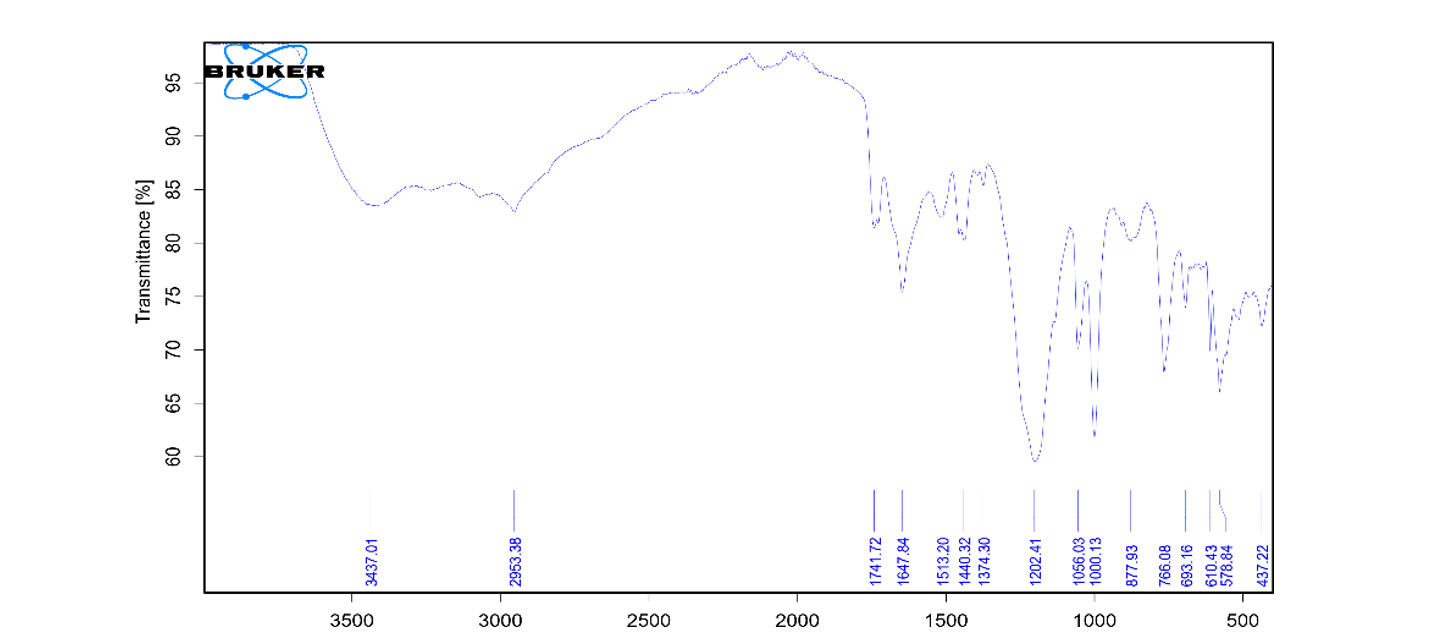
Two Schiff base ligands were generated by the condensation of amoxicillin with furfuraldehyde (HL1) and vanillin (HL2). The Cu(II) and Ni(II) complexes of the Ampicillin-Schiff base ligands were successfully produced under reflux in 1:2 metal-to-ligand molar ratio. Spectroscopic and physicochemical techniques such as elemental analysis, melting point, molar conductivity, UV−Visible, FTIR, 1H NMR, 13C NMR, and mass spectrometry were utilized for the characterization of the synthesized compounds. The antimicrobial activity of the synthesized Schiff base ligands and their metal complexes against different strains of bacteria which include Staphylococcus aureus, Staphylococcus pyogenes, Escherichia coli, Salmonella Typhi and Candida albicans, were tested using disc diffusion method. According to the physical characteristic data, the compounds are stable at room temperature and exhibited various colour with melting/decomposition temperature ranging from 161-185 ºC. The FTIR spectra reveal that the ligands coordinated to the metal ions through v(C=O), and v(C=N). The UV/Visible spectra suggested that the complexes have tetrahedral geometry. The results of microanalysis and mass spectrometry agreed with the proposed structure. The antimicrobial screening of the Schiff base ligands and the complexes revealed that the complexes have better activity as compared to the free ligands.
References
Abdulsada, H. A., Noor, H. N. and Ahmed, K. H. (2018). Design Synthesis and Preliminary Antibacterial Evaluation of Schiff Base Metal Complexes of Ampicillin and Cephalexin. Acta Chimica and Pharmaceutica Indica. Research, 8(1) 1-9.
Albotani, A. S. A., Mohammed, E. R., Al-Dulaimi, M. S., Saied, S. M. and Saleh, M. Y. (2025). Synthesis, Characterization, In Silico Screening for Molecular Docking and Computational Exploration of Some Novel Metal Complexes Derived from Ampicillin - Isatine Schiff Bases. New Materials, Compounds and Applications, 9(1), 109-122. https://doi.org/10.62476/nmca.91109
Alshater, H., Al-Sulami, A. I., Aly, S. A., Abdalla, E. M,, Sakr, M. A. and Hassan, S. S. (2023). Antitumor and antibacterial activity of Ni(II), Cu(II), Ag(I), and Hg(II) complexes with ligand derived from thiosemicarbazones: Characterization and theoretical studies. Molecules, 28(6), 2590.
Arshi, F., Bano, S., Firdaus, S., Kumar, S., Banerjee, M., Kushwaha, N. K., Singh, S. K. and Singh, A. K. (). Ampicillin-Derived Ruthenium Schiff Base Complexes as Emerging Anticancer and Antimicrobial Candidates: Synthesis, Characterization, DFT, ADME and Molecular Docking.
Aurora, R., Adriana, S., Geogeta, C. and Irina, D. (2015). Synthesis, Spectral Characterization and Thermal Behaviour of new Metal(II) Complexes with Schiff Base derived from Amoxicillin. Journal of Chilean Chemical Society, 60(3) 3074-3079.
Banbela, H. M., Al-Dahiri, R. H., Abubakr, A. S., Hassan, S. S. and Mohamed, M. (2025). Amoxicillin Antibiotic with Potential Anticancer and Antidiabetic Activity: Acetaldehyde-Amoxicillin Schiff Base and its Vanadyl Complex with DFT and Docking Investigation. Material Advances, 5, 2345. https://doi.org/10.1039/D5MA00567A
Ceramella, J., Iacopetta, D., Catalano, A., Cirillo, F., Lappano, R., Sinicropi, M. S. (2022). A Review on the Antimicrobial Activity of Schiff Bases: Data Collection and Recent Studies. Antibiotics, 11(2), 191. https://doi.org/10.3390/antibiotics11020191
Khonsary, S. A. (2017). Guyton and Hall: Textbook of Medical Physiology, Surg Neurol Int., 8, 275.
Khorshidifard, M., Rudbari, H. A., Askari, B., Sahihi, M., Farsani, M. R., Jalilian, F. and Bruno, G. (2015). Cobalt (II), copper (II), zinc (II) and palladium (II) Schiff base complexes: Synthesis, characterization and catalytic performance in selective oxidation of sulfides using hydrogen peroxide under solvent-free conditions. Polyhedron, 95: 1-13. https://doi.org/10.1016/j.poly.2015.03.041
Mohamadzadeh, M., Zarei, M. and Vessal, M. (2020). β-Lactam Antibiotics: Synthesis and Biological Activities, Bioorganic Chemistry, 95, 103515. https://doi.org/10.1016/j.bioorg.2019.103515
Mshelia, M. B., Fugu, M. B., Waziri, I., Mala, G. A., Ahmed, A. A., Wakil, I. M. and Ndahi, N. P. (2025). Nickel (II) and Copper(II) Complexes of Ampicillin-Based Schiff Base Ligands: Synthesis, Characterization, and Antimicrobial Evaluation. Arid Zone Journal of Basic and Applied Research, 4(6), 81-96. http://dx.doi.org/10.55639/607.02010083
Naz, N., Khatoon, S., Ajaz, H., Sadiq, Z and Iqbal, M. Z. (2013). Synthesis, Spectral Characterization and Biological Evaluation of Schiff Base Transition Metal Complexes Derived from Ampicillin with D-Glucose. Asian Journal of Chemistry, 25(4), 2239-2242. http://dx.doi.org/10.14233/ajchem.2013.13413
Safak, S., Duran, B., Yurt, A. and Türkoglu, G. (2012). Corrosion Inhibition Studies of Schiff Base Metal Complexes, Corrosion Science, 54, 251–259. https://doi.org/10.1016/j.corsci.2011.09.019
Sarangi, A. K., Mahapatra, B. B., Mohapatra, R. K., Sethy, S. K., Das, D., Pintilie, L., Kudrat-E-Zahan, M., Azam, M. and Meher, H. (2020). Mixed-Ligand Complexes: Synthesis and Biological Applications, Applied Organometallic Chemistry, e5693. https://doi.org/10.1002/aoc.5693
Subitha, S., Kanmoni, V. G. G., Raj, C. I. S., Jona, J. and Vibi, V. (2021). Synthesis, Characterization Study of Schiff base Complexes derived from Ampicillin and 4-Hydroxy-3-methoxy benzaldehyde. Oriental Journal of Chemistry, 37(4), 813-818.
Umar, A. A., Lame, S. A. and Abdulkarim, A. (2025). Synthesis, Characterization and Anti-Microbial Activities of Schiff Base Derived from 2-Aminobenzenethiol and 4-Nitrobenzaldehyde and Its Mn(II), Fe(II) and Co(II) Complexes. FUDMA Journal of Sciences, 9(3), 40 – 44. https://doi.org/10.33003/fjs-2025-0903-3096
Umar, M., Umar. I. A., Lawiye, J. D. and Pindiga, N. Y. (2024). Enhancement of the Antibacterial Potencies of Ampicillin by Schiff Base Formation and Complexing with Metal (II)-Ions of Chromium, Iron and Zinc. International Journal of Organic and Medicinal Development Research, 03(3), 58 – 68.
Usman, M. S., Zowalaty, M. E. E., Shameli, K., Zainuddin, N., Salama, M. and Ibrahim, N. A. (2013). Synthesis, characterization, and antimicrobial properties of copper nanoparticles. International journal of nanomedicine, 4467-4479.
Wasaf, A. A., Jaffer, N. D. and Alkuwaity, E. A. (2023). Synthesis, characterization, and studying of (thermal, spectral and physical) properties of new Schiff base monomers and liquid crystal compounds from Ampicillin. Journal of Medicinal and Pharmaceutical Chemistry Research, 5, 282-293. http://dx.doi.org/10.22034/ecc.2023.371095.1560
Waziri, I., et al. (2023). Zinc (II) complex of (Z)-4-((4-nitrophenyl) amino) pent-3-en-2-one, a potential antimicrobial agent: Synthesis, characterization, antimicrobial screening, DFT calculation and docking study. Bulletin of the Chemical Society of Ethiopia, 37.3 (2023): 633-651.
Downloads
Published
Issue
Section
Categories
License
Copyright (c) 2026 Abubakar Abdullahi Ahmed, Mohammed B. Fugu, Grema A. Mala, Ibrahim M. Wakil, Matthew B. Mshelia, Naomi Ndahi

This work is licensed under a Creative Commons Attribution 4.0 International License.


