
Acanthus montanus Phytochemicals as Potential Multi-Target Therapeutics for Uterine Fibroids: An Integrated GC-MS, Network Pharmacology, and Molecular Dynamics Study
DOI:
https://doi.org/10.33003/fjs-2026-1018-5562Keywords:
Acanthus montanus, Uterine fibroid, GC-MS, ADME, Network pharmacology, Molecular docking, MD simulationAbstract
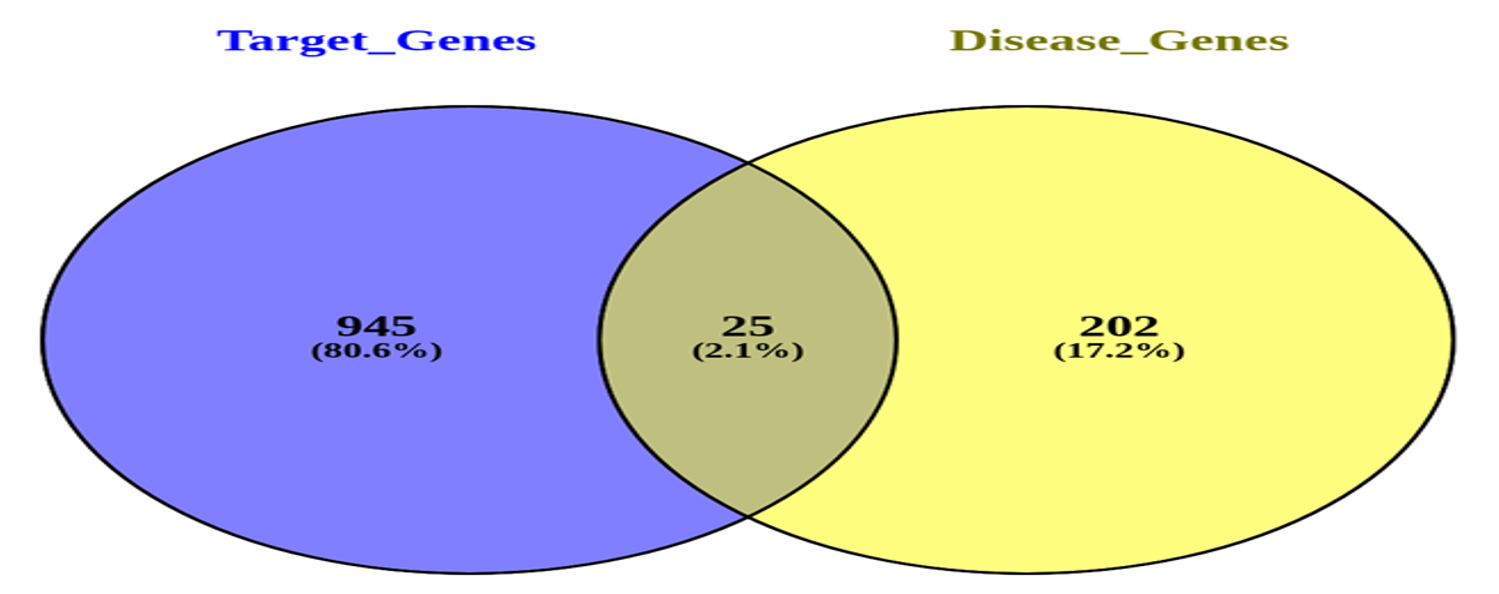
Uterine fibroids are benign hormone-responsive tumours characterized by dysregulated cellular proliferation, extracellular-matrix accumulation, and altered growth-factor signaling. This study investigated the potential anti-fibroid activity of Acanthus montanus leaf phytochemicals using an integrated computational approach. Ethanolic leaf extract was subjected to GC–MS profiling, followed by ADME/drug-likeness screening, network pharmacology, molecular docking, 100-ns molecular dynamics (MD) simulation, PASS activity prediction, and toxicity assessment. GC–MS identified 20 putative phytoconstituents, with 2,3-bis[(4-hydroxy-3-methoxyphenyl)methyl]butane-1,4-diol, tetramethyl ether showing 95% spectral similarity. Fourteen compounds (70%) exhibited high predicted gastrointestinal absorption, while the prioritized tetramethyl ether derivative showed favourable drug-likeness and no PAINS alerts. Network pharmacology identified 25 overlapping targets associated with uterine fibroids, with enrichment of PI3K-Akt, MAPK, estrogen, hormone-related, and other proliferation-associated pathways. Molecular docking showed that leuprolide had SP/XP scores of -8.290/-8.145 kcal/mol, whereas the tetramethyl ether derivative showed -4.772/-4.511 kcal/mol, with MM-GBSA values of -40.63/-55.42 kcal/mol for leuprolide and favourable binding interactions for the phytochemical. The 100-ns MD simulation demonstrated persistent protein–ligand contacts and maintained secondary structural elements, although substantial RMSD fluctuations indicated considerable conformational flexibility. PASS prediction suggested apoptosis agonist (Pa/Pi = 0.436/0.057), antineoplastic (0.264/0.123), ovulation inhibitor (0.482/0.068), and gonadotropin antagonist (0.445/0.035) activities. Predicted LD50 was 2000 mg/kg (toxicity class 4). A. montanus phytochemicals, particularly the tetramethyl ether derivative, demonstrate promising computational evidence for multitarget modulation of uterine fibroid-associated pathways. Experimental validation is required to establish efficacy, mechanism, and safety.
References
Ahmed, M. (2025). Targeting aging pathways with natural compounds: a review of curcumin, epigallocatechin gallate, thymoquinone, and resveratrol. Immunity & Ageing, 22(1), 28. https://doi.org/10.1186/s12979-025-00522-y
Ajisafe, O. M., Adekunle, Y. A., Egbon, E., Ogbonna, C. E., & Olawade, D. B. (2025). The role of machine learning in predictive toxicology: A review of current trends and future perspectives. Life Sciences, 378, 123821. https://doi.org/https://doi.org/10.1016/j.lfs.2025.123821
Alam, M., Gulzar, M., Akhtar, M. S., Rashid, S., Zulfareen, Tanuja, Shamsi, A., & Hassan, M. I. (2024). Epigallocatechin-3-gallate therapeutic potential in human diseases: molecular mechanisms and clinical studies. Molecular Biomedicine, 5(1), 73. https://doi.org/10.1186/s43556-024-00240-9
Aljawobaei, W., Ali, S. S. M., Thippeswamy, N. B., & Achur, R. (2025). Molecular docking and ADMET analysis of bioactive compounds from Simarouba glauca leaf extracts for anti-inflammatory and antioxidant activities. Discover Applied Sciences, 7(10), 1082. https://doi.org/10.1007/s42452-025-07429-9
Asiamah, I., Obiri, S. A., Tamekloe, W., Armah, F. A., & Borquaye, L. S. (2023). Applications of molecular docking in natural products-based drug discovery. Scientific African, 20, e01593. https://doi.org/https://doi.org/10.1016/j.sciaf.2023.e01593
Banerjee, P., Eckert, A., Schrey, A., & Preissner, R. (2018). ProTox-II: A webserver for the prediction of toxicity of chemicals. Nucleic Acids Research, 46. https://doi.org/10.1093/nar/gky318
Capuzzi, S. J., Muratov, E. N., & Tropsha, A. (2017). Phantom PAINS: Problems with the Utility of Alerts for Pan-Assay INterference CompoundS. J Chem Inf Model, 57(3), 417-427. https://doi.org/10.1021/acs.jcim.6b00465
Daina, A., Michielin, O., & Zoete, V. (2017). SwissADME: a free web tool to evaluate pharmacokinetics, drug-likeness and medicinal chemistry friendliness of small molecules. Scientific Reports, 7(1), 42717. https://doi.org/10.1038/srep42717
de Mezer, M., Markowska, A., Pietras, J., Naskręt-Grochowalska, A., Gryboś, M., Markowska, J., & Sajdak, S. (2025). The role of epigallocatechin gallate (EGCG) in uterine myomas. Biomedicine & Pharmacotherapy, 189, 118345. https://doi.org/https://doi.org/10.1016/j.biopha.2025.118345
Dolmans, M.-M., Petraglia, F., Catherino, W. H., & Donnez, J. (2024). Pathogenesis of uterine fibroids: current understanding and future directions. Fertility and Sterility, 122(1), 6-11. https://doi.org/https://doi.org/10.1016/j.fertnstert.2024.02.048
Farhadi, B., Beygisangchin, M., Ghamari, N., Jakmunee, J., & Tang, T. (2025). Molecular dynamics simulations of proteins: an in-depth review of computational strategies, structural insights, and their role in medicinal chemistry and drug development. Biological Cybernetics, 119(4), 28. https://doi.org/10.1007/s00422-025-01026-0
Gekle, M., Dubourg, V., Schwerdt, G., Benndorf, R. A., & Schreier, B. (2023). The role of EGFR in vascular AT1R signaling: From cellular mechanisms to systemic relevance. Biochemical Pharmacology, 217, 115837. https://doi.org/https://doi.org/10.1016/j.bcp.2023.115837
Grewal, S., Deswal, G., Grewal, A. S., & Guarve, K. (2025). Chapter Eight - Molecular dynamics simulations: Insights into protein and protein ligand interactions. In C. V. Narayan, S. Verma, A. S. Grewal, N. Singh, & H. Nimesh (Eds.), Advances in Pharmacology (Vol. 103, pp. 139-162). Academic Press. https://doi.org/https://doi.org/10.1016/bs.apha.2025.01.007
Hopkins, A. L. (2008). Network pharmacology: the next paradigm in drug discovery. Nature Chemical Biology, 4(11), 682-690. https://doi.org/10.1038/nchembio.118
Horak, P., Mara, M., Dundr, P., Kubinova, K., Kuzel, D., Hudecek, R., & Chmel, R. (2012). Effect of a selective progesterone receptor modulator on induction of apoptosis in uterine fibroids in vivo. Int J Endocrinol, 2012, 436174. https://doi.org/10.1155/2012/436174
Hu, H., Chen, Y., Hong, B., Liu, J., Jiang, Y., Yu, Z., Xiao, Z.-J., & Li, J. (2025). A four-gene signature identified by integrated transcriptomic analysis for differential diagnosis and prognosis of uterine smooth muscle tumors [Original Research]. Frontiers in Oncology, Volume 15 - 2025. https://www.frontiersin.org/journals/oncology/articles/10.3389/fonc.2025.1591875
Hussein, F., Elamin, O., Al-Hendy, A., & Mousa, M. (2026). Multi-omics Approaches for Biomarker Discovery of Uterine Fibroids: A Systematic Review. Advances in Therapy, 43(6), 2474-2495. https://doi.org/10.1007/s12325-026-03569-5
Idakwoji, P. A., Tukur, U., Onwukwe, B. O., Agboola, J. B., Onugwu, E. O., Iyiola, A. T., Amadi, B. E., Onoja, A. O., Ali, A. S., Ojo, S. S., Adeyeye, M. A., & Muhammed, H. (2026). Phytochemicals as promising lead compounds for drug discovery: A comprehensive review of mechanisms and pharmacological potentials. Letters in Drug Design & Discovery, 23(1), 100363. https://doi.org/https://doi.org/10.1016/j.lddd.2026.100363
Idu, M., Ojoba, P., & Gabriel, B. O. (2022). Acanthus montanus (Nees) T. Anderson: Review. 6, 21-34.
Islam, M. S., Parish, M., Brennan, J. T., Winer, B. L., & Segars, J. H. (2023). Targeting fibrotic signaling pathways by EGCG as a therapeutic strategy for uterine fibroids. Sci Rep, 13(1), 8492. https://doi.org/10.1038/s41598-023-35212-6
Kim, H. K., Kim, S. J., Gil, W. J., & Yang, C.-S. (2025). Exploring the therapeutic potential of phytochemicals: challenges and strategies for clinical translation. Phytomedicine, 145, 157090. https://doi.org/https://doi.org/10.1016/j.phymed.2025.157090
Lee, J. W., Choi, H. J., Kim, E. J., Hwang, W. Y., Jung, M. H., & Kim, K. S. (2020). Fisetin induces apoptosis in uterine leiomyomas through multiple pathways. Sci Rep, 10(1), 7993. https://doi.org/10.1038/s41598-020-64871-y
Moravek, M. B., & Bulun, S. E. (2015). Endocrinology of uterine fibroids: steroid hormones, stem cells, and genetic contribution. Curr Opin Obstet Gynecol, 27(4), 276-283. https://doi.org/10.1097/gco.0000000000000185
Mukherjee, P. (2025). Genetic and biomarker approaches to uterine fibroids: toward precision medicine [Mini Review]. Frontiers in Global Women's Health, Volume 6 - 2025. https://www.frontiersin.org/journals/global-womens-health/articles/10.3389/fgwh.2025.1581823
Munro, M. G., Tchaikovski, S. N., & Murji, A. (2025). The epidemiology and pathogenesis of uterine fibroids. International Journal of Gynecology & Obstetrics, 171(3), 1029-1045. https://doi.org/https://doi.org/10.1002/ijgo.70527
Nivatya, H. K., Singh, A., Kumar, N., Sonam, Sharma, L., Singh, V., Mishra, R., Gaur, N., & Mishra, A. K. (2025). Assessing molecular docking tools: understanding drug discovery and design. Future Journal of Pharmaceutical Sciences, 11(1), 111. https://doi.org/10.1186/s43094-025-00862-y
Okoli, C. O., Akah, P. A., Onuoha, N. J., Okoye, T. C., Nwoye, A. C., & Nworu, C. S. (2008). Acanthus montanus: An experimental evaluation of the antimicrobial, anti-inflammatory and immunological properties of a traditional remedy for furuncles. BMC Complementary and Alternative Medicine, 8(1), 27. https://doi.org/10.1186/1472-6882-8-27
Olivera, A., Moore, T. W., Hu, F., Brown, A. P., Sun, A., Liotta, D. C., Snyder, J. P., Yoon, Y., Shim, H., Marcus, A. I., Miller, A. H., & Pace, T. W. (2012). Inhibition of the NF-κB signaling pathway by the curcumin analog, 3,5-Bis(2-pyridinylmethylidene)-4-piperidone (EF31): anti-inflammatory and anti-cancer properties. Int Immunopharmacol, 12(2), 368-377. https://doi.org/10.1016/j.intimp.2011.12.009
Oshadu, D. O., Ajanusi, J. O., Chiezey, P. N., Abubakar, M. S., Tanko, J. T., Sambo, S. J., & Mohammed, B. (2022). Toxicological Evaluation and Therapeutic Index of Ethanolic Leaf Extract of Acanthus montanus (Acanthaceae) in Mice. Journal of Pharmacology and Toxicology, 17(1), 28-35. https://doi.org/10.3923/jpt.2022.28.35
Pandey, V., Patel, Y., Tiwari, S., Rani, A., Rai, S., Agarwal, S., Tripathi, A., & Dubey, P. K. (2026). MED12 somatic mutation promotes human uterine leiomyoma’s growth by trigging canonical Wnt4/β-catenin and TGF-β signaling through the EMT pathway. Journal of Endometriosis and Uterine Disorders, 13, 100137. https://doi.org/https://doi.org/10.1016/j.jeud.2025.100137
Saini, K., Singh, S., & Garg, N. (2026). Progesterone and estrogen signaling in uterine fibroids: A tale of two interconnected pathways. The Journal of Steroid Biochemistry and Molecular Biology, 262, 107036. https://doi.org/https://doi.org/10.1016/j.jsbmb.2026.107036
Sheng, Q.-S., Liu, B., Wang, X., Hua, L., Zhao, S.-C., Sun, X.-Z., Li, M.-Y., Zhang, X.-Y., Wang, J.-X., & Hu, P.-L. (2025). Revolutionizing toxicological risk assessment: integrative advances in new approach methodologies (NAMs) and precision toxicology. Archives of Toxicology, 99(12), 4697-4707. https://doi.org/10.1007/s00204-025-04169-y
Singh, S., Bani Baker, Q., & Singh, D. B. (2022). Chapter 18 - Molecular docking and molecular dynamics simulation. In D. B. Singh & R. K. Pathak (Eds.), Bioinformatics (pp. 291-304). Academic Press. https://doi.org/https://doi.org/10.1016/B978-0-323-89775-4.00014-6
Wang, C.-Y., Philpott, M., P O’Brien, D., Ndungu, A., Malzahn, J., Maritati, M., Mehta, N., Gamble, V., Martinez-Burgo, B., Bonham, S., Fischer, R., Garbutt, K., Becker, C. M., Manek, S., Harris, A. L., Sacher, F., Obendorf, M., Schmidt, N., Müller, J., . . . Cribbs, A. P. (2025). A systems-based approach to uterine fibroids identifies differential splicing associated with abnormal uterine bleeding. Communications Medicine, 5(1), 318. https://doi.org/10.1038/s43856-025-01051-x
Wang, L., Geng, M., Wei, L., Wang, S., Wang, W., & Liu, X. (2026). Multidimensional regulation of estrogen signaling in pelvic floor connective tissue homeostasis and remodeling [Review]. Frontiers in Immunology, Volume 17 - 2026. https://www.frontiersin.org/journals/immunology/articles/10.3389/fimmu.2026.1742246
Yang, Q.-m., Chen, Y., Xia, L.-h., Xu, H., Jin, X.-f., & Wu, Q. (2026). Curcumin Inhibits Fibroblast Differentiation and Epithelial-Mesenchymal Transition to Alleviate Adenomyosis through TGF-β1/Smad3 Pathway. Chinese Journal of Integrative Medicine, 32(5), 407-414. https://doi.org/10.1007/s11655-025-4215-0
Yang, Z.-Y., Yang, Z.-J., He, J.-H., Lu, A.-P., Liu, S., Hou, T.-J., & Cao, D.-S. (2021). Benchmarking the mechanisms of frequent hitters: limitation of PAINS alerts. Drug Discovery Today, 26(6), 1353-1358. https://doi.org/https://doi.org/10.1016/j.drudis.2021.02.003
Downloads
Published
Issue
Section
Categories
License
Copyright (c) 2026 Mutiu A. Alabi, Dauda S. Adebara, Habeebullah A. Jamiu, Abdullateef K. Ayuba, Abdulhameed Alli, Ronke A. Oluokun, Emmanuel Ajani

This work is licensed under a Creative Commons Attribution 4.0 International License.