Potentials of Plant Oils in Nanoemulsion Formulations
DOI:
https://doi.org/10.33003/fjs-2026-1015-5444Keywords:
Plant oils, Nanoemulsion, Low-energy emulsification, Ostwald ripening, HLB, Protein corona, PRISMA, BioavailabilityAbstract
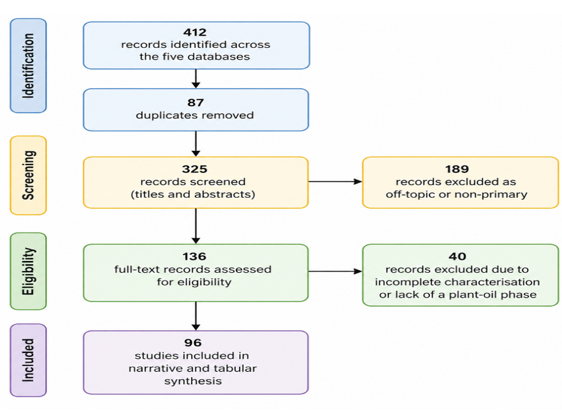
Plant-derived oil extracts are extensively used in food and pharmaceutical products owing to their significant pharmacological effects, which are largely attributed to their phytochemical constituents. However, these oils cannot be used in their natural state due to chemical instability, poor dispensability in food matrices, and unfavorable flavor profiles. To address these limitations, encapsulation technologies—particularly nanoemulsions—are being actively investigated as a viable strategy to enhance the applicability and potency of these organic compounds. Nanoemulsion formulations add considerable value to oil extracts for cosmetic and pharmaceutical applications, enabling both topical and systemic delivery. Key benefits include precise control over droplet size, protection against UV radiation and thermal fluctuations, prevention of volatile compound loss, and enhanced dissolution and stability of lipophilic drugs. This review critically evaluates the recent application of plant oil extract-based nanoemulsions as drug delivery nanosystems and their potential for treating various diseases. A literature search was conducted using the terms "plant-based oils," "nanoemulsions," and "formulation" across NCBI, ScienceDirect, and SCIELO, employing varied keyword combinations to ensure thorough coverage. The review discusses sources of plant-based oils, their phytochemical constituents, extraction and characterization methods, and their application in nanoemulsion formulation. It also examines formulation techniques for plant-based lipid nanoemulsions, key characterization parameters, loaded actives, and therapeutic efficacy findings. Additionally, this review highlights the strengths and limitations of existing studies, identifies research gaps warranting further exploration, and discusses the challenges and future perspectives of these nanosystems.
References
References
Agency for Toxic Substances and Disease Registry (2025) Toxicological profile for n-hexane. U.S. Department of Health and Human Services. https://www.ncbi.nlm.nih.gov/books/NBK601195/
Ai, Biazar E, Jafarpour, Montazeri M, Majdi, Aminifard S, Zafari M, Zaeifi D, Gh. Nanotoxicology and nanoparticle safety in biomedical designs. Int J Nanomedicine. 2011; 6:1117-112 https://doi.org/10.2147/IJN.S16603
Arshad, M. S., & Batool, S. A. (2017). Natural Antimicrobials, their Sources and Food Safety. In Food Additives. InTech. https://doi.org/10.5772/intechopen.70197
Artiga-Artigas M, Acevedo-Fani A, Martín-Belloso O (2017). Improving the shelf life of low-fat cut cheese using nanoemulsion-based edible coatings containing oregano essential oil and mandarin fiber. Food Control 76: 1-12. https://doi.org/10.1016/j.foodcont.2017.01.001
Asbahani EA, Miladi K, Badri W, Sala M, Addi A, Casabianca H, et al (2015) Essential oils: from extraction to encapsulation. Int. J. Pharm 483: 220-243. 10.1016/j.ijpharm.2014.12.069
Ashraf, W., Latif, A., Lianfu, Z., Jian, Z., Chenqiang, W., Rehman, A., Karim, A. (2022). Technological Advancement in the Processing of Lycopene: A Review. Food Reviews International, 38(5), 857–883. https://doi.org/10.1080/87559129.2020.1749653
Bai L, McClements DJ (2016) Development of microfluidization methods for efficient production of concentrated nanoemulsions: comparison of single and dual-channel microfluidizers. J. Colloid Interface Sci 466: 206–212. 10.1016/j.jcis.2015.12.039
Bajerski L, Michels LR, Colome LM, Bender EA, Freddo RA, Bruxel F, et al (2016) The use of Brazilian vegetable oils in nanoemulsions: an update on preparation and biological applications. https://doi.org/10.1590/S1984-82502016000300001
Barros-Velazquez J (2016) Antimicrobial Food Packaging. 1st ed. San
Diego, CA; New York, NY: Academic Press. 10.1016/C2013-0-18941-6
Basak S (2018) The use of fuzzy logic to determine the concentration of betel leaf essential oil and its potency as a juice preservative. Food Chem 240: 1113–1120. 10.1016/j.foodchem.2017.08.047
Bayarri S, Gonzalez-Tomas L, Costell E (2009) Viscoelastic properties of aqueous and milk systems with carboxymethyl cellulose. Food Hydrocoll 23: 441–450. https://doi.org/10.1016/j.foodhyd.2008.02.002
Bhuiya MMK, Rasul MG, Khan MMK, Ashwath N, Azad AK, Mofijur M (2015) Optimisation of Oil Extraction Process from Australian Native Beauty Leaf Seed (Calophyllum inophyllum). Energy Procedia75: 56–61. https://doi.org/10.1016/j.egypro.2015.07.137
Boor KJ, Wiedmann M, Murphy S, Alcaine S (2017) A 100-year review: microbiology and safety of milk handling. J Dairy Sci 100: 9933–9951. https://doi.org/10.3168/jds.2017-12969
Bouchemal K, Briancon S, Perrier E, Fessi H (2004) Nano-emulsion formulation using spontaneous emulsification: solvent, oil and surfactant optimisation. Int J Pharm 280: 241–251. 10.1016/j.ijpharm.2004.05.016
Burt S (2004) Essential oils: their antibacterial properties and potential applications in foods–a review. IntJ Food Microbiol 94(3):223–53. https://doi.org/10.1016/j.ijfoodmicro.2004.03.022
Caldero G, Garcia-Celma, MJ, Solans C (2011) Formation of polymeric nano-emulsions by a low-energy method and their use for nanoparticle preparation. J Colloid Interf Sci 353: 406-411. 10.1016/j.jcis.2010.09.073
Chakraborty A, Dhar P (2017). A review of the potential of proteins as an excipient for developing a nano-carrier delivery system. Crit Rev Ther Drug Carrier Syst 34: 453–488. 10.1615/CritRevTherDrugCarrierSyst.2017018612
Chakravartula SSN, Cevoli C, Balestra F, Fabbri A, Rosa DM (2019). Evaluation of drying of edible coating on bread using NIR spectroscopy. J Food Eng 240:29–37. 10.1016/j.jfoodeng.2018.07.009
Chang Y, McLandsborough L, McClements DJ (2013) Physicochemical properties and antimicrobial efficacy of carvacrol nanoemulsions formed by spontaneous emulsification. J Agric Food Chem 61: 8906–8913. https://doi.org/10.1021/jf402147p
Chang Y, McLandsborough L, McClements DJ (2012) Physical properties and antimicrobial efficacy of thyme oil nanoemulsions: influence of ripening inhibitors. J Agric Food Chem 60: 12056–12063. https://doi.org/10.1021/jf304045a
Charcosset C (2009). Preparation of emulsions and particles by membrane emulsification for the food processing industry. J Agric Food Chem 92 (3): 241–249. 10.1016/j.jfoodeng.2008.11.017
Chaudhry Q, Watkins R, Castle L (2017) Nanotechnologies in Food: what, why & how? RSC Nanosci Nanotechnol 1–19. https://doi.org/10.1039/9781782626879-00001
Cho HT, Salvia-Trujillo L, Kim J, Park Y, Xiao H, McClements DJ (2014) Droplet size and composition of nutraceutical nanoemulsions influences bioavailability of long chain fatty acids and coenzyme Q10. Food Chem 156:117–22. 10.1016/j.foodchem.2014.01.084
Cimino, C., Maurel, O. M., Musumeci, T., Bonaccorso, A., Drago, F., Souto, E. M. B., Pignatello, R., & Carbone, C. (2021). Essential oils: Pharmaceutical applications and encapsulation strategies into lipid-based delivery systems. In Pharmaceutics (Vol. 13, Issue 3, pp. 1–35). MDPI AG. https://doi.org/10.3390/pharmaceutics13030327
Contri, R. V., Ribeiro, K. L. F., Fiel, L. A., Pohlmann, A. R., & Guterres, S. S. (2013). Vegetable oils as core of cationic polymeric nanocapsules: influence on the physicochemical properties. Journal of Experimental Nanoscience, 8(7–8), 913–924. https://doi.org/10.1080/17458080.2011.620019
Das AK, Nanda PK, Bandyopadhyay S, Banerjee R, Biswas S, McClements DJ. Application of nanoemulsion-based approaches for improving the quality and safety of muscle foods: A comprehensive review. Compr Rev Food Sci Food Saf. 2020;19:2677–2700. https://doi.org/10.1111/1541-4337.12604
Das AK, Nanda PK, Das A, Biswas S (2019) “Hazards and safety issues of meat and meat products,” in Food Safety and Human Health, eds R. L. Singh, and S. Mondal (Cambridge: Elsevier Academic Press), 145–168. https://doi.org/10.1016/B978-0-12-816333-7.00006-0
Das S, Singh VK, Dwivedy AK, Chaudhari AK, Upadhyay N, Singh A, Deepika, Nawal KD (2020). Fabrication, characterization and practical efficacy of Myristica fragrans essential oil nanoemulsion delivery system against postharvest biodeterioration. Ecotoxicol Environ Safety 189:110000. https://doi.org/10.1016/j.ecoenv.2019.110000
Dey TK, Banerjee P, Chatterjee R, Dhar P (2018) Designing of ω-3 PUFA enriched biocompatible nanoemulsion with sesame protein isolate as a natural surfactant: focus on enhanced shelf-life stability and biocompatibility. Colloids Surfaces A Physicochem Eng Asp 538: 36–44. https://doi.org/10.1016/j.colsurfa.2017.10.066
Dimer FA, Ortiz M, Pase CS, Roversi K, Friedrich RB, Pohlmann AR, et al (2014) Nanoencapsulation of olanzapine increases its efficacy in the antipsychotic treatment and reduces adverse effects. J Biomed Nanotechnol 10:1137- 1145. https://doi.org/10.1166/jbn.2014.1817
do Nascimento KF, Moreira FMF, Santos JA, Kassuya CAL, Croda JHR,
Car-doso CAL, et al (2018). Antioxidant, anti-inflammatory, antiproliferative and antimycobacterial activities of the essential oil of Psidium guineense Sw. and spathulenol. J Ethnopharmacol 210: 351–358. https://doi.org/10.1016/j.jep.2017.08.030
Donsi F, Annunziata M, Sessa M, Ferrari G (2011) Nanoencapsulation of essential oils to enhance their antimicrobial activity in foods. LWT-Food Sci Technol 44(9):1908–14. 10.1016/j.lwt.2011.03.003
Donsi F, Ferrari G, Maresca P (2009) High-pressure homogenization for food sanitization. Int J Food Sci Technol, 309–352. https://doi.org/10.1016/B978-0-12-374124-0.00019-3
Donsi F, Ferrari G (2016) Essential oil nanoemulsions as antimicrobial agents in food. J Biotechnol 233:106-120. 10.1016/j.jbiotec.2016.07.005
Erna S, Robert M, Hero JH, Antonius AB (2015) Optimization of mechanical oil extraction from Jatropha curcas L. kernel using response surface method. Ind Crop Prod 63:294–302. 10.1016/j.indcrop.2014.08.050
Fernandes CP, de Almeida FB, Silveira AN, Gonzalez MS, Mello CB, Feder D, et al (2014) Development of an insecticidal nanoemulsion with Manilkara subsericea (Sapotaceae) extract. J Nanobiotechnology https://doi.org/10.1186/1477-3155-12-22
Franquilino E (2006) Em ritmo de expansao. Cosmet Toilet 18: 7-10.
Friedrich RB, Fontana MC, Beck RCR, Pohlmann AR, Guterres SS (2008) Development and physicochemical characterization of dexamethasone-loaded polymeric nanocapsule suspensions. Quím Nova 12(31): 1131-1136. https://doi.org/10.1590/S0100-40422008000500038
Garavand, F., Cacciotti, I., Vahedikia, N., Rehman, A., Tarhan, Ö., Akbari-Alavijeh, S., Jafari, S. M. (2022). A comprehensive review on the nanocomposites loaded with chitosan nanoparticles for food packaging. Critical Reviews in Food Science and Nutrition, 62(5), 1383–1416. https://doi.org/10.1080/10408398.2020.1843133
Gheisari SMMM, Gavagsaz-Ghoachani R, Malaki M, Safarpour P, Zandi M (2018). Ultrasonic nano-emulsification-A review. Ultrason. Sonochem 109: 12-24. 10.1016/j.ultsonch.2018.11.005
Gharti, L., Kumari, N., Sharma, V., Upadhyay, N. K., & Kaurav, H. (2026). Harnessing essential oils through nanotechnology-based drug delivery systems for biomedical applications: Current trends and future prospects. Journal of Applied Pharmaceutical Research, 14(3), 53–76. https://doi.org/10.69857/joapr.v14i3.2082
Goncalves ND, de Lima Pena F, Sartoratto A, Derlamelina C, Duarte MCT, An-tunes AEC, et al (2017) Encapsulated thyme (Thymus vulgaris) essential oil used as a natural preservative in bakery products. Food Res Int 96:154–160. 10.1016/j.foodres.2017.03.006
Gupta A, Eral HB, Hatton TA, Doyle PS (2016) Nanoemulsions: formation, properties and applications. Soft Matter 12 (11): 2826–2841. https://doi.org/10.1039/C5SM02958A
Hardy A, Benford D, Halldorsson T, Jeger MJ, Knutsen HK, More S, Naegeli H, Noteborn H, Ockleford C, Ricci A, Rychen G, Schlatter JR, Silano V, Solecki R, Turck D, Younes M, Chaudhry Q, Cubadda F, Gott D, Oomen A, Weigel S, Karamitrou M, Schoonjans R and Mortensen A, 2018. Guidance on risk assessment of the application of nanoscience and nanotechnologies in the food and feed chain: Part 1, human and animal health. EFSA Journal 2018;16(7):5327, 95 pp. https://doi.org/10.2903/j.efsa.2018.5327
Heydari, M., Amirjani, A., Bagheri, M. et al. Eco-friendly pesticide based on peppermint oil nanoemulsion: preparation, physicochemical properties, and its aphicidal activity against cotton aphid. Environ Sci Pollut Res 27, 6667–6679 (2020). https://doi.org/10.1007/s11356-019-07332-y
Hilbig J, Ma Q, Davidson PM, Weiss J, Zhong Q (2016) Physical and antimicrobial properties of cinnamon bark oil co-nano emulsified by lauric arginate and Tween 80. Int J Food Microbiol 233:52-59. https://doi.org/10.1016/j.ijfoodmicro.2016.06.016
Hu M, Xie F, Zhang S, Li Y, Qi B (2020) Homogenization pressure and soybean protein concentration impact the stability of perilla oil nanoemulsions. Food Hydrocoll 101:105575. https://doi.org/10.1016/j.foodhyd.2019.105575
Ibrahim SS (2020) “Essential oil nanoformulations as a novel method for insect pest control in horticulture,” in Horticultural Crops, eds H. K. Baimey, N. Hamamouch, and Y. A. Kolombia (London: IntechOpen Limited), 80747; 1–14. https://doi.org/10.5772/intechopen.80747
Jafari SM, Assadpoor E, He Y, Bhandari B (2008) Re-coalescence of emulsion droplets during high-energy emulsification. Food Hydrocoll 22: 1191–1202. https://doi.org/10.1016/j.foodhyd.2007.09.006
Juneja VK, Dwivedi HP, Yan X (2012) Novel natural food antimicrobials. Annu Rev Food Sci Technol 3:381–403. https://doi.org/10.1146/annurev-food-022811-101241
Karthik, P., Ezhilarasi, P. N., & Anandharamakrishnan, C. (2017). Challenges associated in stability of food grade nanoemulsions. Critical Reviews in Food Science and Nutrition, 57(7), 1435–1450. https://doi.org/10.1080/10408398.2015.1006767
Keykhosravy K, Khanzadi S, Hashemi M, Azizzadeh M (2020) Chitosanloaded nanoemulsion containing Zataria multiflora Boiss and Bunium persicum Boiss essential oils as edible coatings: its impact on microbial quality of Turkey meat and fate of inoculated pathogens. Int J Biol Macromol 150: 904–913. 10.1016/j.ijbiomac.2020.02.092
Korma SA, Wei W, Ali AH, Abed SM, Zheng L, Jin Q, et al (2019) Spray-dried novel structured lipids enriched with medium-and long-chain triacylglycerols encapsulated with different wall materials: Characterization and stability. Food Res Int 116: 538–547. 10.1016/j.foodres.2018.08.071
Kumar, B., & Deak, C. (2025). Occupational and Environmental Risks of N-Hexane in Industries: a Review on Risk and Regulatory Perspectives. In Chemical Engineering Transactions (Vol. 115, pp. 37–42). Italian Association of Chemical Engineering - AIDIC. https://doi.org/10.3303/CET25115007
Kumar, S. P. J., Prasad, S. R., Banerjee, R., Agarwal, D. K., Kulkarni, K. S., & Ramesh, K. v. (2017). Green solvents and technologies for oil extraction from oilseeds. In Chemistry Central Journal (Vol. 11, Issue 1). BioMed Central Ltd. https://doi.org/10.1186/s13065-017-0238-8
Lelis, C. A., de Carvalho, A. P. A., & Conte Junior, C. A. (2021). A Systematic Review on Nanoencapsulation Natural Antimicrobials in Foods: In Vitro versus In Situ Evaluation, Mechanisms of Action and Implications on Physical-Chemical Quality. International Journal of Molecular Sciences, 22(21), 12055. https://doi.org/10.3390/ijms222112055
Li S, Sun J, Yan J, Zhang S, Shi C, McClements DJ, Liu X, et al (2021). Development of antibacterial nanoemulsions incorporating thyme oil: layer-by-layer self-assembly of whey protein isolate and chitosan hydrochloride. Food Chem 339:128016. 10.1016/j.foodchem.2020.128016
Li, H., Che, R., Zhu, J., Yang, X., Li, J., Fernie, A. R., & Yan, J. (2024). Multi-omics-driven advances in the understanding of triacylglycerol biosynthesis in oil seeds. In Plant Journal (Vol. 117, Issue 4, pp. 999–1017). John Wiley and Sons Inc. https://doi.org/10.1111/tpj.16545
Liang R, Shoemaker CF, Yang X, Zhong F, Huang Q (2013) Stability and bioaccessibility of beta-carotene in nanoemulsions stabilized by modified starches. J Agric Food Chem 61:1249–57. https://doi.org/10.1021/jf303967f
Maindarkar S, Dubbelboer A, Meuldijk J, Hoogland H, Henson M (2014) Prediction of emulsion drop size distributions in colloid mills. Chem Eng Sci 118:114–125. https://doi.org/10.1016/j.ces.2014.07.032
Ma, P., Zeng, Q., Tai, K., He, X., Yao, Y., Hong, X., & Yuan, F. (2017). Preparation of curcumin-loaded emulsion using high-pressure homogenization: Impact of oil phase and concentration on physicochemical stability. LWT – Food Science and Technology, 84, 34–46. https://doi.org/10.1016/j.lwt.2017.04.074
Martin-Pinero MJ, Ramirez P, Munoz J, Alfaro MC (2019) Development of rose- mary essential oil nanoemulsions using a wheat biomass-derived surfactant. Colloids Surf B 173: 486-492. 10.1016/j.colsurfb.2018.10.024
Mayer S, Weiss J, McClements DJ (2013) Behavior of vitamin E acetate delivery sys- tems under simulated gastrointestinal conditions: lipid digestion and bioaccessibility of low-energy nanoemulsions. J Colloid Interface Sci 404:215–22. 10.1016/j.jcis.2013.04.048
McClements DJ (2011) Edible nanoemulsions: fabrication, properties, and functional performance. SoftMatter 7:2297–316. https://doi.org/10.1039/C0SM00549E
McClements DJ, Li Y (2010) Structures emulsions-based delivery systems: controlling the digestion and release of lipophilic food components. Adv Colloid Interface Sci 159(2):213–28. https://doi.org/10.1016/j.cis.2010.06.010
McClements DJ (2005) Food Emulsions. Principles, Practices and Techniques. 2nd ed. Boca Raton, FL:CRC Press. https://doi.org/10.1201/9781420039436
McClements, D. J. (2015). Advances in the Application of Natural Emulsifiers in Food and Beverage Systems: Physicochemical and Health Aspects. Food and Function, 6(5), 1362–1382.
McClements DJ (2016) Food Emulsions: Principles, Practice, and Techniques. 3rd Edn. Boca Raton, FL: CRC Press Taylor and Francis Group. https://doi.org/10.1201/b18868
McClements DJ (2020) Nanotechnology approaches for improving the healthiness and sustainability of the modern food supply. ACS Omega 5: 29623–29630. https://doi.org/10.1021/acsomega.0c04050
McClements, D. J., & Rao, J. (2011). Food-Grade Nanoemulsions: Formulation, Fabrication, Properties, Performance, Biological Fate, and Potential Toxicity. Critical Reviews in Food Science and Nutrition, 51(4), 285–330. https://doi.org/10.1080/10408398.2011.559558
Mickymaray S (2019) Efficacy and mechanism of traditional medicinal plants and bioactive compounds against clinically important pathogens. Antibiotics 8:257. https://doi.org/10.3390/antibiotics8040257
Modarres-Gheisari SMM, Gavagsaz-Ghoachani R, Malaki M, Safarpour P, Zandi M (2019) Ultrasonic nano-emulsification – a review. Ultrason Sonochem 52: 88–105. 10.1016/j.ultsonch.2018.11.005
Nde DB, Foncha AC (2020). Optimization Methods for the Extraction of Vegetable Oils: A Review. Processes 8(2):209. https://doi.org/10.3390/pr8020209
Nehmeh, M., Rodriguez-Donis, I., Gerbaud, V., & Thiebaud-Roux, S. (2023). Substitution of hexane in vegetable oil extraction using computer-aided molecular design. In A. C. Kokossis, M. C. Georgiadis, & E. N. Pistikopoulos (Eds.), Computer Aided Chemical Engineering (Vol. 52, pp. 1939–1944). Elsevier. https://doi.org/10.1016/B978-0-443-15274-0.50308-5
NIOSA (2007) NIOSA Pocket guide to chemical hazards. National Institute for Occupational Safety and Health. www.cdc.gov/niosn/npg.pdfs/2005-149
Odriozola-Serrano I, Oms-Oliu G and Martín-Belloso O (2014) Nanoemulsion-Based Delivery Systems to Improve Functionality of Lipophilic Components. Front. Nutr. 1:24. doi: 10.3389/fnut.2014.00024
Özogul, Y., Kuley Boğa, E., Akyol, İ., Durmuş, M., Uçar, Y., Regenstein, J. M., & Köşker, A. R. (2020). Antimicrobial activity of thyme essential oil nanoemulsions on spoilage bacteria of fish and food-borne pathogens. Food Bioscience, 36, 100635. https://doi.org/10.1016/j.fbio.2020.100635
Pabast, M., Shariatifar, N., Beikzadeh, S., & Jahed, G. (2018). Effects of chitosan coatings incorporating with free or nano-encapsulated Satureja plant essential oil on quality characteristics of lamb meat. Food Control, 91, 185–192. https://doi.org/10.1016/j.foodcont.2018.03.047
Prakash, A., Baskaran, R., Paramasivam, N., & Vadivel, V. (2018). Essential oil-based nanoemulsions to improve the microbial quality of minimally processed fruits and vegetables: A review. Food Research International, 111, 509–523. https://doi.org/10.1016/j.foodres.2018.05.066
Qian C, McClements D (2011) Formation of nanoemulsions stabilized by model food-grade emulsifiers using high-pressure homogenization: factors affecting size. Food Hydrocoll 25:1000–8. https://doi.org/10.1016/j.foodhyd.2010.09.017
Quinto, E. J., Caro, I., Villalobos-Delgado, L. H., Mateo, J., De-Mateo-Silleras, B., & Redondo-Del-Río, M. P. (2019). Food Safety through Natural Antimicrobials. Antibiotics, 8(4), 208. https://doi.org/10.3390/antibiotics8040208
Rashed MM, Ghaleb AD, Li J, Al-Hashedi SA, Rehman A (2021) Function- al-characteristics of Zanthoxylum schinifolium (Siebold & Zucc.) essential oil nanoparticles. Ind Crops Prod 161, 113192. 10.1016/j.indcrop.2020.113192
Rashidinejad, A., Bahrami, A., Rehman, A., Rezaei, A., Babazadeh, A., Singh, H., & Jafari, S. M. (2022). Co-encapsulation of probiotics with prebiotics and their application in functional/synbiotic dairy products. Critical Reviews in Food Science and Nutrition, 62(9), 2470–2494. https://doi.org/10.1080/10408398.2020.1854169
Rehman, A., Qunyi, T., Sharif, H. R., Korma, S. A., Karim, A., Manzoor, M. F., Mehmood, A., Iqbal, M. W., Raza, H., Ali, A., & Mehmood, T. (2021). Biopolymer based nanoemulsion delivery system: An effective approach to boost the antioxidant potential of essential oil in food products. Carbohydrate Polymer Technologies and Applications, 2, 100082. https://doi.org/https://doi.org/10.1016/j.carpta.2021.100082
Rasmussen, K., Rauscher, H., Gottardo, S., Hoekstra, E., Schoonjans, R.,
Peters, R., & Aschberger, K. (2019). Chapter 13 - Regulatory Status of Nanotechnologies in Food in the EU. In A. López Rubio, M. J. Fabra Rovira, M. martínez Sanz, & L. G. Gómez-Mascaraque (Eds.), Nanomaterials for Food Applications (pp. 381–410). Elsevier. https://doi.org/https://doi.org/10.1016/B978-0-12-814130-4.00013-0
Rehman, A., Ahmad, T., Aadil, R. M., Spotti, M. J., Bakry, A. M., Khan, I. M., Zhao, L., Riaz, T., & Tong, Q. (2019). Pectin polymers as wall materials for the nano-encapsulation of bioactive compounds. Trends in Food Science & Technology, 90, 35–46. https://doi.org/https://doi.org/10.1016/j.tifs.2019.05.015
Rehman A, Jafari SM, Aadil RM, Assadpour E, Randhawa MA, Mahmood S (2020) Development of active food packaging via incorporation of biopoly- meric nanocarriers containing essential oils. Trends Food Sci Technol 101:106-121. https://doi.org/10.1016/j.tifs.2020.05.001
Rehman, A., Jafari, S. M., Tong, Q., Karim, A., Mahdi, A. A., Iqbal, M. W., Aadil, R. M., Ali, A., & Manzoor, M. F. (2020). Role of peppermint oil in improving the oxidative stability and antioxidant capacity of borage seed oil-loaded nanoemulsions fabricated by modified starch. International Journal of Biological Macromolecules, 153, 697–707. https://doi.org/https://doi.org/10.1016/j.ijbiomac.2020.02.292
Rehman, A., Jafari, S. M., Tong, Q., Riaz, T., Assadpour, E., Aadil, R. M., Niazi, S., Khan, I. M., Shehzad, Q., Ali, A., & Khan, S. (2020). Drug nanodelivery systems based on natural polysaccharides against different diseases. Advances in Colloid and Interface Science, 284, 102251. https://doi.org/https://doi.org/10.1016/j.cis.2020.102251
Rehman, A., Tong, Q., Jafari, S. M., Assadpour, E., Shehzad, Q., Aadil, R. M., Iqbal, M. W., Rashed, M. M. A., Mushtaq, B. S., & Ashraf, W. (2020). Carotenoid-loaded nanocarriers: A comprehensive review. Advances in Colloid and Interface Science, 275, 102048. https://doi.org/https://doi.org/10.1016/j.cis.2019.102048
Ren G, Sun Z, Wang Z, Zheng X, Xu Z, Sun D (2019) Nanoemulsion formation by the phase inversion temperature method using polyoxypropylene surfactants. J. Colloid Interface Sci. 540: 177–184. 10.1016/j.jcis.2019.01.018
Retta D, Dellacassa E, Villamil J, Suarez SA, Bandoni AL (2012) Marcela, a promising medicinal and aromatic plant from Latin America: a review. Ind Crops Prod 38: 27–38. 10.1016/j.indcrop.2012.01.006
Ribeiro, A. R., Leite, P. E., Falagan-Lotsch, P., Benetti, F., Micheletti, C., Budtz, H. C., Jacobsen, N. R., Lisboa-Filho, P. N., Rocha, L. A., Kühnel, D., Hristozov, D., & Granjeiro, J. M. (2017). Challenges on the toxicological predictions of engineered nanoparticles. NanoImpact, 8, 59–72. https://doi.org/https://doi.org/10.1016/j.impact.2017.07.006
Ribeiro-Santos R, Andrade M, de Melo NR, Sanches-Silva A (2017) Use of essential oils in active food packaging: Recent advances and future trends. Trends Food Sci Technol 61: 132–140. https://doi.org/10.1016/j.tifs.2016.11.021
Salvia-Trujillo, L., Qian, C., Martín-Belloso, O., & McClements, D. J. (2013). Modulating β-carotene bioaccessibility by controlling oil composition and concentration in edible nanoemulsions. Food Chemistry, 139(1–4), 878–884. https://doi.org/10.1016/j.foodchem.2013.02.024
Salvia-Trujillo, L., Rojas-Graü, M. A., Soliva-Fortuny, R., & Martín-Belloso, O. (2015). Physicochemical characterization and antimicrobial activity of food-grade emulsions and nanoemulsions incorporating essential oils. Journal of Food Science, 80(9), H2047–H2056. https://doi.org/10.1016/j.foodhyd.2014.07.012
Salvia-Trujillo L, Martin-Belloso O, Julian McClements D (2016) Excipient nanoemulsions for improving oral bioavailability of bioactives. https://doi.org/10.3390/nano6010017
Salvia-Trujillo L, Rojas-Grau, MA, Soliva-Fortuny R, Martín-Belloso O (2015) Use of antimicrobial nanoemulsions as edible coatings: Impact on safety and quality attributes of fresh-cut Fuji apples. Postharvest Biol Technol 105: 8–16. 10.1016/j.postharvbio.2015.03.009
Sanchez-Rubio M, Taboada-Rodriguez, A, Cava-Roda R, Lopez-Gomez A, Marin-Iniesta F (2016) Combined use of thermo-ultrasound and cinnamon leaf essential oil to inactivate Saccharomyces cerevisiae in natural orange and pomegranate juices. LWT-Food Sci Technol 73: 140-146. 10.1016/j.lwt.2016.06.005
Sanidad, K. Z., Sukamtoh, E., Xiao, H., McClements, D. J., & Zhang, G. (2019). Curcumin: Recent Advances in the Development of Strategies to Improve Oral Bioavailability. Annual Review of Food Science and Technology, 10(Volume 10, 2019), 597-617. https://doi.org/10.1146/annurev-food-032818-121738
Sevcikova P, Kasparkova V, Vltavska P, Krejci J (2012) On the preparation and characterization of nanoemulsions produced by phase inversion emulsification. Colloids Surf A: Physicochemical and Engineering Aspects 410: 130–135. 10.1016/j.colsurfa.2012.06.031
Shao Y, Wu C, Wu T, Li Y, Chen S, Yuan C, et al (2018) Eugenolchitosan nanoemulsions by ultrasound-mediated emulsification: formulation, characterization and antimicrobial activity. Carbohydr Polym 193: 144–152. https://doi.org/10.1016/j.carbpol.2018.03.101
Suruhz, A., & Suruhz, R. (2022). Pharmaceutical and therapeutic potentials of essential oils. In New trends in pharmaceutical sciences (Chapter 8). IntechOpen. https://www.intechopen.com/chapters/80122
Silva HD, Cerqueira MA, Vicente AA (2012) Nanoemulsions for food applications: development and characterization. Food Bioproc Tech 5 (3): 854–867. Silva, H.D., Cerqueira, M.Â. & Vicente, A.A. Nanoemulsions for Food Applications: Development and Characterization. Food Bioprocess Technol 5, 854–867 (2012). https://doi.org/10.1007/s11947-011-0683-7
Simoes A, Veiga F, Figueiras A, Vitorino C (2018) A practical framework for implementing quality by design to the development of topical drug products: nanosystem-based dosage forms. Int J Pharm 548: 385–399. 10.1016/j.ijpharm.2018.06.052
Spinelli, L.S., Mansur, C.R.E., González, G. et al. Evaluation of process conditions and characterization of particle size and stability of oil-in-water nanoemulsions. Colloid J 72, 56–65 (2010). https://doi.org/10.1134/S1061933X10010084
Viacava GE, Ayala-Zavala JF, Gonzalez-Aguilar GA, Ansorena MR (2018) Effect of free and microencapsulated thyme essential oil on quality attributes of minimally processed lettuce. Postharvest Biol. Technol 145:125–133. 10.1016/j.postharvbio.2018.07.004
Vinh TDT, Hien LTM, Dao DTA (2020) Formulation of black pepper (Piper nigrum L.) essential oil nano-emulsion via phase inversion temperature method. Food Sci Nutr 8: 1741–1752. https://doi.org/10.1002/fsn3.1422
Wani TA, Masoodi FA, Jafari SM, McClements DJ (2018) “Safety of nanoemulsions and their regulatory status,” in Nanoemulsions: Formulation, Applications, and Characterization, eds S. M. Jafari and D. J. McClements (Cambridge: Academic Press) 613–628. https://doi.org/10.1016/B978-0-12-811838-2.00019-9
Wu J, Fan Q, Xia Y, Ma G (2015) Uniform-sized particles in biomedical field prepared by membrane emulsification technique. Chem Eng Sci 125: 85–97. https://doi.org/10.1016/j.ces.2014.08.016
Yukuyama MN, Kato ETM, de Araujo GLB, Lobenberg R, Monteiro LM, Lourenco FR, et al (2019) Olive oil nanoemulsion preparation using high-pressure homogenization and d-phase emulsification–A design space approach. J Drug Deliv Sci Technol 49: 622–631. 10.1016/j.jddst.2018.12.029
Zhang S, Zhang M, Fang Z, Liu Y (2017) Preparation and characterization of blended cloves/cinnamon essential oil nanoemulsions. LWT 75: 316–322. 10.1016/j.lwt.2016.08.046
Ziani, K., Chang, Y., McLandsborough, L., & McClements, D. J. (2011). Influence of surfactant charge on antimicrobial efficacy of surfactant-stabilized thyme oil nanoemulsions. Journal of Agricultural and Food Chemistry, 59(11), 6247–6255. https://doi.org/10.1021/jf200450m
Downloads
Published
Issue
Section
Categories
License
Copyright (c) 2026 Oluwaseun Orugun, Paul Yahaya, Iliya Ishaya, Mponan Guga, Sophie Anyebe

This work is licensed under a Creative Commons Attribution 4.0 International License.