
Impact of Climate Change on Health Risks for People with Disabilities in Vulnerable Populations; A Review
DOI:
https://doi.org/10.33003/Keywords:
Climate change, Disabilities, People, Environment, Health riskAbstract
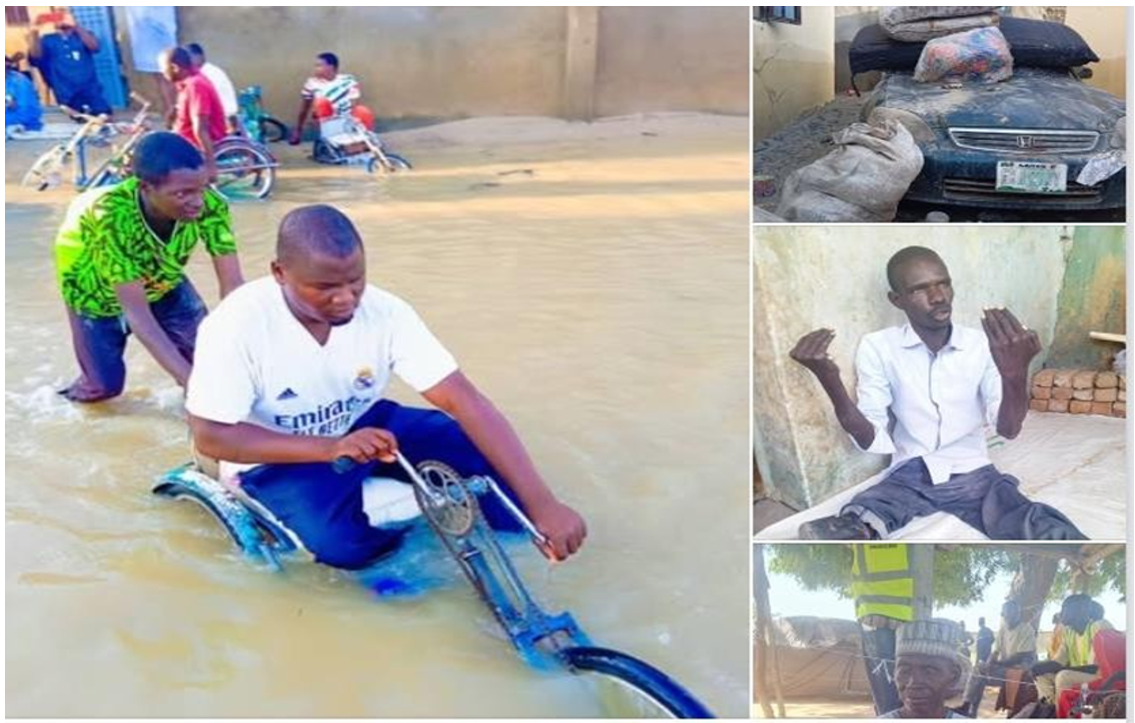
Climate change has emerged as a significant global challenge with serious consequences for environmental stability and human health. Among the most affected groups are people with disabilities, particularly those living in vulnerable communities where access to healthcare, infrastructure, and emergency services is limited. This study examines the impact of climate change on health risks faced by people with disabilities, focusing on how environmental hazards such as heat waves, floods, droughts, and severe storms increase their vulnerability. Individuals with physical, sensory, intellectual, or psychosocial disabilities often experience additional barriers during climate-related disasters, including limited mobility, inaccessible emergency information, disruption of medical services, and separation from caregivers. These challenges can worsen existing health conditions, increase the risk of infectious diseases, and contribute to psychological stress and trauma. Socioeconomic factors such as poverty, discrimination, and inadequate infrastructure further intensify these risks, particularly in low-income and disaster-prone regions. The study highlights evidence from previous research showing that people with disabilities are frequently excluded from disaster planning and response systems, which reduces their ability to cope with environmental crises. This review is aimed at the study the impacts of climate change, climate adaptation and public health strategies that integrate disability considerations into disaster preparedness, healthcare systems, and policy frameworks in order to protect vulnerable populations and promote resilient communities.
References
Afzal, M. F., Sharma, P. K., Subrahmanyam, S. V., Bala, A., Gaddala, B., Ghamande, M. V., & Bhoopathy, V. (2026). Extreme Weather Linked to Climate Change: Risk, (349-372). IGI Global Scientific Publishing.
Ahmed, S., Hasan, M. Z., Pongsiri, M. J., Ahmed, M. W., & Szabo, S. (2021). Effect of extreme weather events on injury, disability, and death in Bangladesh. Climate and Development, 13(4), 306-317.
Airi, M., & Salgotra, V. (2026). Climate Change and Human Health. In Biotechnology Innovations for a Sustainable Future: Integrating Clean Energy, Life on the Planet, Clean Water, and Climate Action (pp. 1863-1874). Singapore: Springer Nature Singapore.
Alexander, M., Alexander, J., Arora, M., Slocum, C., & Middleton, J. (2019). A bellweather for climate change and disability: educational needs of rehabilitation professionals regarding disaster management and spinal cord injuries. Spinal cord series and cases, 5(1), 94.
Arogundade, S., Ketchoua, G. S., & Mduduzi, B. (2026). Climate vulnerability and economic performance in Africa under the moderating influence of monetary policy. Discover Environment, 4(1), 13.
Asibey, M. O., Osei-Bonsu, A., Agyekum, S., & Kpeebi, Y. (2026). „Collective consciousness‟ and urban informal action groups towards climate resilience. Cities, 171, 106724.
Auerbach, A. M., Abdukhalilov, A., Sacks, A., & Yusupov, D. (2026). Climate change and disability-inclusive adaptation: Qualitative evidence from Uzbekistan. The Journal of Development Studies, 62(1), 128-145.
Auerbach, A. M., Abdukhalilov, A., Sacks, A., & Yusupov, D. (2026). Climate change and disability-inclusive adaptation: Qualitative evidence from Uzbekistan. The Journal of Development Studies, 62(1), 128-145.
Bamney, U., Manikappa, S. K., Tansa, K. A., Doddamani, A. H., & Sekar, K. (2026). Raising Resilience: Empowering and Preparing Children in Times of Disaster through Psychosocial Support and a Preparedness Approach. In Psychosocial and Mental Health Support for Disaster Management in India (pp. 465-500). Cham: Springer Nature Switzerland.
Benigno, M. R., Kleinitz, P., Calina, L., Alcido, M. R., Gohy, B., & Hall, J. L. (2015). Responding to the health and rehabilitation needs of people with disabilities post-Haiyan. Western Pacific surveillance and response journal: WPSAR, 6(Suppl 1), 53.
Bukauskaitė Žiūkienė, G. (2026). Nursing approaches to maintaining health in older adults during heat waves: A narrative review. Journal of Nursing Reports in Clinical Practice, 4(3), 165-171.
Bukhari, H. A., Alaryni, M. A., & Eid, M. A. (2026). Factors of mortality in the heat stroke pilgrims during Hajj: a retrospective study. Journal of Umm Al-Qura University for Medical Science, 12(1), 11.
Cui, Y., Zhou, X., He, H., Fan, C., & Ye, L. (2026). Assessing the coupled exposure risks of heat waves and particulate matter: Based on the empirical analysis of 347 cities in China. Journal of Cleaner Production, 541, 147575.
Darboei, A., Azari, A., & Mirakzadeh, A. A. (2026). Sustainable exploitation of water resources in the framework of water-energy-food nexus in climate change conditions using new multi-objective optimization algorithm MOGWO-3D. Agricultural Water Management, 323, 110025.
Elisala, N., Turagabeci, A., Mohammadnezhad, M., & Mangum, T. (2020). Exploring persons with disabilities preparedness, perceptions and experiences of disasters in Tuvalu. PLoS One, 15(10), e0241180.
Engelman, A., Craig, L., & Iles, A. (2022). Global Disability Justice in Climate Disasters: Mobilizing People with Disabilities as Change Agents: Analysis describes disability justice in climate emergencies and disasters, mobilizing people with disabilities as change agents. Health Affairs, 41(10), 1496-1504.
Fachruddin, S. (2026). Navigating Change: The Social Impacts of Climate Change on Older Adults. In Using Sustainable Neighborhood Resources for Successful Aging amidst Global Crises (pp. 293-322). IGI Global Scientific Publishing.
Fachruddin, S. (2026). Navigating Change: The Social Impacts of Climate Change on Older Adults. In Using Sustainable Neighborhood Resources for Successful Aging amidst Global Crises (pp. 293-322). IGI Global Scientific Publishing.
Flores, R., & Flores, R. (2026). Multidisciplinary analysis of climate change impact on health, education, and income in the Bolivian Amazon: contributions to the Sustainable Development Goals. In The Elgar Companion to International Business and the Sustainable Development Goals (pp. 318-339). Edward Elgar Publishing.
Gkouliaveras, V., Kalogiannidis, S., Kalfas, D., Papaklonari, A., & Kontsas, S. (2026). Climate Change and Health Systems: A Scoping Review of Health Professionals‟ Perceptions and Readiness for Action. Climate, 14(1), 12.
Grover, P., Verduzco-Gutierrez, M., & Annaswamy, T. (2026). A socioecological approach to understanding and positively affecting the intersectionality between disability, race and ethnicity, climate change, and rehabilitation outcomes: A scoping review. PM&R, 18, S35-S44.
Herbowo, H. D. (2026). Climate Crisis and the Well-Being of Vulnerable Groups: A Social Work Perspective on the Elderly and Persons with Disabilities. Proceeding of SINERGY, 1(1), 1240-1260.
Hiranandani, V. (2015). Where is disability in disaster management in India. In Strategic Disaster Risk Management in Asia (pp. 39-48). New Delhi: Springer India.
Hussein, S. (2026). Developing a Climate-Tailored Integrated Long-Term Care Framework: Strengthening Policy and Practice Response. Sustainability, 18(5), 2383.
Jiang, H. (2026). Smart open governance for urban flood disasters: transforming emergency capabilities. Asian Geographer, 43(1), 1-20.
Khan, I. (2026). The Role of NGOs in Fostering Change and Promoting Inclusion. In Inclusive and Equitable Education for All: SDG 4 and Global Challenges (pp. 155-164). Cham: Springer Nature Switzerland.
Khine, M. M., & Langkulsen, U. (2023). The implications of climate change on health among vulnerable populations in South Africa: a systematic review. International journal of environmental research and public health, 20(4), 3425.
Kisira, Y., Ssennoga, M., Mugagga, F., & Nadhomi, D. (2023). Persons with disabilities and resilience: coping with environmental hazards case of landslides in Mount Elgon region, Uganda. Environmental Hazards, 22(4), 349-366.
Levy, B. S., & Patz, J. A. (2015). Climate change, human rights, and social justice. Annals of global health, 81(3), 310-322.
Liao, J. (2026). Structural Exclusion and Employment Barriers for Individuals with Mental Disabilities: A Comparative Welfare Regime Analysis. Journal of Sustainability, Policy, and Practice, 2(1), 115-124.
Luthviati, R. D. (2026). Achieving Sustainable and Responsible Consumption Production Policy through Integrated Waste Management in Residential Areas. Contrarius, 2(1), 50-86.
MacPherson-Krutsky, C., Painter, M. A., & Villarreal, M. (2026). Inclusive Emergency Alerts: Exploring Whether Agencies Are Ready, Willing, and Able. Natural Hazards Review, 27(1), 04025064.
Malik, K. N. (2026). Climate Change and Its Impacts on Mental Health: A Systematic Review. Social Science Review Archives, 4(1), 1895-1909.
Mangara, F., & Dorasamy, N. (2026). Historical Context: Urban Growth and Disaster Risks in Southern Africa. In Sustainable Urban Development in Southern Africa: Disaster Risk Reduction and Economic Resilience (pp. 67-89). Cham: Springer Nature Switzerland.
Mann, M., McMillan, J. E., Silver, E. J., & Stein, R. E. (2021). Children and adolescents with disabilities and exposure to disasters, terrorism, and the COVID-19 pandemic: A scoping review. Current psychiatry reports, 23(12), 80.
Mazza, A., Keaton, D., Granville-Martin, A., Mazza, N., & Abbot, C. (2026). Addressing Community Inequities and Social Determinants of Preparedness: A Prototype Mobile Application for Hyperlocal Emergency Response Coordination. World Journal of Arts, Education and Literature, 3(2), 1-15.
Mubashir, A. S., Abbasi, S. U. A., & Kainaat, R. (2026). Climate Change, Disaster, and Mental Health in Pakistan. In Climate Change, Disaster and Mental Health in South Asia (pp. 129-141). Singapore: Springer Nature Singapore.
Muslim, M., & Susami, H. (2026). Climate Change and Public Health in the Arabian Peninsula: Epidemiological Threats, Vulnerabilities and Adaptive Pathways. In Climate Change in the Arabian Peninsula: Challenges and Pathways to Solutions (pp. 185-216). Cham: Springer Nature Switzerland.
Mutinta, G. (2026). Environmental Challenges in Africa. In An African Perspective on Environmental Communication: Advocating for Sustainable Environmental Communication in Africa (pp. 29-49). Cham: Springer Nature Switzerland.
Natukunda, E., & Abdul, H. M. (2026). Physical, psychosocial and economic burden among caregivers of children with sickle cell disease at masaka regional referral hospital, Uganda. Journal of Public Health and Toxicological Research, 3(1), 178-183.
Nur, S. S. (2026). Enhancing Human Capacity Linking Sustainable Neighbourhood Resources: Pathways to Successful Aging in Global Crises. In Using Sustainable Neighborhood Resources for Successful Aging amidst Global Crises (pp. 207-226). IGI Global Scientific Publishing.
Pan, A. (2016). Study on mobility-disadvantage group'risk perception and coping behaviors of abrupt geological hazards in coastal rural area of China. Environmental research, 148, 574-581.
Peek, L., & Stough, L. M. (2010). Children with disabilities in the context of disaster: A social vulnerability perspective. Child development, 81(4), 1260-1270.
Raj, A. B., Kathiresan, P., & Nebhinani, N. (2026). Disaster and Disability. In Climate Change, Disaster and Mental Health in South Asia (pp. 279-299). Singapore: Springer Nature Singapore.
Russin, N. H., Martin, M. P., & McElhinny, M. (2026). Global Warming and the Elderly: A Socio-Ecological Framework. International Journal of Environmental Research and Public Health, 23(2), 164.
Ssennoga, M., Mugagga, F., Nadhomi, D. L., & Kisira, Y. (2022). Mapping the susceptibility of persons with disabilities to landslides in a highland landscape of Bushika Sub County, Mount Elgon, Eastern Uganda. Jàmbá-Journal of Disaster Risk Studies, 14(1), 1266.
Stough, L. M. (2015). World Report on Disability, Intellectual Disabilities, and Disaster Preparedness: C osta R ica as a Case Example. Journal of Policy and Practice in Intellectual Disabilities, 12(2), 138-146.
Tohit, N. F. M., Minhat, H. S., Hassan, N. A., & Haque, M. (2026). Climate Change and Older Adults: A Scoping Review of Health Impacts and Policy Recommendations. Advances in Human Biology, 10-4103.
Yeshiwas, Y., Tadele, E., Mohammed, A., & Hu, X. (2026). Impacts of climate change on horticultural systems with focus on socio-economic implications, production and postharvest challenges, and adaptive pathways. Discover Environment, 4(1), 55.
Downloads
Published
Issue
Section
Categories
License
Copyright (c) 2026 Abdullahi Abubakar Danwanzam, Musa Maina, Muhammad Bukar Ali, Kaumi Goni Kaka, Hassan Aminu Bawa, Abba Ibrahim Zaki

This work is licensed under a Creative Commons Attribution 4.0 International License.