
Physico-Chemical Characterization of the Constituent Materials for Sustainable Concrete: Incorporating Rice Husk Ash and Corn Cob Ash as Partial Cement Replacements
DOI:
https://doi.org/10.33003/fjs-2026-1020-5385Keywords:
Rice Husk Ash, Corn Cob Ash, Pozzolanic Materials, Sustainable Concrete, Physico-Chemical Properties, Binary and Ternary BlendsAbstract
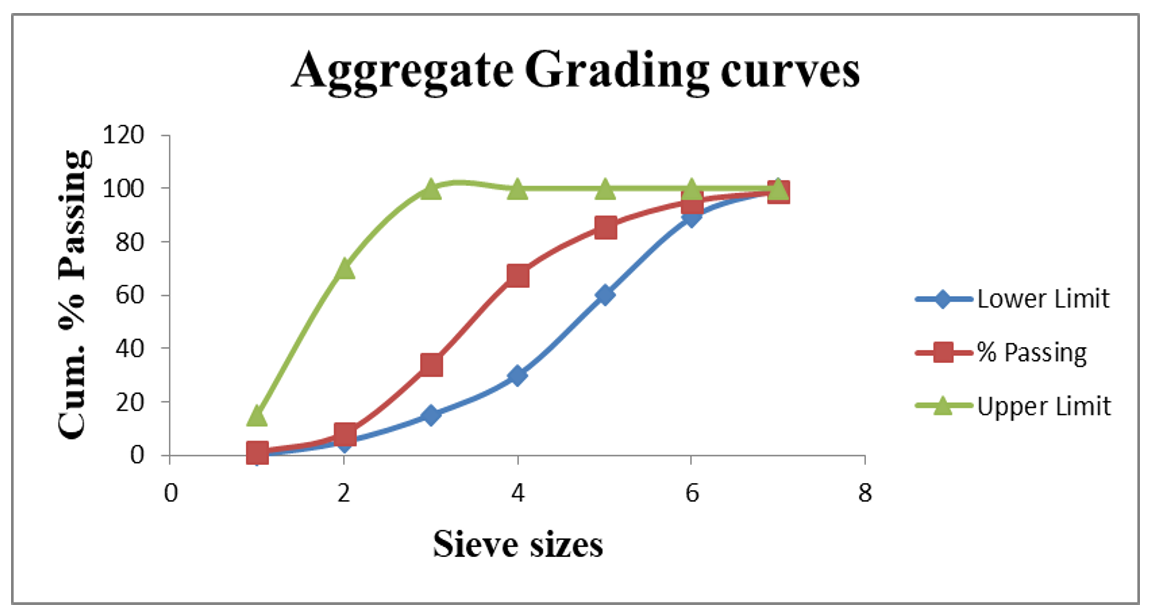
This study evaluated the physico-chemical properties of constituent materials for sustainable ternary blended concrete incorporating rice husk ash (RHA) and corn cob ash (CCA) as partial cement replacements. The objective was to assess the suitability of these agricultural by-products as supplementary cementitious materials (SCMs) for sustainable concrete production. Experimental investigations were conducted on the constituent materials, RHA, and CCA following British Standards (BS EN) and ASTM procedures to ensure reliable and accurate results. X-ray fluorescence (XRF) analysis showed that the combined SiO₂, Al₂O₃, and Fe₂O₃ contents were 79.55% for RHA and 63.45% for CCA. Based on ASTM C618:2019, RHA was classified as a Class F pozzolan, while CCA was classified as a Class C pozzolan, confirming their suitability as SCMs. Physical characterization demonstrated compliance with standard requirements, including a cement consistency of 31%. The cement paste exhibited an initial setting time of 2 h 5 min and a final setting time of 3 h 39 min. Aggregate tests, including specific gravity and particle size grading, also satisfied relevant standards for quality concrete production. X-ray diffraction (XRD) and scanning electron microscopy (SEM) identified amorphous silica and other reactive phases in both ashes, confirming their pozzolanic potential and ability to participate in cement hydration, thereby enhancing concrete strength and durability. Overall, the findings demonstrate that RHA and CCA are viable supplementary cementitious materials capable of reducing cement consumption, lowering carbon emissions, and promoting environmentally sustainable concrete production without compromising material quality in practical construction applications and long-term infrastructure development across settings.
References
Amartey, B. H. S., Aliyu, I., & Usman, B. (2024). Development of Compressive Strength Predictive Models of Self-Compacting Concrete Cured Using Different Curing Methods. FUDMA Journal of Sciences (FJS) Vol. 8 No. 1, pp 305 – 312. https://doi.org/10.33003/fjs-2024-0801-1012
Amartey, Y., Otuoze, H. S., Sada, B., & Modibbo, I. (2013). Evaluation of Natural Aggregate found in Zaria, Nigeria. World of Engineering and Pure and Applied Science, 3(1), 16-20.
ASTM C618-23 Standard Specification for Coal Ash and Raw or Calcined Natural Pozzolan for Use in Concrete. ASTM International, West Conshohocken, PA, 2023
BS 812-112:1990: The Standard for Testing aggregates - Method for determination of aggregate impact value (AIV)
BS 882-2 1992. Grading Limit for Fine Aggregate. British Standards Institution, London.
BS 812-2: 1995 Testing aggregates. Methods for the determination of density
BS 812-110: 1995 Testing aggregates. Methods for the determination of aggregate crushing value (ACV)
BS EN 1097-3: 1998 Tests for mechanical and physical properties of aggregates. Determination of loose bulk density and voids
BS EN 196-1: 2016 Methods of testing cement. Determination of strength
BS EN-196-3. (2016). Methods of testing cement. Determination of setting times and soundness.
Dereje, T. W., Jemal, J. M., Solomon, D. N., Jose, H., & Endrias, A. B. (2025) Experimental Investigation on partial cement replacement with binary blended bagasse ash and calcined dolomite for enhanced C-25 grade concrete performance. National Library of Medicine. https://doi.org/10.1038/s41598-025-98019-7
Ejeh, S. P. (2017). Properties of materials. A reading in Civil Engineering, Zaria, Kaduna State, Ahmadu Bello University Press Limited.
Etim, M. A., Babaremu, K.,Lazarus, J. & Omole, D. (2021) Health Risk and Environmental Assessment of Cement Production in Nigeria. Atmosphere, 12, 1111.
Hosen, K., Al Maruf, M. A., Howlader, R., Chakma, K., & Mia, M.R. (2024). Concrete Strength and Aggregate Properties: In-Depth Analysis of Four Sources. Civ. Eng. J. 10, 1254–1264.
Liao, S., Wang, D., Xia, C., & Tang, J. (2022). China’s provincial process CO2 emissions from cement production during 1993–2019. Sci. Data, 9, 165.
Muhammad A. I., Esar A., Shashivendra D., Umar S. I., Salihu S. U., Ibrahim A. I., & Idris Z. I.(2024), Exploring the Potential of Weld Slag as Aggregate Replacement in Concrete for Sustainable Construction: A Review Paper. International Journal of Mechanical and Civil Engineering 7(1), 137-144. https://doi.org/10.52589/IJMCEHSUFSNKI
Olafusi, O. S., Kupolati, W. K., Sadiku, E. R., Snyman, J., & Ndambuki, J. M. (2018) Characterization of Corncob Ash (CCA) as a Pozzolanic Material. International Journal of Civil Engineering and Technology, 9(12), 2018, pp. 1016–1024
Sanuja, S. P., Hansa, R., Vishwa, P., & Shashini, D. (2023). Cement Manufacturing Process and Its Environmental Impact. ResearchGate
Sun, H., Li, Y.-Z., Yu, Z.-W., Sadat, S.-I., Ding, F.-X., Lyu, F., Xu, Q.-Y., & Zhang, T. (2026). Seismic performance of continuous girder bridges with concrete-filled steel tube piers and earthquake-induced train-track-bridge responses: Assessment of train running safety. Journal of Central South University. https://doi.org/10.1007/s11771-026-6336-9
UN Environment Programme. Global Nitrous Oxide Assessment (2024). Available online: https://www.unep.org/resources/report/global-nitrous-oxide
Vaggar, G. B., Yashwanth, K., Farooq, U. & Kumar, P. (2023). Benefits of rice rusk ash used in cement concrete: A review. International Journal of Engineering Research & Technology (IJERT), 12(1), 33-39.
Xin, L., Su, Y., Fu, P., Pei, M., Xu, L., Li, X., Zheng, Y., & Wang, D. (2026). Life-cycle evolution of train running performance on prestressed concrete bridges: A train–track–bridge interaction analysis with material degradation. Railway Engineering Science. https://doi.org/10.1007/s40534-025-00426-z
Younis. R. M. H. (2025). Why We Use Concrete in Building: International Journal of Civil and Structural Engineering. Research. Vol. 12, Issue 2, pp 105-107
Zeyad, A.M., Khan, A.H., & Tayeh, B.A. (2020). Durability and strength characteristics of high-strength concrete incorporated with volcanic pumice powder and polypropylene fibers. J. Mater. Res. Technol. 9, 806–818.
Zhu, G., Shi, H., Zhong, L., He, G., Wang, B., Shan, J., Han, P., Liu, T., Wang, S., Liu, C., Zhang, N., Jiang, L., Yu, L., Zhan, C., Tang, Z., Wen, T., Ma, B., Su, X., Zhang, S., Zhu, Y.-G. (2025). Nitrous oxide sources, mechanisms and mitigation. Nature Reviews Earth & Environment, 6, 574–592. https://doi.org/10.1038/s43017-025-00707-5
Downloads
Published
Issue
Section
Categories
License
Copyright (c) 2026 Chris Williams Ejembi, Yusuf Dada Amartey, Lawan Adamu, Bilkisu Sada Amartey, Raphael Owoicho Ejembi, Kevin Zambwa Joseph

This work is licensed under a Creative Commons Attribution 4.0 International License.