
Environmental DNA, Water Quality, and Plankton Community Dynamics in the Niger Delta: A Critical Review of Molecular Approaches for Biodiversity Monitoring and Ecosystem Management
DOI:
https://doi.org/10.33003/fjs-2026-1018-5353Keywords:
Environmental DNA, Water Quality, Biodiversity Monitoring, Plankton Dynamics, Niger Delta, Aquatic EcosystemsAbstract
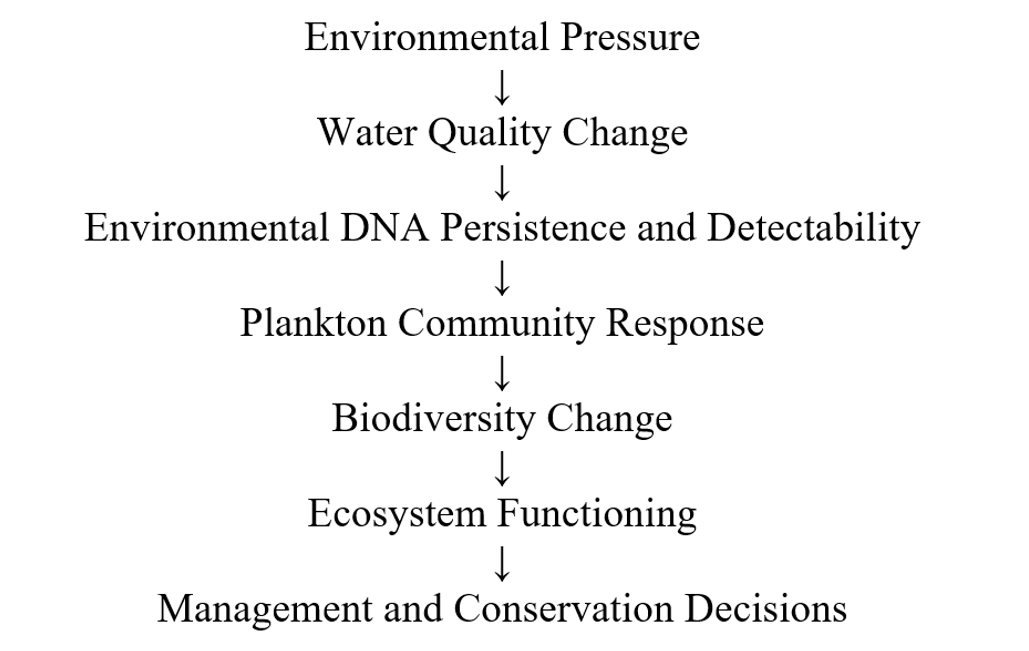
The Niger Delta is home to a variety of freshwater, estuarine and coastal ecosystems that provide fisheries, biodiversity and other critical ecosystem services. But the area has been significantly changed by increasing anthropogenic impacts such as petroleum activities, industrial effluents, agricultural pollutants, urbanization and climate change. These disturbances have been associated with a loss of biodiversity and altered plankton community structure which affects the functioning of the ecosystem and its monitoring. This review critically assesses the interrelationships between water quality, biodiversity, plankton dynamics and environmental DNA (eDNA) based monitoring in the Niger Delta. Specific attention is paid to the impacts of physicochemical conditions on plankton communities, and the utility of molecular tools for the assessment of plankton biodiversity. There is evidence that environmental degradation causes a shift in community composition and degradation of the eDNA detection.Environmental degradation has been shown to have complex ecological and physicochemical effects on aquatic community composition and on eDNA detection. Although the use of eDNA in the region holds great promise, there are certain limitations in their application such as limited validation studies, limited reference databases, and methodological inconsistencies. The combination of traditional ecological surveys and eDNA can provide a comprehensive approach to the conservation of biodiversity and monitoring pollution and the management of aquatic ecosystems in the Niger Delta in a sustainable way.
References
Akpomughe, E., Nwachi, O. F., & Awhefeada, O. K. (2023). Estimation of genetic diversity in silver catfish (Chrysicthys nigrodigitatus) using random amplified polymorphic DNA. FUDMA Journal of Sciences, 7(6), 110–119.
Amorim, C. A., & do Nascimento Moura, A. (2021). Ecological impacts of freshwater algal blooms on water quality, plankton biodiversity, structure, and ecosystem functioning. Science of the Total Environment, 758, 143605.
Anyanwu, I. N., Beggel, S., Sikoki, F. D., Okuku, E. O., Unyimadu, J. P., & Geist, J. (2023). Pollution of the Niger Delta with total petroleum hydrocarbons, heavy metals and nutrients in relation to seasonal dynamics. Scientific Reports, 13(1), 14079.
Aragón-Flores, E. A., Rodiles-Hernández, R., Soria-Barreto, M., Cazzanelli, M., Montaña, C. G., & Castillo, M. M. (2026). Estuarine structure and connectivity influence seasonal and spatial shifts in the food web structure of fish assemblages. Regional Studies in Marine Science, 104806.
Bessey, C., Jarman, S. N., Berry, O., Olsen, Y. S., Bunce, M., Simpson, T., ... & Keesing, J. (2020). Maximizing fish detection with eDNA metabarcoding. Environmental DNA, 2(4), 493–504.
Blackman, R. C., Carraro, L., Keck, F., & Altermatt, F. (2024). Measuring the state of aquatic environments using eDNA—upscaling spatial resolution of biotic indices. Philosophical Transactions of the Royal Society B: Biological Sciences, 379(1904), 20230121.
Borics, G., Abonyi, A., Salmaso, N., & Ptacnik, R. (2021). Freshwater phytoplankton diversity: models, drivers and implications for ecosystem properties. Hydrobiologia, 848(1), 53–75.
Chandel, P., Mahajan, D., Thakur, K., Kumar, R., Kumar, S., Brar, B., ... & Sharma, A. K. (2024). A review on plankton as a bioindicator: A promising tool for monitoring water quality. World Water Policy, 10(1), 213–232.
Chang, C., Hu, E., Xue, X., Li, J., Du, D., Yang, F., & Li, M. (2024). Hydro-morphology and water quality jointly shape the structure and network stability of the plankton community in multi-tributary river basins. Journal of Hydrology, 643, 131945.
Chen, X., Wei, Q., Niu, Y., & Jiang, X. (2024). Complementary roles of eDNA metabarcoding and microscopy in plankton monitoring across seven habitats. Journal of Plankton Research, 46(6), 555-566.
Choi, Y., Oh, H. J., Lee, D. H., Jang, M. H., Lee, K. L., Chang, K. H., & Kim, H. W. (2023). Current utilization and further application of zooplankton indices for ecosystem health assessment of lake ecosystems. Sustainability, 15(14), 10950.
Deiner, K., Yamanaka, H., & Bernatchez, L. (2021). The future of biodiversity monitoring and conservation utilizing environmental DNA. Environmental DNA, 3(1), 3–7.
Du, X., Xiong, W., Li, S., & Zhan, A. (2024). Conventional net tow versus environmental DNA for metabarcoding-based analysis of plankton-environment interactions in polluted aquatic ecosystems. Ecological Indicators, 158, 111356.
Fai, P. B. A., Kenko, D. B. N., Tchamadeu, N. N., Mbida, M., Korejs, K., & Riegert, J. (2023). Use of multivariate analysis to identify phytoplankton bioindicators of stream water quality in the monomodal equatorial agroecological zone of Cameroon. Environmental Monitoring and Assessment, 195(6), 788.
Feng, X., & Chen, J. (2023). Impacts of environmental factors and freshwater discharges from multiple river outlets on estuarine salinity variation in rainy season: A case study of the Pearl River Estuary in China. Journal of Hydrology, 623, 129784.
Fenibo, E. O., Nkuna, R., & Matambo, T. (2024). Impact of artisanal refining activities on bacterial diversity in a Niger Delta fallow land. Scientific Reports, 14(1), 3866.
Fubara, R. I., Wokeh, O. K., & Okey-Wokeh, C. G. (2022). Physicochemical characterisation and water quality status of the lower Orashi River, Niger Delta, Nigeria. West African Journal of Applied Ecology, 30(2), 24–31.
Geng, Y., Li, M., Yu, R., Sun, H., Zhang, L., Sun, L., ... & Xu, J. (2022). Response of planktonic diversity and stability to environmental drivers in a shallow eutrophic lake. Ecological Indicators, 144, 109560.
Harvey, M. E., Giddings, S. N., Pawlak, G., & Crooks, J. A. (2023). Hydrodynamic variability of an intermittently closed estuary over interannual, seasonal, fortnightly, and tidal timescales. Estuaries and Coasts, 46(1), 84–108.
Henson, S. A., Cael, B. B., Allen, S. R., & Dutkiewicz, S. (2021). Future phytoplankton diversity in a changing climate. Nature Communications, 12(1), 5372.
Hou, T., Lu, S., Shao, J., Dong, X., Yang, Z., Yang, Y., ... & Lin, Y. (2025). Assessment of planktonic community diversity and stability in lakes and reservoirs based on eDNA metabarcoding—A case study of Minghu National Wetland Park, China. Environmental Research, 271, 121025.
Iwegbue, C. M., Faran, T. K., Iniaghe, P. O., Ikpefan, J. O., Tesi, G. O., Nwajei, G. E., & Martincigh, B. S. (2023). Water quality of Bomadi Creek in the Niger Delta of Nigeria: assessment of some physicochemical properties, metal concentrations, and water quality index. Applied Water Science, 13(2), 36.
Joseph, C., Faiq, M. E., Li, Z., & Chen, G. (2022). Persistence and degradation dynamics of eDNA affected by environmental factors in aquatic ecosystems. Hydrobiologia, 849(19), 4119–4133.
Kunal, K., & Ganie, P. A. (2024). Microbial planktonic communities. In Handbook of Aquatic Microbiology (pp. 12–27). CRC Press.
Lanzen, A., Dahlgren, T. G., Bagi, A., & Hestetun, J. T. (2021). Benthic eDNA metabarcoding provides accurate assessments of impact from oil extraction, and ecological insights. Ecological Indicators, 130, 108064.
Li, L., Li, H., Cui, J., & Bao, M. (2025). A critical review on the application of environmental DNA (eDNA) metagenomics in monitoring and assessing biological communities post marine oil spills. Science of The Total Environment, 995, 180110.
Liang, X., Yang, X., Sha, N., Wang, J., Qiu, G., & Chang, M. (2025). Application of eDNA metabarcoding technology to monitor the health of aquatic ecosystems. Water, 17(8), 1109.
Mariani, R., Lessa, G. C., & Marta-Almeida, M. (2022). Long-term variability of the salinity field in a large tropical, well-mixed estuary: the influence of climatic trends. Estuaries and Coasts, 45(3), 721–736.
Mauvisseau, Q., Harper, L. R., Sander, M., Hanner, R. H., Kleyer, H., & Deiner, K. (2022). The multiple states of environmental DNA and what is known about their persistence in aquatic environments. Environmental Science & Technology, 56(9), 5322–5333.
McKnight, E. G., Shafer, A. B., & Frost, P. C. (2024). Quantifying the effect of water quality on eDNA degradation using microcosm and bioassay experiments. Environmental DNA, 6(2), e530.
Miya, M. (2022). Environmental DNA metabarcoding: A novel method for biodiversity monitoring of marine fish communities. Annual Review of Marine Science, 14, 161–185.
Nguyen, T. G., & Huynh, N. T. H. (2023). Evaluating surface water quality using indexes of water quality and plankton diversity. Civil Engineering Journal, 9(5), 1187–1202.
Nneji, L. M., Oladipo, S. O., Nneji, I. C., Atofarati, O. T., Asiamah, M. K., & Adelakun, K. M. (2025). Evaluating eDNA metabarcoding for fish biodiversity assessment in Nigerian aquatic ecosystems: potential, limitations, and comparisons with traditional methods. Journal of Freshwater Ecology, 40(1), 2541689.
Ogolo, N. A., Anih, O. C., & Onyekonwu, M. O. (2022). Sources and effects of environmental pollution from oil and gas industrial operations. Arabian Journal of Chemical and Environmental Research, 9(01), 98–121.
Ogwu, M. C., Ojo, A. O., & Alaka, A. C. (2025). Biodiversity and human health: The interconnections of species loss and ecosystem services. In Innovative Approaches in Environmental Health Management: Processes, Technologies, and Strategies for a Sustainable Future (pp. 113–141). Springer Nature Switzerland.
Ohimain, E. I., Ada, Y. N., & Kendabie, P. (2024). Physicochemical properties and bacterial population in the rhizosphere of mangrove plant species at the upper reaches of Santa Barbara River, Central Niger Delta, Nigeria. Journal of Applied Sciences & Environmental Management, 28(11).
Okafor, C. P., Chikere, C. B., Akaranta, O., & Ntushelo, K. (2022). Crude oil hydrocarbons' effect on soil microbial metagenome from Niger Delta polluted soils. F1000Research, 11, 1108.
Pawlowski, J., Apothéloz‐Perret‐Gentil, L., & Altermatt, F. (2020). Environmental DNA: What's behind the term? Clarifying the terminology and recommendations for its future use in biomonitoring. Molecular Ecology, 29(22), 4258–4264.
Power, H., Takahashi, M., Jarman, S., & Berry, O. (2023). What is environmental DNA? Environmental DNA, 5(6), 1743–1758.
Raimi, M. O., Sawyerr, H. O., Ezekwe, C. I., & Opasola, A. O. (2022). Quality water not everywhere: Exploratory Analysis of Water Quality Across Ebocha-Obrikom Oil and Gas Flaring Area in the Core Niger Delta Region of Nigeria. Pollution, 8(3), 751-778.
Sharma, K., Rajan, S., & Nayak, S. K. (2024). Water pollution: Primary sources and associated human health hazards with special emphasis on rural areas. In Water Resources Management for Rural Development (pp. 3–14). Elsevier.
Singh, V. (2024). Water pollution. In Textbook of Environment and Ecology (pp. 253–266). Springer Nature Singapore.
Tee, H. S., Waite, D., Lear, G., & Handley, K. M. (2021). Microbial river-to-sea continuum: gradients in benthic and planktonic diversity, osmoregulation and nutrient cycling. Microbiome, 9(1), 190.
Ude, G. N., Igwe, D. O., Onyia, C. O., & Obih, C. E. (2022). Biodiversity and genetic resources conservation in Nigeria. In Agricultural Biotechnology, Biodiversity and Bioresources Conservation and Utilization (pp. 405–425). CRC Press.
Valdivia‐Carrillo, T., Rocha‐Olivares, A., Reyes‐Bonilla, H., Domínguez‐Contreras, J. F., & Munguia‐Vega, A. (2021). Integrating eDNA metabarcoding and simultaneous underwater visual surveys to describe complex fish communities in a marine biodiversity hotspot. Molecular Ecology Resources, 21(5), 1558–1574.
von der Heyden, S. (2023). Environmental DNA surveys of African biodiversity: state of knowledge, challenges, and opportunities. Environmental DNA, 5(1), 12–17.
Wilson, O. (2024). Introduction to biodiversity loss in streams. Impact of Societal Development and Infrastructure on Biodiversity Decline, 82.
Zhou, S., Li, Z., Peng, S., Zhang, D., Li, W., Hong, M., ... & Lu, P. (2022). Combining eDNA and morphological approaches to reveal the impacts of long-term discharges of shale gas wastewaters on receiving waters. Water research, 222, 118869
Downloads
Published
Issue
Section
Categories
License
Copyright (c) 2026 Emuesiri Akpomughe, Uwana Sonny Fombo, Kingsley Ovie Awhefeada, Bishop Lamiengha Seikorowei

This work is licensed under a Creative Commons Attribution 4.0 International License.


